
 Basiran
In a dramatic pivot that has sent shockwaves through the environmental and industrial sectors, the Trump administration has moved to dismantle key components of the American Innovation and Manufacturing (AIM) Act. The move, announced at a White House press conference last month, marks a stark reversal for a president who, nearly six years ago, championed the very legislation he now seeks to sideline. By loosening EPA rules governing hydrofluorocarbons (HFCs)—the potent greenhouse gases ubiquitous in commercial cooling and air conditioning—the administration claims it is offering a lifeline to American consumers struggling with inflation. However, experts, economists, and even internal EPA assessments suggest the policy may be a performative economic "gimmick" that risks accelerating climate change without delivering the promised relief at the checkout counter.
The Chronology of a Policy Pivot
The legislative journey of HFC regulation has been a study in bipartisan pragmatism turned partisan battleground. In 2020, during the final year of his first term, Donald Trump signed the AIM Act into law. The legislation was designed to phase out HFCs—substances with global warming potentials hundreds to thousands of times higher than carbon dioxide—in alignment with the international Kigali Amendment to the Montreal Protocol. At the time, the bill was heralded as a victory for American manufacturing, positioning U.S. companies at the forefront of the global transition to climate-friendly refrigerants.
Over the subsequent four years, the Biden administration aggressively implemented a roadmap to reduce HFC production and use by 85 percent by 2036. This transition was supported by billions of dollars in private-sector investment, as major chemical companies like Chemours and Honeywell, along with HVAC manufacturers, retooled their production lines for next-generation cooling technologies.
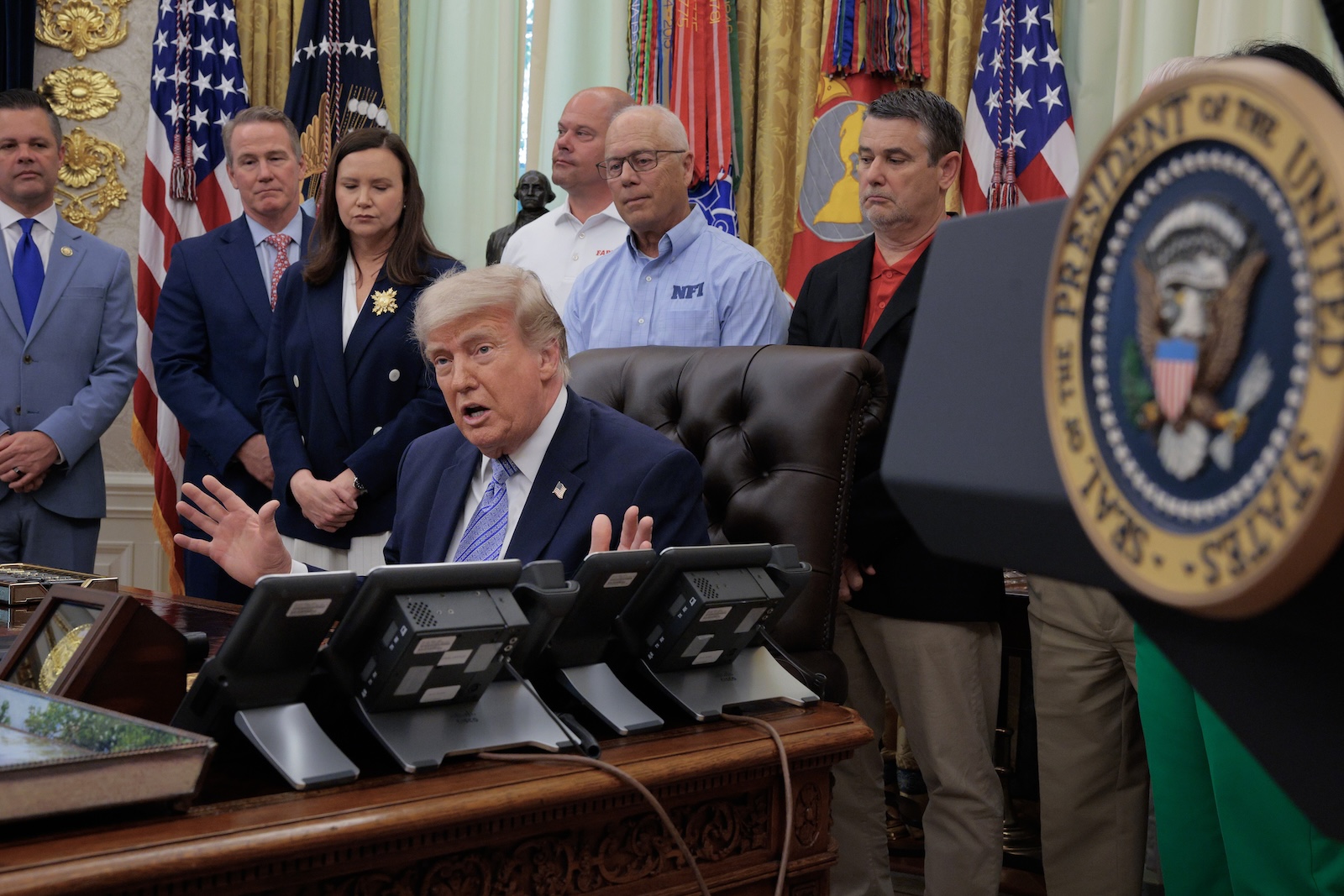
However, the political winds shifted in May 2026. Flanked by EPA Administrator Lee Zeldin and executives from some of the nation’s largest grocery chains, President Trump announced that his administration would effectively hit the brakes on this transition. The new directives delay deadlines for retailers to phase out legacy HFCs and grant broad exemptions to transport companies, allowing them to bypass requirements for repairing refrigerant leaks. The president framed the move as a bold strike against bureaucratic overreach and a tactical effort to lower the cost of living for American families.
The Economic "Grocery Theater"
The administration’s central justification for the rollback is economic: by easing the regulatory burden on the cold chain—the network of refrigeration required to transport and store food—the government argues it can lower the costs of operation, which will subsequently trickle down to the consumer. The White House projects that these changes could save U.S. businesses and families upwards of $2.4 billion.
"Thanks to today’s reforms, the American people have lower grocery prices, cheaper transportation of goods, and lower costs of air conditioning at no detriment to our country," President Trump stated during the May 21 press event.
Yet, this narrative is meeting fierce resistance from economists who track the mechanics of food pricing. Chris Barrett, an economist at Cornell University, dismisses the claim as "grocery-price theater." According to data from the U.S. Department of Agriculture’s "Food Dollar" series, retail, transport, and storage energy costs account for roughly 20 percent of the average grocery bill. Within that segment, the specific cost of refrigerant management is a marginal expense.
"We’re talking about a maximum reduction of a percentage point in your grocery bill," Barrett explained. "For a consumer spending $200 a week on groceries, maybe it will save you a dollar or two at the absolute maximum."
Furthermore, the administration’s rule changes contain no mandates requiring grocery retailers to pass any operational savings on to the consumer. Critics argue that without such a mandate, the savings are likely to be absorbed by corporate bottom lines rather than lowering the price of a gallon of milk or a pound of beef.
The Environmental Cost of Delayed Action
While the economic benefits remain speculative and likely negligible, the environmental impacts are concrete. HFCs are notoriously leaky; the EPA has previously estimated that U.S. supermarkets alone leak approximately 25 percent of their refrigerant inventory annually. Because these gases are thousands of times more potent than carbon dioxide, these leaks represent a massive, preventable contribution to global warming.
The decision to stall the phaseout is projected to have significant long-term consequences. An internal EPA assessment cited by Inside Climate News estimates that the rollbacks could result in an additional 68 million metric tons of CO2-equivalent emissions entering the atmosphere by 2050.
Joseph Goffman, who served as the assistant administrator of the EPA’s Office of Air and Radiation under the Biden administration, believes the administration is ignoring the reality of the market. "It’s almost, by definition, arbitrary for the Trump EPA to say, ‘We’ll come along and make these changes,’ as if the EPA hadn’t already received a lot of information and worked through these issues," Goffman noted. He points out that the industry itself had largely accepted the transition, with over 90 percent of new residential and light commercial equipment already utilizing the next-generation, climate-friendly alternatives the administration is now de-prioritizing.
Industry Disruption and Market Confusion
The administration’s argument that the industry is not ready for the phaseout has been met with skepticism by the very groups it claims to protect. Organizations like the Air-Conditioning, Heating, and Refrigeration Institute (AHRI) have previously testified that the industry has already committed the necessary capital to move forward. By delaying the transition, the administration risks creating a "bifurcated" market where manufacturers who invested heavily in green technology are suddenly undercut by a re-opened market for legacy, high-GWP (Global Warming Potential) pollutants.
"We heard that argument—that the transition was too fast—three years ago," Goffman said. By moving the goalposts, the administration is effectively punishing companies that followed the previous regulatory guidance, creating uncertainty that could stifle future innovation in the U.S. cooling sector.

The Climate-Inflation Feedback Loop
The most ironic, and perhaps most damaging, implication of the rollback lies in the long-term relationship between climate stability and food prices. Economists like Barrett argue that the administration’s attempt to solve short-term inflation via deregulation may inadvertently fuel long-term, structural food inflation.
Global food prices are increasingly sensitive to extreme weather events—droughts, heat waves, and floods—that disrupt production and distribution. Recent spikes in beef prices, for example, have been largely attributed to persistent droughts in cattle-rearing regions, which decimated herds and reduced supply.
"The evidence is very clear," Barrett said. "Climate change is predictably driving the growth of supply down, and therefore driving prices up. So, if relaxing these rules aggravates climate change and gives us more severe and more frequent episodes of extreme weather that hurts productivity in agriculture, we’re actually going to increase grocery prices down the road."
By choosing to prioritize a marginal, short-term reduction in operational costs for retailers, the administration may be ignoring the larger, more existential threat to food security. If the "super pollutants" continue to linger in the atmosphere, the resultant climate volatility will likely create price shocks far more severe than the costs associated with the transition to modern, efficient refrigeration.
Conclusion: A Question of Intent
As the administration continues to frame the refrigerant rollback as a populist win for the American consumer, the scientific and economic communities remain largely unconvinced. With no mechanism to ensure price relief, and a growing body of evidence suggesting that the long-term environmental consequences will be felt in the form of higher food prices, the policy appears to be a calculated political maneuver rather than a sound economic strategy.
"Who’s really benefiting from these empty promises?" Barrett asked. As the midterms approach and the rhetoric around the cost of living intensifies, it is a question that may define the legacy of this sudden and controversial environmental reversal. For now, the move stands as a reminder of the tension between immediate political messaging and the long-term, complex realities of a warming planet and a fragile global food supply.


 Raul Delapena Setiawan
 Laily UPN
 Reynand Wu
 Sagoh
Sagoh

 Azzam Bilal Chamdy
 Ali Ikhwan