
 Ali Ikhwan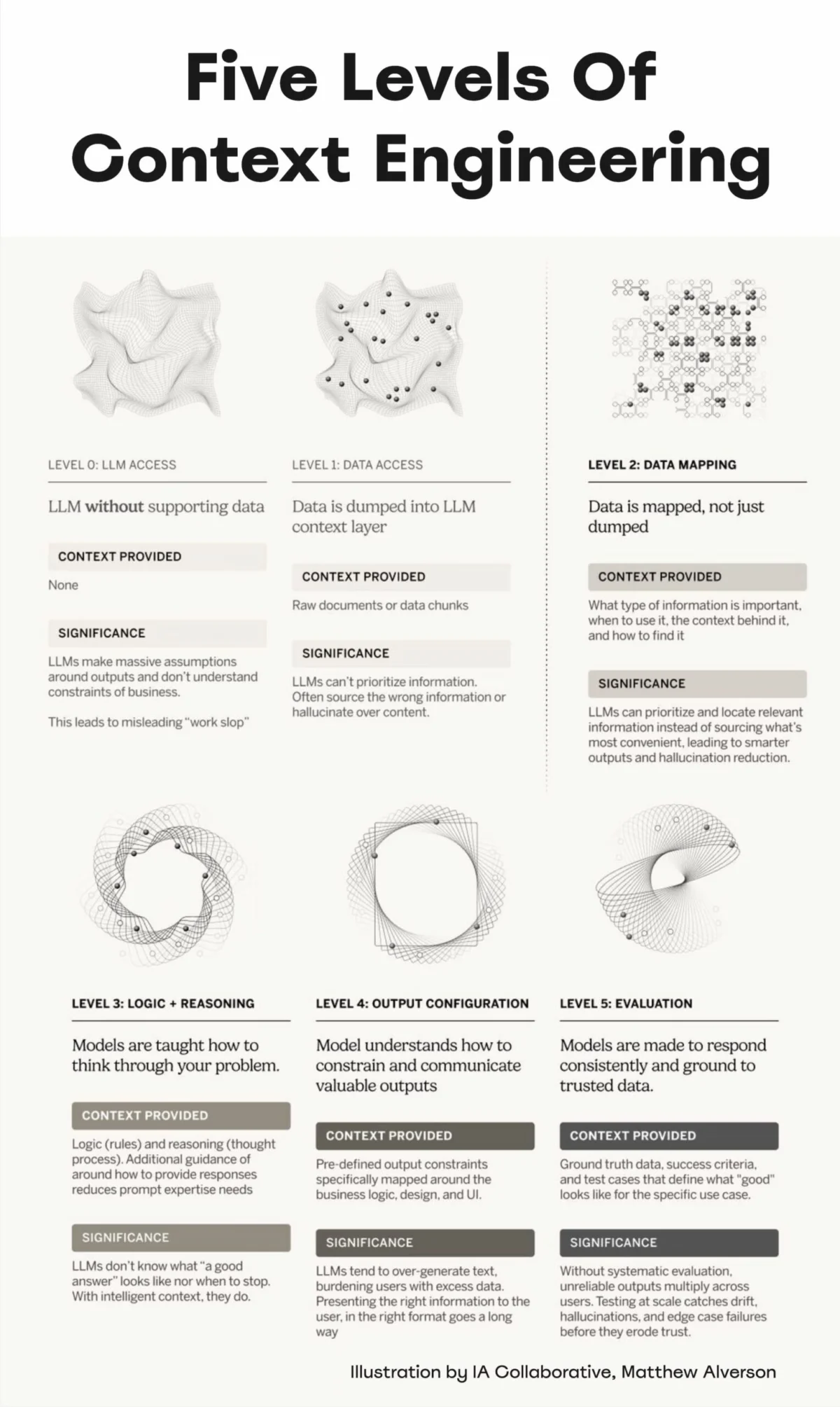
In the rapidly evolving landscape of product design, artificial intelligence is no longer a futuristic promise—it is an active collaborator. However, many design teams are discovering a harsh reality: AI-generated prototypes often fall short of professional standards. These failures are rarely the result of a "dumb" model; rather, they are a symptom of "design drift"—the accumulation of undocumented decisions, hard-coded values, and inconsistent patterns that leave the AI guessing.
To move beyond the limitations of hit-or-miss prototyping, designers must shift their perspective. As noted by Hardik Pandya of Atlassian in his recent, highly influential guide on Large Language Model (LLM) design systems, the path forward involves treating design documentation as essential infrastructure. By refining our systems to be "AI-ready," we can reduce ambiguity, minimize errors, and significantly improve the output quality of AI-assisted workflows.
The Core Problem: Why AI Struggles with Modern Design
At its core, the friction between AI and design systems stems from a lack of semantic context. When an AI is tasked with generating a prototype, it often relies on visual cues from existing mock-ups or loosely defined styles. Without a rigorous, machine-readable framework, the AI is forced to hallucinate or invent values to fill in the gaps.
This leads to several systemic issues:
- Decisions without Documentation: Design choices are often made in the heat of a sprint but never codified, leaving the AI without a "source of truth."
- The "Hard-Coding" Trap: When developers or designers hard-code values instead of using design tokens, the AI learns to replicate these anomalies, cementing technical debt into the new prototype.
- Lack of Accessibility Constraints: AI models, if not explicitly instructed, may overlook WCAG compliance or inclusive design principles, prioritizing visual aesthetics over functional accessibility.
Chronology of the "AI-Ready" Shift
The movement toward structured, AI-readable design systems has gained momentum over the past eighteen months, coinciding with the broader adoption of LLMs in development workflows.
Phase 1: The Era of Manual Interpretation
Initially, the industry approached AI as a black box. Designers would feed visual mock-ups into multimodal models, hoping the AI would "understand" the design language. This resulted in high-variance output, where the same prompt yielded drastically different results depending on the day or the model version.
Phase 2: The Rise of Context Engineering
As designers realized that quality output requires quality input, the focus shifted to "context engineering." Inspired by methodologies like those outlined by Matthew Alverson and promoted by industry leaders like Addy Osmani, designers began to categorize context into tiers. This phase marked the transition from "prompting" to "systemic guidance," where the AI is fed structured documentation rather than mere images.
Phase 3: The Current Standardization
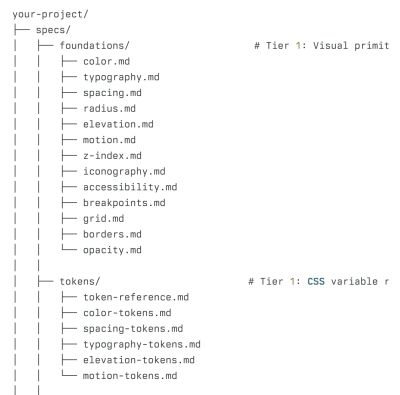
Today, we are entering the era of the "Spec File." Instead of relying on a visual scan, current best practices involve providing the AI with machine-readable Markdown files that explicitly detail spacing rules, color palettes, and component behavior. This ensures the AI is not "creating" a design, but rather "assembling" one based on a strict, human-approved set of rules.

Supporting Data: The Three-Layer Architecture
To achieve consistent, high-fidelity results, the industry is coalescing around a three-layer architecture for design systems. This framework, as championed by Pandya, effectively acts as a bridge between human intent and machine execution.
1. The Spec File Layer (The Logic)
Spec files serve as the "brain" of the operation. These are structured, human-readable (and therefore AI-readable) Markdown files. They contain:
- Design Principles: The "why" behind the design choices.
- Component Guidelines: Clear "Do’s and Don’ts" for each element in the library.
- Decision Logs: A trail of why certain patterns were chosen, helping the AI understand the rationale behind complex interactions.
2. The Token Layer (The Vocabulary)
The token layer is the closed-loop system that prevents AI from "inventing" plausible but incorrect values. By restricting the AI to a predefined set of named variables (e.g., color-primary-action, spacing-md), the system ensures that every prototype generated adheres strictly to the brand’s design language. This eliminates the "ad hoc" value generation that often plagues AI-generated code.
3. The Auditing Layer (The Quality Control)
No system is perfect, and the auditing layer is the safety net. Tools like FigmaLint have become indispensable in this stage. By using a free, automated plugin, teams can scan their files to catch:

- Detached component instances.
- Missing interactive states.
- Hard-coded values that deviate from the token library.
The auditing script acts as an automated "gatekeeper," providing feedback to the AI. If the AI proposes a design that violates these rules, the audit script identifies the flaw, which can then be corrected in the next iteration cycle.
Implications for the Future of Design
The shift toward AI-ready systems has profound implications for the role of the designer.
From "Pixel Pusher" to "System Architect"
The designer’s role is evolving. In an AI-driven environment, the value lies less in manually drawing every state and more in defining the rules by which those states are generated. Designers are effectively becoming "Design System Architects," spending their time maintaining the accuracy of Markdown specs and token hierarchies.
The Vendor-Client Relationship
This shift is particularly critical when working with third-party vendors. In the past, vendors would supply a style guide (often a PDF) that required manual implementation. In the future, "AI-ready" will become a procurement requirement. Vendors will be expected to provide machine-readable documentation, enabling internal design teams to integrate the vendor’s components into their own AI-prototyping workflows seamlessly.
The Long-Term Maintenance Challenge
While this approach promises immense efficiency, it introduces a new burden: the maintenance of the specs themselves. If a design system updates but the Markdown spec files remain stale, the AI will begin hallucinating outdated patterns. Organizations will need to implement "sync routines"—automated processes that alert the documentation team whenever a core component changes, ensuring that the AI’s "source of truth" remains accurate.
Official Perspectives: The Industry Consensus
Industry experts are largely in agreement: AI cannot fix poor foundations. Without a well-maintained, clear, and logical design system, AI is simply a tool for accelerating the production of technical and design debt.
Vitaly Friedman, a prominent voice in UX and interface design, emphasizes that "AI cannot magically resolve technical debt." The focus must remain on the deliberate and precise guidance provided by humans. The consensus is clear: the better the guidance, the more powerful the outcome. The work of maintaining these systems will be the primary task of designers for the next decade.
Conclusion: Preparing for the Decade of AI
As we look ahead, the gap between those who treat design systems as mere visual libraries and those who treat them as living, machine-readable infrastructure will only widen. For teams looking to leverage AI effectively, the roadmap is clear:

- Codify your decisions into accessible, text-based formats (Markdown).
- Strictly enforce your token layer to limit AI variance.
- Automate your audits to catch drift before it propagates.
The era of "AI as a magic button" is ending; the era of "AI as an extension of the system" has begun. By investing the time now to structure our design infrastructure, we aren’t just making our prototypes better—we are building the foundation for a more efficient, consistent, and scalable design future.
For those looking to deepen their expertise, resources like Design Patterns For AI Interfaces offer a comprehensive look at the intersection of UX and AI, providing a practical roadmap for designers navigating this transition. As we continue to refine these workflows, the discipline of design will become more collaborative, more structured, and ultimately, more powerful.

 Sagoh
Sagoh
 Asep Darmawan
 Raul Delapena Setiawan
 Reynand Wu


 Azzam Bilal Chamdy
