
 Sagoh
Sagoh
In the modern digital landscape, the most potent marketing strategies are not born from thin air; they are synthesized from a steady stream of high-signal information. For content creators, social media managers, and brand strategists, the inbox has become the primary laboratory for innovation. However, as the volume of available newsletters has exploded, the challenge has shifted from "finding information" to "curating wisdom."
The best marketing newsletters—the ones that transcend the "read-later" folder—don’t just provide news; they provide the intellectual scaffolding upon which successful campaigns are built. They are the sources cited in boardroom presentations, the inspiration behind viral LinkedIn posts, and the quiet guides shaping the future of the creator economy.
The Anatomy of a High-Signal Content Rotation
The most common trap for professionals is the accumulation of subscriptions that add noise rather than value. A truly effective content rotation is defined by range and intentionality, not volume. You need voices that challenge your existing assumptions, provide cross-industry context, and prevent your own output from sounding like an echo chamber.

Based on a consistent, multi-year review of the landscape, 23 newsletters have proven to be the most reliable sources for marketing, social media, and creator economy insights. These have been categorized into two distinct groups: the "Essentials"—those that require immediate attention—and the "Rotation," which are consulted based on specific thematic needs or weekly workflows.
The Essential Rotation: A Chronology of Value
The following newsletters have earned their place in the "must-read" tier through consistent quality, depth of analysis, and actionable output.
1. Link in Bio (Rachel Karten)
For the social media practitioner, Link in Bio is the industry’s de facto masterclass. Karten’s approach is to go behind the curtain of top-tier brands like The Washington Post and Duolingo. By facilitating deep dives into the workflows of the people actually doing the work, Karten provides "steal-worthy" tactics that are grounded in real-world application.
2. Considered Chaos (Eugene Healey)
Healey, a brand strategist and academic, offers a higher-level view. His newsletter, Considered Chaos, examines the intersection of brand strategy and modern culture. It is essential for those looking to develop a sophisticated vocabulary for why certain consumer trends take hold, providing the "why" behind the "what" of marketing.
3. Creator Science (Jay Clouse)
Clouse operates under the philosophy that content creation is a discipline, not a vibe. His newsletter is a repository of seven-figure business frameworks. By sharing the strategic reasoning behind his own growth and that of the hundreds of creators he has interviewed, Clouse provides a blueprint for treating a creator business with the rigor of a traditional enterprise.
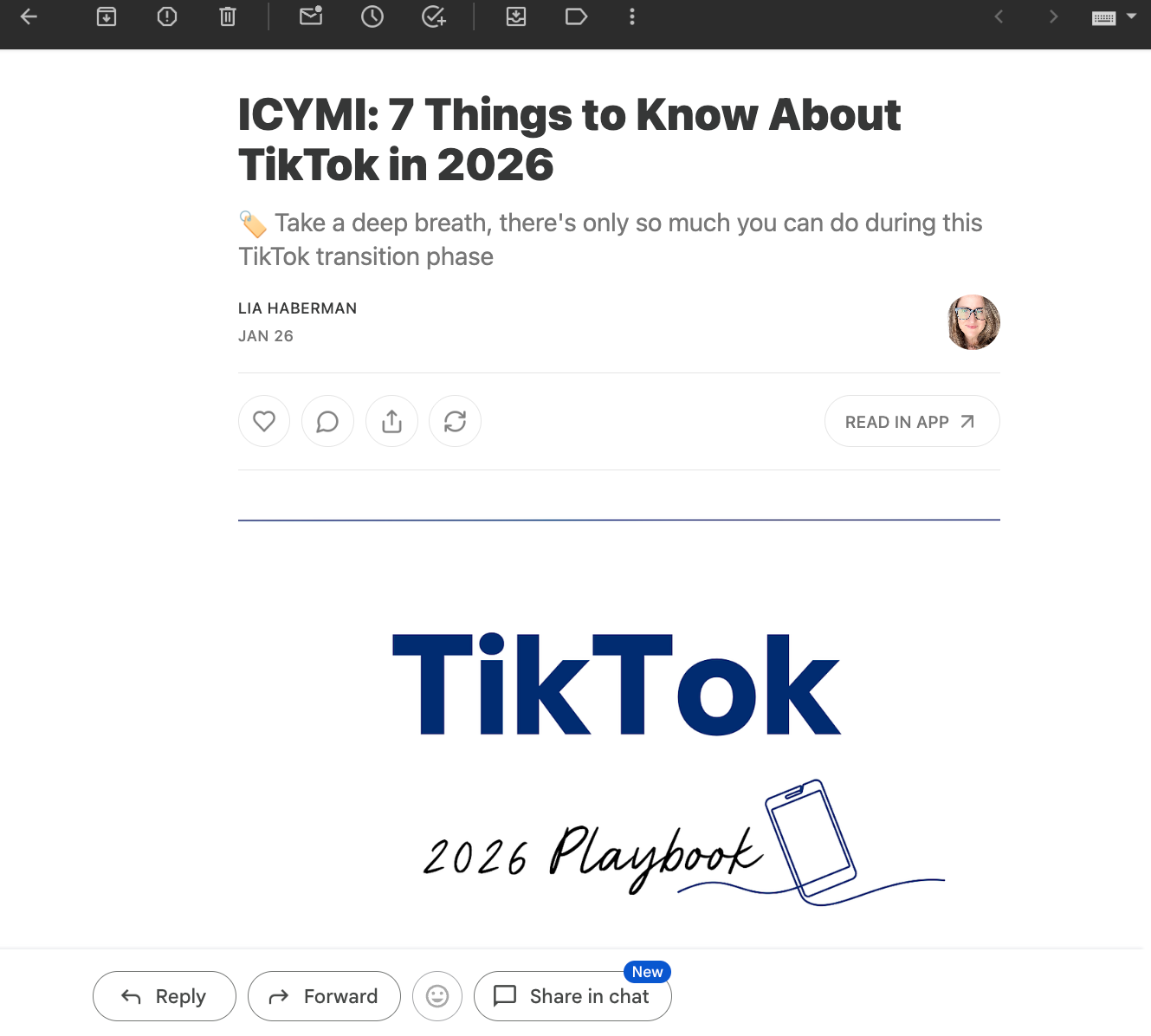
4. ICYMI (Lia Haberman)
If you only have time for one news-focused newsletter, this is it. Haberman manages the impossible task of summarizing the creator economy’s chaotic weekly news cycle while providing the necessary context that most roundups lack. Her background as a consultant and educator allows her to connect the dots between a platform update and a broader industry shift.
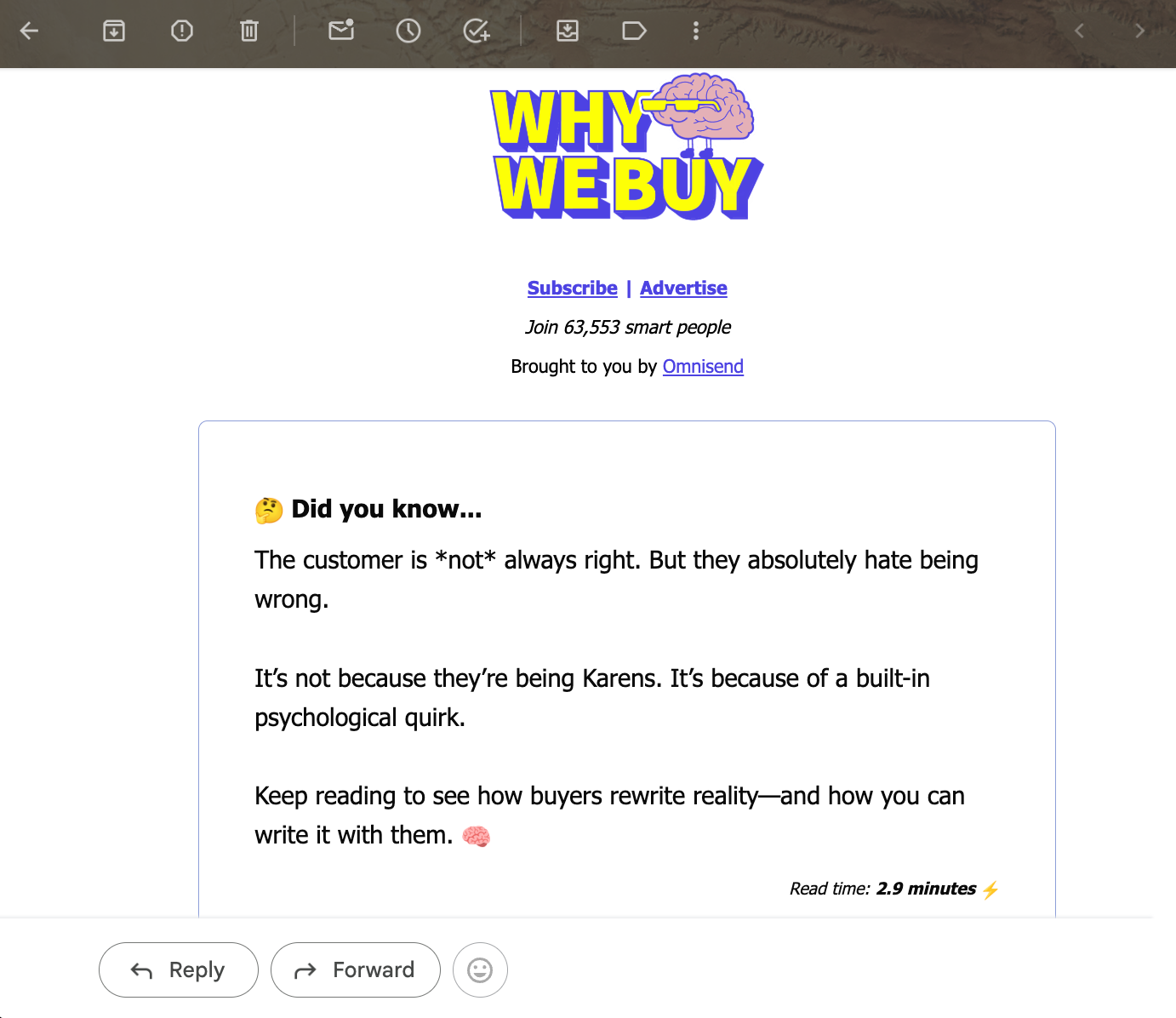
5. Why We Buy (Katelyn Bourgoin)
Marketing is, at its core, applied psychology. Bourgoin’s Why We Buy dissects the cognitive biases and behavioral triggers that drive consumer decision-making. By making complex behavioral science feel like a practical, everyday toolkit, this newsletter helps marketers solve the most persistent problem: why, despite great content, the audience isn’t converting.
6. Party Friend (Xanthe Appleyard)
While strategy is vital, creativity requires fuel. Party Friend serves as a vital reminder that the internet should remain a space for joy and experimentation. Appleyard’s work on digital culture and niche expansion provides a much-needed creative reset, ensuring that your content strategy doesn’t become purely clinical.
7. The Weekly Scroll (Buffer)
Curated by practitioners, The Weekly Scroll represents an editorial approach to news. By moving beyond a simple link dump, the newsletter treats curation as a way to bridge the gap between platform updates and the actual execution of social media strategy.
Strategic Categorization: The 23-Newsletter Landscape
To manage your information intake, it is effective to categorize these resources by their primary function. This ensures that when you enter your inbox, you are seeking the specific type of intelligence your current project requires.
| Newsletter | Best For | Tier |
|---|---|---|
| Link in Bio | Social media practitioner deep dives | Essential |
| Considered Chaos | Culture and brand strategy | Essential |
| Creator Science | Creator business frameworks | Essential |
| ICYMI | Creator economy and platform news | Essential |
| Why We Buy | Marketing psychology and behavior | Essential |
| Party Friend | Digital culture and creative inspiration | Essential |
| The Weekly Scroll | Curated social media commentary | Essential |
| Marketing Brew | Daily marketing and advertising news | News |
| Geekout | Weekly platform update digest | News |
| Lindsey Gamble | Influencer marketing analysis | News |
| The Publish Press | Creator economy business deep dives | Strategy |
| MKT1 | B2B marketing frameworks | Strategy |
| Passionfruit | Creator economy journalism | Strategy |
| Creator Economy NYC | Creator business models | Strategy |
| Creator Spotlight | Long-form creator profiles | Strategy |
| Communiqué | African media and creative economy | Strategy |
| Future Social | Brand social media campaign analysis | Skills |
| Creator Wizard | Brand partnerships and sponsorships | Skills |
| The Social Social Club | Behind-the-curtain social team stories | Skills |
| Creator Tea Talk | Creator economy pay and rates | Skills |
| Content to Commas | Creator monetization playbooks | Skills |
| Post-Culture | Brand and culture intersection | Inspiration |
| People Brands and Things | Cultural brand campaigns | Inspiration |
Supporting Data: The Efficiency of Curation
The shift from passive consumption to active curation yields measurable improvements in output. Data suggests that professionals who utilize a filtered, intentional information stream—what we might call a "Personal Knowledge Management" (PKM) system—report higher levels of creative output and lower instances of burnout.
By limiting the input to a set number of high-quality sources, you reduce the "paradox of choice," allowing for deeper synthesis. The strategy here is simple: if a newsletter does not trigger a thought, a note, or a change in behavior, it is effectively dead weight.
Implications for Future Workflows
As the creator economy evolves, the role of these newsletters is shifting from simple information distribution to community building. We are beginning to see a trend toward newsletters adopting "community-first" features—such as Substack’s comment sections and reply threads—that turn a broadcast into a conversation.
The implication for the modern marketer is clear: the passive reader is becoming a participant. This shift necessitates a new set of skills: the ability to engage in nuanced discussion and the discipline to filter out the noise of an increasingly loud digital ecosystem.
Building Your Own Practice
Your content rotation is not a collection to be curated; it is a practice to be maintained. Here are three governing principles for managing your information diet:
- The Rule of Three: Do not add more than three new newsletters at a time. Read them for a month to determine if they truly fill a gap in your knowledge.
- The Three-Strike Rule: If you haven’t opened a newsletter in three consecutive sends, unsubscribe immediately. The inbox is a finite resource; the best newsletters will always earn their spot back.
- The Output Test: Ask yourself, "Did this information inform a post, a conversation, or a strategic decision?" If the answer is consistently "no," the source is not providing value to your professional life.
Ultimately, your rotation should be a reflection of your evolving goals. It is a living system that requires periodic pruning. By treating your inbox as an extension of your professional toolkit rather than a list of tasks, you move from being a consumer of content to an architect of strategy.

 Nana Wu
 Azzam Bilal Chamdy
 Raul Delapena Setiawan
 Reynand Wu



 Ali Ikhwan