
 Pevita Pearce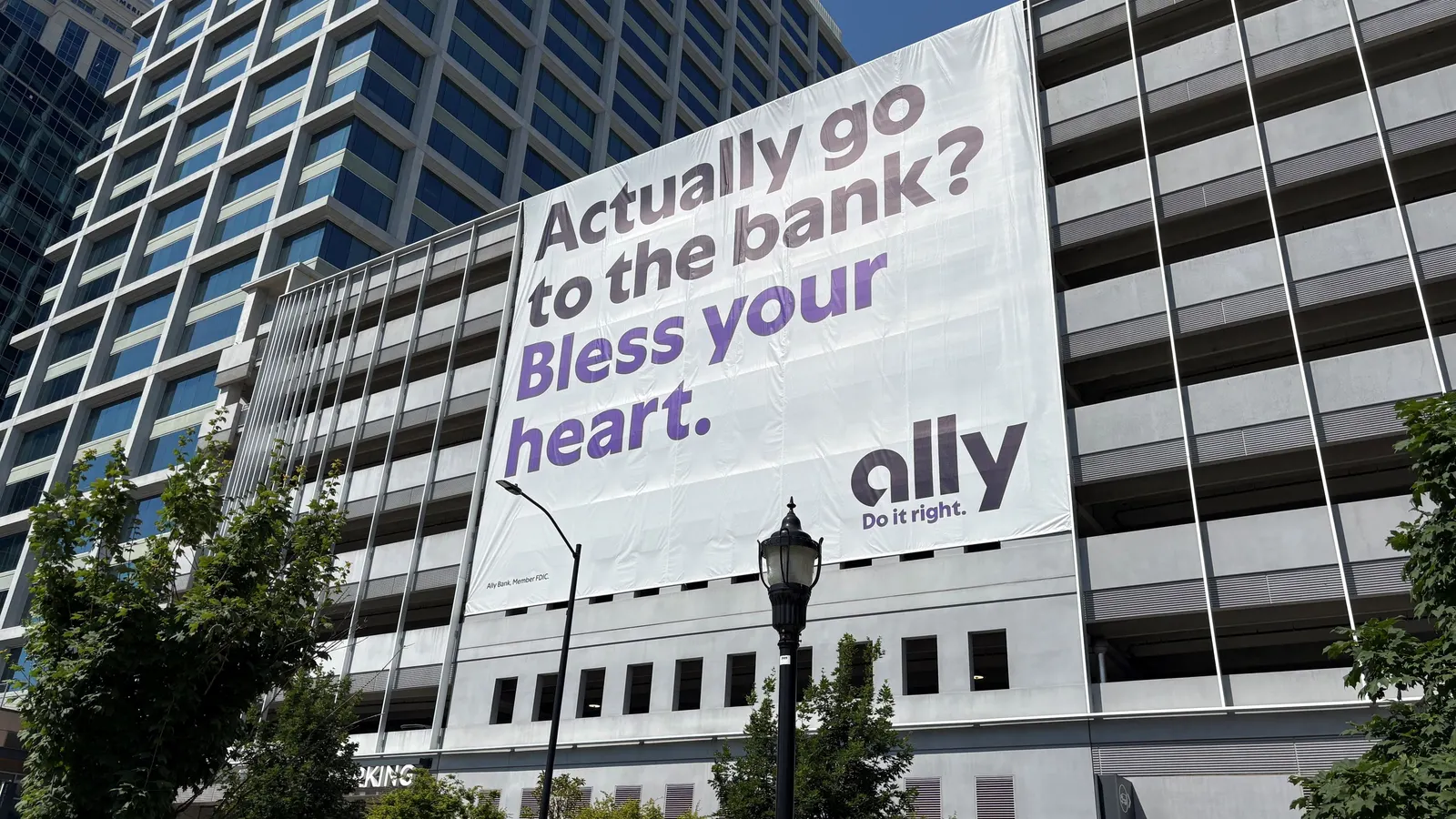
In a bold move to solidify its position as a leader in the digital-first financial landscape, Ally Financial has launched an aggressive new marketing campaign titled "Life Today." The campaign, designed in collaboration with the creative agency Anomaly LA, seeks to capture the attention of digital-native generations—specifically Gen Z and millennials—by directly challenging the necessity of the traditional brick-and-mortar branch. With provocative slogans appearing on high-profile billboards in major cities, Ally is signaling a definitive departure from the status quo of retail banking.
The Strategy: "Life Today" and the Death of the Traditional Branch
The campaign’s messaging is intentionally combative, targeting the physical infrastructure that legacy banks continue to invest in. In Charlotte, North Carolina, a city long considered a bastion of traditional banking, a massive billboard on the side of Ally’s parking garage reads: "Actually go to the bank? Bless your heart." The use of the quintessential Southern phrase is a calculated jab, positioning the act of visiting a physical branch as an antiquated, if not slightly pitiable, endeavor.
In New York City, the messaging is equally pointed. One advertisement reads, "Cool branch, bro. No branches means more money for you," while another quips, "Laughing all the way to the bank (which is on your phone) so it’s a pretty short laugh. Ha."
Bridget Sponsky, executive director of brand, sponsorship, and creative marketing at Ally, frames these advertisements as a necessary tactic in an increasingly crowded financial services market. According to Sponsky, the goal is to be "unmistakable" and "distinctive" to a demographic that views their financial life as non-linear and inherently messy.
Chronology of the Shift
Ally’s pivot toward a younger, digitally-integrated demographic has been a multi-year evolution rather than an overnight decision.
- Foundation: As a $197.3 billion-asset bank, Ally established itself as a pioneer in the digital banking space, eschewing physical branches to lower overhead costs and pass those savings to consumers through better interest rates.
- Strategic Research: Over the past 24 months, Ally conducted extensive consumer research, identifying that while trust, value, and convenience remain universal priorities, the younger cohorts—Gen Z and millennials—are significantly more inclined to switch primary banking relationships to digital-only providers.
- The Launch: On Thursday, Ally officially unveiled the "Life Today" platform, which represents a comprehensive brand refresh. The campaign aims to transition the brand’s identity from a mere utility to a "true financial ally" that accompanies customers through the complexities of their daily lives.
- Recent Momentum: The campaign follows a strong financial start to the year, with Ally reporting in its first-quarter earnings that retail deposits rose by $63 million year-over-year to $146 billion. The bank successfully added 74,000 net new deposit customers during that period, reaching a total of 3.5 million.
Supporting Data: Who Is Banking Today?
The data supports Ally’s aggressive pursuit of the under-40 demographic. According to JD Power, the shift toward digital-first institutions is accelerating. In the last three months, 43% of all new checking accounts were opened by millennials, with Gen Z accounting for another 31%. Savings accounts follow a similar trend, with 37% of new accounts attributed to millennials and 32% to Gen Z. Crucially, more than half of these new accounts are being opened at either large national banks or neobanks, highlighting the decline of community-based or localized branch banking.
Ally’s internal metrics confirm this trend. While the bank declined to release the exact percentage of its customer base belonging to younger generations, its first-quarter report explicitly stated that "millennials and younger customers continue to comprise the largest generation segment of new customers."
Official Responses and Industry Friction
The aggressive nature of the campaign has not gone unnoticed by the traditional banking sector. In Charlotte, where Ally’s "Bless your heart" billboard looms, the reaction has been mixed. Jimmie Lawrence Jr., an employee at Regions Bank—a competitor with a physical presence down the street—took to LinkedIn to criticize the campaign. He argued that such messaging can "come across as dismissive toward people who still value walking into a branch and speaking with a banker face-to-face."
Sponsky, however, remains unmoved by the criticism, maintaining that the absence of a physical building does not equate to an absence of service. "Just because we don’t have a branch doesn’t mean that we aren’t providing that one-to-one, thoughtful and intentional customer service," she stated in a recent interview. She contends that a banking partner is defined by the quality of the support and the efficacy of the digital tools, not the square footage of an office.
Implications for the Future of Banking
The implications of Ally’s strategy extend far beyond simple advertising. It marks a clear line in the sand for the banking industry: the battle for the "primary bank" status is now being fought almost exclusively in the digital arena.
1. The Power of "Sticky" Digital Features
Ally intends to leverage its existing digital ecosystem to retain these new customers. This includes features like "buckets" for savings goals and "round-up" programs for spending, which cater to the behavioral finance needs of younger users. By gamifying the savings process, Ally aims to keep users engaged within its ecosystem, effectively increasing the "stickiness" of the account.
2. The Role of Influencer Marketing
A core component of the "Life Today" strategy involves a massive investment in trust-building through influencers. Notably, Ally has prioritized female athletes, viewing them as credible role models who resonate with the bank’s core values. This follows Ally’s milestone of achieving an equal 50-50 split in advertising spend between women’s and men’s sports media. By associating the brand with high-achieving, trustworthy figures, Ally hopes to bridge the "trust gap" that often persists between consumers and digital-only banks.
3. Increased Competition for "Eyeballs"
The financial services landscape is arguably more competitive than at any point in history. With fintech startups, neobanks, and traditional institutions all vying for the same digital-native customers, the cost of customer acquisition is rising. Sponsky acknowledged that the sector is becoming "extremely crowded," necessitating a more creative and, at times, confrontational approach to marketing.
4. A Meaningful Investment
While Ally declined to disclose the specific financial outlay for the brand refresh, a spokesperson emphasized that it represents a "meaningful investment" central to the bank’s future. The scalability of the campaign suggests that Ally is not just looking for a short-term bump in account openings but is attempting to rebrand its entire institutional identity to ensure long-term viability in a mobile-first world.
Conclusion
Ally’s "Life Today" campaign is more than just a series of clever billboards; it is a declaration of war on the traditional retail banking model. By openly mocking the concept of the physical branch, Ally is forcing a conversation about the necessity of legacy infrastructure in an era where the average consumer interacts with their finances entirely through a smartphone.
Whether this confrontational approach will alienate older, more traditional customers remains to be seen. However, if the current data regarding Gen Z and millennial banking preferences holds true, Ally’s strategy of leaning into its digital-only identity may prove to be a masterstroke, securing the bank’s relevance for the next generation of financial consumers. As the lines between tech companies and financial institutions continue to blur, Ally’s willingness to be "unmistakable" suggests they are ready to lead the charge into a purely digital financial future.


 Reynand Wu
 Iffa Jayyana
 Raul Delapena Setiawan

 Sagoh
Sagoh
 Azzam Bilal Chamdy
 Ali Ikhwan