
 Sagoh
Sagoh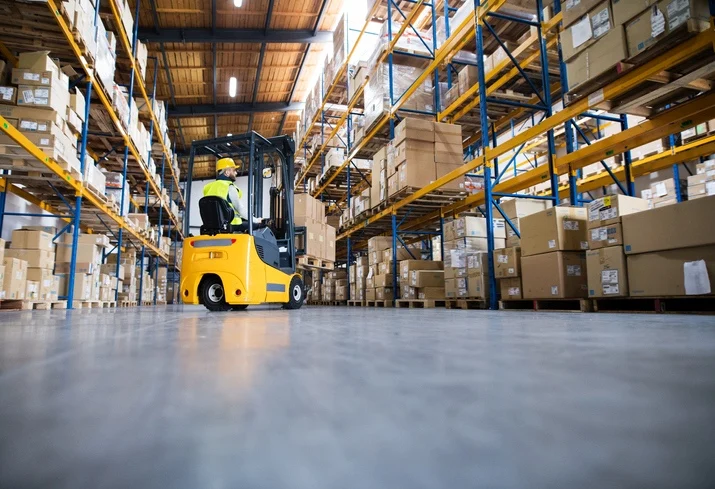
In a strategic maneuver that underscores the shifting landscape of British retail, Marks and Spencer (M&S) has announced the acquisition of a state-of-the-art distribution center from the online fashion giant Asos. The transaction, valued at approximately £67.5 million (€77.5 million), serves as a pivotal cornerstone in M&S’s ongoing digital transformation strategy. By absorbing this high-tech facility into its logistics network, the retail veteran aims to accelerate its online growth, specifically targeting a significant expansion of its non-food retail footprint across the United Kingdom.
For Asos, the deal represents a pragmatic retreat from the aggressive physical expansion that once characterized its rapid ascent to the e-commerce stratosphere. Facing mounting financial pressures, declining demand, and a strategic pivot toward profitability over raw growth, the fashion platform is shedding assets to strengthen its balance sheet.
The Core Facts: A Strategic Exchange
The acquisition involves a fully automated warehouse spanning roughly 40,600 square meters (437,000 square feet). Located in a prime logistical position, the facility is designed to handle high volumes of stock with precision, a capability that M&S intends to leverage to enhance product availability and customer service standards.
Under the terms of the agreement, M&S will integrate the facility into its national operations over the next three years, with a target date for full functionality set for 2027. The move is expected to be a significant engine for local employment, with the company projecting the creation of approximately 600 new jobs upon full operational capacity. Financially, the deal is comfortably within M&S’s means; the company currently sits on a healthy net cash balance of approximately £200 million, allowing it to fund this capital expenditure without compromising its financial stability.
Chronology: From E-commerce Darling to Warehouse Divestment
To understand the weight of this transaction, one must examine the divergent trajectories of the two retailers over the past decade.
The Rise of Asos
For years, Asos was the undisputed champion of the digital fashion era. It commanded a spot in the UK’s top 10 online stores, defined by its rapid trend-cycling and aggressive investment in logistics. At the height of its expansion, the company invested heavily in massive, automated fulfillment centers to keep pace with an insatiable appetite for fast fashion.
The Post-Pandemic Correction
The post-pandemic era, however, brought a harsh reality check. Rising inflation, a cost-of-living crisis, and a shift in consumer behavior toward more value-conscious spending led to a sustained slump in demand for Asos. By 2023 and 2024, the company was forced to reckon with declining financial results and a bloated operational structure. Restructuring became the priority. This included shrinking its warehouse footprint—an effort that culminates in the sale of this facility to M&S.
The M&S Renaissance
Conversely, Marks and Spencer has been in the midst of a multi-year turnaround. Under the leadership of CEO Stuart Machin, the company has pivoted away from its reputation as a legacy brand to a modern, digitally integrated retailer. By focusing on its "non-food" category—encompassing clothing, beauty, and home goods—M&S has seen its online sales grow steadily. The acquisition of the Asos warehouse is not merely a purchase of real estate; it is an acquisition of velocity, providing the infrastructure needed to meet the company’s ambitious goal of doubling its non-food online market share.
Supporting Data: Why This Warehouse Matters
The technical specifications of the facility are vital to M&S’s growth. The 40,600-square-meter site is not just empty floor space; it is a sophisticated piece of logistics infrastructure.
- Automation Efficiency: The facility is fully automated, utilizing advanced robotics and conveyor systems that allow for high-speed picking, packing, and sorting. In an era where "next-day" delivery is the minimum consumer expectation, such automation is non-negotiable.
- Capacity Expansion: M&S has long struggled with the physical limitations of its legacy warehouse network. By integrating this site, the company effectively offloads pressure from its existing distribution hubs, allowing for a wider range of stock availability and faster turnaround times.
- Financial Impact: For Asos, the £67.5 million injection is a vital lifeline. The company’s net debt has been a point of concern for investors. By divesting from an asset that was likely underutilized given its current output, Asos effectively lowers its interest-bearing liabilities. Following the announcement, the market responded favorably, with Asos stock seeing a measurable uptick as investors expressed confidence in the company’s "right-sizing" strategy.
Official Perspectives and Industry Implications
The response to the deal has been largely positive among retail analysts, who view the move as a textbook example of "synergistic divestment."
"The integration of the new warehouse into Marks and Spencer’s logistics network will create around 600 jobs," an M&S spokesperson noted, emphasizing that the investment is part of a broader commitment to long-term scalability. The company views the warehouse as a critical link in its supply chain, one that will minimize delivery delays and enhance the customer experience—a key pillar of its "M&S 2.0" strategy.
From the Asos perspective, the sale is a necessary sacrifice. In recent investor briefings, Asos leadership has been clear: the company is moving away from the "growth at all costs" model of the 2010s. By reducing its net debt, Asos is positioning itself to survive a volatile retail environment. The market’s positive reaction—a rise in share price—signals that shareholders prefer a leaner, more resilient Asos over one that is over-leveraged and burdened by excessive physical assets.
The Broader Retail Landscape: A Shift in Power
This transaction illustrates a wider shift in the UK retail ecosystem. The lines between "pure-play" online retailers (like the former Asos model) and "omnichannel" retailers (like M&S) are blurring.
Pure-play e-commerce companies, once thought to be the death knell for traditional high-street giants, are now discovering the immense capital cost of maintaining physical logistics infrastructure. Meanwhile, traditional retailers that successfully integrated digital platforms are proving to be more durable, benefiting from a hybrid model that combines the convenience of online shopping with the trust and brand heritage of a physical presence.
The Challenges Ahead
Despite the optimism, the road ahead is not without its hurdles. Integrating a fully automated facility into an existing, complex logistics network is a gargantuan task. M&S faces the challenge of software integration, personnel training, and the logistical nightmare of transitioning stock without interrupting service. The 2027 timeline reflects the complexity of this task; it is not a "plug and play" solution, but rather a long-term strategic evolution.
Furthermore, the retail sector remains highly sensitive to macroeconomic shifts. Should the UK’s economic recovery stall, both companies will face pressure. M&S will need to ensure that the increased capacity of its new warehouse is matched by consumer demand, while Asos must prove that its leaner operation can still capture market share against global competitors like Shein and Temu.
Conclusion: A Win-Win in a Volatile Market
The sale of the Asos warehouse to Marks and Spencer is more than just a real estate transaction; it is a symbol of the maturation of the UK’s e-commerce sector. For M&S, it is an investment in the future, a clear signal that they intend to dominate the digital space for years to come. For Asos, it is a necessary correction, an acknowledgment that the path to profitability requires a smaller, more focused footprint.
As M&S begins the multi-year process of integrating this state-of-the-art facility, the retail industry will be watching closely. The success of this transition could provide a blueprint for other legacy retailers looking to scale their digital operations, while the financial relief provided to Asos may offer a lifeline for other struggling digital-native brands. In a market defined by rapid change, this deal proves that the most successful companies are those willing to adapt, divest, and reinvest in the infrastructure that matters most: the ability to deliver, efficiently and at scale.
As we look toward 2027, the success of this warehouse will ultimately be measured not in square meters or pounds sterling, but in the speed and reliability with which M&S can serve its customers—a metric that, in the modern era, is the true currency of retail success.


 Reynand Wu
 Iffa Jayyana
 Raul Delapena Setiawan


 Azzam Bilal Chamdy
 Ali Ikhwan