
 Iffa Jayyana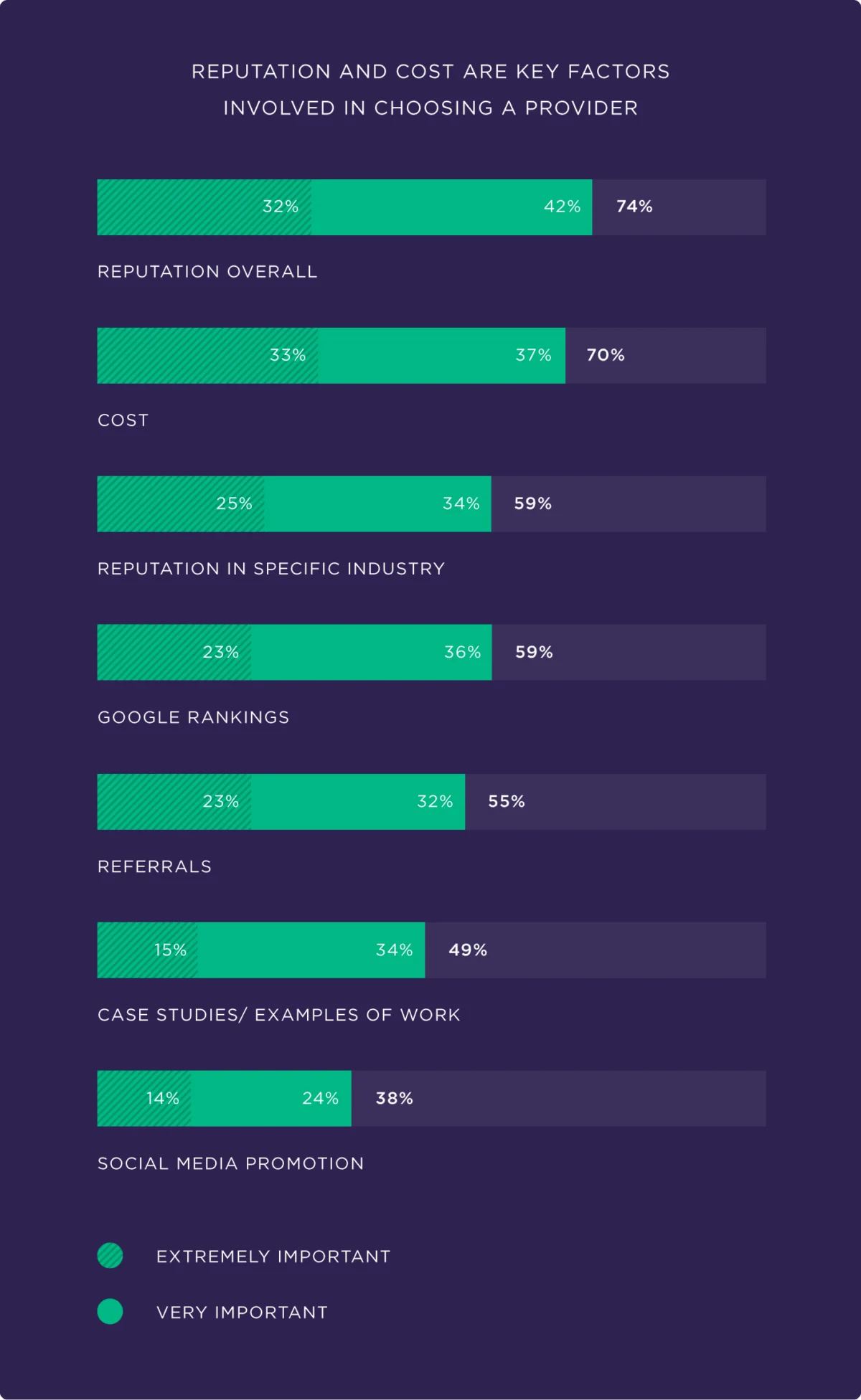
The landscape of search engine optimization (SEO) has undergone a seismic shift. Driven by the rapid integration of artificial intelligence into search results, evolving user behavior, and an increasingly crowded digital marketplace, the way businesses consume and perceive SEO services is in flux. To provide a comprehensive look at the current state of the industry, we have analyzed data from multiple sources, including an extensive survey of 1,200 small business owners, to understand exactly what drives the $119.4 billion US SEO and digital marketing consulting market.

Main Facts and Market Overview
The SEO industry is currently operating at an unprecedented scale, with US organizations pouring $119.4 billion annually into digital consulting. Despite this massive investment, the industry faces a significant perception crisis. Our data reveals a stark disconnect: while businesses view SEO as a vital growth lever, satisfaction levels remain alarmingly low.
Key findings from our research include:
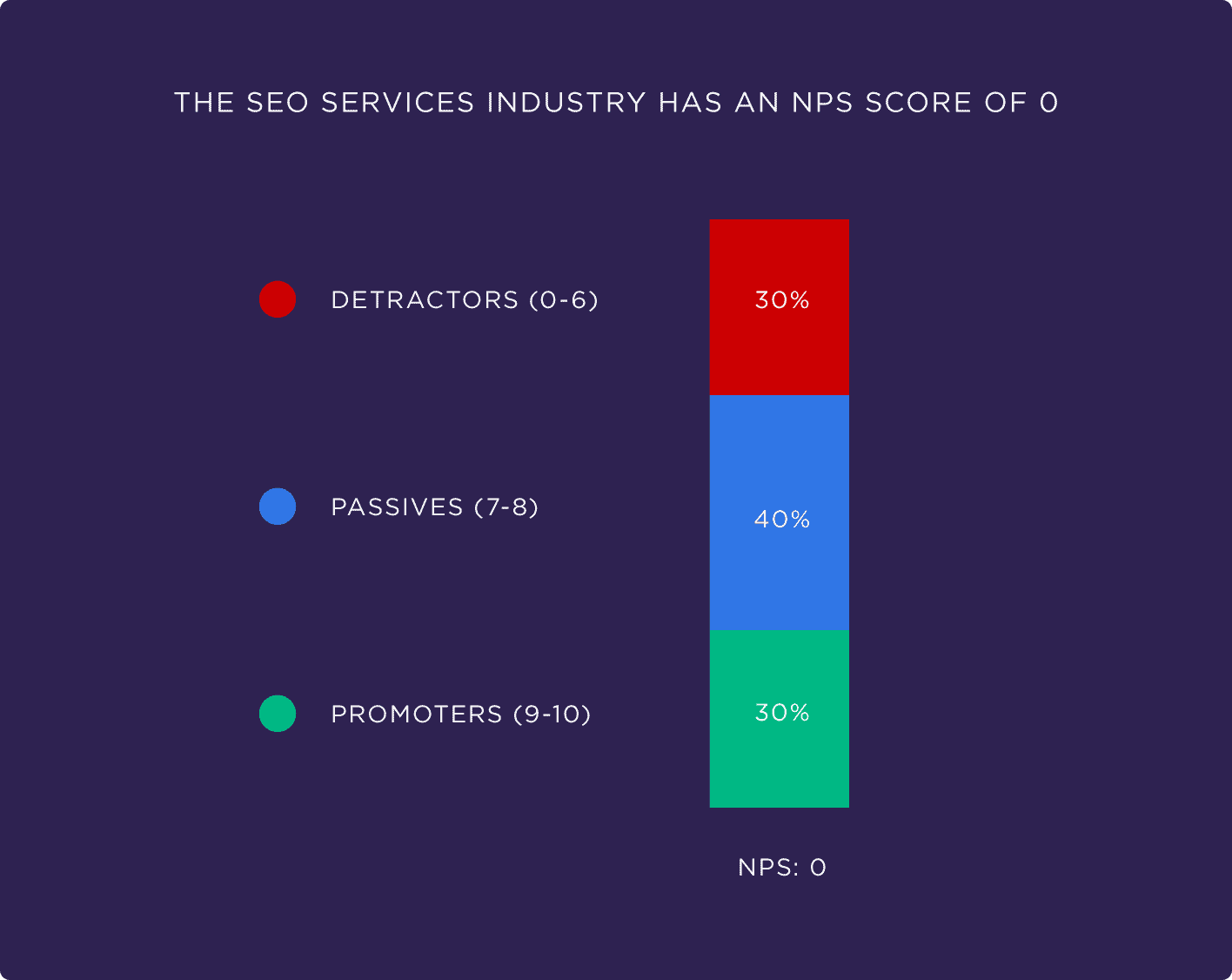
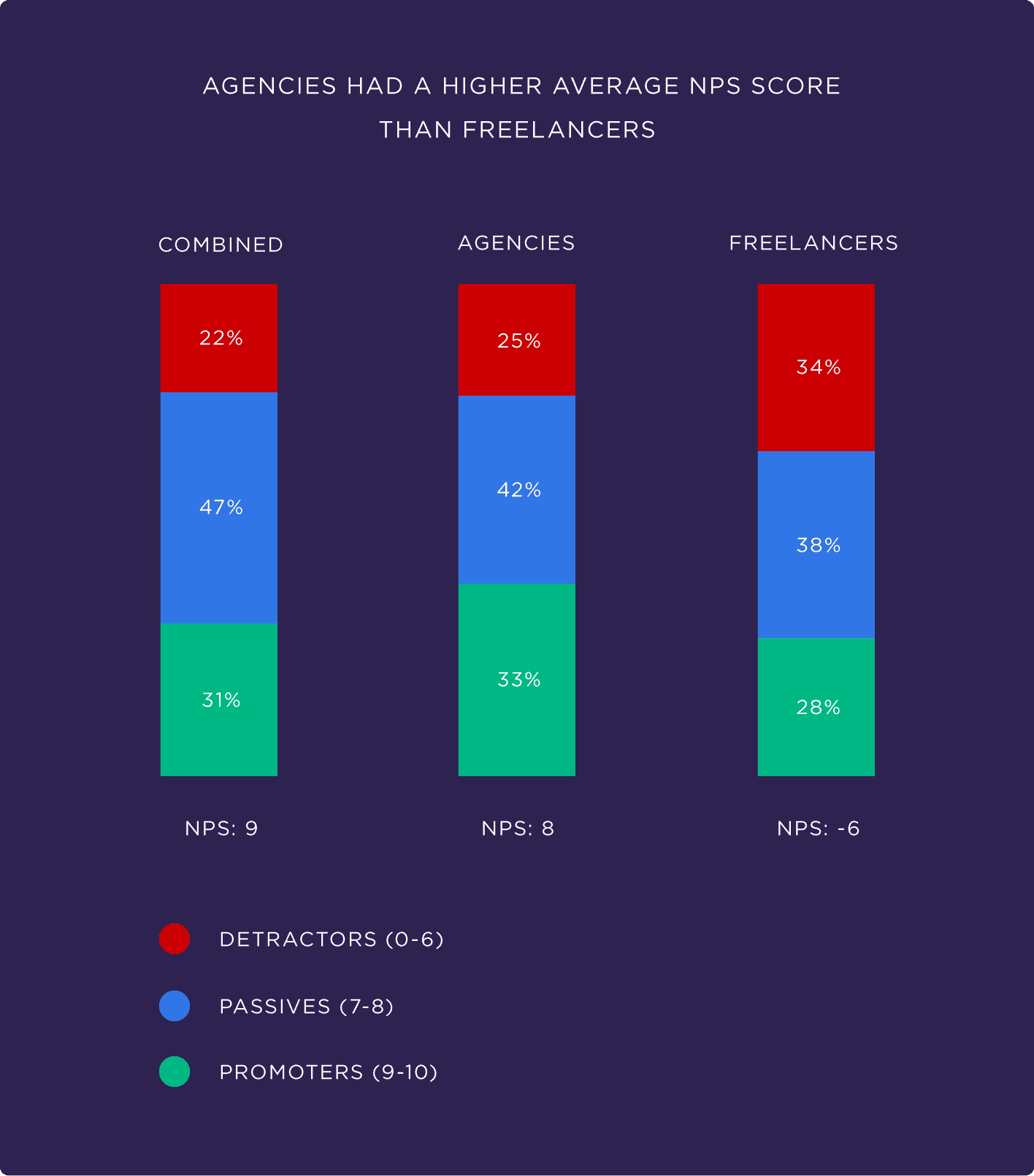
- The Satisfaction Gap: Only 30% of business owners would recommend their current SEO provider to a colleague.
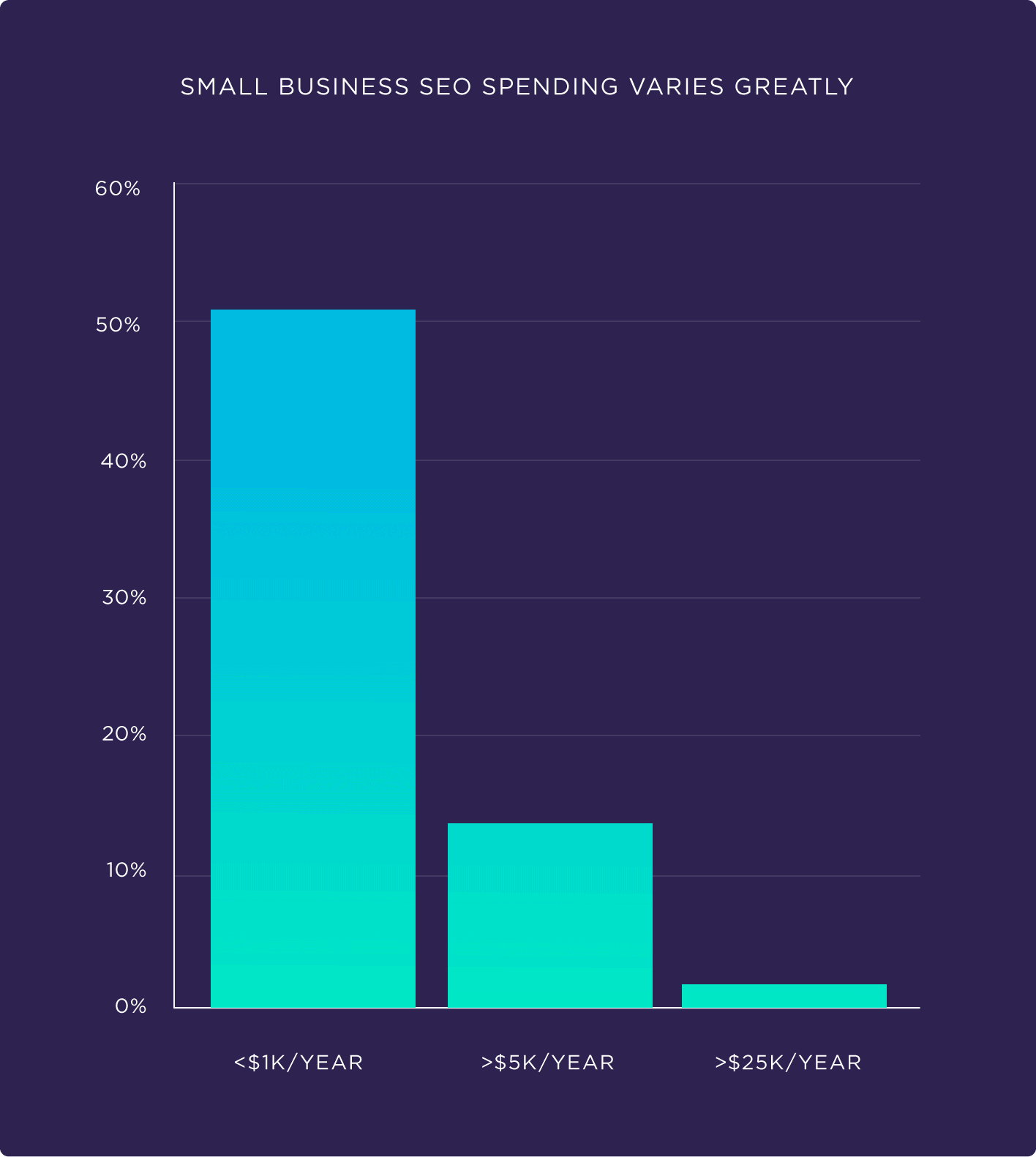
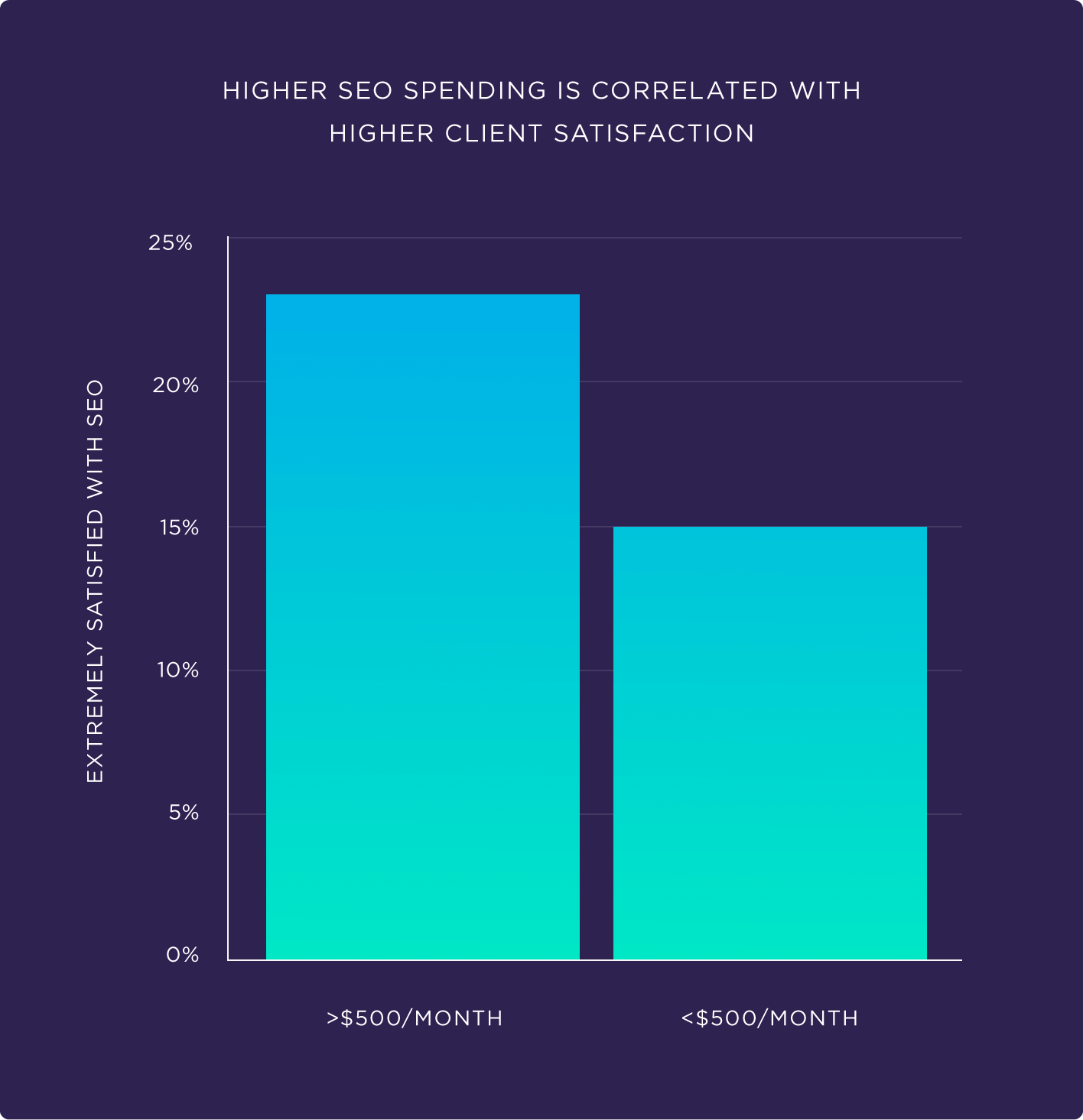
- The "Get What You Pay For" Reality: There is a clear correlation between spend and success; clients spending over $500/month are 53.3% more likely to report being "extremely satisfied" than those spending less.
- High Turnover: The industry suffers from a churn rate that would be unsustainable in many other sectors, with 65% of businesses having worked with multiple providers, and 25% having cycled through three or more.
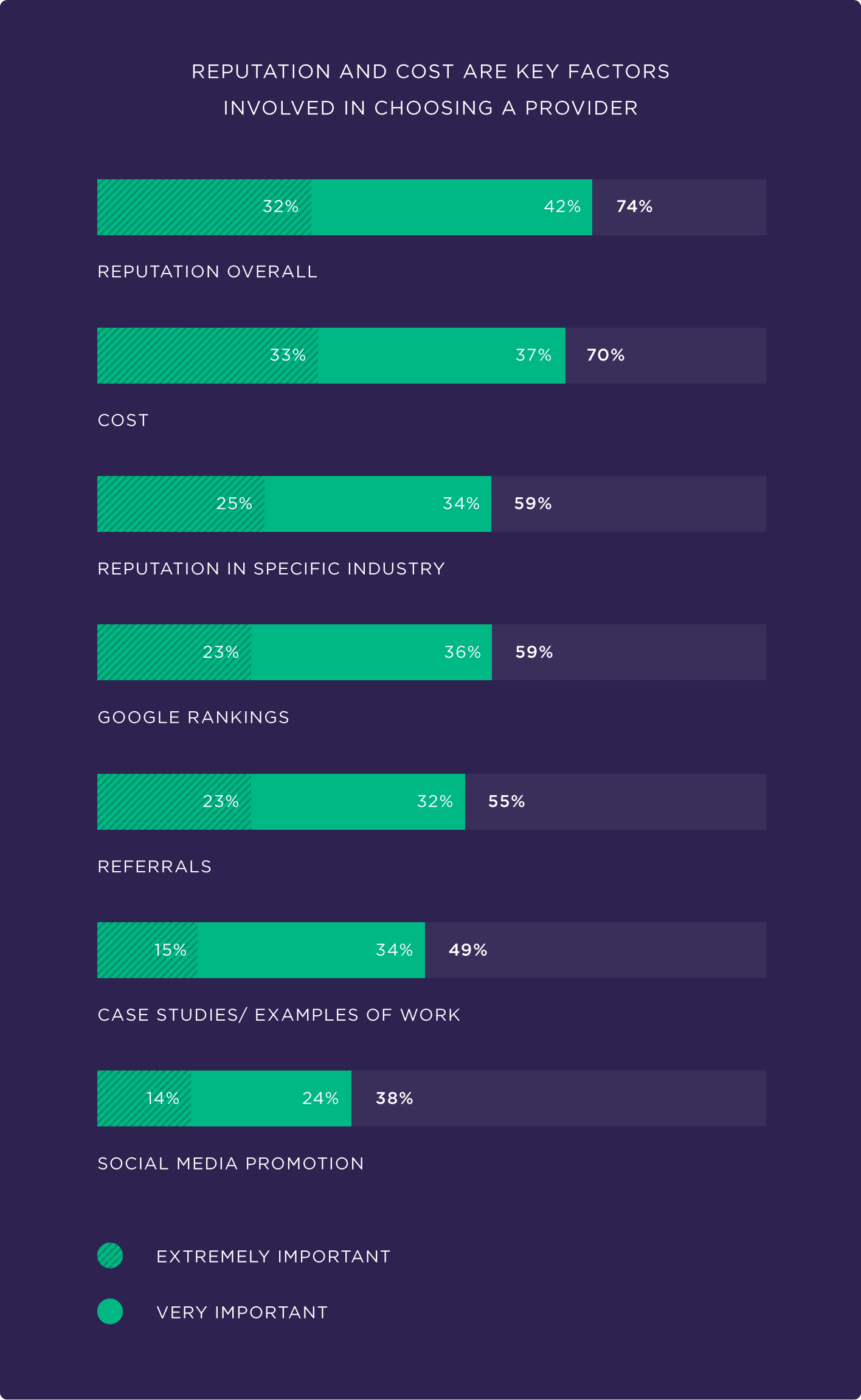
- The Power of Reputation: 74% of business owners rank a provider’s reputation as the most critical factor when selecting an agency.
Chronology of Industry Evolution
The evolution of SEO service delivery has shifted from simple link-building tactics to complex, data-driven consulting.
In the early years of the 2010s, SEO was often treated as a commodity service, with many providers focusing on "quick wins" and volume-based metrics. As search algorithms matured, the focus shifted toward high-quality content and user experience.
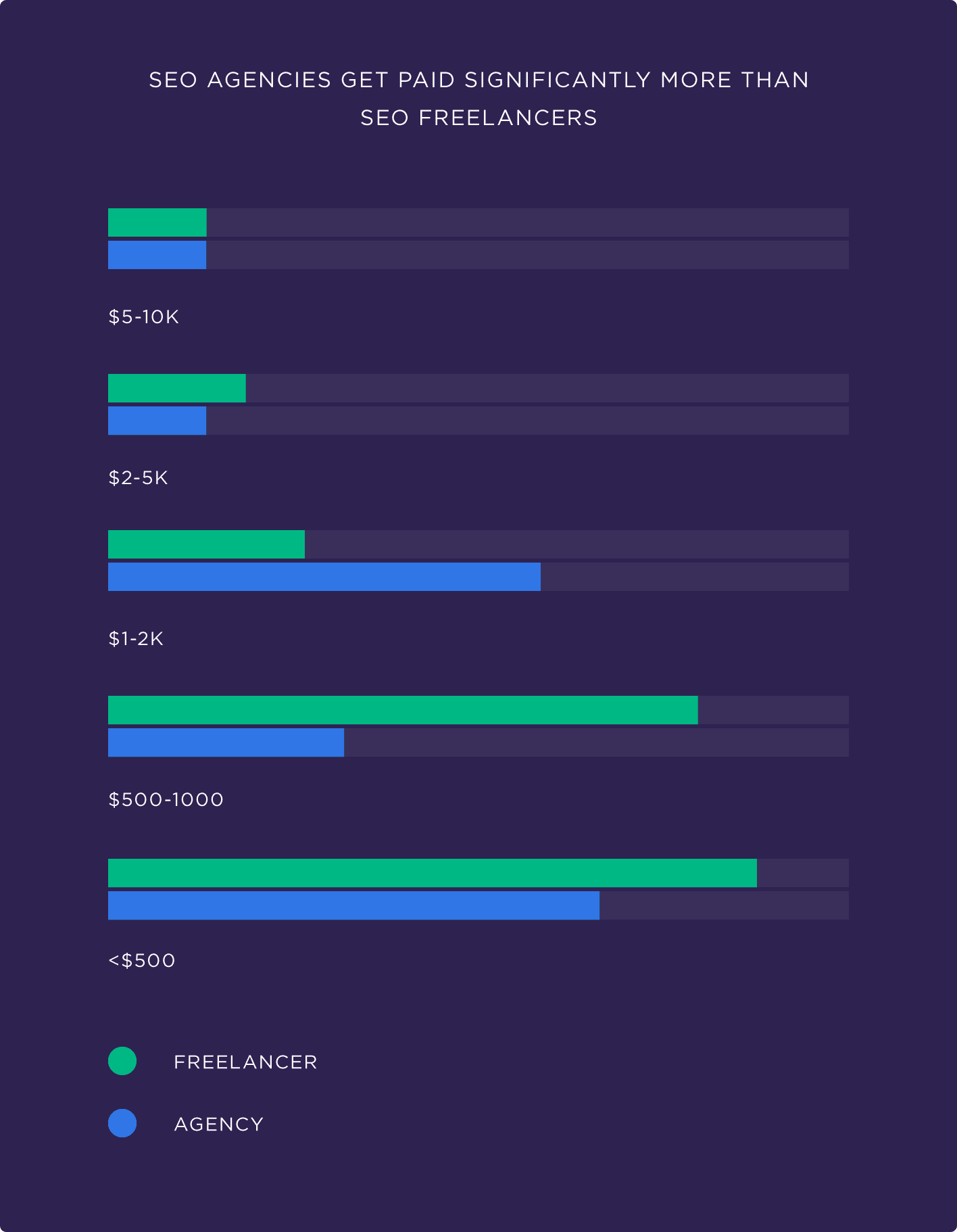
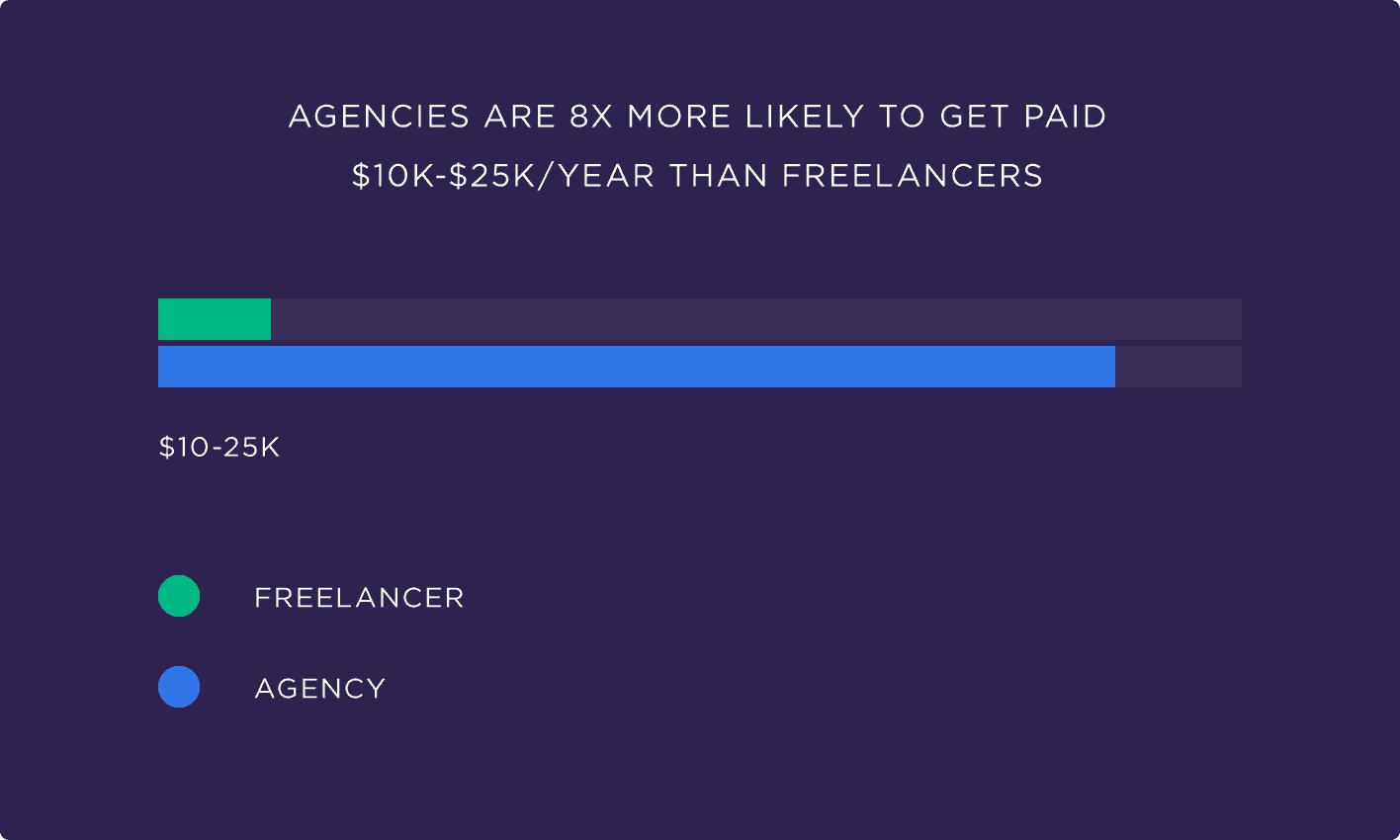
By 2019, our research indicated that while small businesses were averaging a monthly spend of approximately $497, the industry began to bifurcate. Agencies started to command higher fees by positioning themselves as full-service consultants, while freelancers largely remained in the lower-tier pricing brackets.
Entering 2025, we are witnessing the "AI Era." Search is no longer just about blue links; it is about intent, conversational AI, and Zero-Click searches. This shift has forced providers to pivot from traditional ranking metrics to conversion-based ROI. Our current data shows that 68% of businesses report a moderate to significant increase in ROI specifically due to the adoption of AI-driven SEO tools and strategies.
Supporting Data: Dissecting the Numbers
The Price-Satisfaction Correlation
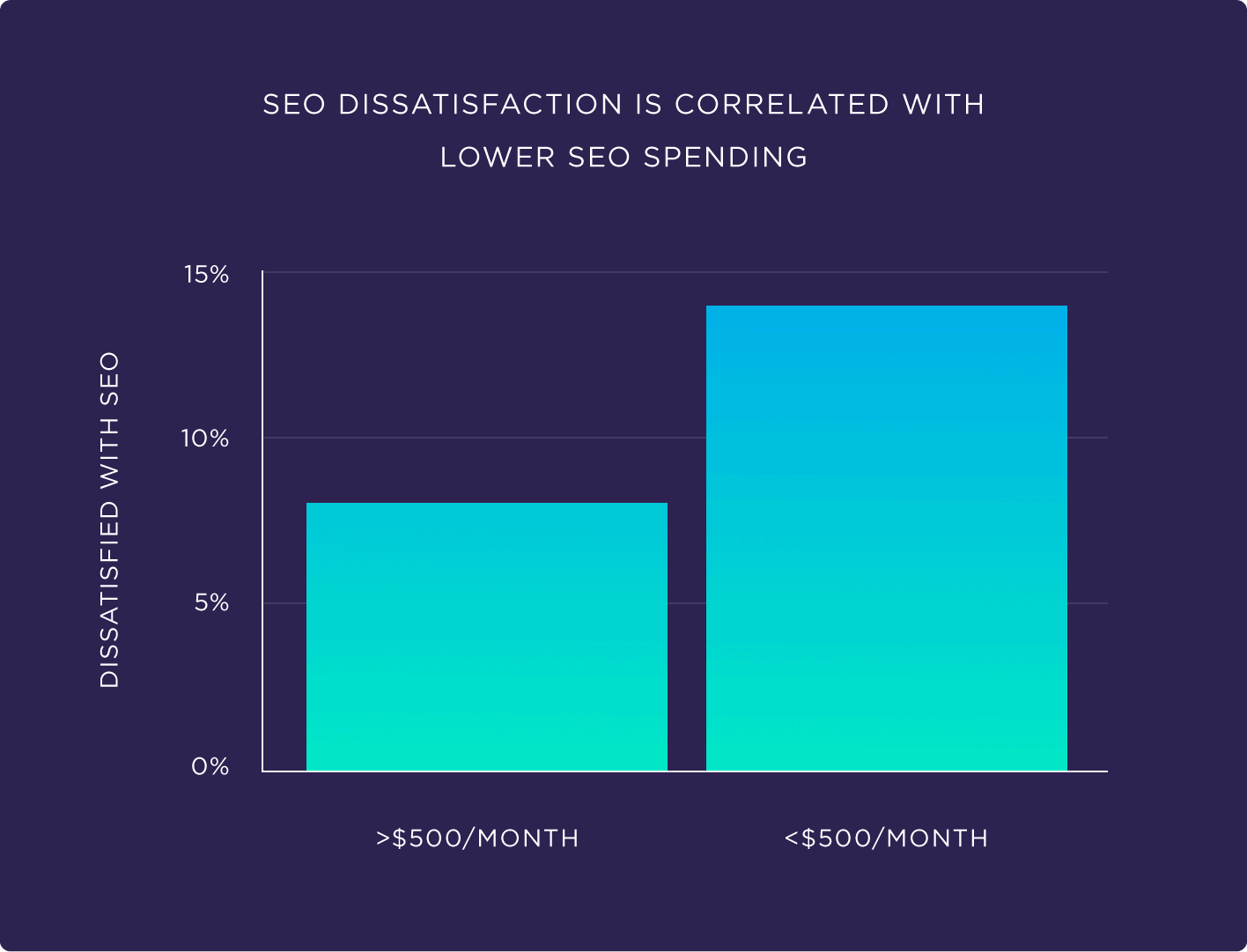
One of the most persistent myths in the industry is that all SEO services provide similar results regardless of price. Our data debunks this. Business owners who invest less than $500/month are 75% more likely to be dissatisfied with their service compared to those who invest in higher-tier packages. This suggests that the "bargain" SEO tier often lacks the resources required for meaningful, long-term impact.
How Clients Find Providers
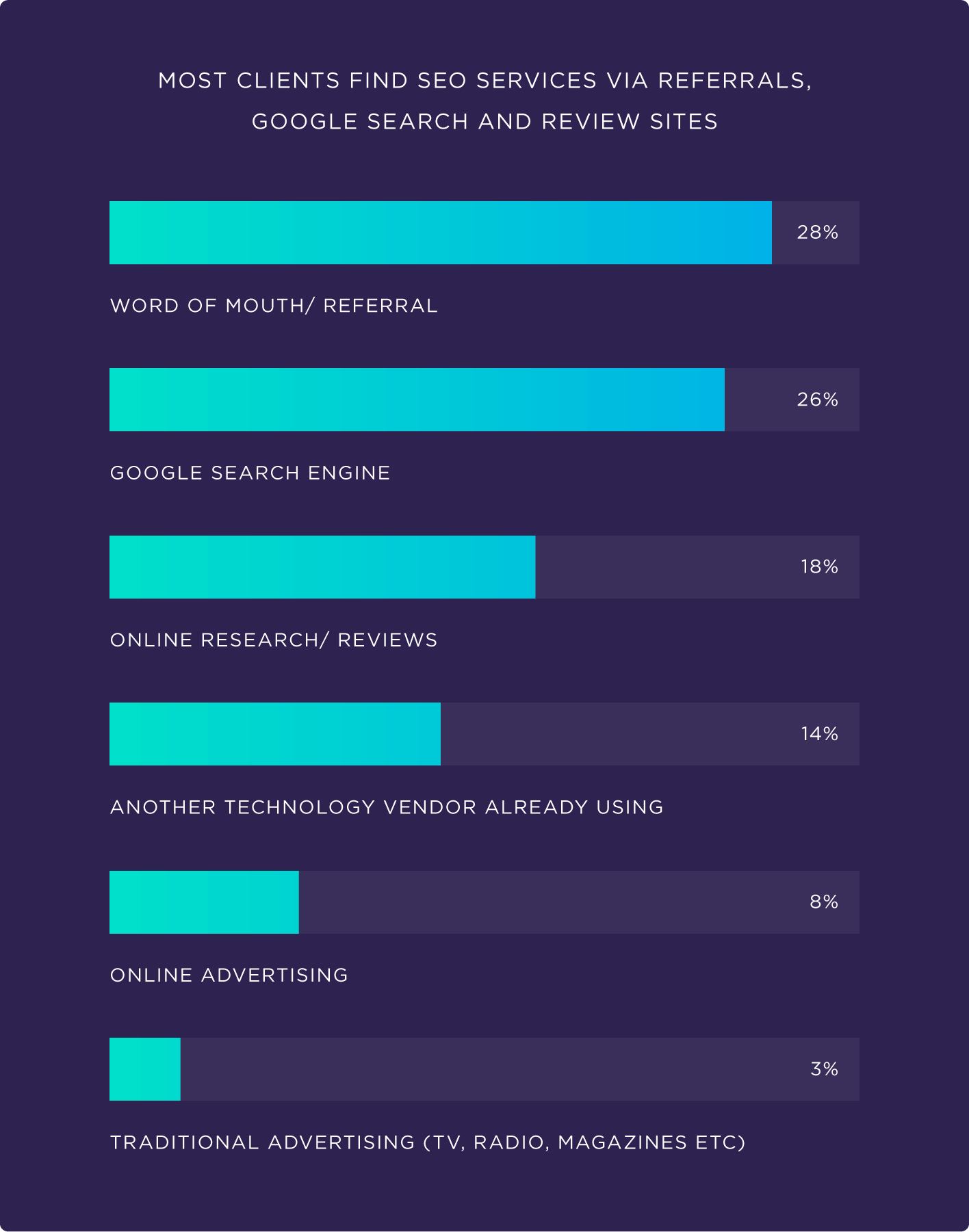
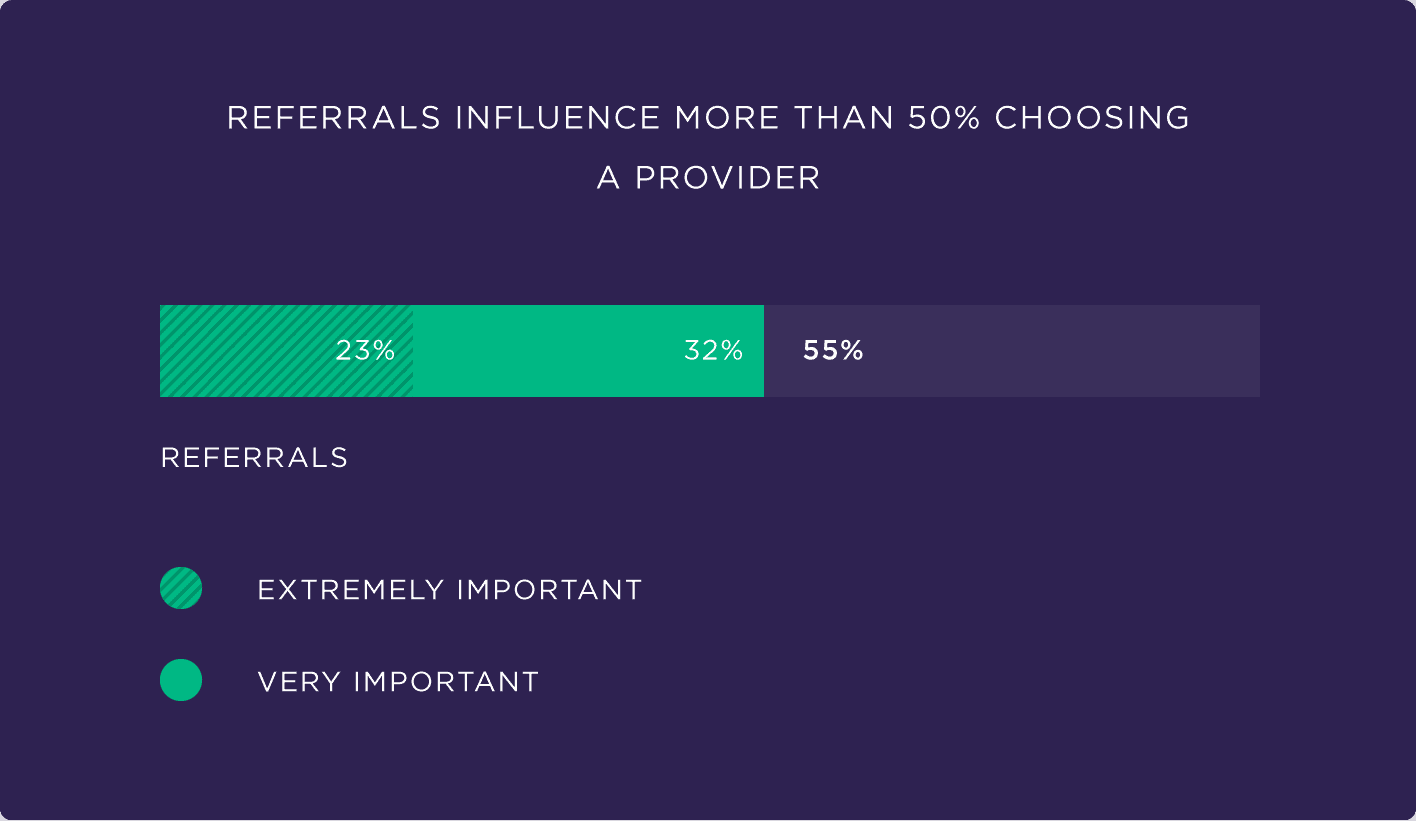
The "referral economy" still dominates. Most businesses find their providers through word-of-mouth, Google searches, and third-party review platforms. Only 8% of clients reported finding their current provider through active online advertising, indicating that for agencies, building a strong, visible reputation is more effective than traditional ad spend.
The Role of Location
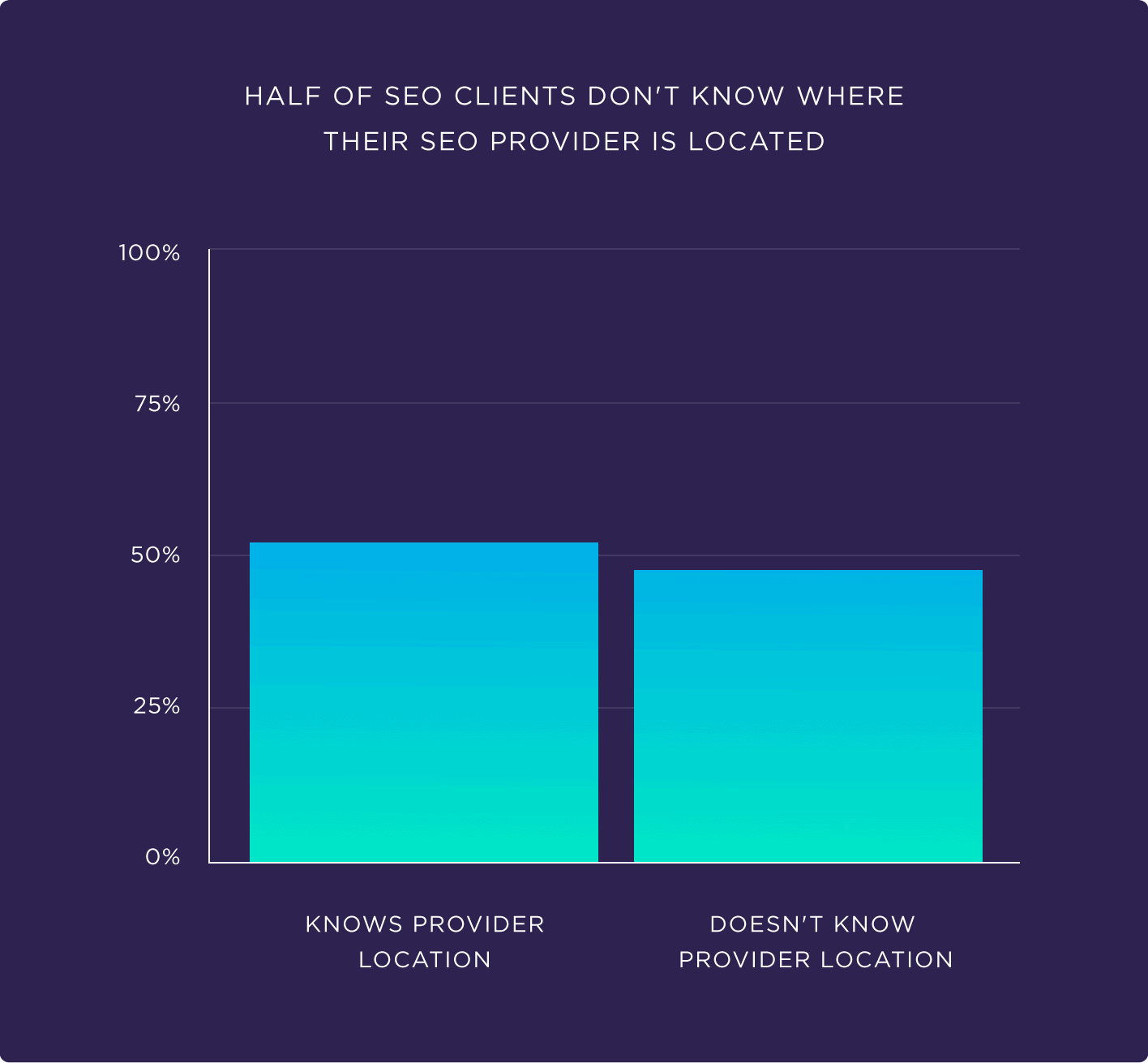
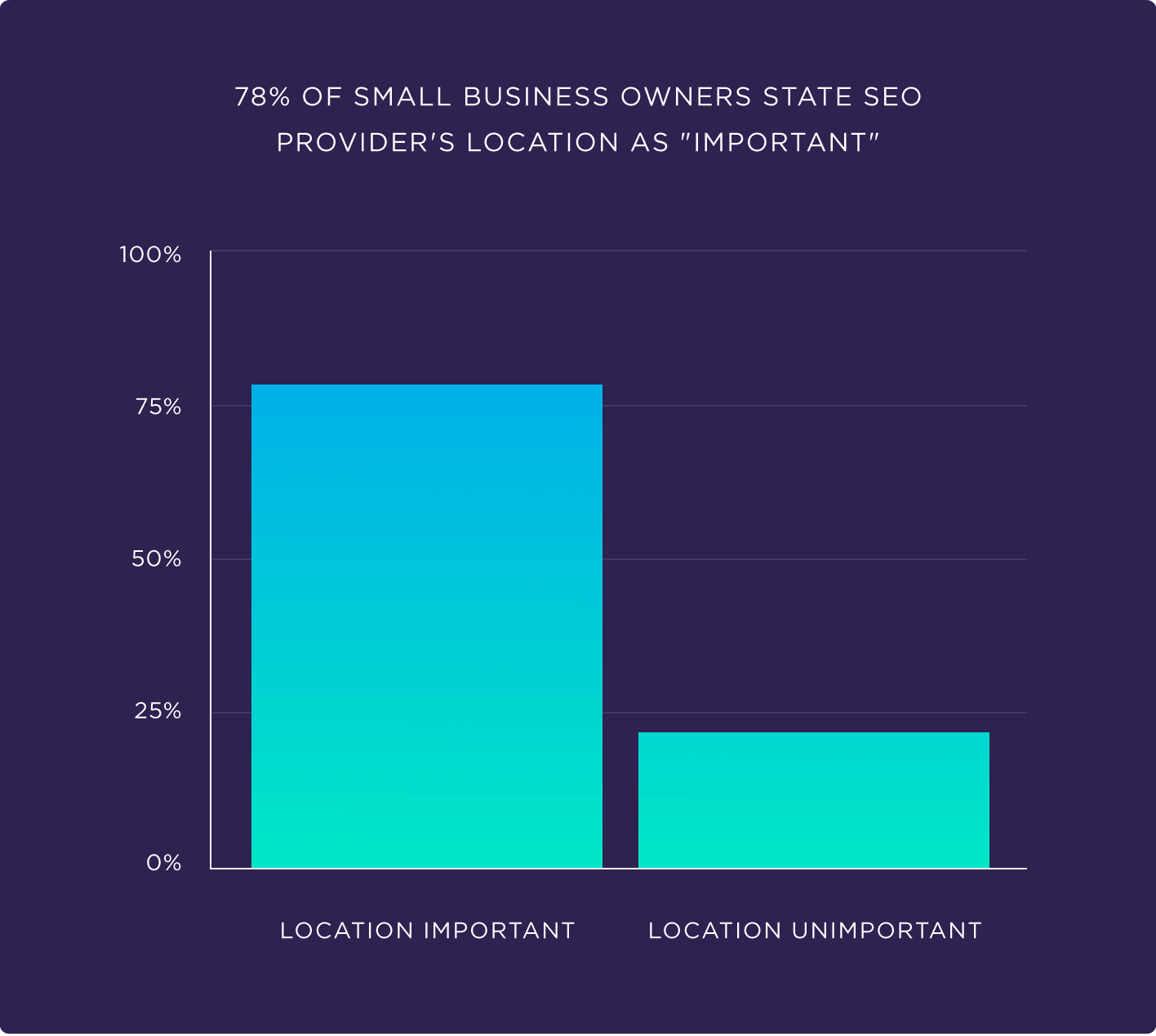
Despite the digital nature of SEO, geography still matters. While only 51% of clients can pinpoint the exact physical location of their provider, 78% of US-based businesses consider the provider’s location to be "very" or "extremely" important. This suggests that businesses still crave the security of a "local" partner, even if the work is entirely remote.
Implications for Agencies and Clients
The data points toward a clear path forward for both sides of the professional relationship.
For Providers: Transparency and Education
The "black box" approach to SEO is a primary driver of dissatisfaction. 27% of clients find SEO services confusing, and 25% are unsure what they are actually paying for. Agencies that provide clear, non-jargon-heavy reporting—focusing on leads, sales, and bottom-line revenue rather than technical metrics like "backlink velocity"—are significantly more likely to retain clients.

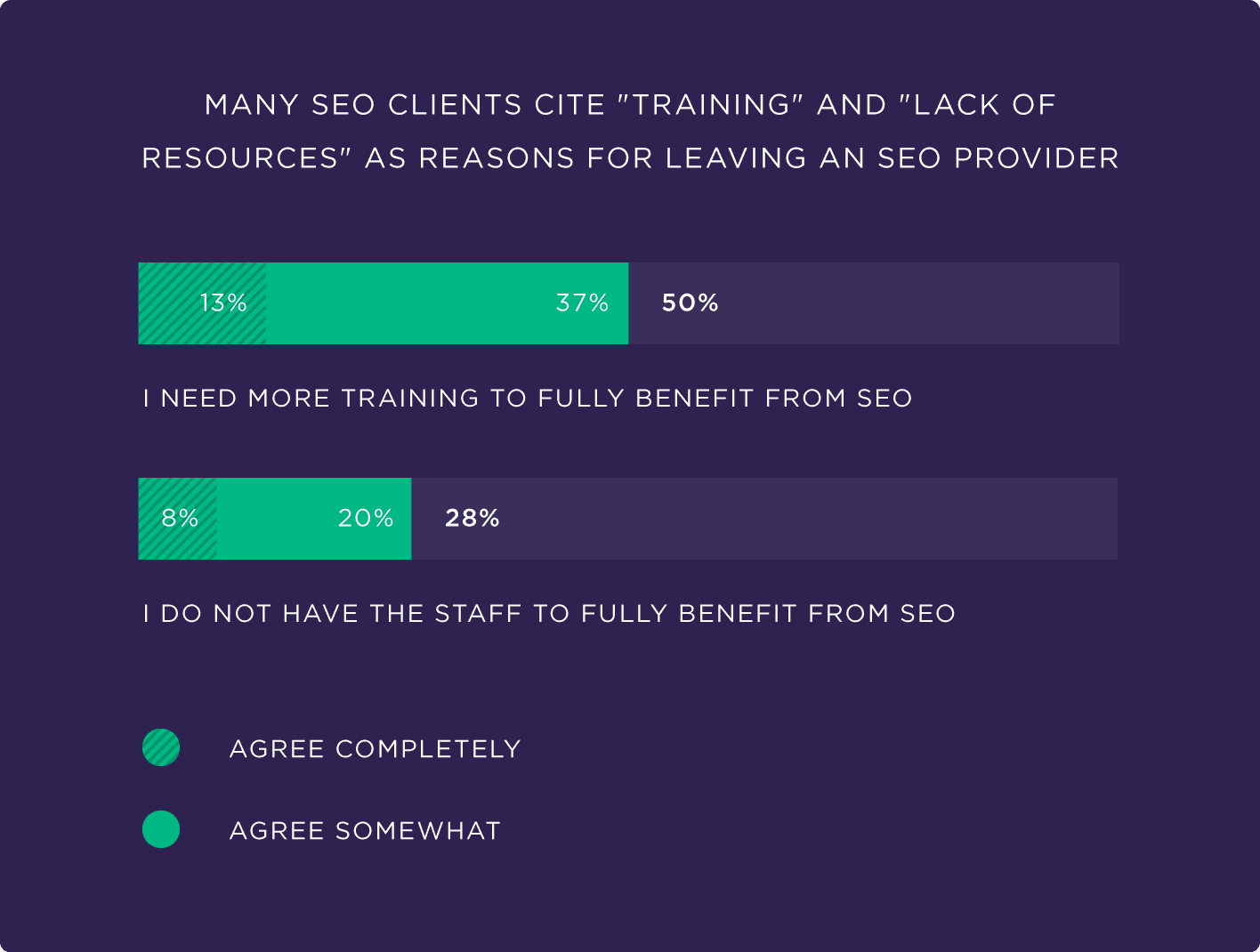
Furthermore, providers must act as educators. Since 50% of unhappy clients feel they need more training to understand the value of SEO, agencies that invest time in "client success" education reduce churn. When a client understands why a title tag change matters, they are more likely to prioritize the work, leading to better results and higher satisfaction.
For Business Owners: Assessing "Web Savviness"
Our study reveals that existing, satisfied clients are twice as likely to consider themselves "extremely web savvy" compared to lapsed clients. There is an implication here for business owners: if you are hiring an SEO firm, your internal team needs a baseline level of digital literacy to manage the relationship. If you don’t understand the basics, you are more likely to view the SEO’s work as ineffective, simply because you cannot interpret the progress being made.
Why Clients Leave: The "Rapid Switcher" Phenomenon
The high turnover rate in the SEO industry is not entirely the fault of the agencies. While 82% of clients cite lack of results and 81% cite cost as reasons for switching, there is a "rapid switcher" subset—10% of our panel—who have worked with three or more providers in a single year.

This behavior suggests a mismatch in expectations regarding the timeline of SEO. SEO is a long-term investment, with most campaigns requiring 6 to 12 months just to reach a break-even point. When businesses approach SEO as a "quick fix" and fail to see results in 90 days, they enter the churn cycle, often repeating the same mistake with a new provider.
Conclusion: A Call for Alignment
The state of the SEO services industry is at a crossroads. The demand for organic growth has never been higher, yet the trust between service providers and their clients is at an all-time low.
To bridge this gap, the industry must move toward a model of radical transparency. Providers must stop selling "rankings" and start selling "business outcomes," and they must be willing to walk away from prospects who are not prepared to invest the time or resources necessary for success. Conversely, businesses must view SEO as a long-term strategic partnership rather than a commodity service.
By aligning expectations around clear, ROI-focused metrics and investing in client education, the industry can move from its current "not likely to recommend" status to one where SEO is viewed as the engine of modern business growth. The data is clear: those who treat SEO with the seriousness of a high-return financial investment are the ones who see the 22:1 ROI that makes the industry so vital in the first place.


 Ammar Sabilarrohman
 Sagoh
Sagoh
 Raul Delapena Setiawan
 Reynand Wu


 Azzam Bilal Chamdy
 Ali Ikhwan