
 Evan Lee Salim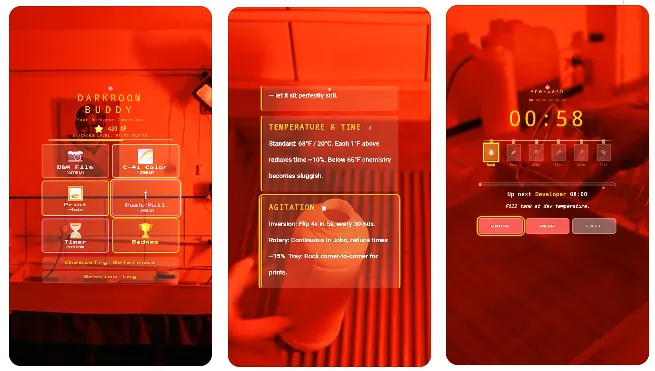
In a strategic pivot that signals a profound shift in the landscape of wearable technology, Meta has officially opened its "Meta Display" glasses ecosystem to third-party developers. This move marks the transition of the company’s most advanced AI-powered eyewear from a closed, proprietary experience to an expansive, open-ended platform. By inviting external creators to build mobile and web applications tailored for the device, Meta is effectively laying the groundwork for a new paradigm of ambient, gesture-driven computing.
The initiative, announced via the Meta Developer portal, provides the tools necessary to integrate digital experiences directly into the user’s line of sight. As the company prepares to scale its wearable ambitions, this development phase represents a critical bridge between simple AI voice assistants and the fully realized augmented reality (AR) future that Meta has long projected.
Core Developments: A New Canvas for Creators
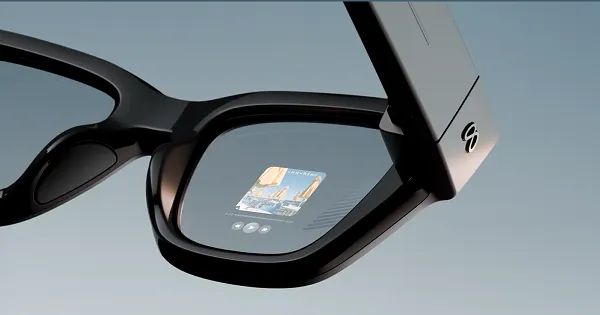
The Meta Display glasses, which debuted in September 2025, represent the pinnacle of the company’s hardware engineering. Unlike traditional smart glasses that rely primarily on audio or external smartphone screens, the Display model features an integrated heads-up display (HUD) and, most notably, a proprietary "Neural Band."
This wrist-worn peripheral is the engine behind the new developer initiative. By utilizing electromyography (EMG) sensors, the Neural Band detects the subtle electrical signals sent from the brain to the fingers, allowing users to interact with digital interfaces through almost imperceptible micro-gestures.
Expanding the Development Toolkit
Meta is enabling developers to craft experiences using familiar web and mobile frameworks. Whether a developer is looking to extend an existing iOS or Android application or create a bespoke, glasses-first experience, the new SDK provides the necessary hooks to render information within the user’s field of vision. This integration is designed to be frictionless, allowing developers to repurpose existing logic while optimizing the UI for a transparent, heads-up environment.
Chronology of Meta’s Wearable Evolution
To understand the gravity of this announcement, one must look at the rapid, calculated progression of Meta’s Reality Labs division over the past several years:
- 2021: The Ray-Ban Meta Partnership: Meta launched its first foray into smart eyewear with Ray-Ban, focusing on audio and basic camera functionality. This established the form factor—stylish, lightweight, and socially acceptable.
- 2023: The AI Integration: Meta introduced multimodal AI to its glasses, allowing the hardware to "see" and "hear" the world, providing context-aware assistance.
- September 2025: The Display Debut: The introduction of the Display model moved the needle from "smart glasses" to "heads-up computing." This hardware added the essential visual component, enabling the overlay of data on real-world views.
- Late 2025: The Developer Preview: Meta initiates the opening of its SDK to third-party developers, moving from a curated experience to an ecosystem model.
- 2026 (Projected): The AR Milestone: Industry analysts expect Meta to leverage the lessons learned from the Display program to launch their first true, high-fidelity AR glasses.
The Technology: Beyond Touchscreens and Voice
For decades, the human-computer interface (HCI) has been dictated by the constraints of physical hardware: the keyboard, the mouse, and eventually, the capacitive touchscreen. Meta’s current strategy is an explicit attempt to move beyond these "points of friction."
The Neural Band Paradigm
The core value proposition for developers is the removal of the need for voice commands or physical touch. In public spaces, talking to one’s glasses can be socially awkward, and pulling out a smartphone defeats the purpose of "heads-up" technology.
The Neural Band offers a "discrete" interaction model. By registering small finger taps or slides against a thumb, the user can navigate menus, select objects, or scroll through information without the world noticing. For developers, this creates a unique challenge and opportunity: how to design interfaces that are intuitive, non-intrusive, and highly responsive to minimal physical input.
Practical Application: The "Darkroom Buddy"
Meta CTO Andrew Bosworth recently showcased the potential of this technology with an application dubbed "Darkroom Buddy." Designed for photographers working in analog darkrooms, the app overlays chemical timing instructions and temperature data directly onto the user’s vision. By using subtle gestures, the photographer can advance through the process without ever touching their phone with wet, chemical-covered hands. This use case highlights the "utility-first" approach Meta is prioritizing: solving real-world, context-specific problems.

Official Perspectives and Industry Strategy
Meta’s official stance on this rollout is one of cautious optimism. The company recognizes that for hardware to succeed, the ecosystem must provide value that the user cannot find elsewhere.
"You can design experiences that respond to simple gestures, enabling more discrete, immediate control in real-world contexts without speaking or reaching for the glasses," Meta stated in its developer briefing. By emphasizing the "real-world context," the company is signaling that it is not looking to replace the phone with a virtual desktop, but rather to augment the physical world with ephemeral, helpful data.
The Role of the Ecosystem
By opening the platform to third-party developers, Meta is effectively outsourcing the innovation of "killer apps." Historically, platforms like the Apple App Store or the Google Play Store became indispensable not because of the hardware manufacturers, but because of the millions of developers who found new ways to utilize the sensors, screens, and connectivity of those devices. Meta is attempting to replicate this flywheel effect in the wearable space.
Implications: The Road to Ubiquitous AR
The implications of this announcement are twofold: they serve as an immediate test of the Display hardware, and they act as a "beta test" for the upcoming AR glasses.
1. Data-Driven Utility
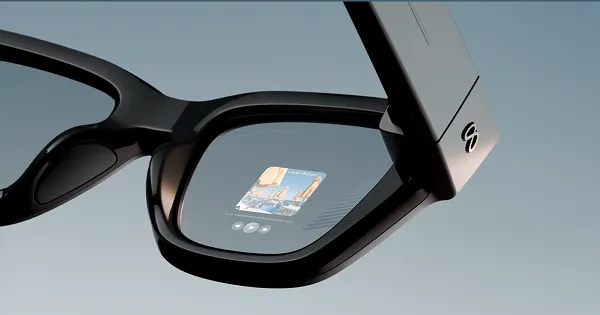
The shift to heads-up computing requires a fundamental change in how information is displayed. Developers must learn to respect "visual real estate." Unlike a smartphone, where an app can occupy the entire screen, glasses require an interface that is minimally invasive. This necessitates a new design language, one that favors clarity, brevity, and situational awareness.
2. Preparing for the AR Future
Meta’s ultimate goal is the development of lightweight, high-fidelity AR glasses capable of persistent digital overlays. The Display program provides a controlled environment to gather data on how users interact with digital content in the real world. By observing how developers and users utilize gesture control, Meta can refine its neural interfaces, voice recognition, and battery management strategies before the full-scale AR rollout.
3. The Privacy and Social Dimension
As with any wearable camera and display technology, privacy remains a paramount concern. Meta has been under constant scrutiny regarding how its hardware records and processes data. By opening the platform to third-party developers, Meta will need to enforce strict guidelines to ensure that user privacy is not compromised by rogue applications. The company’s ability to maintain public trust will be just as vital as its ability to innovate on the hardware front.
Looking Ahead: The Next Frontier
As Meta continues to expand access to its developer program over the coming weeks, the tech industry will be watching closely. The success of the Meta Display program will likely determine the pace at which the company pivots toward its broader AR ambitions.
We are currently in a transitional era. We have moved past the novelty phase of "smart glasses" and are entering the era of "utility eyewear." If Meta can successfully foster a developer community that builds genuine, time-saving, and life-enhancing applications—like the Darkroom Buddy—it may finally break the seal on the wearable market that has eluded tech giants for the better part of a decade.
The vision is clear: a world where digital information is not something we "check" on a screen, but something that exists alongside us, accessible through a flick of the finger. With this developer initiative, Meta has taken a significant step toward making that vision a reality, turning the abstract promise of AR into the tangible, functional experience of the Meta Display. The question remains whether the developer community will embrace the constraints of the wrist-band and the HUD to build the next generation of essential, everyday applications. For now, the sandbox is open, and the potential for a new computing paradigm has never been more visible.


 Reynand Wu
 Iffa Jayyana
 Raul Delapena Setiawan

 Sagoh
Sagoh

 Azzam Bilal Chamdy
 Ali Ikhwan