Lina Hope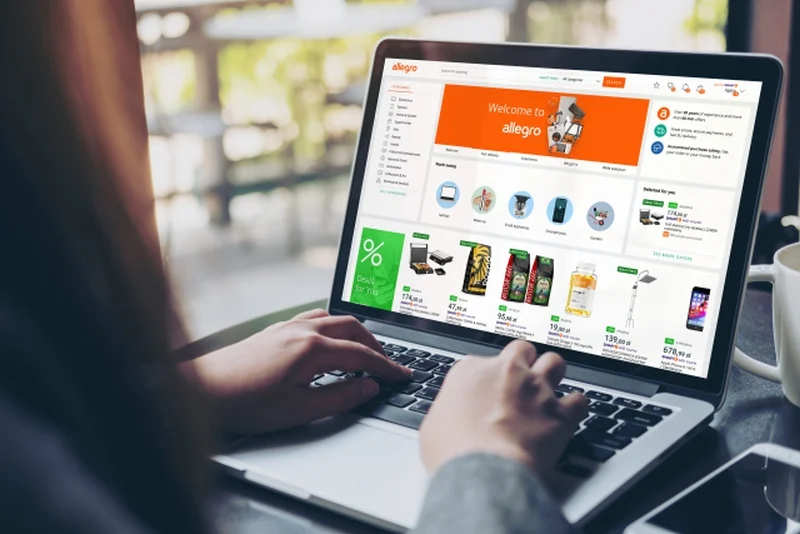
In a landmark move for the European digital economy, Allegro—the undisputed leader of the Polish e-commerce landscape—has officially entered into a strategic partnership with OpenAI, the artificial intelligence powerhouse behind the revolutionary ChatGPT. This collaboration marks a significant pivot in Allegro’s operational strategy, signaling a transition from a traditional marketplace model to an AI-first ecosystem. By gaining privileged access to cutting-edge generative AI models and technical support from OpenAI, Allegro aims to redefine the standards of digital retail, enhancing everything from user personalization to backend logistics.
Main Facts: A New Chapter in AI Integration
The partnership is designed to foster a symbiotic relationship between e-commerce infrastructure and advanced machine learning. Under the agreement, Allegro will integrate OpenAI’s sophisticated language and reasoning models into its platform, facilitating the design, testing, and deployment of specialized retail applications.
The core objectives of this collaboration are multi-faceted:
- Hyper-Personalization: Utilizing AI to tailor the shopping journey, making it more intuitive and predictive for the millions of users browsing the marketplace.
- Seller Empowerment: Providing vendors with a suite of AI-driven tools to manage inventory, optimize pricing, and streamline logistical operations.
- Operational Efficiency: Enhancing marketing effectiveness through automated content generation and data-driven insights.
- Innovation Acceleration: Leveraging OpenAI’s development pipeline to stay ahead of global competitors, including Amazon and local challengers.
For Allegro, this is not merely a software update; it is a fundamental shift in how the platform intends to conduct business across its European footprint.
Chronology: From Local Marketplace to Global AI Aspirant
Allegro’s journey toward becoming an AI-centric marketplace has been a methodical progression. The timeline of its technological evolution highlights a company deeply invested in digital transformation:
- Initial AI Explorations: Recognizing the need for automated support, Allegro began integrating basic machine learning models to improve search relevance and customer service ticketing.
- The Mobile Virtual Assistant: Following the lead of European giants like Zalando, Allegro launched a virtual shopping assistant within its mobile application. This tool allowed users to navigate the vast product catalog using conversational queries rather than traditional keyword searches.
- The Google Synergy: Allegro simultaneously deepened its technical ties with Google, working on an intelligent browser-based shopping assistant designed to integrate seamlessly into the user’s online browsing experience.
- Las Vegas Debut: In a high-profile move earlier this month, the company unveiled a dedicated AI assistant for its selling partners at an industry conference in Las Vegas. This tool, designed to act as a virtual business consultant, provides real-time insights into quality scores, inventory health, and market performance.
- Formalizing the OpenAI Partnership: With the pilot phase of its seller assistant nearing completion, the partnership with OpenAI serves as the structural foundation for scaling these technologies across the entire Allegro ecosystem.
Supporting Data: The Competitive Landscape
The competitive pressure in the Polish e-commerce sector is immense. While Allegro remains the dominant market leader, it operates in a high-stakes environment.
The Regional Dynamics
Allegro characterizes itself as the "flywheel of the Polish economy." However, it is operating in an increasingly crowded market. Amazon, the global titan of e-commerce, has committed over €5 billion to strengthen its infrastructure in Poland, posing a significant long-term threat.
Recent Strategic Adjustments
To maintain its agility, Allegro has been "pruning" its portfolio. Earlier this year, the company sold its subsidiaries in Slovenia and Croatia. This divestment was a strategic move to streamline financial results and focus resources on core markets and high-growth technologies like artificial intelligence. By exiting secondary markets, Allegro has freed up the capital and focus necessary to double down on its technological edge.
The Peer Comparison
Allegro is not acting in a vacuum. Its efforts mirror a broader industry-wide shift:
- Zalando: Has successfully deployed AI-driven fashion assistants to reduce return rates and increase engagement.
- Bol: The Benelux market leader is currently rolling out a store-wide AI assistant, putting pressure on regional marketplaces to match these capabilities or risk obsolescence.
Official Responses: The Vision for the Future
The leadership at Allegro has been vocal about the transformative nature of this alliance. CEO Marcin Kuśmierz emphasized that the integration of artificial intelligence is not merely an optional upgrade but an existential necessity for the next generation of e-commerce.
"We are confident that our approach will set a new standard for the next generation of commercial services in Europe," Kuśmierz stated following the announcement. The sentiment from the company is clear: by aligning with OpenAI, Allegro is positioning itself to be a technology pioneer rather than a technology consumer.
For OpenAI, the partnership represents a strategic entry point into the European retail sector, providing them with a massive, high-volume environment to stress-test their models in real-world commercial applications. This synergy is expected to create a feedback loop where Allegro’s domain-specific data helps refine OpenAI’s models, which in turn deliver better results for Allegro’s users.
Implications: How the AI Shift Changes the Game
The implications of the Allegro-OpenAI partnership extend far beyond the immediate interface of the website.
For the Buyer: The Death of the Search Bar
As the AI assistant evolves, the traditional "search, click, filter" model of shopping is likely to diminish. Instead, consumers will experience a conversational interface that understands context. A user might say, "Find me a sustainable, budget-friendly desk chair that fits in a small apartment and can be delivered to Krakow by Friday." The AI will not just search; it will synthesize, compare, and recommend, effectively shortening the path from intent to purchase.
For the Seller: The Rise of the Algorithmic Business
The upcoming seller assistant, which is currently wrapping up its pilot phase, is designed to democratize business intelligence. Small and medium-sized enterprises (SMEs) on the Allegro platform often struggle with complex logistics and data analytics. The new AI tool will provide:
- Automated Offer Optimization: Suggesting adjustments to product descriptions and images based on current trends.
- Dynamic Pricing Models: Helping sellers stay competitive without constant manual oversight.
- Logistics Support: Predicting demand spikes and suggesting inventory movements to optimize delivery times.
For the Industry: A New Benchmark for Compliance and Ethics
With the implementation of AI, Allegro faces the challenge of maintaining trust. The company has indicated that the AI assistant will explain quality scores and identify areas for improvement, implying a move toward transparency. However, the use of LLMs (Large Language Models) in e-commerce raises questions regarding data privacy and bias. How Allegro manages the balance between automated efficiency and human-centric oversight will serve as a case study for the entire European retail industry.
Conclusion: Setting the Pace
As Allegro integrates these advanced technologies, it is effectively insulating itself against the disruption brought by global competitors. By shifting its focus to an AI-driven, data-rich experience, the company is not just protecting its market share in Poland—it is attempting to rewrite the playbook for e-commerce across the continent.
The coming months will be critical. As the seller assistant rolls out to the broader partner base and new features emerge from the OpenAI collaboration, the marketplace will likely see a surge in operational throughput and user engagement. If successful, this partnership could establish a new standard for what a digital marketplace should be: a smart, anticipatory, and highly efficient engine of commerce that serves as the backbone of the modern digital economy.
In the race for the future of retail, Allegro has made its move. By placing AI at the heart of its "flywheel," it is betting that in the new digital age, the most successful companies will be those that can most effectively harness the power of artificial intelligence to anticipate the needs of both the buyer and the seller.


 Jia Lissa
 Basiran
 Nila Kartika Wati
 Sagoh
Sagoh