Ali Ikhwan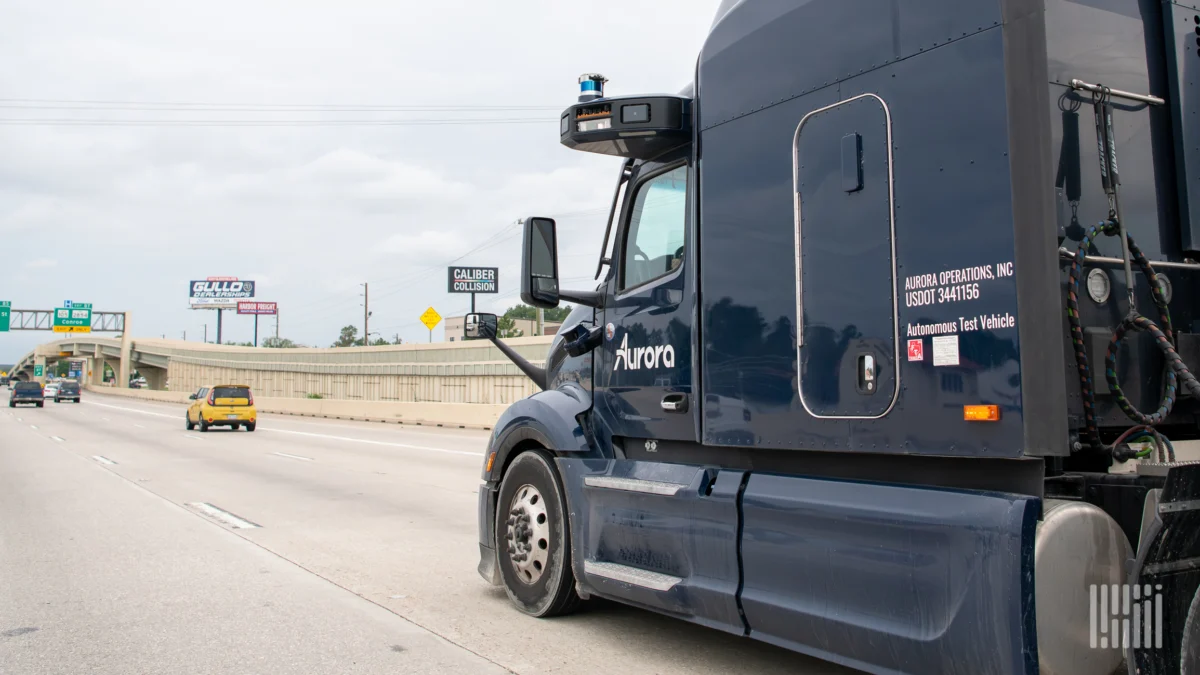
This is not an ideological manifesto against automation, nor is it a speculative forecast of the 2035 freight landscape. It is not an endorsement or a condemnation of any specific technology company’s safety record or business model. Rather, it is a necessary interrogation of the operational realities facing the trucking industry today. Before the deployment of 80,000-pound autonomous vehicles outpaces the infrastructure designed to manage them, the industry—carriers, drivers, regulators, first responders, and the tax-paying public—deserves honest, rigorous answers to foundational questions about safety, maintenance, and emergency response.
The urgency of this inquiry stems from a singular fact: autonomous trucking is no longer a futuristic concept confined to R&D labs or investor slide decks. It is operational.
The Current State of Autonomous Freight
The transition from testing to commercial reality is well underway. Companies like Aurora Innovation are running driverless Class 8 trucks on commercial routes between Dallas and Houston, while Kodiak Robotics is actively operating in the Permian Basin. These firms have logged significant commercial miles, published safety data, and—most crucially—announced aggressive scaling plans that aim to put hundreds of autonomous trucks on the road by the end of 2026, with projections extending into the thousands thereafter.
This is not a marketing exercise. It is a logistical deployment. As this shift accelerates, the people who have spent their careers behind the wheel—those who understand the nuances of moving freight across a continent—deserve to have this conversation on their own terms, not the sanitized terms of venture-backed investor presentations.
What a Professional Driver Does (That Nobody Mentions)
The most glaring omission in every autonomous trucking press release is the definition of what a professional driver actually does to maintain highway safety. The role extends far beyond steering and braking; it is defined by a deep, sensory-based awareness that no sensor suite currently in commercial deployment can fully replicate.
An experienced driver possesses a "mechanical intuition" built through years of pattern recognition. They hear the subtle frequency change of a tire losing pressure long before a TPMS (Tire Pressure Monitoring System) triggers an alert. They feel the slight pull of a brake caliper before the alignment is measurably off. They smell the ozone of an electrical component beginning to arc before a fault code is generated. They recognize the specific shimmy at 65 mph that the Electronic Control Module (ECM) ignores.
More importantly, they engage in social awareness. A human driver notices a passenger car drifting in an adjacent lane and recognizes, before any algorithm has processed the trajectory, that the driver is likely impaired or asleep. This is not intuition; it is contextual, experiential awareness. When the cab is left empty, this vital layer of safety disappears. To suggest that autonomous trucks cannot be safe is incorrect, but to assume that the current technology automatically compensates for this missing layer of human judgment is a dangerous oversight.
The Maintenance Paradox
The architecture of autonomous maintenance introduces a systemic vulnerability: if the truck is the diagnostic agent, what happens when the diagnostic agent fails?
In conventional trucking, the driver is the first line of defense, the lead technician, and the incident commander. They manage breakdowns with professional judgment, securing the scene and communicating with dispatch. Autonomous maintenance, however, relies on a rigid infrastructure that does not yet exist at scale.
Sensor calibration is a prime example. Lidar units and cameras are subject to degradation from road grime, insect accumulation, and weather. An autonomous truck "seeing" through a compromised lens is a risk factor that no one is inside the cab to mitigate. Furthermore, software updates—such as the four major releases Aurora pushed since April 2025—change the operational behavior of the vehicle. In traditional trucking, a driver adapts to the vehicle; in autonomous trucking, the vehicle must be validated across a thousand edge cases for every update.
We face an impending technician crisis. The shortage of qualified mechanics to service autonomous sensor arrays and redundant electronic architectures is not yet fully felt, but it is inevitable. The current training pipeline is years behind the projected deployment schedule. When the scale arrives, the burden will fall on carriers and the existing, already strained, roadside assistance networks.
The 2:00 AM Scenario: A Case for Public Accountability
Consider this scenario: A driverless truck suffers a catastrophic tire failure on a rural interstate at 2:00 AM. The truck, following its programming, executes a controlled stop and pulls to the shoulder. It is now stationary in the dark with 80,000 pounds of freight and no human aboard.
The system alerts an operations center. A remote operator assesses the situation. But who places the reflective triangles 100, 200, and 300 feet behind the vehicle, as required by FMCSA regulations? Not the truck. Not the remote operator. If a support vehicle is dispatched from a hub 50 miles away, what happens during the hour of exposure on a high-speed, unlit interstate?
The risks are not hypothetical. In December 2025, a power outage in San Francisco caused over 1,500 Waymo vehicles to stall simultaneously, overwhelming the 911 dispatch system and forcing first responders to act as de facto roadside assistance. If that happens in an urban center, what is the protocol for a rural highway? The Governors Highway Safety Association (GHSA) has already begun training first responders on how to handle "driverless" scenes, an admission that the technology has outpaced the safety infrastructure.
Data at Scale vs. Data at Launch
Companies point to impressive safety statistics—Aurora’s 250,000 driverless miles with zero system-attributed collisions is a notable achievement. However, these figures are generated under highly controlled conditions: Sun Belt corridors, favorable weather, and limited complexity.
The industry has yet to prove these statistics hold under the pressure of 20,000 trucks across 500 routes, including high-density corridors, mountainous terrain, and severe winter weather. For context, Waymo’s robotaxi fleet, which has logged significantly more miles, reported 1,429 incidents to the NHTSA between July 2021 and November 2025, including 117 injuries and two fatalities. These incidents demonstrate that as scale increases, so does the probability of encountering "edge cases" that defy pre-programmed logic.
The Call for Transparency and Standards
The professional trucking community, carriers, and regulators should demand three specific pillars of accountability:
- Independent Verification: Self-reported safety data is insufficient. The industry requires third-party auditing that covers the full operational domain, including "out-of-domain" scenarios and failure states.
- Roadside Regulatory Clarity: We need explicit federal standards defining the "duty of care" for a disabled autonomous vehicle. Who is liable, and what are the specific safety protocols for securing a disabled unit on a public highway?
- First Responder Investment: The technology companies must be mandated to fund and facilitate comprehensive training for rural law enforcement, fire departments, and EMS, ensuring that first responders are equipped to handle a 40-ton vehicle that has no operator to consult.
The Future of the Professional Driver
The reality of 2026 is that autonomous trucks are confined to hub-to-hub long-haul runs. They do not possess the skills to navigate complex dock facilities, manage customer relationships, or handle the ambiguity of local delivery. The human driver remains the most capable, adaptable, and efficient unit in the logistics chain.
The professional skills that machines cannot replicate—situational judgment, adaptability, and complex problem-solving—are the very skills that will define the most resilient and high-value freight careers over the next decade.
However, comfort with the current status quo is a mistake. The drivers who have kept the global supply chain moving for generations have earned the right to ask hard questions. They are not merely observers of this technological transition; they are the primary stakeholders of the infrastructure being used to test it. It is time for the industry to move beyond the press release and provide the answers that the public—and the men and women on the road—deserve.

 Sagoh
Sagoh
 Raul Delapena Setiawan
 Reynand Wu


 Azzam Bilal Chamdy