
 Ali Ikhwan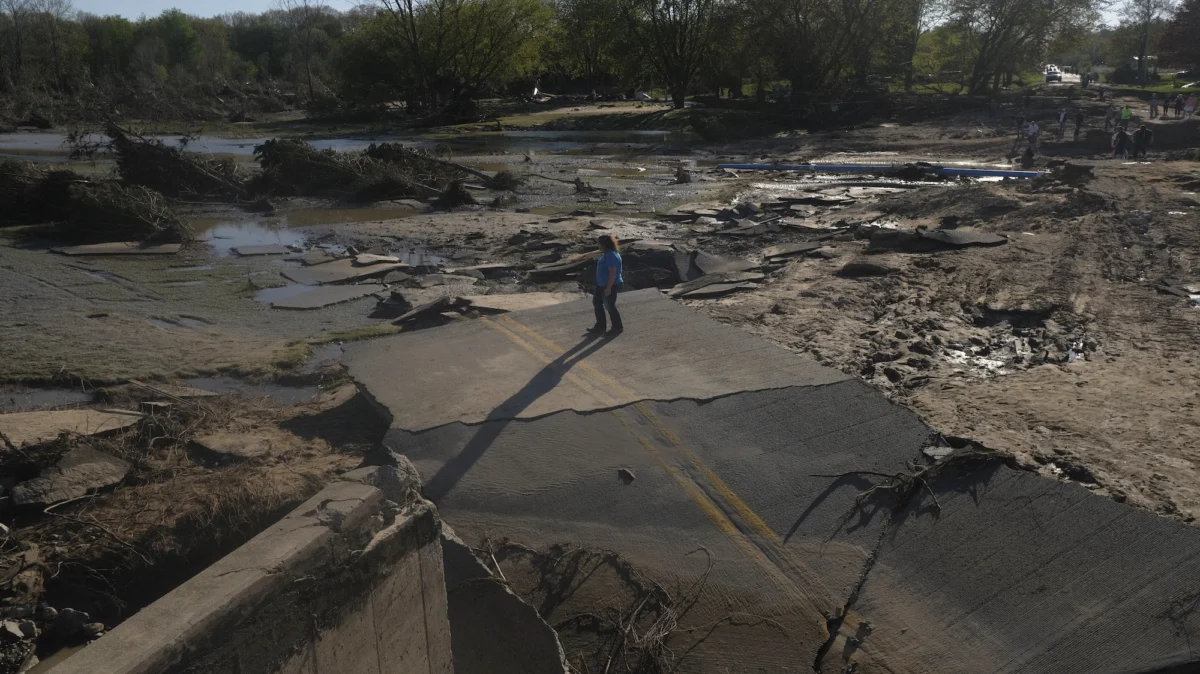
The recent surge of floodwaters across northern Michigan was not merely an inconvenience for local residents; it was a structural stress test that exposed a precarious reality for the entire United States. As record-breaking rainfall and rapid snowmelt pushed rivers to historic levels this past April, the state’s aging, often neglected dam infrastructure stood on the brink of catastrophe. In cities like Cheboygan, water came within five inches of overtopping a critical barrier, nearly triggering mass evacuations.
This narrow escape serves as a grim preview of a future defined by climate-driven volatility. With the average American dam now 64 years old—predating modern understanding of climate-induced extreme weather—the crisis in Michigan is a microcosm of a national emergency that threatens to turn long-standing infrastructure into environmental and human liabilities.
The Anatomy of a Crisis: Main Facts and Current Vulnerabilities
Across the United States, there are approximately 92,000 dams. Of these, roughly 18 percent are categorized as "high-hazard," meaning that their failure would almost certainly result in the loss of human life. In Michigan alone, more than half of all dams have exceeded their 50-year design life, rendering them relics of a hydrological era that no longer exists.
The central issue is a misalignment between engineering and reality. These structures were built based on historical rainfall patterns that are increasingly obsolete. As the atmosphere warms, it holds more moisture, leading to more intense, frequent, and unpredictable precipitation events. Richard Rood, a professor emeritus at the University of Michigan who specializes in climate change, offers a sobering assessment: "This needs to be considered not the worst we can experience. This needs to be considered as typical of the future."
The financial burden of this reality is staggering. The Association of State Dam Safety Officials estimates that rehabilitating the nation’s high-hazard dams will cost more than $165 billion. In Michigan, the estimated price tag for necessary upgrades hovers around $1 billion, a figure that far outstrips current municipal and state funding capacities.
A Chronology of Tension: From Edenville to April’s Near-Misses
The urgency of this situation is not abstract; it is rooted in recent history.
- 2020: The catastrophic failure of the Edenville Dam, which overwhelmed the downstream Sanford Dam, forced the evacuation of over 10,000 residents and caused millions of dollars in property damage. The event was a watershed moment, proving that "100-year floods" are occurring with alarming regularity.
- 2024: Traverse City successfully removed the Union Street Dam as part of a massive ecological and safety initiative. This proved to be a critical preemptive strike, as the removal significantly mitigated the impact of the April 2026 flooding.
- April 2026: Northern Michigan experienced sustained, heavy rainfall. The Cheboygan River surged, leaving the Cheboygan Dam with a mere five-inch margin of safety. Simultaneously, in Bellaire, officials were forced to scramble, deploying over 1,000 sandbags to prevent a century-old dam from failing.
- May 2026: Following the recession of floodwaters, state officials, engineers, and environmental groups began formalizing calls for a comprehensive overhaul of dam safety regulations and long-term infrastructure planning.
The Data of Decay: Why Infrastructure is Failing
The fragility of these structures is compounded by their ownership models. Roughly 75 percent of the dams under state regulation in Michigan are privately owned. This creates a fragmented system where maintenance, inspection, and emergency preparedness fall on individuals or private entities, rather than a centralized, state-funded authority.
Furthermore, the "regulatory gap" is vast. While the Federal Energy Regulatory Commission (FERC) oversees large hydroelectric dams, thousands of smaller barriers fall into a gray zone, escaping the rigorous inspection standards required for larger projects. According to the Michigan Dam Inventory, there are roughly 1,500 such smaller, unregulated barriers in the state.
The cost-benefit analysis of these structures is shifting. While some dams serve as essential sources of power or municipal water, others exist merely for aesthetics or historical attachment. As noted by Daniel Brown, a climate resilience strategist at the Huron River Watershed Council, "There’s this emotional attachment to that impoundment," even when that impoundment represents a significant flood risk to downstream communities.
Official Responses and the Push for Legislative Reform
State leaders are beginning to treat dam safety as a non-partisan survival issue. Phil Roos, director of the Michigan Department of Environment, Great Lakes, and Energy (EGLE), has been vocal about the necessity of immediate action. Proposed state legislation (HB 5485) seeks to bridge the funding and regulatory gap by tightening inspection protocols and providing financial assistance for both repairs and deliberate, managed removals.
State Senator John Damoose has openly questioned the viability of private ownership for dams that pose a public threat. "I tend to believe in private ownership, but they might be right," Damoose remarked, acknowledging that the scale of the risk may require moving these assets into the public domain or subjecting them to significantly stricter oversight.
However, the path forward is fraught with financial hurdles. While the state previously utilized a $44 million grant program—established in the wake of the 2020 Edenville disaster—to facilitate removals and upgrades, that program has expired. Federal resources, including those from FEMA and the U.S. Army Corps of Engineers, remain limited and are currently facing political uncertainty, with some programs at risk of funding cuts.
Implications: The Hard Choices Ahead
The future of dam management in America boils down to three difficult choices: repair, reengineer, or remove.
The Case for Removal
For many aging, non-functional dams, removal is the most cost-effective and environmentally sound option. Organizations like Huron Pines have successfully managed numerous removals, noting that the process not only eliminates the risk of catastrophic failure but also restores river health and eliminates the need for perpetual maintenance. The Boardman-Ottaway River project, which cost $25 million, stands as a successful model. By removing three dams, the project allowed the river to absorb the impact of the April 2026 flooding, which engineers estimate would have otherwise resulted in two extra feet of water inundating upstream communities.
The Practicality of Retention
For dams integral to the power grid or water supply, removal is not an option. These structures must be reengineered to handle modern climate realities—a process that is as expensive as it is technically demanding. The fundamental challenge is that most of these structures were designed to be static, whereas the climate and the rivers they control have become dynamic and volatile.
The Cost of Inaction
The most dangerous path is the status quo. If these dams are not actively managed, the state and the nation are essentially waiting for a "slowly unfolding series of failures," as Professor Rood describes.
"It’s a little bit of a misconception that if we fix the dam issue, there’ll be no more flooding," says Luke Trumble, chief of dam safety for Michigan. "There’s still going to be flooding on rivers whenever we get rain like this. What we can do with dam safety legislation is help ensure that flooding is not made worse by a dam failure."
As the climate continues to change, the infrastructure of the 20th century is increasingly at odds with the demands of the 21st. Michigan’s recent experience is a warning: if we do not proactively choose which dams to save and which to dismantle, the environment will eventually make that choice for us, often with devastating consequences. The time for reactive repair has passed; the era of strategic, climate-resilient infrastructure planning must begin.


 Raul Delapena Setiawan
 Laily UPN
 Reynand Wu
 Sagoh
Sagoh

 Azzam Bilal Chamdy
