
 Jia Lissa
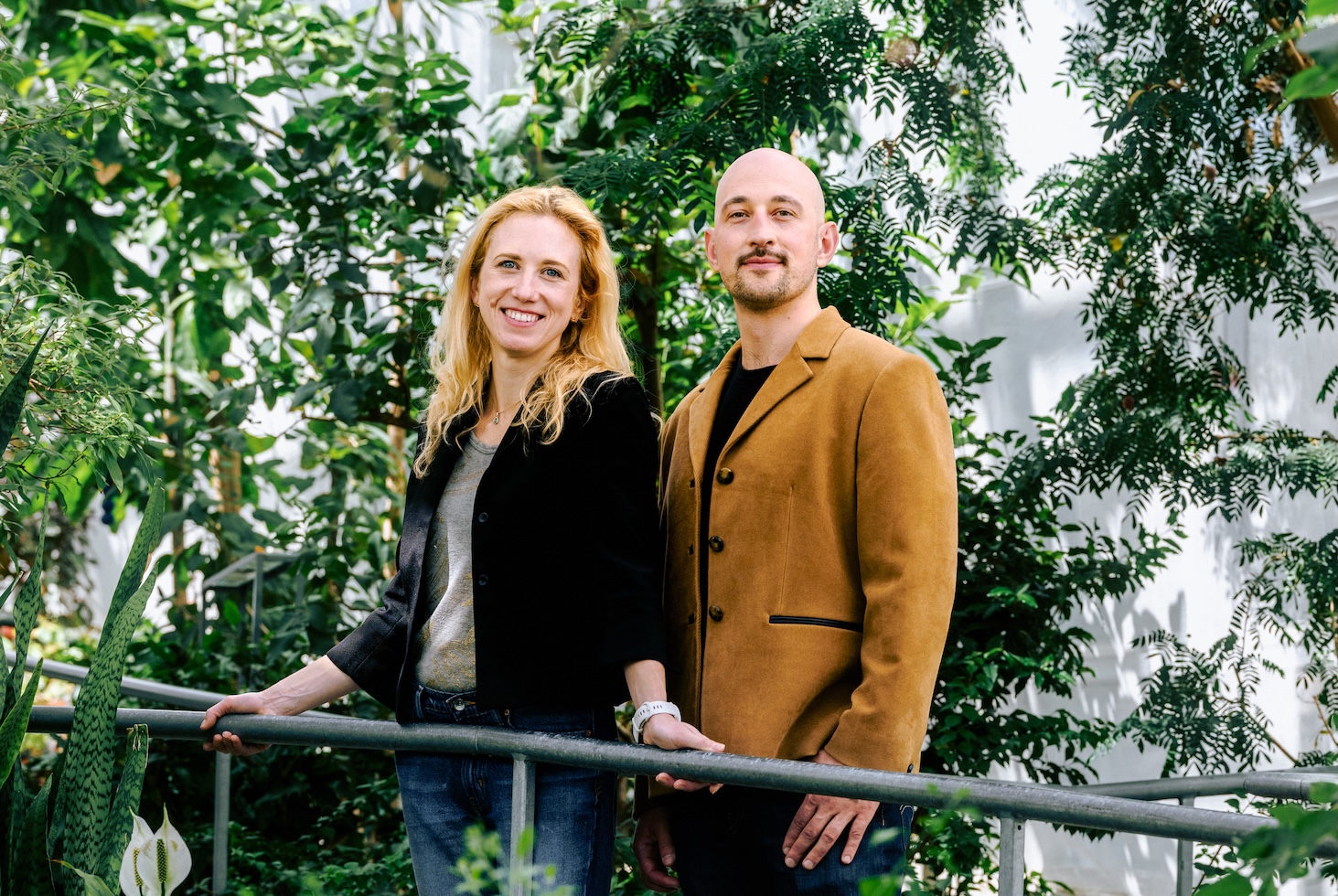
As the artificial intelligence revolution accelerates, transforming everything from software development to supply chain management, a parallel crisis is emerging in the shadows of the digital infrastructure. The massive data centers required to train and deploy large language models are consuming electricity and water at unprecedented rates. To help corporations navigate this complex intersection of innovation and environmental stewardship, industry veterans Boris Gamazaychikov and Dr. Sasha Luccioni have launched the Sustainable AI Group, a research and advisory firm dedicated to demystifying the ecological footprint of machine learning.
The Genesis of a New Frontier
The Sustainable AI Group enters the market at a pivotal moment. For many sustainability professionals, AI integration has moved from a speculative pilot program to a core operational necessity, yet the tools to measure the resulting carbon and water footprints remain dangerously underdeveloped.
Boris Gamazaychikov, former AI and sustainability manager at Salesforce, and Dr. Sasha Luccioni, a renowned climate scientist and former AI and climate lead at Hugging Face, identified a profound gap in corporate strategy. While companies are racing to adopt generative AI to gain a competitive edge, the sustainability teams tasked with reporting on Scope 3 emissions and ESG (Environmental, Social, and Governance) targets are often left in the dark.
"It became apparent that unlike other sustainability topics that I’ve touched in the past, this is moving at such a rapid speed and customers are feeling really disempowered," Gamazaychikov said in an interview regarding the firm’s launch. By providing the data-driven framework necessary to quantify AI’s impact, the Sustainable AI Group aims to move the conversation from vague commitments to actionable metrics.
A Chronology of Climate-Conscious AI
The path to this venture was paved by years of individual research and collaborative advocacy. Dr. Luccioni’s journey began in the financial services sector at Morgan Stanley, where she observed a widening chasm between the rapid-fire deployment of AI technologies and a lack of institutional oversight regarding their climate impacts. Recognizing that corporate adoption was outpacing scientific understanding, she pivoted her career toward academic research, focusing on "climate-positive" AI development.
Her work at Hugging Face became a cornerstone of the movement to demand transparency in the tech sector. In her role there, she was among the first to sound the alarm on the outsized energy consumption of modern neural networks.
Together, Gamazaychikov and Luccioni began bridging the gap between technical AI development and sustainability policy. Their collaboration has already yielded significant industry resources, including:
- AIEnergyScore: A public resource on Hugging Face that offers a standardized approach to comparing the energy efficiency of various AI models.
- Data Center Primers: Comprehensive guides detailing the intersection of AI compute power, water usage for cooling systems, and the depletion of local natural resources.
- Procurement Frameworks: A curated list of essential questions for corporate procurement teams to ask when sourcing AI vendors, ensuring that sustainability is factored into the bottom line during contract negotiations.
The "Saber-Toothed Tiger" Problem: Data Center Realities
One of the primary challenges identified by the Sustainable AI Group is the cognitive dissonance created by the cloud. Because AI appears to exist in a "virtual" space, users often forget the physical reality of the infrastructure required to sustain it.
"I think that most people don’t realize to what extent the AI that they use, that we use, doesn’t run locally," Dr. Luccioni noted. "All of this is running in data centers, and all these data centers are so far away from us."
She draws a poignant parallel to human evolution: "As human beings across the millennia, we’ve been focusing on immediate threats to our safety, like the saber-toothed tiger that jumps out of the bush. Data centers are the saber-toothed tigers that are very, very far away from us." Because the environmental degradation caused by data centers—whether through excessive power grid draw or water depletion in drought-stricken regions—occurs out of sight, it fails to trigger the immediate urgency that a more visible threat might. The Sustainable AI Group’s mission is to bring these distant "tigers" into the foreground of corporate risk management.
Empowering the Sustainability Professional
The Sustainable AI Group is structured to provide both strategic advisory services and educational resources. Their initial focus is directed toward sectors where AI adoption has reached "mainstream maturity," including finance, healthcare, and logistics. In these fields, investors are increasingly demanding transparency regarding AI’s carbon and ethics policies.
For sustainability officers wondering how to exert influence in an AI-dominated tech stack, Gamazaychikov offers a clear roadmap. The most effective approach is to demand transparency from Software-as-a-Service (SaaS) providers.
"That actually helps aggregate the signal and push the software-as-a-service providers into really demanding this from their AI vendors," Gamazaychikov explains. By forcing the hand of vendors through standardized procurement questionnaires, organizations can create a ripple effect that demands cleaner energy sourcing and more efficient model training practices across the entire AI supply chain.
Implications for Corporate Governance and Policy
The emergence of the Sustainable AI Group signals a shift in the broader ESG landscape. For years, AI was treated as a "black box" exempt from the typical sustainability audits applied to manufacturing or supply chain logistics. That era is effectively coming to an end.
The Investor Perspective
As AI becomes a central pillar of corporate valuation, investors are shifting their focus to the risks associated with AI infrastructure. Companies that cannot account for the water usage or carbon intensity of their AI operations may soon face regulatory scrutiny or investor divestment. The Sustainable AI Group’s focus on helping firms report these metrics is, in effect, a form of risk mitigation.
The Technological Pivot
There is also a technological implication to this movement. By incentivizing energy efficiency, the group hopes to shift the industry’s focus away from the "bigger is always better" mentality that has dominated the LLM (Large Language Model) era. If companies are required to account for the energy cost of every query or model training run, developers may be forced to prioritize efficiency—leading to smaller, more specialized, and less energy-intensive models.
Future Outlook: A New Standard for Digital Responsibility
As the Sustainable AI Group scales its operations, it intends to build on the foundation of its previous open-source work. By sharing knowledge across the community, they hope to create a standard language for AI sustainability that can be adopted by organizations worldwide.
The conversation is already finding a home on the global stage. Topics surrounding the intersection of AI and sustainability are set to take center stage at major industry events like Trellis Impact 26. The upcoming summit will feature deep-dive sessions on the future of sustainable data centers—featuring experts like Microsoft’s Jim Hanna—as well as practical applications, such as using AI to track deforestation in supply chains.
The message is clear: The digital future cannot be built at the expense of the physical planet. Through the efforts of firms like the Sustainable AI Group, the industry is beginning to recognize that true intelligence requires not only computational power but also a deep, operational awareness of its own ecological cost.
By bridging the gap between the engineers who build these models and the sustainability officers who must account for them, Gamazaychikov and Luccioni are helping ensure that the AI revolution serves as a tool for progress rather than a burden on the environment. As the technology continues to mature, the transparency they advocate for will likely become the baseline for any responsible organization operating in the 21st century.


 Raul Delapena Setiawan
 Laily UPN
 Reynand Wu
 Sagoh
Sagoh

 Azzam Bilal Chamdy
 Ali Ikhwan