
 Nila Kartika Wati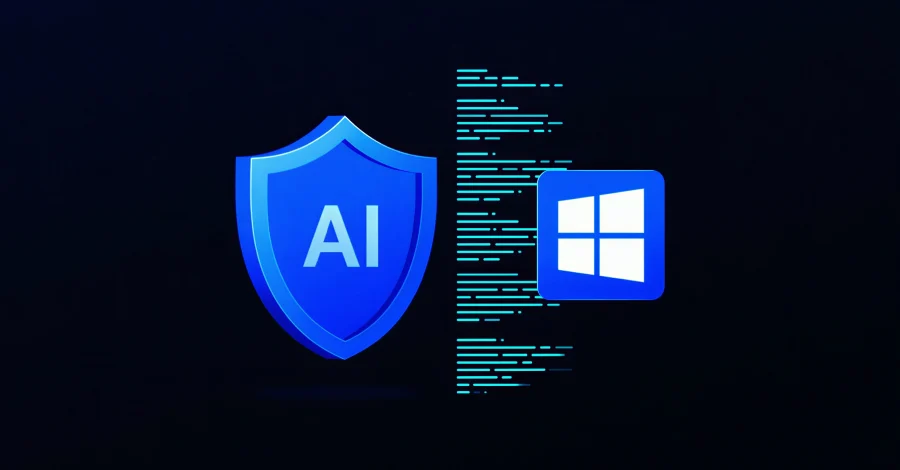
By Ravie Lakshmanan
May 13, 2026
In a move that signals a fundamental transformation in how global enterprises defend their digital perimeters, Microsoft has unveiled MDASH (Multi-model Agentic Scanning Harness). This sophisticated AI-driven ecosystem is engineered to automate the discovery, validation, and remediation of software vulnerabilities at a scale and speed previously unattainable by human analysts or legacy static analysis tools.
Currently in a limited private preview, MDASH represents Microsoft’s most ambitious attempt to leverage "agentic" artificial intelligence to secure complex, sprawling codebases like Windows. By moving beyond simple pattern matching, Microsoft is positioning MDASH as a production-grade defensive moat in an era where cyber adversaries are increasingly turning to AI to accelerate the exploitation lifecycle.
The Core Architecture: Understanding MDASH
At its heart, MDASH is not merely an AI model; it is an orchestrator. Unlike traditional security tools that rely on a single algorithm or a predefined set of rules, MDASH utilizes a model-agnostic framework that coordinates over 100 specialized AI agents. These agents function as a collaborative, multi-disciplinary team, each tasked with specific roles in the lifecycle of a security finding.
The Pipeline of Discovery
The system operates as a structured, multi-stage pipeline that treats code analysis with the rigor of a scientific inquiry. The process unfolds in four critical phases:
- Threat Modeling and Surface Mapping: The system first ingests the codebase, mapping out the attack surface and establishing a baseline for the threat model.
- Auditor Phase: Specialized "auditor" agents perform deep-dives into candidate code paths. These agents are trained to flag potential anomalies or deviations from secure coding practices.
- Debater Phase: Once a potential issue is flagged, a secondary, independent set of "debater" agents is deployed. Their sole responsibility is to attempt to refute the findings of the auditor. This adversarial "debate" is a critical feature: if the debater cannot disprove the vulnerability, the credibility score of the finding increases significantly.
- Proof of Exploit: In the final stage, the system generates a proof-of-concept (PoC) to validate that the identified flaw is indeed exploitable in a real-world scenario.
This "debate" mechanism is the system’s greatest innovation. By requiring findings to survive a rigorous counter-argument, Microsoft significantly reduces the "false positive" noise that plagues traditional automated scanning tools, allowing security teams to focus on actionable, high-risk threats.
Chronology: The Path to Agentic Security
The announcement of MDASH does not exist in a vacuum. It is the culmination of years of internal research at Microsoft and a response to the rapidly evolving threat landscape.

- Early Development (2024–2025): Microsoft began experimenting with Large Language Models (LLMs) for code review. Initially, the results were promising but inconsistent, as early models struggled with context awareness in massive repositories like the Windows kernel.
- The Pivot to Agentic Workflows: Recognizing that no single model could master the nuance of vulnerability research, Microsoft’s research teams pivoted toward an "agentic" approach. By breaking tasks into specialized sub-agents, they found they could achieve better reasoning capabilities.
- Proof of Concept (Q1 2026): The system was tested against the massive, legacy-heavy Windows codebase. It successfully identified dozens of flaws that had previously gone undetected.
- Validation (May 2026): The system was officially credited with unearthing 16 vulnerabilities addressed in the May 2026 "Patch Tuesday" release. These included critical flaws within the Windows networking and authentication stack, confirming the system’s viability in high-stakes environments.
Supporting Data: Proof in Performance
The efficacy of MDASH is backed by its recent real-world performance. Microsoft revealed that the 16 vulnerabilities identified by the system were not minor; they included critical bugs that could have enabled Remote Code Execution (RCE).
The Multi-Model Advantage
The system utilizes a "configurable panel" of models to ensure efficiency:
- State-of-the-Art (SOTA) Models: Reserved for high-level reasoning and complex logic tasks where accuracy is paramount.
- Distilled Models: Used for high-volume passes. Because these models are smaller and faster, they can scan vast swaths of code quickly, passing only the most suspicious sections to the SOTA models for deeper scrutiny.
- The Independent Counterpoint: A second, separate SOTA model provides an independent check, ensuring that the "debater" agent remains objective and rigorous.
This architecture ensures that the system is not only accurate but also cost-effective and scalable, allowing Microsoft to deploy it across the entirety of its product portfolio without prohibitive computational costs.
Official Responses and Strategic Vision
Taesoo Kim, Vice President of Agentic Security at Microsoft, emphasized that the industry has reached a critical inflection point. "The strategic implication is clear," Kim stated in a recent blog post. "AI vulnerability discovery has crossed from research curiosity into production-grade defense at enterprise scale."
Kim highlighted that the "durable advantage" of MDASH lies not in the underlying model—which can be swapped out as better models emerge—but in the harness itself. By creating a modular environment, Microsoft has "future-proofed" the system against the rapid pace of AI evolution. If a new, more powerful model is released next year, it can simply be "plugged in" to the MDASH framework, instantly upgrading the system’s reasoning capabilities.
The agents themselves have been trained on historical data, including years of past Common Vulnerabilities and Exposures (CVEs) and their subsequent patches. This historical knowledge allows MDASH to recognize "anti-patterns"—recurring mistakes that developers have made in the past—and preemptively flag them in new code before it is even compiled.
Implications: A New Era of Cyber Defense
The introduction of MDASH by Microsoft, closely following similar initiatives like Anthropic’s Project Glasswing and OpenAI’s Daybreak, signifies a broader industry shift toward "AI-speed" security.

1. The Death of Manual Triage?
For decades, security researchers have been overwhelmed by the sheer volume of code generated by global development teams. By automating the "discovery-validation-proof" loop, MDASH could theoretically allow security teams to move from a reactive posture to a proactive one. Instead of waiting for a bug to be exploited in the wild, organizations can identify and patch flaws during the CI/CD (Continuous Integration/Continuous Deployment) process.
2. The Arms Race Escalates
While MDASH is a powerful defensive tool, the same underlying technology—multi-model agentic systems—is equally accessible to threat actors. As security teams use AI to find vulnerabilities, attackers will inevitably use similar frameworks to automate the discovery of those same bugs before patches are released. This sets the stage for an "AI-versus-AI" cybersecurity arms race, where the winner is the entity with the most efficient, accurate, and rapid agentic pipeline.
3. The Future of Software Engineering
If MDASH can identify 16 critical vulnerabilities in a single release cycle, it begs the question: how will this change the role of the software developer? In the near future, we may see a tighter integration between IDEs (Integrated Development Environments) and agentic security systems. Developers may receive real-time feedback from "debater" agents as they type, effectively turning the security team into an automated, always-on pair programmer.
Conclusion
Microsoft’s MDASH is more than just a new tool; it is a declaration that the era of manual vulnerability research is coming to a close. By orchestrating a symphony of specialized AI agents, Microsoft has demonstrated that the complexity of modern software can be managed, provided the right framework is in place.
As the industry watches the private preview results with bated breath, one thing is certain: the speed at which vulnerabilities are found and fixed is about to accelerate by orders of magnitude. The defense of the future will not be fought by humans looking at code, but by intelligent systems debating the security of our digital architecture in the background. In this new frontier, the primary competitive advantage for any technology company will be the maturity and robustness of their agentic security infrastructure.

 Basiran
 Iffa Jayyana
 Raul Delapena Setiawan
 Reynand Wu
 Sagoh
Sagoh

 Azzam Bilal Chamdy
 Ali Ikhwan