
 Raul Delapena Setiawan
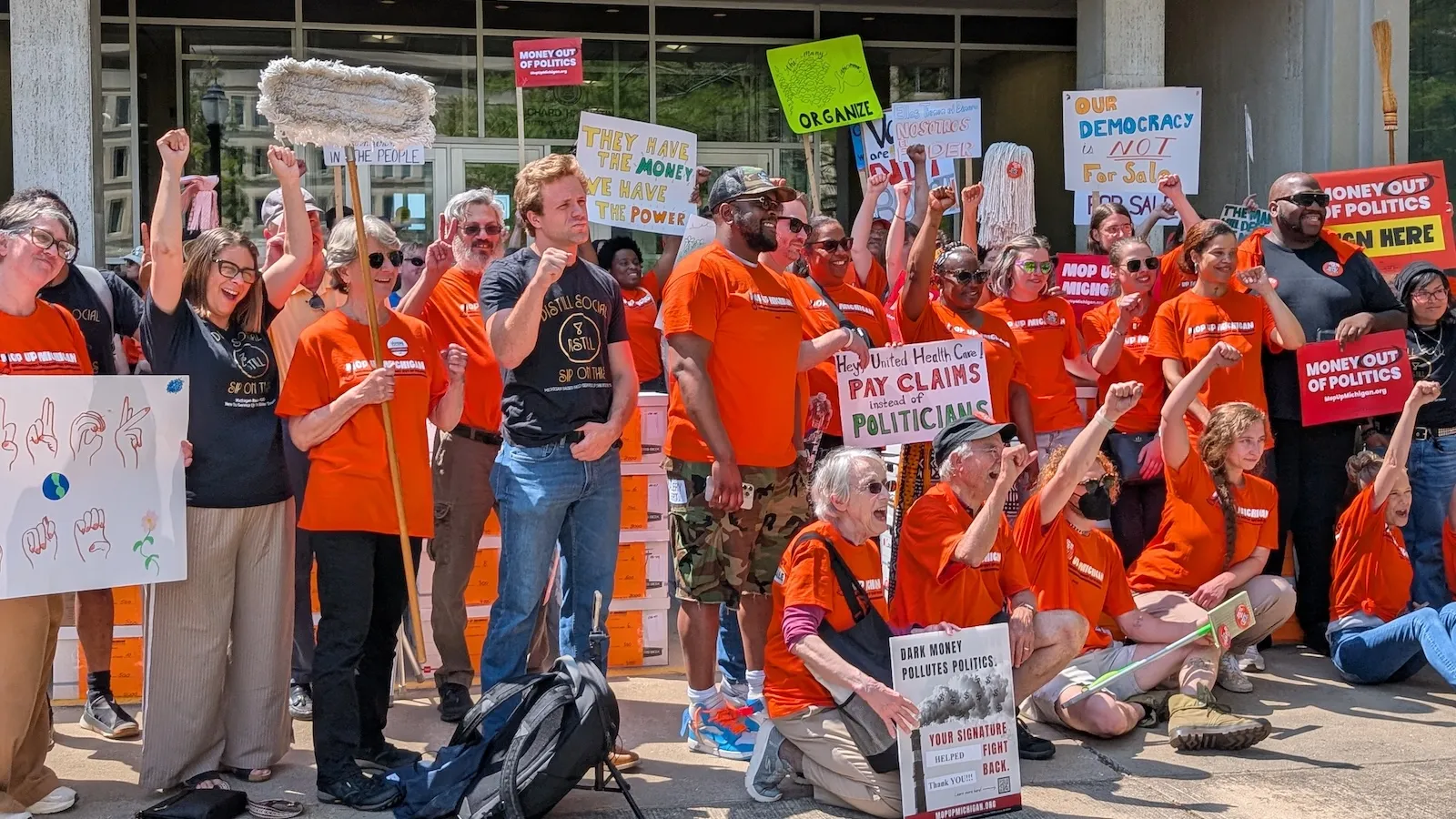
For 83-year-old Sam Getsinger, the future is not an abstract concept; it is a tangible responsibility defined by her five grandchildren. As she surveys the political landscape of her home state, she sees a system she fears is fundamentally broken—one where the sheer weight of corporate capital has eclipsed the voices of the electorate.
"I don’t want our politics to continue so that the person with the most money wins everything," Getsinger says. "I don’t think that’s a very sound democracy."
Getsinger’s conviction led her to spend months canvassing throughout northern Michigan, knocking on doors to build support for a sweeping ballot initiative aimed at curbing the influence of gas and electric utilities in state politics. Her experience in the field was telling: nearly every resident she encountered shared her frustration, pointing to a mounting sense of urgency regarding high energy costs, unreliable infrastructure, and the perceived stranglehold that utility giants maintain over the halls of power in Lansing.
As Michigan heads to the polls next week, the state finds itself at the center of a high-stakes constitutional experiment. Proposal 2 seeks to fundamentally reshape the relationship between regulated monopolies and the democratic process, testing the legal limits of how a state can restrict corporate spending in an era defined by Citizens United.
The Catalyst: A Crisis of Reliability and Cost
The momentum behind Proposal 2 did not emerge in a vacuum. It is the culmination of years of deep-seated public resentment. Michigan currently grapples with some of the highest utility rates in the nation, paired with a grid that has been described as having the least reliable service in the country.
Extreme weather events have become a recurring trauma for residents. Consecutive seasons marked by devastating ice storms and erratic tornadoes have left hundreds of thousands of Michiganders without power for days at a time. This physical vulnerability has been compounded by economic strain, as families struggle to reconcile rising monthly bills with a service quality that seems to be in terminal decline.
Furthermore, the recent influx of massive data center projects—and the energy-intensive infrastructure required to power them—has sparked a grassroots backlash. Critics argue that these developments prioritize industrial growth at the expense of residential rate stability and environmental health.
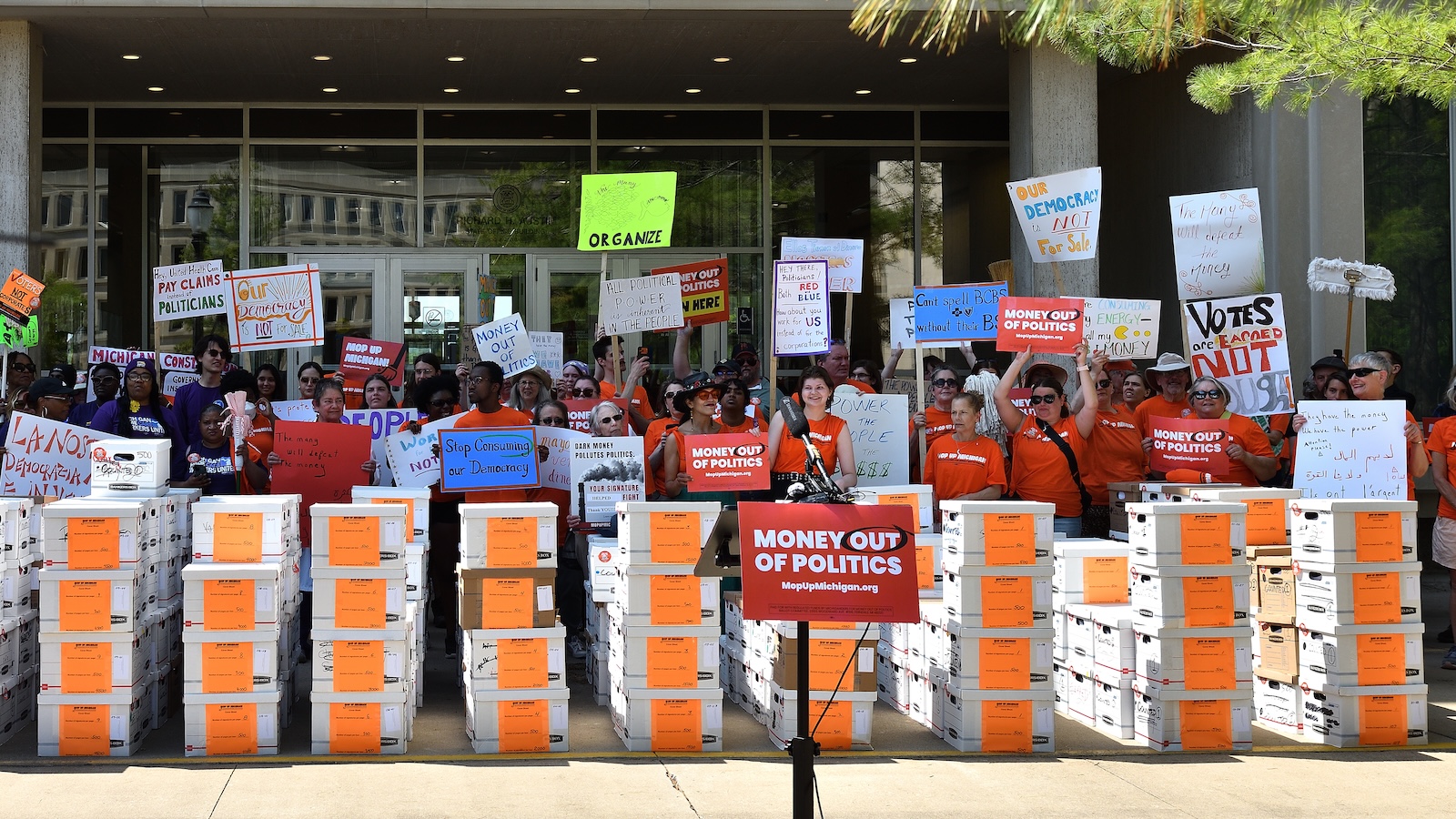
"Everything is more expensive," says Christy McGillivray, co-chair of Michiganders for Money Out of Politics, the coalition that spearheaded the effort. "The quality of service is worse, and we are dealing with more air and water pollution as a result of utility influence in Lansing. We have to put a stop to it."
Chronology: From Grassroots Frustration to the Ballot
The path to the ballot was paved by sheer organizational grit. The coalition managed to collect 560,000 signatures, a staggering number that underscores the depth of public anger.
The movement traces its roots to 2025, a year characterized by repeated legislative failures to curb utility lobbying. During that period, the Michigan League of Conservation Voters launched the "No Utility Money Challenge," urging lawmakers to reject campaign contributions from utility-aligned entities. Initially, the challenge saw limited participation, with fewer than 10 candidates signing on.
However, the political climate shifted rapidly as the public grew more vocal. By the current election cycle, the number of candidates who have taken the pledge has swelled to 126, including both Democrats and Republicans. This shift suggests that for the first time in recent memory, being "pro-utility" in the state capitol has become a political liability rather than a standard operational procedure.
"These pledges are reflective of how toxic utility money has become, and that’s new," notes Karlee Weinmann, a research and communications manager for the Energy and Policy Institute. "It used to not even be controversial in the state capitol to be connected with the utilities as a lawmaker."
The Mechanics of Proposal 2
Proposal 2 is designed to act as a systemic filter, plugging the leaks that currently allow utility money to flow into campaigns under the guise of "independent" spending.
While Michigan already prohibits corporations from donating directly to political campaigns, the law is porous. Companies frequently utilize nonprofit organizations and Political Action Committees (PACs) to funnel money into races or launch attack advertisements. According to the Michigan League of Conservation Voters, lawmakers and committees accepted $421,000 in utility-linked corporate donations last year alone, with the 2022 election cycle seeing that figure balloon to over $1.6 million.

If passed, Proposal 2 would:
- Prohibit utility-funded PACs from contributing directly to campaigns.
- Ban utility executives, board members, and their immediate family members from making individual political contributions to candidates or parties.
- Extend these bans to other companies that hold state or local government contracts exceeding $250,000.
- Implement stricter transparency requirements for online political advertising.
The Opposition: A Defense of Speech
Predictably, the proposal has drawn fierce resistance from utilities and interest groups, who frame the initiative as an unconstitutional overreach.
John Sellek, spokesperson for Protect MI Free Speech, argues that the measure is a "sneak attack" on the rights of individuals and companies to participate in the democratic process. His organization has received $232,000 from utility-aligned groups to fight the measure.
"Supporters are using voters’ frustration with the cost of living to carry out a wider attack on those who can’t support candidates simply because of who they are related to or what company they work for," Sellek says.
Similarly, Consumers Energy, a major regulated utility in the state, maintains that it operates within the bounds of existing campaign finance law. "Mop Up Michigan’s approach won’t eliminate money in politics—it will simply shift influence away from Michigan companies and toward wealthy national donors and special interests," says Katie Carey, a spokesperson for the company.
Legal Implications and the Shadow of Citizens United
The broader implication of Proposal 2 is its status as a direct challenge to current federal jurisprudence. For 50 years, the U.S. Supreme Court has trended toward treating political spending as a form of protected free speech, most notably through the 2010 Citizens United decision.
Legal experts are divided on the measure’s survivability. While governments retain the right to ban direct contributions to prevent corruption, they have significantly less leeway to limit independent expenditures or "uncoordinated" advertising. Consequently, if the ballot measure passes, it is almost certain to trigger a protracted legal battle that could ultimately reach the highest courts in the land.
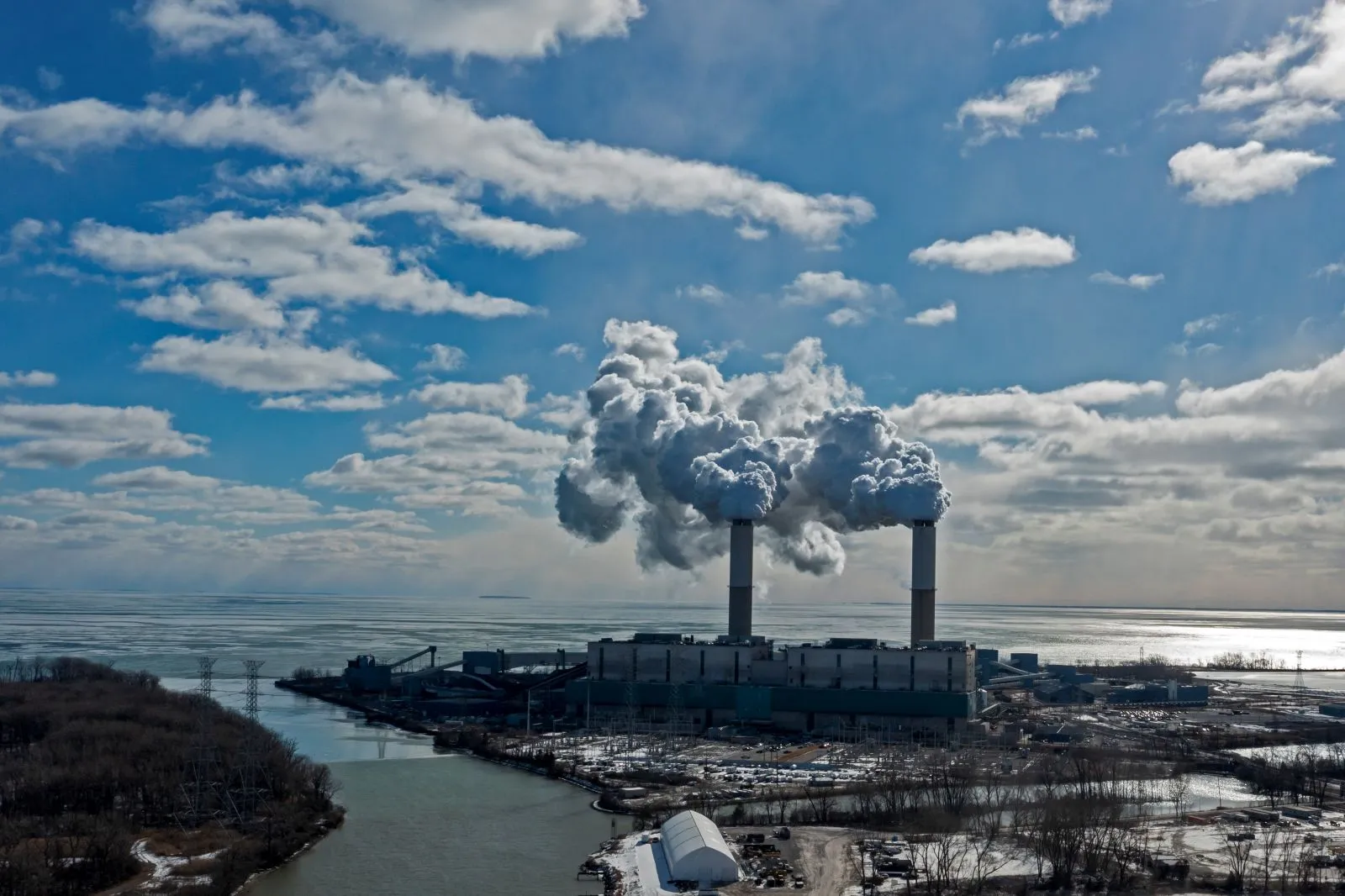
Karley Abramson of the Citizens Research Council of Michigan notes that even if the measure survives a legal challenge, it is not a panacea. "If one avenue is closed off to them, they can redirect that money to other entities that can effectuate pretty much the same goal," she says.
Looking Ahead: A First Step or a Last Stand?
Despite the potential for legal setbacks and the acknowledgment that corporate influence is a hydra-headed problem, supporters remain undeterred. They view the ballot initiative not as the final solution to money in politics, but as a critical opening salvo in a longer campaign.
"This is a really solid first step in starting to push forward some more transparency," says Nick Dodge, senior director of programs for the Michigan League of Conservation Voters.
For voters like Sam Getsinger, the outcome of this election is about sending an unmistakable message to the power brokers in Lansing. Whether or not Proposal 2 succeeds in its entirety, the act of placing it on the ballot signifies a growing demand for accountability—a signal that the era of business-as-usual for Michigan’s utilities may finally be nearing an end. As the state stands on the precipice of this decision, the eyes of the nation are fixed on Michigan to see if a state-level revolt can successfully challenge the entrenched power of the modern corporate lobby.


 Rifan Muazin

 Siti Muinah

 Nana
 Layla Zulfa

 Ammar Sabilarrohman
