Basiran
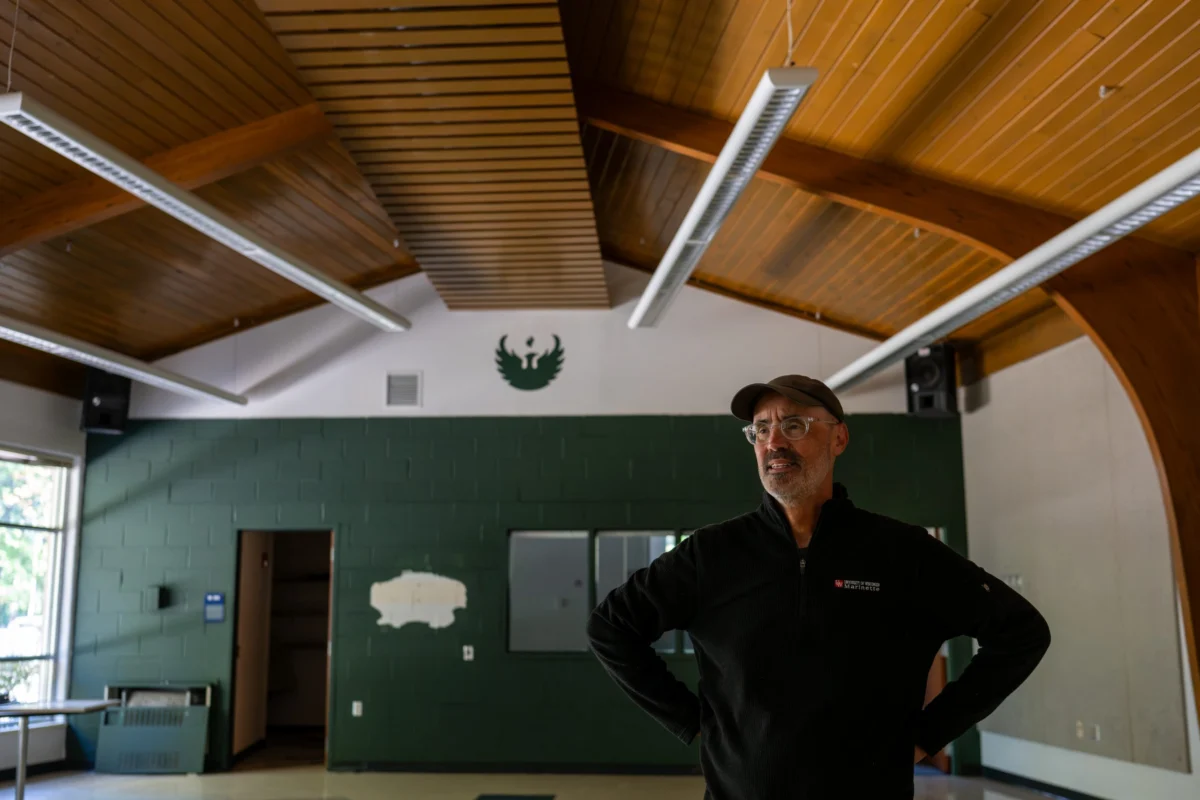
Last May, as the academic year drew to a close, a quiet but profound transformation occurred in the heart of south-central Wisconsin. Students, staff, and faculty at the University of Wisconsin–Platteville Baraboo Sauk County received the final, devastating confirmation that their campus was shutting its doors forever. For nearly 60 years, the school—affectionately known as "Boo U"—had served as a cornerstone of the community. As the final semester ended, the halls emptied, leaving behind not just silent classrooms, but a void in the educational landscape of rural Wisconsin.
This closure was not an isolated incident. It was the latest in a aggressive wave of consolidation and shuttering that has seen the University of Wisconsin (UW) system permanently close eight of its 13 two-year branch campuses in just three years. These institutions, historically focused on the liberal arts, functioned as critical, affordable on-ramps to higher education, particularly for rural and first-generation college students. Their disappearance marks a pivot away from the state’s historic commitment to broad-based public education, raising urgent questions about the future of social mobility in rural America.
A Chronology of Decline: From Expansion to Consolidation
The decline of the branch campus system is a story written over the course of nearly a decade, fueled by a mixture of demographic shifts, political budget constraints, and a fundamental change in the administrative philosophy of the UW system.
The trajectory began to shift noticeably in 2015, when then-Governor Scott Walker implemented significant budget cuts across the UW system. These cuts, paired with a prolonged, state-mandated tuition freeze, severely hampered the ability of smaller, regional schools to maintain their infrastructure, attract faculty, and innovate.
The most significant turning point occurred in 2017, when the Board of Regents approved a sweeping merger, reclassifying the two-year colleges as branch campuses of the state’s larger four-year universities. While intended to create efficiency, the move inadvertently forced smaller institutions into a predatory competitive environment. Suddenly, these community-focused schools were competing for resources and students against massive, better-funded institutions that, in many cases, lowered their own admissions requirements to lure students away from the smaller branches.
By 2023, the fiscal pressures had become insurmountable. Former UW System President Jay Rothman catalyzed a firestorm of controversy when he publicly advocated for a shift away from the liberal arts in favor of career-specific, vocational training, specifically targeting institutions that served low-income populations. This policy shift signaled the end of the "experimentation" phase of college, where students could discover their academic passions, and ushered in a rigid, ROI-focused model of education.

The Shrinking Map: A Data-Driven Crisis
The justification offered by UW officials for these closures centers on plummeting enrollment numbers. Across the UW system, enrollment has declined by more than 10 percent since 2010. However, the drop at two-year schools has been catastrophic. In its final year of operation, "Boo U" enrolled just 100 students, a staggering decline from the 500 students who walked its halls a decade prior.
However, researchers argue that enrollment is a symptom, not the cause. Nicholas Hillman, a leading scholar on education policy and a professor at Indiana University, has long warned about the creation of "education deserts." His research demonstrates that for the vast majority of students, proximity is destiny; most undergraduates choose to attend college within 20 miles of their home. When a college closes, it doesn’t just relocate the students—it eliminates the possibility of college for many.
"They’ve hollowed out the two-year schools and the liberal arts transfer mission, and now they’re sealing the coffin," Hillman notes. "The question is: if you shut one door, have you opened another?"
The data suggests the answer is no. Previous reporting indicates that rural student enrollment in the UW system has fallen at a rate significantly higher than the general decline in college attendance. As these hubs of learning disappear, the geographic "desertification" of the state is becoming a self-fulfilling prophecy.
The Human Cost: Voices from the "Desert"
For the students who relied on these institutions, the impact is personal and lasting. Alex Stevens, a history teacher in Marinette, Wisconsin, credits the local branch campus with saving his academic career. Growing up in a rural, low-income household in Michigan’s Upper Peninsula, Stevens was tasked with caring for his disabled mother.
"I was rural, poor, and smart, and the UW-Marinette campus gave me a remarkable opportunity," Stevens recalls. The ability to attend classes close to home, at an affordable rate, allowed him to build a foundation before transferring to a four-year institution. That path is now closed to the students he teaches today.

Dan Kallgren, who taught history at UW-Marinette for decades, served as the final faculty member on campus. He describes the closure as the loss of an essential, supportive environment where students could "try out" college without the immediate financial burden of relocation. "Think about the rural kid screwing up his courage and coming here, then getting turned on to engineering or history," Kallgren says. "That avenue is now closed."
The sense of loss is shared by community leaders. Karen DeSanto, a Wisconsin state legislator representing Baraboo, attended a memorial event for the closing of the Baraboo campus. "The students talked about how this place shaped and changed lives in this community," she says. "We don’t have that anymore."
Official Perspectives and the "Wisconsin Idea"
The administration of the University of Wisconsin maintains that the state is not abandoning its students. Officials frequently point to the existence of 13 remaining four-year schools and 16 technical colleges as evidence that "plenty of options" still exist.
However, this argument ignores the specific, specialized role that liberal arts-focused branch campuses played. By stripping away these programs, the state is effectively dismantling the "Wisconsin Idea"—the century-old, progressive vision that education should extend to every corner of the state, improving the lives of citizens both inside and outside the classroom.
Critics like Douglas Haynes, a professor at UW-Oshkosh, argue that this move is creating a two-tiered system. "People don’t realize the contrast between schools where programs are being cut and Madison, where the world is your oyster," Haynes says. "There are going to be increasing numbers of rural students who just don’t go to college anymore."
This shift has profound economic implications. A recent study by the Wisconsin Policy Forum highlighted the state’s severe "brain drain," noting that young, educated workers are fleeing the state at one of the highest rates in the nation. By limiting college access at the front end, the state is potentially creating a secondary form of brain drain—one where local talent is never developed, and young people in rural communities are deprived of the tools to improve their own neighborhoods.

Implications: A Narrowing Future
The current trend represents more than just a fiscal rebalancing; it is an ideological shift. The narrowing focus on vocational training, as championed by former leadership, suggests that the state views education primarily as a commodity with a "return on investment" rather than a public good.
Alyssa Ratledge of MDRC notes that while job readiness is important, the loss of liberal arts education removes the "discovery" element of college. "Students also go to college to try things out and discover who they are," she says.
In some communities, local citizens are attempting to salvage what they can from the ruins. In Marinette, a theater arts program has survived through a combination of private donations, community engagement, and a partnership with UW-Green Bay. Lauryn Albaugh, who oversees the theater program, views it as a vital lifeline for local youth. But even in this success story, the reality of the campus’s status is grim: only two employees remain on-site, and a maintenance worker now spends his time walking through largely empty, mothballed facilities.
As the state of Wisconsin continues to shutter these campuses, it is effectively closing the doors to the future for thousands of rural students. The "education deserts" being created today will likely result in a less educated, less mobile, and more isolated rural workforce in the decades to come.
The closing of the branch campuses is a final act in a long process of institutional neglect. Whether the state will eventually recognize the damage done to its social fabric remains to be seen. For now, the buildings in Baraboo, Marinette, and beyond remain as silent monuments to a version of the Wisconsin Idea that is rapidly fading from view.
This story is part of a larger collaboration with the Institute for Nonprofit News’ Rural News Network. The project involved five nonprofit newsrooms—Barn Raiser, Carolina Public Press, Mountain State Spotlight, Oklahoma Watch, and the Shasta Scout—investigating the decline of rural higher education. This series was supported by the Ascendium Education Group.


 Asro
 Layla Zulfa

 Neng Nana

 Azzam Bilal Chamdy

 Laily UPN

 Nila Kartika Wati