
 Nana Wu
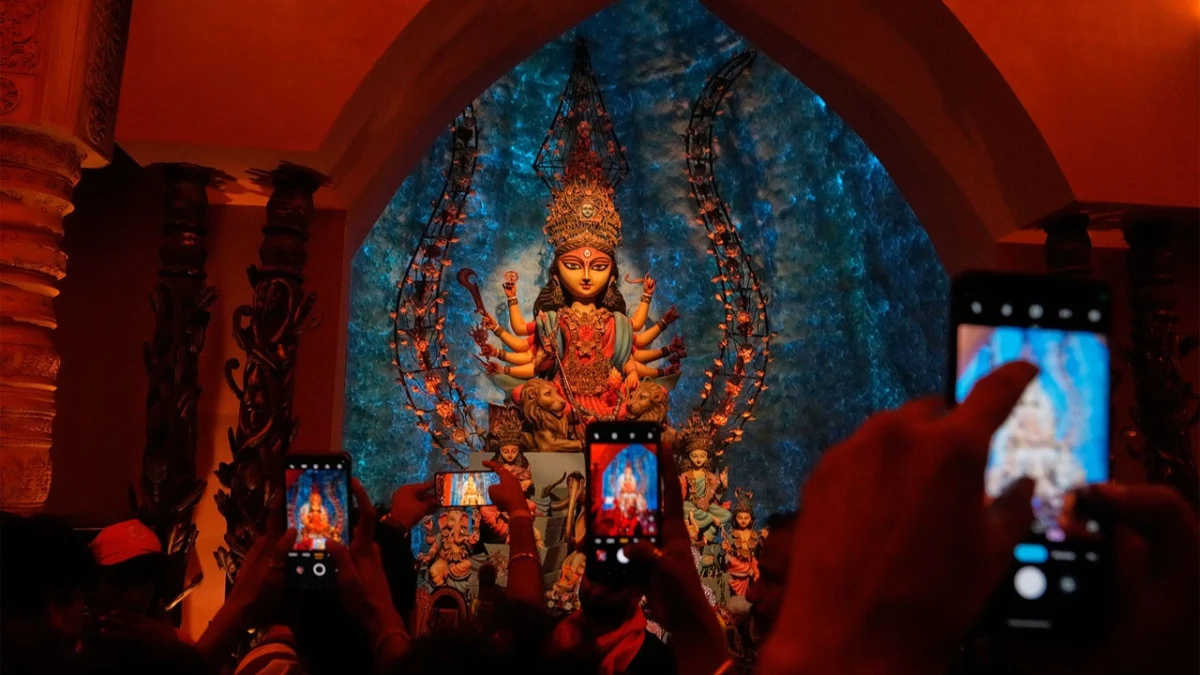
As the race to achieve Artificial General Intelligence (AGI) accelerates, the world’s most powerful technology companies find themselves facing an unexpected bottleneck: they are running out of engineering solutions for the problem of morality. In an attempt to solve the "alignment problem"—the challenge of ensuring AI systems act in accordance with human values—tech giants are increasingly turning to an ancient source for guidance: religion.
From the hallowed halls of the Vatican to private boardrooms in San Francisco, executives at firms like OpenAI, Anthropic, and Meta are engaging with theologians, philosophers, and faith leaders. The goal is ambitious, if not hubristic: to distill thousands of years of human ethical wisdom into the cold, probabilistic logic of Large Language Models (LLMs). Yet, as this trend gains momentum, it raises a profound question that remains largely unexamined: Do these companies understand what religion actually is, or are they merely treating it as a database of moral "best practices"?
The Great Convergence: Tech Meets Theology
The intersection of Silicon Valley and the sacred began in earnest as AI models became more sophisticated, capable of outputting human-like reasoning that occasionally veered into bias, deception, or harmful advice. Faced with the reality that their machines might mirror the worst of humanity, executives began looking for a "moral compass" that could transcend the chaotic, often polarized internet data upon which their models are trained.
"These are not questions a lab can answer," noted Chris Olah, co-founder of the AI safety firm Anthropic, during a presentation at the Vatican regarding Pope Francis’s encyclical on AI. "They are questions traditions like yours have carried for millennia."
This sentiment is shared by many in the industry. OpenAI CEO Sam Altman has frequently suggested that ChatGPT should reflect a "weighted average" of humanity’s moral views. The underlying philosophy is that by "training" AI on the ethical frameworks of major world religions, the resulting models will be better equipped to navigate the complex social landscape they are now entering.
Chronology of an Ethical Pivot
The move toward religious consultation did not happen overnight. It evolved in parallel with the public’s growing anxiety regarding AI safety:
- Early 2023: As ChatGPT’s popularity exploded, OpenAI and others faced mounting pressure regarding "hallucinations" and biased output. The industry shifted from focusing purely on technical capability to "AI safety" and "alignment."
- Late 2023: Tech giants began formalizing outreach to diverse religious groups. This included private symposiums where theologians were asked to weigh in on abstract questions such as "Do humans have souls?" and "What is the nature of suffering?"
- Early 2024: High-profile events, such as the Vatican’s AI initiatives, saw tech leaders publicly engaging with religious figures. Anthropic published blog posts detailing their consultations with over 15 religious and cross-cultural groups, signaling a shift toward more structured ethical integration.
- Mid-2024 to Present: The conversation has moved from "Can we do this?" to "How do we scale this?" Companies are now experimenting with ways to hard-code ethical constraints derived from these religious consultations into the fine-tuning processes of their models.
The "Rule Book" Fallacy: Anthropological Critiques
While the intentions of these tech companies may be noble, experts in religious studies argue that the industry is operating on a fundamental misunderstanding of what religion is. Webb Keane, an anthropologist at the University of Michigan, suggests that Silicon Valley is falling into the "rule book" trap—the tendency to view religion as a collection of extractable commandments or moral maxims that can be detached from the lived experience of believers.
"There’s a very conventional way of thinking of religion as a rule book," Keane explains. "It is certainly very tied to scriptural religion, and the scriptural religions at the end of the day really turn out to be the Abrahamic religions."
This approach poses a significant risk of cultural erasure. Many religious traditions, particularly those in the Global South or indigenous contexts, do not prioritize codification of ethics in the same way. By stripping religious wisdom of its ritualistic, cultural, and political context, AI companies risk creating a "Frankenstein" morality that feels alien to the traditions it claims to represent.
Supporting Data: Diversity in the Boardroom
Anthropic, often viewed as the industry leader in safety-conscious development, has been the most transparent about its efforts. Their recent meetings included a diverse array of scholars, clergy, and ethicists. Meghan Sullivan, a professor at the University of Notre Dame who attended these sessions, described them as "intellectually curious" and "nerdy" in the best possible sense.
However, the lack of transparency regarding the exact weighting of these viewpoints remains a point of contention. If an AI is trained on 80% Western ethical frameworks and 20% everything else, the "weighted average" Altman speaks of is not a universal truth, but a reflection of power dynamics.
Furthermore, scholars like Tomoko Masuzawa, author of The Invention of World Religions, point out that the very category of "religion" as a set of distinct, comparable systems is a modern, Western invention. Before the 19th century, traditions like Buddhism or Hinduism were not viewed as bounded "religions" in the modern sense. By forcing these ancient, fluid traditions into rigid, searchable data buckets, Silicon Valley may be inadvertently distorting the very wisdom it seeks to preserve.
Implications: The Risk of Homogenization
The most pressing concern is the danger of "moral homogenization." AI models operate by predicting the next token in a sequence based on vast amounts of data. When companies attempt to integrate diverse religious perspectives into these models, the technology may not "understand" the nuances of a specific faith; instead, it may flatten them.
Paolo Carozza, a member of the Meta Oversight Board and an expert in Catholic social thought, warns that the process of "mixing it all up" leads to a loss of meaning. "Any living, sophisticated tradition over time is capable of interacting with others outside of it and absorbing some new knowledge and growing," Carozza notes. "But it does so in this organic way. What AI… does, is not in an organic way, but in a way that just throws it all together, mixes it all up, and therefore makes sense of none of it."
The risk is that we end up with an "AI morality" that is essentially a bland, sanitized, and westernized compromise—a digital version of "universal values" that satisfies corporate safety metrics but fails to resonate with the depth of the human experience.
Official Responses and Future Outlook
In response to these critiques, tech companies argue that their goal is not to replace religious tradition, but to gain "accumulated thinking" on how good character is formed. They contend that by exposing their models to a wide range of moral arguments, they are creating a more robust, if not perfect, framework for decision-making.
"This work isn’t about aligning our models with any one tradition’s worldview," Anthropic stated in a recent blog post. "We want Claude to draw from a full range of viewpoints—religious, secular, political—with equal depth and rigor."
As we look to the future, the integration of religion into AI development represents a new frontier in the culture wars. It is an acknowledgment that technology is no longer just a tool, but a mirror of our collective values. However, if Silicon Valley continues to treat religion as a data-mining exercise rather than a living, breatheable set of traditions, it risks creating an AI that mimics the language of morality while remaining profoundly empty of it.
For the technologists, the challenge remains: can you program a machine to be "good" when humanity itself has spent millennia debating exactly what that means? Perhaps the most important thing these companies can learn from religion is not a set of rules, but the humility to recognize that some questions may never have a final, algorithmic answer.


 Azzam Bilal Chamdy
 Asep Darmawan

 Suro Senen

 Nana
 Muslim
