
 Dwi Wanna
In the modern corporate landscape, the line between business success and mediocrity is increasingly drawn by the proficiency of the workforce. As the marketing ecosystem undergoes a radical metamorphosis driven by artificial intelligence, data fragmentation, and shifting consumer expectations, the mandate for leadership is clear: evolve or stagnate.
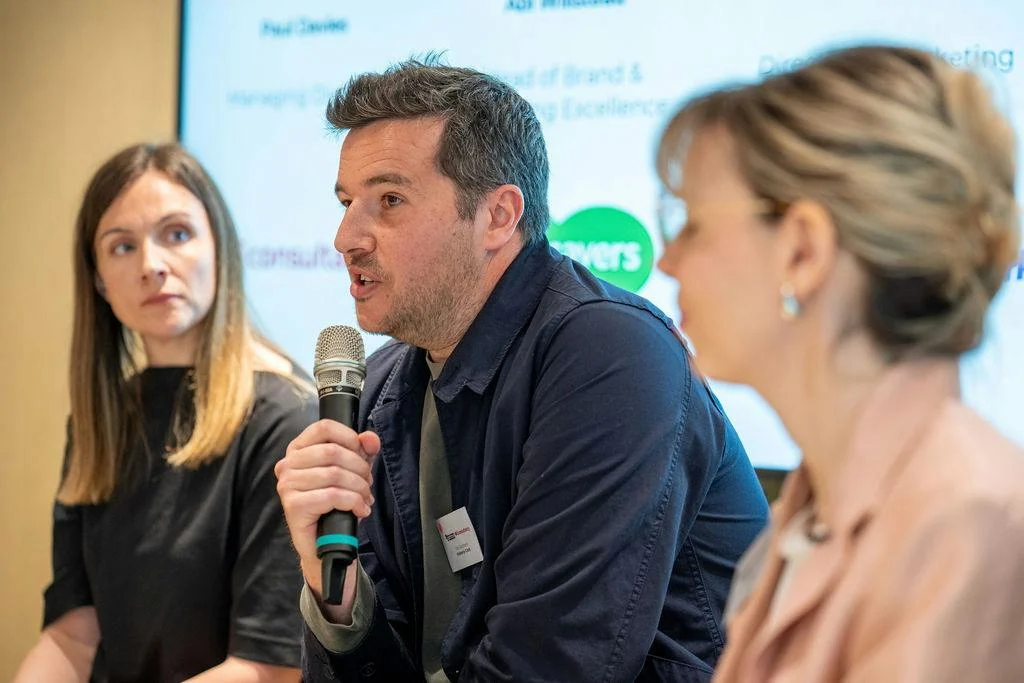
At the most recent Econsultancy Capability Leaders Forum, held this May, industry experts converged to dissect a fundamental truth: people and their skills are the primary engine of business performance. Opening the session, Rose Keen, Content and Insight Director at Econsultancy, set a provocative tone: "Let’s start with something we can all agree on: people and their skills matter for business performance."
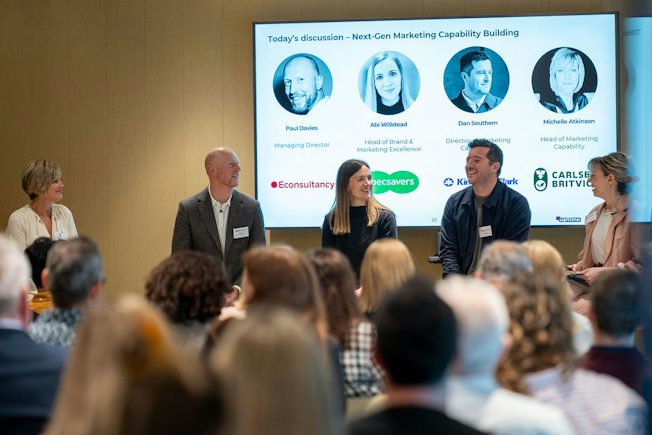
The event, which brought together marketing luminaries from Specsavers, Kimberly-Clark, and Carlsberg Britvic, served as a diagnostic session for global brands struggling to align their internal learning initiatives with the high-velocity demands of 2026.
The Foundation: Why Capability Building is Transformation in Disguise
Econsultancy’s latest research offers a sobering insight for those relying on outdated training models. The data confirms that the most significant differentiator between market-outperforming businesses and their laggards is the intensity and strategy of their investment in human capital. However, investment alone is a blunt instrument.
"One of the most consistent findings we get is that the biggest difference between businesses that outperform the market and those that don’t is how much they invest in their people and their skills," Keen noted. "However, not all those investments are equally effective."

The forum’s central thesis was that capability programmes are not merely HR initiatives; they are "transformation in disguise." When executed correctly, they bridge the gap between static corporate strategy and the dynamic, real-world execution required to win in a crowded marketplace.
Chronology of the Forum: Mapping the Modern Marketing Mindset
The forum unfolded as a masterclass in organizational design. The conversation followed a logical progression, starting with the existential need for relevance and moving toward the tactical application of "evergreen" versus "evolving" skills.
Phase 1: The Relevance Gap
The discussion began by addressing the "relevance gap." Panelists argued that if a training programme does not solve a specific problem the marketer faces on a Tuesday afternoon, it is destined for failure. Behavioural change, they agreed, cannot be forced through abstract theory.
Abi Willstead, Head of Brand & Marketing Excellence at Specsavers, highlighted the daily struggle: "Whether the learning is really transferring through to the day-to-day is one of the key challenges." If technological or cultural barriers make it difficult to apply new skills in the flow of work, the ROI of that training drops to near zero.
Phase 2: The Dichotomy of Skills
The panel explored the Econsultancy "Learning for Growth" model, which categorizes skills into two distinct buckets:

- Evergreen Skills: Timeless competencies, such as brand strategy, consumer insight, and creative storytelling, which serve as the bedrock of the profession.
- Evolving Skills: Volatile competencies, such as mastering generative AI agents, real-time data analytics, and emerging social platforms, which have a short "half-life."
Michelle Atkinson, Head of Marketing Capability at Carlsberg Britvic, shared her approach to this balance: "I look at the brand-building programme we’re launching. We are looking to land those core skills that marketers need. But alongside those, we have leadership skills and we have future skills."
Phase 3: The AI Imperative
A significant portion of the forum was dedicated to the elephant in the room: Artificial Intelligence. Rather than viewing AI as a replacement for human skill, the panel positioned it as a catalyst for deeper critical thinking.
Dan Southern, Director of Marketing Capabilities at Kimberly-Clark, noted that as LLMs and AI agents take over repetitive tasks, the human requirement for high-level oversight becomes critical. "As our workflows become more reliant on artificial intelligence and LLMs producing outputs, we’ve got to make sure that the marketers within our community have very strong critical thinking skills."
Supporting Data and Industry Trends
The urgency of the discussion was underscored by a startling statistic: only one in five marketers describes their organization as capable of responding to emerging skills needs. This agility deficit is creating a massive competitive disadvantage for legacy firms.
Furthermore, the panel pointed to the "access vs. engagement" trap. Paul Davies, Managing Director at Econsultancy, drew a stark contrast between libraries and galleries. "If you walk into a library and you don’t know what you’re looking for, it is confusing. But a gallery, where everything is curated for you, is a better experience."

Most organizations invest in massive Learning Management Systems (LMS) that function like digital libraries—vast, unnavigable, and ignored. The data suggests that engagement only occurs when content is curated, personalized, and delivered at the exact moment of need. As Michelle Atkinson astutely observed, "Nobody wants to learn how to change a tyre until they get a puncture. Then you want to learn how to change a tyre real quick."
Official Perspectives from the Panel
The insights shared by the panelists represent the gold standard for marketing leaders currently navigating their own transformation journeys.
Abi Willstead (Specsavers)
Willstead emphasized the importance of securing the "floor" before aiming for the ceiling. By first focusing on evergreen, foundational skills, Specsavers was able to build a stable platform from which the team could then selectively adopt high-growth, evolving technologies. This phased approach prevents the "shiny object syndrome" that often plagues marketing departments.
Dan Southern (Kimberly-Clark)
Southern’s arrival at Kimberly-Clark 18 months ago triggered a cultural shift. He identified that before any learning can happen, there must be a spark of curiosity. "It’s about exciting people, making people curious and making people want to learn. Getting people to have learning agility." For Southern, capability building is an exercise in cultural psychology as much as it is in technical upskilling.
Paul Davies (Econsultancy)
Davies summarized the philosophical shift required for modern leaders. He stressed that access to a platform is not equivalent to the cultivation of a skill. True capability building requires a shift from passive consumption to active, context-rich application.
The Implications: Why Your Strategy Needs to Change
The findings from the May forum suggest three major implications for marketing leaders as they look toward 2027 and beyond:
1. The Death of the "One-Size-Fits-All" Academy
The era of the mandatory, broad-brush training course is over. Future-proof organizations will move toward "just-in-time" learning, where content is served to the employee based on the specific project or challenge they are tackling.
2. Critical Thinking is the New Technical Skill
As AI democratizes the creation of content, copy, and code, the competitive advantage shifts to the individual who can judge, curate, and optimize those outputs. Technical proficiency in a tool is fleeting; the ability to think critically about the strategy behind the tool is permanent.
3. Culture Drives Capability
You cannot "install" capability. As both Southern and Willstead noted, unless the culture encourages curiosity and allows for the application of new ideas, the best curriculum in the world will fail. The primary role of the modern marketing leader is to remove the friction that prevents their team from experimenting and learning.
Conclusion: A Call to Action
The Capability Leaders Forum served as a wake-up call for the industry. The rapid pace of change in the marketing landscape—driven by technological disruption—is not slowing down. In fact, it is accelerating.

For those in leadership positions, the message is clear: stop buying platforms and start building ecosystems. The goal is not to fill a database with certifications, but to cultivate a workforce that is agile, curious, and fundamentally aligned with the core principles of marketing, even as the methods of execution shift beneath their feet.
As the industry looks toward the next quarter, the organizations that will thrive are those that recognize that their greatest asset is not their data stack or their media spend—it is the combined intellect and adaptability of their people.
Are you prepared to lead your team through the next wave of industry change? The conversation continues at the next Econsultancy Capability Leaders Forum. Secure your seat here and join the leaders who are defining the future of the marketing profession.

 Pevita Pearce

 Nana

 Suro Senen

 Azzam Bilal Chamdy

 Asep Darmawan

 Nana Wu


 Muslim
