
 Jia Lissa
Executive Summary: A New Era for the Ad Holding Giant
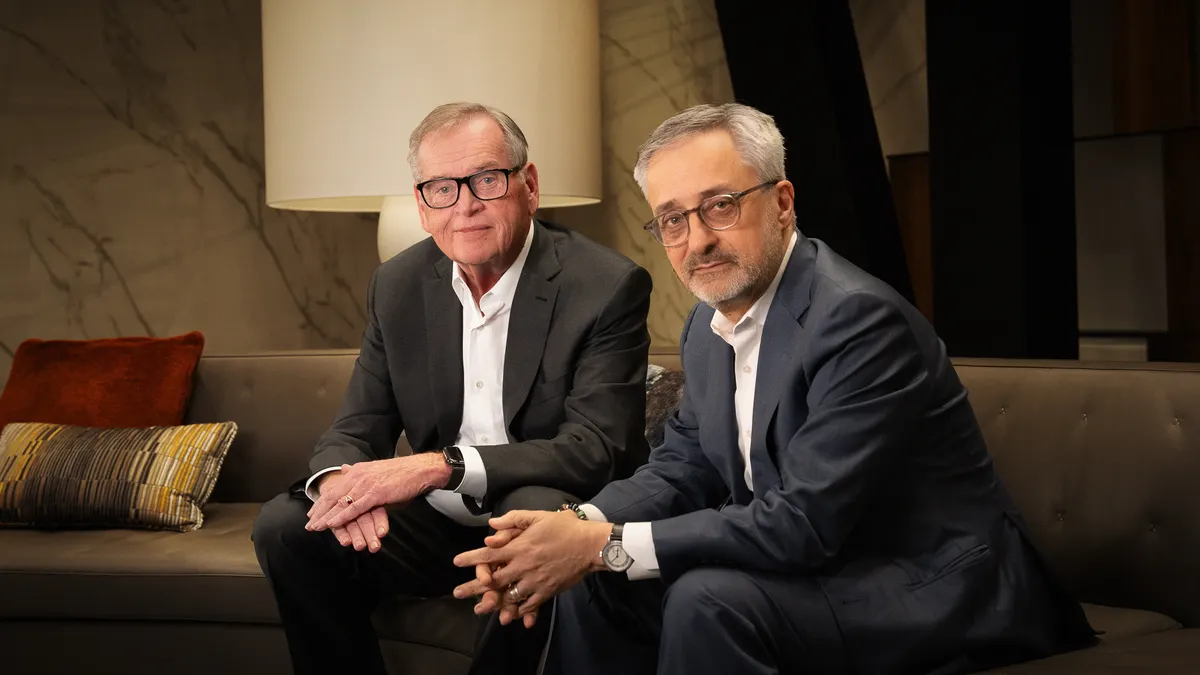
Nearly one year after finalizing the largest acquisition in the history of the advertising agency sector, Omnicom Group is signaling that its massive structural overhaul is nearing completion. During the company’s third-quarter earnings call on October 23, 2026, CEO John Wren confirmed that the integration of Interpublic Group (IPG) is "substantially completed." The firm is now firing on all cylinders, reporting $6 billion in third-quarter revenue and steady progress toward its ambitious $900 million cost-savings target.
As the agency landscape continues to consolidate, Omnicom’s ability to weave the legacy assets of IPG into its existing infrastructure while maintaining organic growth has become the primary benchmark for investors. Despite high-profile executive departures and the loss of long-term anchor accounts like PepsiCo, the holding company appears to be successfully pivoting toward integrated media and sports sponsorship as its primary growth engines.
Chronology of the Integration
The path to this moment has been marked by rapid decision-making and aggressive restructuring.
- Late 2025: Following the finalization of the acquisition—a move that redefined the competitive dynamics of the global advertising market—Omnicom initiated a comprehensive audit of its combined portfolio.
- December 2025: The company began a series of strategic layoffs and the systematic shedding of "noncore" assets, aiming to streamline operations and eliminate redundant capabilities created by the merger.
- Q1–Q2 2026: Omnicom focused on aligning the leadership teams of both organizations, managing internal culture shifts, and consolidating its technology stacks to better serve a unified client base.
- Q3 2026: The current reporting period marks the first time the company has reported financials that reflect a "substantially integrated" entity. The focus has shifted from the trauma of merger-related restructuring to long-term operational efficiency.
Supporting Data and Financial Performance
The financial health of the "New Omnicom" is currently defined by a delicate balance between growth in high-margin sectors and contraction in legacy advertising segments.
Organic Revenue and Growth
Omnicom reported a 7.2% year-over-year organic revenue increase for the third quarter, reaching $6 billion. Crucially, this figure excludes the performance of assets held for sale, providing a clearer picture of the company’s core trajectory. While the advertising segment experienced a mid-single-digit decline, integrated media emerged as the standout performer, boasting growth of over 10%.

Cost Efficiency
The $900 million cost-savings initiative remains the central pillar of the company’s investor thesis. By trimming the fat from the combined organizational chart and divesting non-strategic business units, Omnicom is attempting to improve its margins significantly. Wren noted that the "remaining handful of dispositions" would be finalized in the near term, effectively closing the chapter on the asset-shedding phase of the merger.
Sports Sponsorships
Beyond traditional media, Omnicom is doubling down on sports. The firm currently manages approximately $9.9 billion in sports sponsorships. This investment has already yielded dividends surrounding recent World Cup cycles and is being positioned as a key differentiator for the upcoming 2028 Olympic Games. In an era where fragmented media makes mass-market reach difficult, sports remains one of the few reliable vehicles for large-scale brand visibility.
Official Responses and Client Dynamics
The corporate narrative at Omnicom remains one of resilience and forward momentum. When faced with inquiries regarding client churn and leadership turnover, the executive team has maintained a posture of unflappable confidence.
The PepsiCo-Coca-Cola Shakeup
The advertising world was recently rocked by a high-stakes "changing of the guard" between the industry’s two largest beverage rivals. While Omnicom suffered a significant blow by losing the PepsiCo global media business—an account it held for decades—to Publicis Groupe, it effectively neutralized that loss by securing the North American media duties for The Coca-Cola Company.
When questioned about this high-profile swap, John Wren remained notably restrained, opting to defer comments on the Coca-Cola win to the client’s official announcements. He emphasized that the "pitch environment is healthy" and that the vast majority of account reviews expected for the year have already concluded.

The Talent Question
The departure of key creative leaders—most notably Tyler Turnbull, who left to lead WPP’s creative arm, and the retirement of long-time veteran Troy Ruhanen—has prompted speculation about the stability of Omnicom’s agency culture. Wren dismissed concerns that these exits suggest a systemic issue, asserting that no individual is essential to the firm’s existence.
"There’s no one key individual in this company that the company revolves solely around," Wren stated. "Everybody is replaceable, and we anticipate and have succession plans for all of our key positions throughout the company, so when something like that happens, we’re able to react to it very smoothly."
Implications: What This Means for the Industry
1. The Death of the "Generalist" Agency
The growth of integrated media over creative advertising suggests a permanent shift in client priorities. Brands are no longer looking for siloed creative shops; they are looking for "full-stack" partners who can handle data, media buying, and creative execution in one unified ecosystem. Omnicom’s success in this area suggests that the holding company model is not dying, but evolving into a technology-first consultancy.
2. The Power of "Noncore" Divestment
Omnicom’s strategy provides a roadmap for other conglomerates. By ruthlessly identifying assets that do not scale—even those with historical significance—the firm has freed up capital to reinvest in higher-growth areas like sports and data-driven media. This "leaner and meaner" approach is likely to become the standard across the holding company landscape.
3. Client Loyalty is Increasingly Transactional
The PepsiCo-Publicis and Coca-Cola-Omnicom transitions underscore a brutal reality: even the longest-standing agency-client relationships are now subject to immediate disruption. The market has moved toward a model where global media buying is treated as a strategic, short-to-medium-term investment rather than a permanent partnership. Agencies that cannot prove their value through measurable performance and integrated data will find themselves increasingly vulnerable to these sudden shifts.

4. The 2028 Olympic Tailwind
By positioning its sports sponsorship division at the forefront of its future growth, Omnicom is hedging its bets against the unpredictability of digital advertising. The 2028 Olympic Games represent a massive global marketing event that will demand the exact type of integrated, high-scale service that Omnicom is currently building. If the firm can successfully leverage its current media momentum into these high-profile events, it may solidify its position as the preeminent partner for global enterprise brands.
Conclusion
Omnicom Group stands at a definitive crossroads. By successfully navigating the integration of IPG, the firm has proven that it can scale through acquisition without losing its competitive edge. While the loss of legacy accounts and the departure of veteran leadership pose challenges, the company’s pivot toward integrated media and its disciplined approach to cost-saving suggest a stable, if transformed, future. As the industry moves toward 2027, the focus will shift from the mechanics of the merger to the actual output of this new, consolidated giant. Whether this behemoth can sustain its organic growth and keep its creative talent happy will determine if the "New Omnicom" represents the future of advertising or merely a bloated vestige of the past.

 Basiran

 Reynand Wu

 Nila Kartika Wati

 Nana Muazin
 Layla Zulfa
 Nana

 Rifan Muazin
