
 Sagoh
At some point in your financial journey, you will inevitably encounter a liquidity crunch. It is a universal rite of passage for investors and professionals alike: you have a plan, you have a set of sophisticated strategies, and you have a roadmap—but suddenly, the capital you need to keep your engine running is nowhere to be found.
This is the reality of managing high-level assets, specifically venture capital commitments. When aggressive capital calls outpace your liquidity, the numbers on a spreadsheet don’t just represent loss; they represent a fundamental challenge to your lifestyle and future security. Faced with this exact predicament, I turned to a concept that often draws skepticism from the pragmatic finance community: "manifesting" money. While the term is frequently dismissed as esoteric, when applied through a lens of professional discipline, it serves as a powerful psychological mechanism for recalibrating one’s focus and uncovering hidden capital.
The Liquidity Crunch: When Capital Calls Overwhelm
The catalyst for this experiment was a significant shortfall in my liquid reserves. As an investor in a $1 million venture fund, I had meticulously budgeted for capital calls totaling $300,000 over the first 12 months. Reality, however, proved more demanding than the projections. Within just six months, $460,000 had been called—a $160,000 deficit occurring in half the anticipated timeframe.
While passive income streams continue to cover all household living expenses, the velocity of these capital calls created a precarious situation. If an additional call were to strike within the next 60 days, I would be forced to dip into assets I had earmarked for long-term growth. The objective was clear: I needed to replenish my cash buffer, and I needed to do it quickly.
The Chronology of Intent: From the Hot Tub to the Ledger
The process began, perhaps ironically, during a moment of reflection in a hot tub. It wasn’t a mystical breakthrough, but rather a vocalization of intent. I began repeating a simple mantra: "Let the money come in unexpected ways." It was a redirection of mental energy, shifting my focus from the stress of the deficit to the possibility of overlooked resources.

What followed was not magic, but a series of systematic discoveries that occurred over the subsequent weeks:
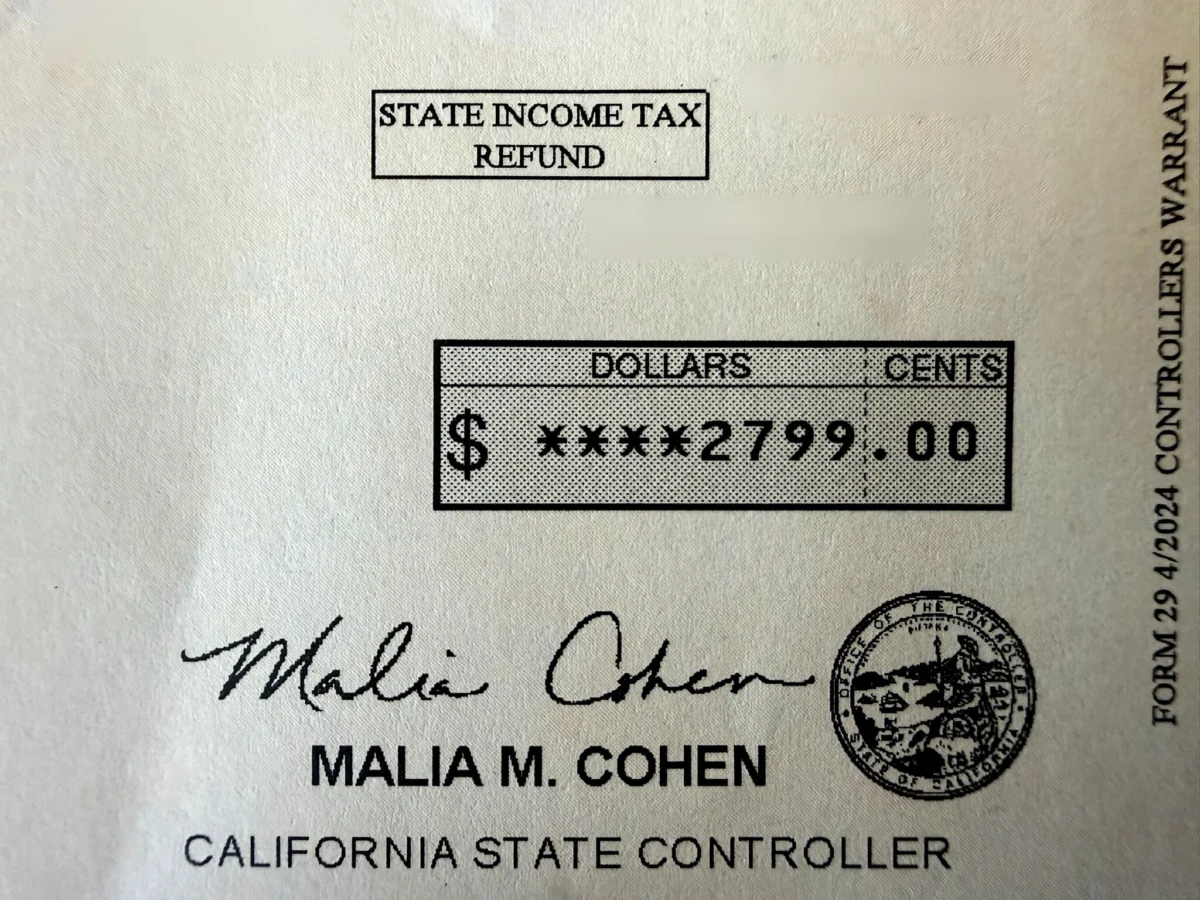
- The Tax Refund Surprise: A week later, I retrieved a backlog of mail from my PO Box. Among the stack was a notice from the California Franchise Tax Board containing a check for $2,799. This resulted from a mismatch in my filing—I had made estimated tax payments that weren’t properly credited during my extension, and my final filing triggered an automatic refund.
- Federal Recovery: Upon investigating the state refund, I discovered the federal government also owed a disbursement that had remained unclaimed because I hadn’t updated my bank details on the IRS online portal. By simply performing the administrative task of linking my account, I initiated the transfer of additional funds.
- Consulting Inbound Demand: Almost immediately following my shift in focus, I saw a surge in interest for financial consulting. While I typically limit these sessions to one or two per month to maintain balance, the sudden influx allowed me to book four sessions. This created a much-needed liquidity injection, effectively adding a 1% buffer to my total portfolio.
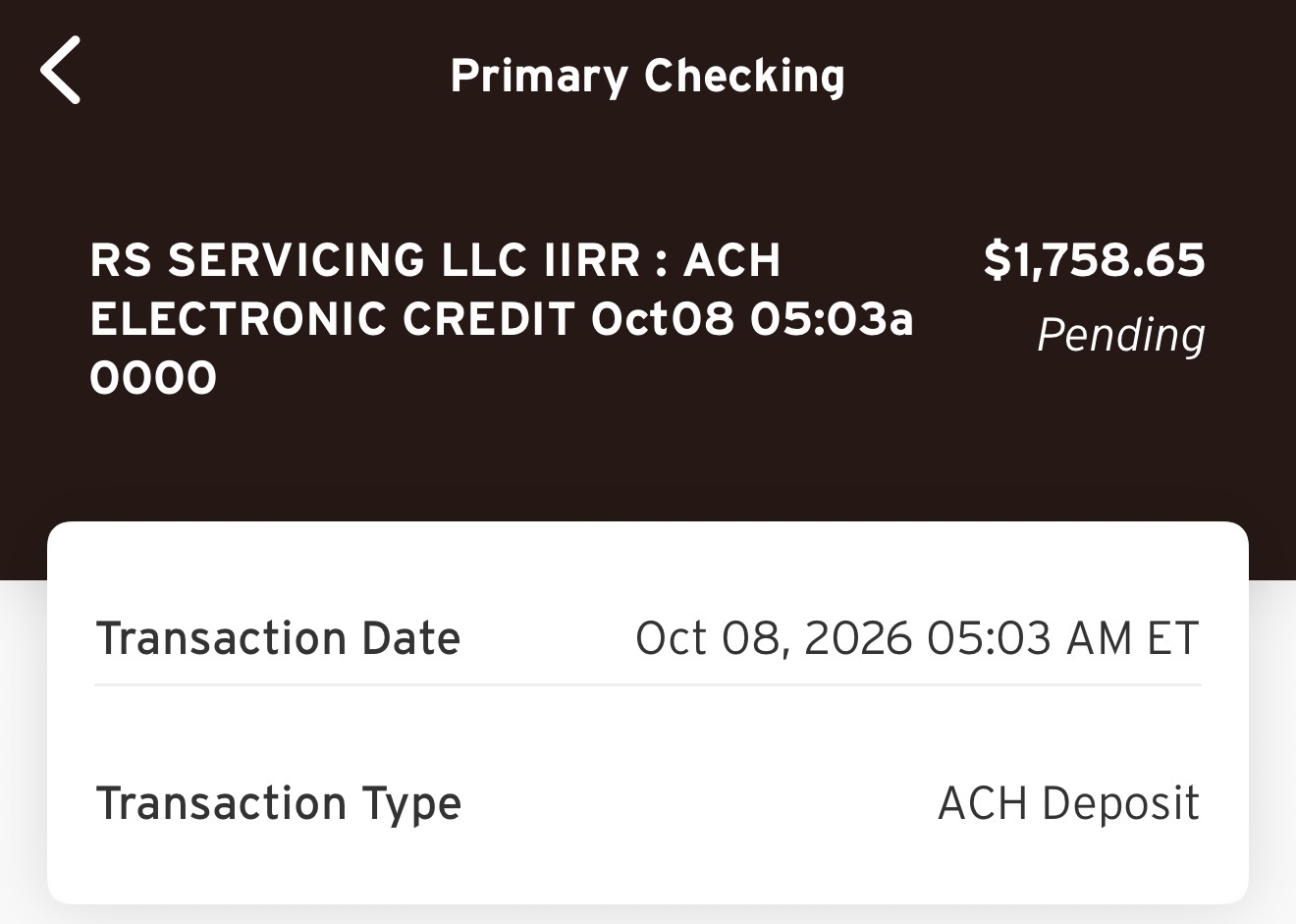
- Real Estate Fund Distribution: A long-dormant private real estate investment I had made a decade ago suddenly issued a distribution of $1,758.65. While the fund had largely been written off as a finished investment, the unexpected liquidity served as a reminder that legacy assets can occasionally provide surprise dividends.
- Corporate Account Optimization: A review of our 40+ financial accounts revealed an underperforming investment in a corporate entity. By selling this position, which I had not even factored into my net worth calculations, I unlocked $137,000—providing an immediate cushion for future capital calls.
Supporting Data: The Power of Auditing Your Portfolio
The implications of these events are clear: the "money" didn’t appear out of thin air; it was already there, trapped in administrative errors, forgotten investments, or unutilized professional opportunities.
When we operate in a state of high-stress "survival mode," we often develop tunnel vision. We focus so intently on the problem (the capital call) that we stop looking at the broader landscape of our assets. By "manifesting"—which I define as the active, repetitive articulation of a financial goal—I forced my brain to exit the tunnel. I stopped looking at what I didn’t have and started looking for what I had forgotten.
This is a recurring theme in personal finance. Studies in behavioral economics suggest that "mental accounting"—the way we categorize different pots of money—often leads to inefficiency. Because I held the underperforming investment in a separate corporate account, it stayed off my primary radar for four years. The intentionality of my "manifestation" practice provided the impetus to conduct a comprehensive audit, which proved to be the most significant contributor to my liquidity buffer.
Official Perspectives on Behavioral Finance
While financial advisors rarely use the word "manifesting," the underlying principle is a cornerstone of behavioral finance: Goal-Directed Attention.

Psychologists have long argued that humans possess a Reticular Activating System (RAS) in the brain. When you program your mind with a specific, articulated goal, the RAS begins to filter information from your environment that aligns with that goal. You aren’t just "hoping" for money; you are training your brain to spot the tax refund notice, the email from an old business partner, or the underperforming stock that you would have otherwise scrolled past.
The business partnership that emerged during this period—an inquiry from a former affiliate partner regarding a new real estate bookkeeping platform—is a prime example. Had I not been in a state of heightened financial alertness, I might have dismissed the email as junk. Instead, I recognized the potential for a mutually beneficial professional collaboration.
Long-Term Implications: Engineering Your Own Destiny
This is not my first encounter with the power of defined intent. In 1999, working in New York City with 5:30 AM starts, I realized the traditional path of a 40-year finance career was incompatible with my vision of a good life. I manifested an exit by 40.
That goal became a filter for every financial decision for the next 13 years. I saved between 50% and 80% of my income, not because I was forced to, but because I had a clear target. When the time came to leave, I didn’t just walk away; I negotiated a severance package that allowed me to exit at 34, six years ahead of schedule.
Lessons for the Aspiring Investor:
- Don’t Quit, Negotiate: Whether leaving a job or settling a debt, approach the situation with a strategy. My book, How To Engineer Your Layoff, outlines the tactical steps to securing a severance package rather than simply resigning.
- The Audit is Essential: Review your accounts at least quarterly. We all have "found money" sitting in obscure accounts, forgotten rebates, or underperforming assets that we haven’t checked because they don’t impact our day-to-day life.
- Relationships are Assets: Reconnecting with a partner from a decade ago reminded me that human capital is often more valuable than financial capital. Treat every professional connection with long-term respect.
Conclusion: The Reality of "Manifesting"
Ultimately, "manifesting" is not an alternative to hard work; it is the directional compass that makes hard work effective. It is the practice of aligning your subconscious with your daily actions.
By the end of this period, I had secured roughly $18,000 in personal liquidity and $137,000 in corporate liquidity, effectively neutralizing the immediate threat of the capital calls. This was not the result of a miracle; it was the result of a deliberate, focused audit triggered by the act of stating my needs clearly.
If you are currently facing a wall, stop looking at the wall. Start looking for the door you’ve been standing in front of, but were too busy to notice. Whether you call it manifesting, goal-setting, or strategic auditing, the principle remains the same: you have more resources than you think. You just need to tell yourself to go find them.


 Nana Wu

 Muslim

 Raul Delapena Setiawan

 Reynand Wu



 Azzam Bilal Chamdy

 Ali Ikhwan
