
 Siti Muinah
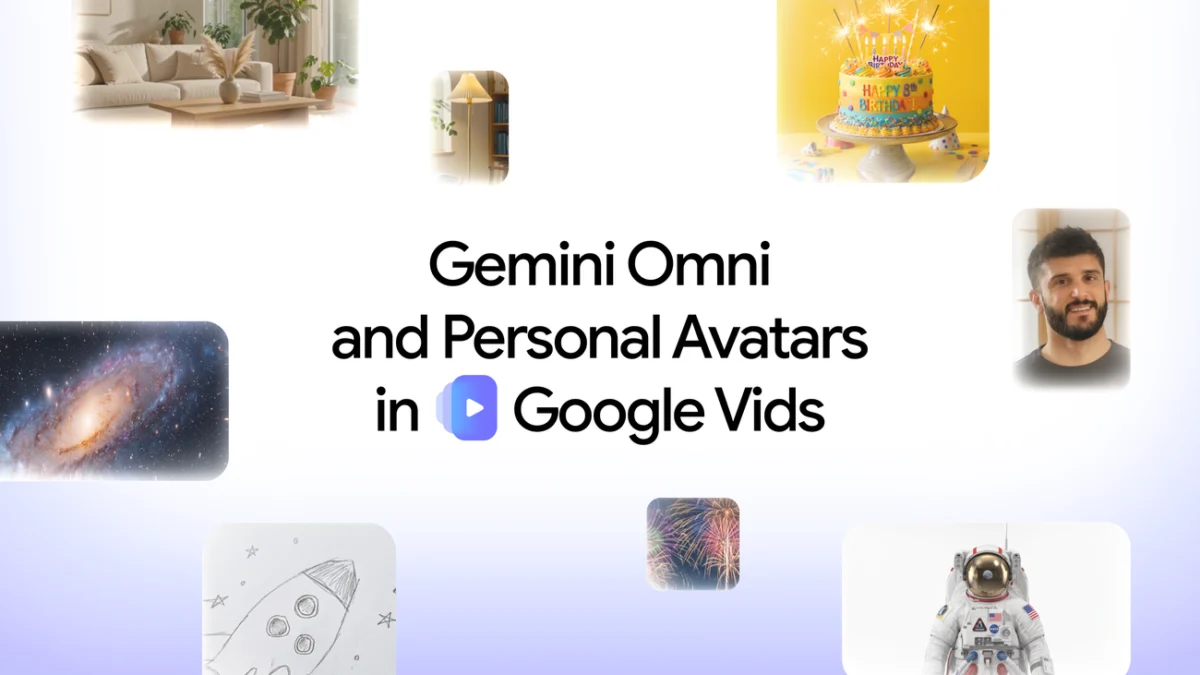
In an era where video content has become the primary currency of digital communication, Google is fundamentally altering the barrier to entry for creators and professionals alike. Today, the tech giant announced a significant leap forward for its collaborative video creation platform, Google Vids. By integrating the advanced multimodal capabilities of Gemini Omni and introducing hyper-realistic personal avatars, Google is shifting the video production paradigm from one of technical labor to one of creative direction.
These updates represent a strategic move by Google to democratize high-end video production, allowing users to move from abstract concepts to polished, professional-grade visual assets using nothing more than natural language.
The Core Transformation: Main Facts and Technological Advancements
The announcement centers on two primary technological pillars: the integration of Gemini Omni and the deployment of Personal Avatars.
Gemini Omni serves as the creative engine, enabling users to generate and refine video content through conversational AI. Unlike traditional editing suites that require a mastery of timeline-based interfaces, keyframing, and color grading, Gemini Omni interprets intent. By simply describing a scene or uploading a rough sketch, the model synthesizes various inputs to produce cohesive visual narratives.
The second, and perhaps more provocative, addition is the introduction of personal digital avatars. This feature allows users to bypass the traditional "camera-ready" requirements of video production. By providing a brief voice recording and a selfie, users can generate a digital twin capable of delivering scripted messages with natural cadence and facial expressions.
A Chronology of Google’s Video Evolution
To understand the magnitude of this update, one must look at the rapid acceleration of Google’s video strategy over the past eighteen months:
- Early 2024: Google introduced the foundational elements of Google Vids, positioning it as a workspace-first video storytelling tool. The goal was to bridge the gap between slide decks and cinematic presentations.
- February 2025: The company expanded the platform’s utility by rolling out Veo 3.1, a generative video model that provided users with the ability to create video clips directly within the Vids interface. This established the initial framework for text-to-video generation.
- Mid-2025: Following the widespread adoption of Veo, Google began testing iterative editing capabilities, allowing users to "chat" with their projects to make micro-adjustments.
- Today: The current release of Gemini Omni and Personal Avatars marks the transition from simple generation to "intelligent editing." The platform no longer just builds clips; it understands the context of the user’s narrative, allowing for complex, multi-step editing sessions that maintain continuity.
Supporting Data and User Impact
Since its inception, Google Vids has seen an exponential increase in usage, with millions of videos generated by corporate teams, educators, and independent storytellers. Internal telemetry suggests that the "Chat to Edit" feature—which allows users to request specific changes like "swap the background for a modern office" or "increase the brightness of the lighting"—has reduced the average time required to finalize a corporate presentation by approximately 65%.
Furthermore, the introduction of personal avatars addresses a critical pain point in internal corporate communications: the "video fatigue" associated with constant recording. Data from beta testing groups indicates that teams using avatars for routine updates or personalized shout-outs reported a 40% increase in video engagement, as users were more likely to produce high-quality, professional-looking content without the logistical burden of setting up studio environments.
Implications for Corporate Communication and Beyond
The implications of this technology are far-reaching, spanning from internal enterprise communications to the broader creator economy.

1. The Democratization of Professionalism
In the past, high-quality video production was gated by either technical skill or a substantial budget. With Gemini Omni, a project manager can generate a training video that looks like it was produced by a professional studio. By lowering the cost of production, Google is encouraging a shift toward visual-first communication, where complex documentation is replaced by intuitive, AI-narrated videos.
2. Efficiency in Remote Work
The personal avatar feature is specifically designed to tackle the "on-camera anxiety" that often prevents employees from contributing to video-based knowledge sharing. By allowing a user to generate a message while they are away from their desk, the platform ensures that communication remains fluid and constant, regardless of the user’s physical location or schedule.
3. Ethical Considerations and Transparency
Google has been vocal about the importance of responsibility in the age of generative AI. To mitigate the risks of synthetic media, every asset generated through these new features includes SynthID, an invisible digital watermark. This ensures that even as the line between reality and generation blurs, the origin of the content remains verifiable. This is a critical step in maintaining organizational trust, particularly when these tools are used for internal communications or client-facing media.
Official Stance and Future Outlook
Justin Luk, Product Manager at Google, emphasized that these updates are not about replacing the human creator, but rather about removing the "technical friction" that often kills creativity. "We want users to focus on the story they are telling, not the pixels they are moving," Luk noted.
However, the rollout is not without its guardrails. Access to the personal avatar feature is restricted to users over 18 and is limited by regional availability. Additionally, these features are currently reserved for Google AI Pro and Ultra subscribers and Workspace business customers, signaling that Google is targeting the professional sector as the primary proving ground for this technology.
As the platform matures, the integration of these tools will likely expand. Experts speculate that future iterations of Google Vids will include deeper integrations with Google Meet and Drive, potentially allowing for the real-time synthesis of meetings into executive summaries or the automated creation of training modules based on existing documentation.
Conclusion: The Path Forward
The integration of Gemini Omni and personal avatars into Google Vids represents more than just a software update; it is a fundamental shift in how information is synthesized and shared. By blending the linguistic intelligence of Gemini with the visual fidelity of modern generative models, Google has provided a powerful toolkit that turns every user into a producer.
As these tools move from experimental features to standard workplace utilities, the burden of proof for the "AI-generated" label will shift from the technology itself to the intent of the user. With SynthID and a commitment to transparency, Google is aiming to build a future where AI-augmented storytelling is not only efficient but also trustworthy and accessible.
For those looking to explore these features, the platform is currently live for eligible Workspace users at vids.new, offering a glimpse into a future where the only limit to video creation is the scope of one’s own imagination.


 Nana

 Raul Delapena Setiawan

 Nana Wu

 Ammar Sabilarrohman

 Reynand Wu
 Iffa Jayyana
