
 Layla Zulfa
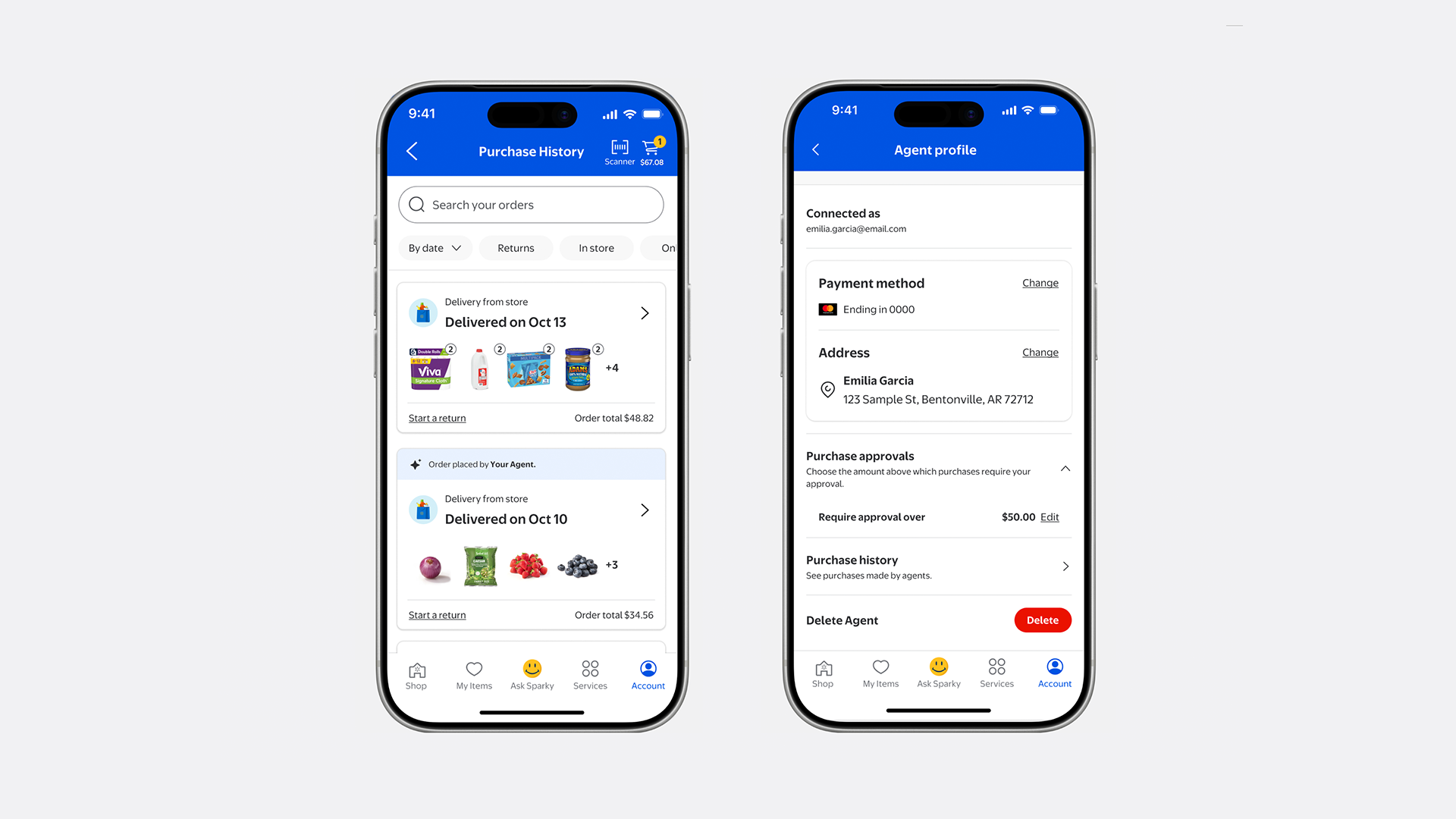
In an era where artificial intelligence is rapidly transitioning from a novelty to a fundamental component of the digital shopping experience, Walmart is taking a proactive stance on consumer agency. As "agentic commerce"—the practice of AI systems making autonomous purchasing decisions on behalf of users—gains momentum, the retail giant is introducing a robust framework of tools designed to ensure that shoppers remain firmly in the driver’s seat.
Announced on Wednesday, October 21, these new initiatives represent a strategic pivot for the world’s largest retailer. By implementing granular control mechanisms, spending boundaries, and enhanced security protocols, Walmart aims to foster trust in a technology that many consumers find both promising and potentially intrusive.
The Core Mandate: Balancing Innovation with Control
The retail landscape is currently witnessing a paradigm shift. Unlike traditional e-commerce, where a user manually searches, selects, and checks out, agentic commerce allows AI entities—such as those integrated into ChatGPT, Gemini, or Walmart’s proprietary "Sparky" agent—to navigate the retail funnel autonomously.
Recognizing that consumer apprehension is the primary barrier to widespread adoption, Walmart is positioning its new "Agent Profiles" as the solution to the "black box" problem of AI shopping. Daniel Danker, Walmart’s executive vice president of AI acceleration, product, and design, emphasized that the retailer’s primary goal is to build the most trusted experience in the industry. The upcoming rollout of Agent Profiles within the next month is the centerpiece of this effort.
Currently, when an AI makes a purchase, it often integrates into the user’s primary account with little distinction from human-led transactions. This lack of transparency can lead to confusion and a loss of financial oversight. The new system will allow agents to operate under dedicated profiles, ensuring that every AI-driven action is compartmentalized, reviewable, and subject to user-defined constraints.
A Chronology of Walmart’s AI Evolution
Walmart’s recent announcement is the latest chapter in a multi-year strategy to integrate artificial intelligence into its core business operations.
- Early Foundations (2025): Walmart began experimenting with AI-driven product discovery, testing the waters of conversational commerce where customers could ask broad questions about products rather than performing traditional keyword searches.
- The Rise of Sparky (May 2026): The launch of "Sparky," Walmart’s specialized AI shopping agent, marked a significant milestone. Designed to streamline supply chain logistics and customer interactions, Sparky set the stage for more complex agentic behaviors.
- Strategic Integrations (Throughout 2026): By embedding AI capabilities into major third-party platforms—including Meta’s Muse, OpenAI’s ChatGPT, and Google’s Gemini—Walmart expanded its reach beyond its own domain, meeting customers where they spend their time digitally.
- The October 2026 Milestone: The introduction of Agent Profiles and the Agent Gateway signals the maturation of these experiments. Moving from simple chatbots to autonomous purchasing agents requires the sophisticated "guardrails" announced this week.
Supporting Data: Why Safeguards are Essential
The necessity for these controls is backed by significant market research. A study published in August by NMI, a payments technology provider, highlighted a stark disconnect between the industry’s enthusiasm for AI and the average consumer’s comfort level.
According to the survey of 1,000 U.S. adults:
- Low Adoption: Only 11% of consumers have used AI to complete a retail transaction.
- The Desire for Oversight: A resounding 70% of participants explicitly stated they want the ability to review or manually override an AI’s purchasing decision before the transaction is finalized.
- Control Anxiety: Only 10% of respondents expressed a willingness to grant an AI "full control" over their spending habits.
These figures underscore why Walmart’s decision to require manual approval by default is not just a technical feature, but a necessary psychological bridge for the mass market. By allowing users to set spending limits (e.g., $50, $100, or $200 per transaction) and view agent-specific history, Walmart is directly addressing the core concerns of the 90% of consumers who are currently hesitant to hand over the "wallet" to an algorithm.
Official Responses and Strategic Safeguards
Walmart’s approach is built on a "Privacy-First, Control-First" philosophy. In his LinkedIn address, Daniel Danker outlined the specific rules governing how these agents function.

Key Protective Measures:
- Strict Authorization: AI agents are forbidden from accessing payment-card details or altering existing payment methods. This isolation prevents malicious actors or software glitches from compromising a user’s financial credentials.
- Instructional Boundaries: Agents are hard-coded to operate only within the scope of explicit shopper instructions. They cannot "upsell" or deviate from the user’s specific request, ensuring the agent acts as an assistant rather than a salesperson.
- Transparency: All pricing, fees, and offers are displayed exactly as they would be for a human shopper. There is no "AI-only" pricing structure that could hide surcharges or unfavorable terms.
- Recourse: In the event of an unintended purchase, the standard, time-tested Walmart returns process remains fully in effect. If an agent violates these terms, it will be immediately blocked from the platform.
Regarding data privacy, Walmart has clarified that while it maintains strict control over its internal processes, information shared by users directly with third-party AI apps remains subject to the privacy policies of those providers.
The Technological Leap: The Agent Gateway
To solve the latency and error issues associated with current "browser-based" AI shopping, Walmart is introducing the "Agent Gateway." By utilizing the Model Context Protocol (MCP)—an open standard developed by Anthropic—Walmart is creating a direct, high-speed pipe for AI systems.
This gateway allows AI to perform complex tasks like discovery, cart management, and order tracking without the inefficiencies of a traditional human-facing browser. Critically, the gateway is designed to minimize data exposure. It can facilitate a "reorder" of a customer’s preferred brand of milk or bread without the AI ever needing access to the customer’s broader, more sensitive purchase history. This balance of utility and privacy is likely to become the gold standard for future e-commerce architectures.
Implications for the Marketplace and Retail Ecosystem
The rise of agentic commerce is a double-edged sword for the millions of third-party sellers on the Walmart Marketplace. As Manish Joneja, senior vice president of Walmart Global Marketplace and Fulfillment Services, pointed out, this transition represents a "potential game-changer."
New Opportunities for Discovery
AI agents do not browse websites in the traditional sense; they process information. This means that brands that previously struggled with low visibility can now be "discovered" by an AI if their product data is optimized for machine understanding. If a customer asks an agent for "the best organic protein supplement under $30," the AI’s recommendation will be based on hard data—availability, price, and ratings—rather than ad spend or visual site placement.
The Higher Bar for Sellers
However, this democratization of discovery comes with a higher bar for quality. Because AI agents rely on structured data to make decisions, inaccurate product information, vague descriptions, or inconsistent inventory levels will effectively make a product "invisible" to the AI.
Walmart is already working with its seller base to improve catalog quality, ensuring that product listings are machine-readable and highly detailed. Sellers who fail to provide precise, competitive, and reliable data will find themselves bypassed by the very agents meant to streamline the buying process.
Conclusion: The Future of Autonomous Retail
Walmart’s latest initiatives reflect a sophisticated understanding of the current retail climate. The company is not merely adopting AI to be at the cutting edge; it is building the infrastructure necessary to make AI a safe, reliable, and indispensable partner for the consumer.
By prioritizing user oversight and developing direct-connection protocols, Walmart is attempting to turn the "agentic commerce" revolution into a stable business model. As these tools roll out in the coming weeks, the retail industry will be watching closely to see if the consumer’s desire for convenience can finally outweigh their need for total control. If successful, Walmart will have effectively bridged the gap between the chaotic potential of AI and the practical needs of the everyday shopper.


 Reynand Wu

 Iffa Jayyana

 Raul Delapena Setiawan


 Sagoh

 Azzam Bilal Chamdy

 Ali Ikhwan
