
 Layla Zulfa
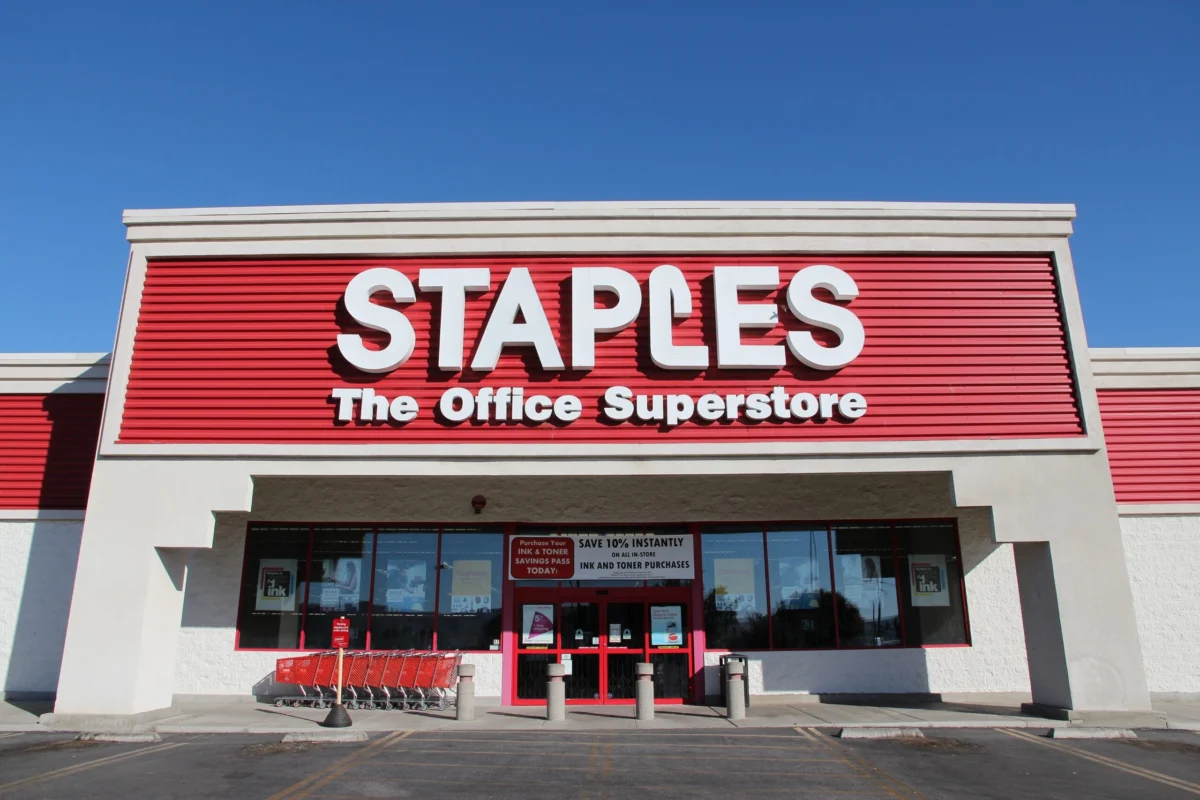
Staples Canada, a cornerstone of the Canadian retail landscape for over three decades, has officially unveiled a new strategic brand identity: Staples Business. This initiative represents a comprehensive restructuring of the company’s B2B (business-to-business) operations, designed to consolidate office supplies, technology procurement, print services, and facilities management under a single, unified umbrella.
The move marks a critical evolution for the Richmond Hill, Ontario-based company, which currently operates nearly 300 retail locations nationwide, including those operating under the Bureau en Gros banner in Quebec. By pivoting toward a more specialized B2B service model, Staples Canada is attempting to address the growing operational complexities faced by Canadian organizations, ranging from emerging startups to massive enterprise corporations.
The Core of the Strategy: A Two-Tiered Approach
At the heart of the Staples Business launch is a deliberate segmentation of the customer base. Recognizing that a solo entrepreneur and a multinational corporation have vastly different procurement requirements, Staples has structured the new brand into two distinct tiers:
- Small and Medium-Sized Business (SMB) Tier: This segment focuses on efficiency, automation, and speed. Recognizing that smaller teams often lack the administrative bandwidth for complex procurement, this tier emphasizes self-service tools, streamlined digital checkouts, and high-velocity fulfillment.
- Enterprise Tier: Geared toward larger organizations, this tier provides the high-touch, white-glove service that typically defines complex B2B relationships. Features include dedicated account management, negotiated dynamic contract pricing, custom-curated product catalogs, and consolidated billing solutions.
By bifurcating these services, Staples Canada aims to reduce the "administrative friction" that often plagues professional procurement departments.
Chronology of a Corporate Evolution
Staples Canada’s journey toward this specialized B2B brand did not occur in a vacuum. For over 30 years, the retailer has functioned as a hybrid, serving both the walk-in consumer and the business account holder. However, the retail landscape has shifted dramatically over the last decade.
- 1990s–2000s: The era of the "big box" store dominance. Staples established itself as the go-to provider for physical office supplies.
- 2010s: The rise of e-commerce giants, specifically Amazon Business, began to erode the traditional retail model. Businesses started shifting away from physical store visits toward digital-first, bulk-procurement platforms.
- 2020–2022: The COVID-19 pandemic accelerated the digital transformation. Businesses were forced to rethink their supply chains, IT infrastructure, and remote-work capabilities, leading to an increased demand for integrated procurement solutions rather than fragmented individual purchases.
- 2024: Staples Canada formalizes the Staples Business brand, effectively ending the era of treating business accounts as a mere extension of retail customer service.
Market Implications: Defending the Canadian Turf
Industry analysts view this rebranding as a defensive fortification. Marty Bauer, an e-commerce expert at Omnisend, suggests that the move is an essential maneuver to combat the encroaching market share of global e-commerce platforms.
"This new branding strategy is about much more than a cosmetic rebrand," Bauer noted. "It’s an important step in defending the market against e-commerce giants, particularly Amazon Business."
The core challenge for Staples is that while Amazon may win on price-point transparency and logistics speed, Staples maintains a historical advantage in physical presence and local expertise. The strategic goal is to leverage that expertise to provide a "concierge" experience that generic e-commerce platforms struggle to replicate. By offering a single account manager for an entire range of needs—from paper clips to IT server hardware—Staples is positioning itself as an operational partner rather than a mere vendor.
Expert Analysis: The Frictionless Procurement Mandate
The success of Staples Business will ultimately hinge on its ability to solve the "procurement paradox": businesses want lower costs, but they are willing to pay for time-savings.
Rich Pleeth, founder of the AI-powered logistics platform Finmile, emphasizes that the brand’s promise is significant, but the execution must be flawless. "Someone who thinks of Staples for printer paper may not think of it for IT support or facilities supplies," Pleeth observes. "Putting those services together gives the sales team a clearer story, but the customer still needs a reason to change suppliers."
The "Total-Experience" Test
The real test for Staples, according to Pleeth, lies in the logistics of complex orders. If a company orders a comprehensive office refresh—including laptops, ergonomic furniture, and printed marketing materials—can Staples ensure a unified, reliable delivery experience?
"If the customer still has to chase three departments to resolve a missing shipment, the brand has promised more than the operation delivers," Pleeth warns. The transition from a "store that sells things to businesses" to a "business partner that manages procurement" requires a fundamental shift in backend logistics and communication infrastructure.
Official Corporate Perspective
Chris Saniga, Chief B2B Officer at Staples Canada, characterizes the launch as a natural progression of the company’s long-standing mandate.
"Staples Business brings everything our business customers rely on together under one brand, building on our long-standing commitment to supporting Canadian businesses for more than 30 years," Saniga stated during the launch announcement. "As a Canadian company, we understand the pressures organizations here are facing. Whether it’s a growing startup or a large enterprise, our goal is to take more off their plate so they can focus on what comes next."
This sentiment underscores the company’s focus on "value-add" services. By acting as a single point of contact, Staples intends to remove the mental load of managing multiple vendors for IT, cleaning supplies, print, and office furniture.
Supporting Data and Competitive Dynamics
The B2B e-commerce sector is projected to continue its rapid expansion as traditional procurement methods become digitized. While Staples Canada does not disclose specific revenue breakdowns for its business division, the investment in a dedicated brand identity signals a high-level commitment to capturing a larger share of the B2B wallet.
Competitive Advantages:
- Physical Infrastructure: With nearly 300 locations, Staples has a "last-mile" advantage that pure-play e-commerce firms lack. In many cases, these stores can serve as distribution hubs or pick-up points for local businesses.
- Local Market Knowledge: Unlike global entities, Staples Canada possesses an intimate understanding of Canadian tax laws, regional procurement regulations, and the unique challenges of the Canadian supply chain.
- Relationship-Based Selling: By implementing the tier-based account management system, Staples is pivoting back to high-touch, relationship-based selling, which is a significant departure from the transactional nature of Amazon Business.
The Path Forward: Can Staples Deliver?
The rebranding of Staples Canada into Staples Business is a bold, necessary step in an increasingly crowded and automated market. However, the path to success is fraught with potential pitfalls.
The company must ensure that its digital user experience is as intuitive as its new service promise. For the SMB tier, this means a seamless, mobile-friendly platform that rivals the best consumer e-commerce experiences. For the Enterprise tier, it means high-level data integration—ensuring that Staples’ invoicing systems can talk to the complex ERP (Enterprise Resource Planning) software used by large corporations.
If Staples can successfully harmonize its massive physical footprint with these new digital, service-oriented processes, it may well secure its position as the premier B2B partner in Canada. If, however, the brand remains a "retailer in disguise," it risks being squeezed out by more agile, tech-native competitors.
Ultimately, Staples Business is a bet on the idea that Canadian businesses, despite the trend toward automation, still crave a partner who understands their specific needs—someone who can pick up the phone, solve a logistics issue, and provide a consultative approach to procurement that a chatbot simply cannot match. The next 18 to 24 months will serve as the litmus test for whether this strategic shift will yield the long-term growth the company anticipates.


 Reynand Wu
 Iffa Jayyana


 Sagoh

 Azzam Bilal Chamdy

 Ali Ikhwan
