
 Laily UPN
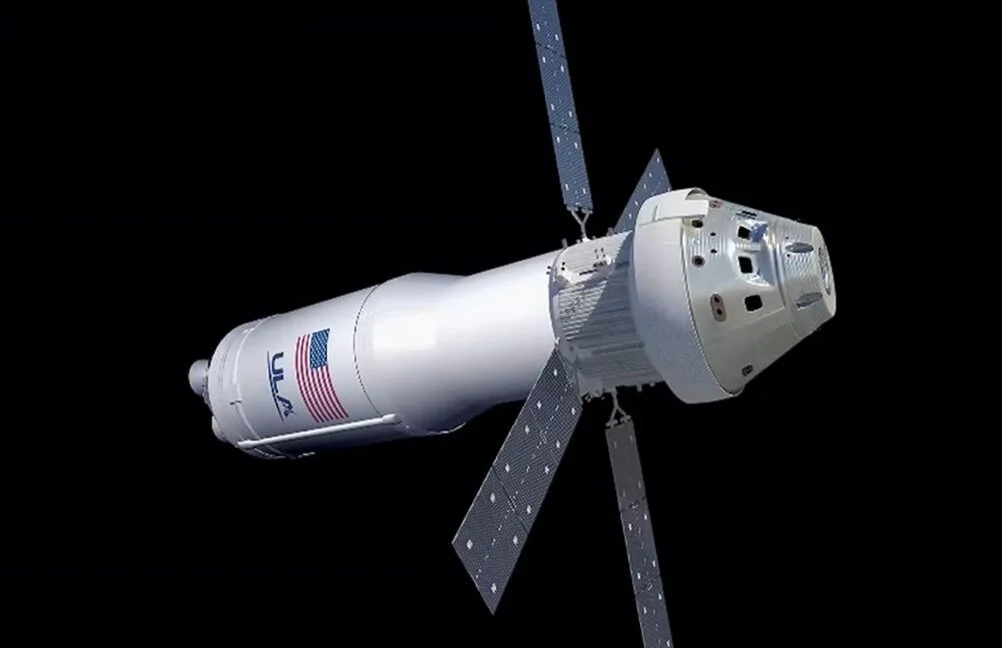
In a move that marks a significant pivot in the architectural philosophy of the Artemis program, NASA has signaled a major evolution in how it intends to transport astronauts to the lunar surface. By collaborating with United Launch Alliance (ULA) to develop an "extended" variant of the Centaur V upper stage, the space agency is aiming to solve a long-standing performance gap that has hampered the Orion spacecraft since its inception. This shift, designed to bring Orion into low-lunar orbit (LLO) rather than relying on high-altitude rendezvous, represents a pragmatic effort to reduce the operational burden on commercial landing partners like Blue Origin.
Main Facts: A Shift in Orbital Strategy
The core of this development is a technical and logistical re-evaluation of the lunar transit. Historically, NASA’s Artemis program has relied on the Lunar Gateway—a small station in a near-rectilinear halo orbit (NRHO)—to serve as a staging point for lunar landings. While the NRHO offers high stability and constant communication with Earth, it sits thousands of kilometers away from the lunar surface.
New schematics released by NASA illustrate a mission architecture where the Orion spacecraft docks with Blue Origin’s Blue Moon lander in an elliptical orbit roughly 8,500 km above the lunar surface. However, NASA officials are now aggressively pursuing the capability to dock in low-lunar orbit, which sits just a few hundred kilometers above the Moon.
Jeremy Parsons, the Artemis Program manager, noted that the transition to a lower orbit is a "mass-efficiency game." By reducing the distance the lander must travel to meet the crew, the amount of propellant required by the Blue Moon lander for descent and ascent operations drops precipitously. This saved mass can be reallocated to increase cargo capacity, enhance life-support systems, or provide additional safety redundancies for the crew. Furthermore, a lower orbit provides a much more favorable "abort profile," allowing for faster emergency departures from the lunar surface should a contingency arise.
Chronology: From Design Limitations to Engineering Solutions
To understand the weight of this announcement, one must look at the historical trajectory of the Orion spacecraft.
- The Design Legacy: When the Orion Multi-Purpose Crew Vehicle (MPCV) was conceived, it was burdened by a Service Module that lacked the necessary delta-V (change in velocity) capability to reach low-lunar orbit and subsequently return to Earth.
- The Gateway Workaround: To circumvent this limitation, NASA focused on the Lunar Gateway. By placing the Gateway in a highly elliptical orbit, NASA allowed Orion to reach the station without requiring the massive fuel reserves that an LLO insertion would necessitate.
- The Burden of Performance: Under the original Artemis architecture, the "burden of performance" was pushed onto the private contractors. Companies like SpaceX and Blue Origin were essentially tasked with building landers that could bridge the massive gap between the NRHO and the lunar surface.
- The Current Pivot: Facing the realities of hardware development and the ambitious timelines of the Artemis mission, NASA’s leadership has acknowledged that the original plan placed an undue, perhaps unsustainable, burden on its commercial partners. The decision to pursue an "extended" Centaur V, in concert with the Space Launch System (SLS), represents a direct intervention to bridge the performance gap internally rather than expecting contractors to solve it alone.
Supporting Data: The Physics of Lunar Access
The physics of orbital mechanics are unforgiving. A transition from an 8,500 km orbit to a 200 km "parking" orbit requires a massive reduction in the delta-V budget of the lander.
When a lander must descend from a high altitude, it must not only fight the gravity well of the Moon for a longer duration but also manage the timing of the rendezvous with high precision. By moving the rendezvous point closer to the Moon, NASA achieves two primary engineering goals:
- Propellant Margin: For every kilogram of propellant saved on the lander, the vehicle can carry more scientific equipment or life-support consumables. Reducing the descent distance significantly lowers the "fuel overhead," which is the biggest driver of lander size and complexity.
- Safety and Abort Windows: In the event of a surface emergency, a lander operating from LLO is physically closer to the orbital rendezvous point. This decreases the time to orbit, which is critical for crew safety. In space exploration, time-to-safety is often the deciding factor in mission success.
The development of the "extended" Centaur V is the linchpin here. By utilizing this upgraded upper stage, NASA provides the SLS with the extra "kick" needed to place the entire stack—Orion and the lander—into a lower, more efficient lunar orbit. This corrects a systemic deficiency that has been a point of quiet embarrassment for the agency for years.
Official Responses and Strategic Philosophy
The candid nature of the recent briefings reflects a shift in NASA’s management style under the Artemis banner. Isaacman, a key voice in the recent announcement, emphasized that the agency is no longer operating in a vacuum. "We’re listening to the data, and looking at what’s happening around us," he stated.
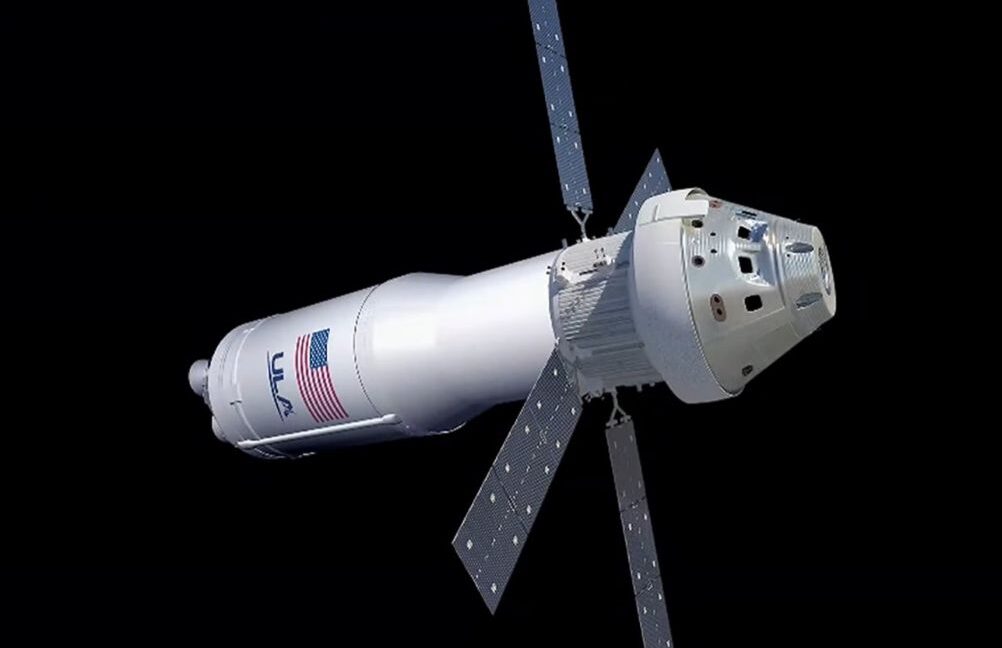
The logic is clear: If NASA wants the commercial sector to succeed, it must stop ignoring the limitations of its own primary transport vehicle. By choosing to "turn the knobs" and assist with the propulsion requirements, NASA is effectively subsidizing the technical risk of its landing partners. This is not seen as a failure of the lander companies, but rather as an evolution of the "Partnership" model.
"Their lives get easier if we can get Orion closer to the Moon, substantially," Isaacman remarked. This philosophy—that the prime contractor (NASA) has a duty to optimize the environment for its partners—is a significant departure from the "contractor-is-on-their-own" mentality that dominated some previous procurement eras. It suggests that NASA is prioritizing the success of the Artemis landing over rigid adherence to a pre-existing, potentially flawed, mission architecture.
Implications: The Future of Artemis
The implications of this shift are profound, impacting everything from mission costs to long-term lunar infrastructure.
1. Accelerating the Timeline
By reducing the performance demands on the Blue Moon lander, NASA is effectively fast-tracking the development cycle. When engineers are not struggling to squeeze the last percentage point of efficiency out of a rocket engine, development moves faster. This adjustment could be the difference between meeting the current launch windows and experiencing multi-year delays.
2. A More Capable Surface Presence
The mass saved through this orbital shift allows for larger, more capable surface habitats and power systems. If a lander requires 15% less fuel to reach the surface, that capacity can be converted into 15% more cargo. For a permanent lunar presence, this is a massive multiplier in utility.
3. Redefining the Role of the Lunar Gateway
While the Gateway remains a vital component for long-term lunar exploration, its role may evolve. If NASA becomes comfortable with LLO rendezvous, the Gateway might transition from a "mandatory staging point" to a "research and logistics hub." This provides the agency with operational flexibility—a "Plan B" that is just as viable as the primary plan.
4. Setting a Precedent for Future Missions
This move sets a precedent that NASA will intervene when the technical bottlenecks of the Artemis architecture threaten the viability of the landing mission. It signals to future partners that the agency is committed to an iterative, collaborative process.
Conclusion
The decision to develop an extended Centaur V and move toward a low-lunar orbit rendezvous is a masterclass in strategic adaptability. It acknowledges the hardware limitations of the Orion spacecraft, validates the challenges faced by commercial partners, and prioritizes mission success over organizational inertia.
As the Artemis program moves closer to the goal of putting boots back on the lunar surface, these "behind-the-scenes" adjustments will prove to be the most critical factors in the mission’s ultimate success. By bringing Orion closer to the Moon, NASA is not just saving fuel; it is bringing the reality of sustainable, long-term lunar exploration within reach. The transition from an elliptical high-orbit rendezvous to a more aggressive LLO strategy confirms that NASA is learning to balance its legacy engineering with the nimble, efficiency-driven requirements of the modern commercial space age.


 Reynand Wu

 Sagoh


 Azzam Bilal Chamdy

 Ali Ikhwan

 Iffa Jayyana
