
 Ammar Sabilarrohman
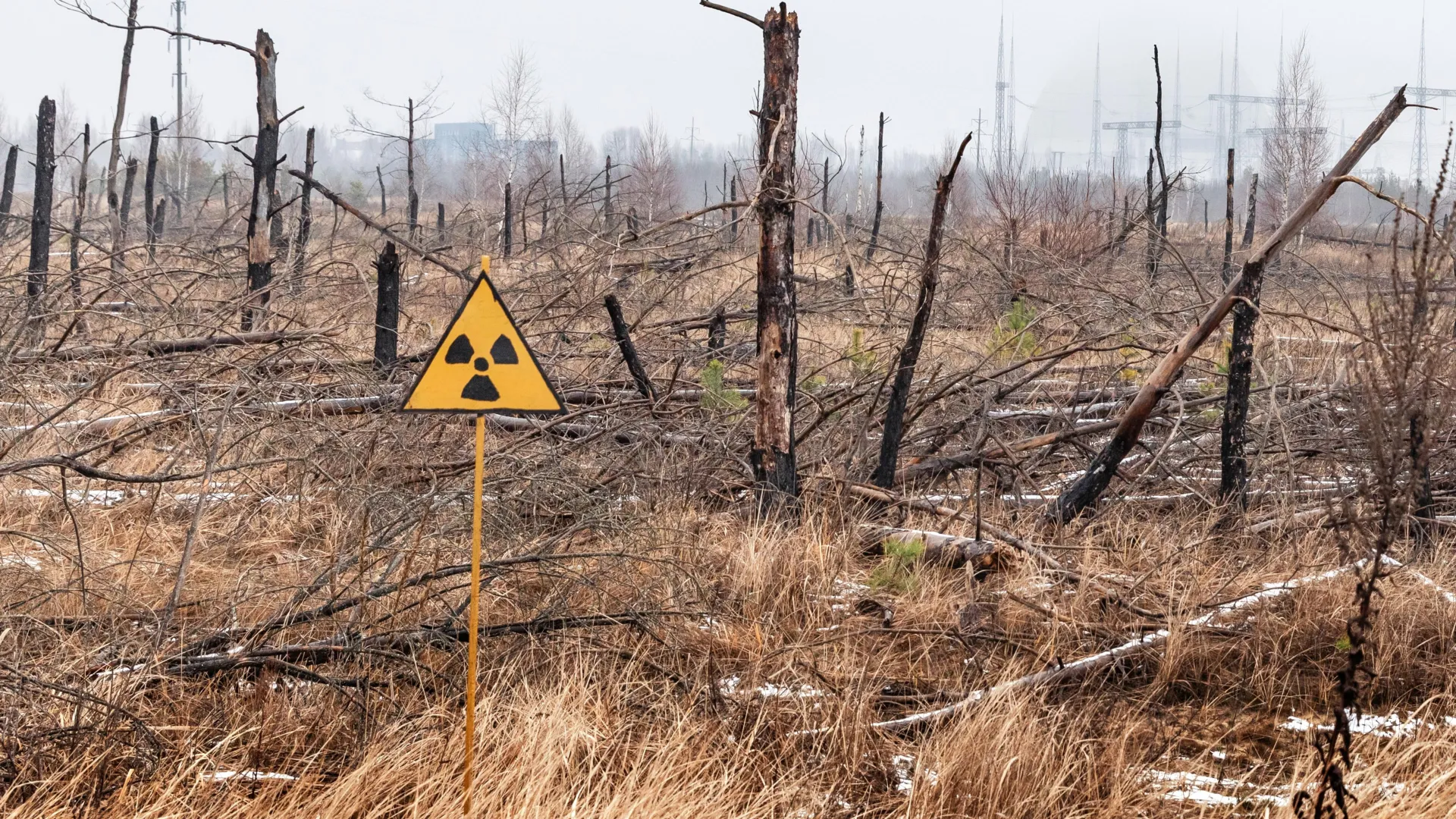
Four decades after the catastrophic reactor explosion at the Chornobyl Nuclear Power Plant, the Exclusion Zone remains a haunting testament to the destructive potential of nuclear energy. While the reactor’s ruined husk, the “Sarcophagus,” dominates the visual landscape, a more insidious danger persists beneath the soil: microscopic radioactive particles. Ranging from 8 to 50 micrometers in size, these fragments of nuclear fuel continue to migrate through the environment, posing long-term health risks to anyone entering the zone without stringent protective gear.
Recent advancements in synchrotron X-ray diffraction have allowed an international team of researchers to peer into the atomic heart of these particles. What they discovered challenges long-held assumptions about the stability of radioactive fallout, offering a complex new perspective on the disaster’s half-life in the environment.
The Anatomy of a Disaster: Main Facts
The 1986 disaster released an unprecedented volume of radioactive debris into the atmosphere. Among the various isotopes scattered across Europe were microscopic bits of nuclear fuel—uranium dioxide—which had been subjected to the most violent physical and chemical transformations imaginable.
Scientists categorize these remnants into three distinct classes, each representing a different stage of the reactor’s demise. Tobias Weissenborn, a physicist and doctoral candidate at Leibniz University Hannover, explains that the first class consists of particles that remain chemically and physically similar to the original uranium dioxide fuel. The second class, arguably the most complex, formed when melting nuclear fuel fused with the zirconium cladding—a highly resistant metal used to protect fuel rods. The third category emerged during the ten-day fire that consumed the reactor’s graphite moderator. As the graphite burned, the intense heat caused the fuel to oxidize, resulting in various uranium oxides, such as U₃O₈.
Unlike the more stable fuel pellets, these oxidized fragments are mechanically fragile. They can crumble into dust, become airborne, and travel long distances via wind, ultimately settling in soil or entering the human respiratory system.
A Chronology of Contamination and Analysis
The journey of these particles from the Ukrainian soil to the cutting-edge laboratories of the Rossendorf Beamline in Grenoble is a testament to scientific persistence.
- April 1986: The explosion at Reactor No. 4 releases massive quantities of radionuclides, creating the diverse landscape of radioactive dust that persists today.
- 1986–2020s: For nearly forty years, these particles have been subjected to natural weathering processes, including freezing, thawing, and chemical interactions with the soil.
- The Sampling Phase: Researchers from Hanover and the Helmholtz-Zentrum Dresden-Rossendorf (HZDR) carefully isolated six radioactive particles from soil samples collected in the Chornobyl region. Given the high levels of radiation, the samples required multiple layers of specialized containment for transport.
- The Analytical Breakthrough: Using tungsten electrodes, the team mounted the particles for structural analysis. Dr. Christoph Hennig, a crystallographer at HZDR, led the structural investigation at the European Synchrotron Radiation Facility (ESRF) in Grenoble. By rotating these tiny particles through an X-ray beam focused to the thickness of a human hair, the team captured 2,000 unique angles of reflection to map the atomic arrangement of the uranium oxides.
Supporting Data: The Stability Surprise
The most striking revelation of the study is the unexpected resilience of the fuel. Despite four decades of environmental exposure, the internal crystal structure of the examined particles remained largely intact. This suggests that the “weathering” process—the degradation of radioactive materials into more mobile forms—may occur much more slowly than previous climate-based models predicted.
The Role of Crystalline Phases
The researchers utilized synchrotron X-ray diffraction to identify specific crystalline phases within the particles. By understanding these phases, scientists can begin to calculate the rate at which radioactive substances are leached into groundwater or absorbed by plants. The ability of these particles to “trap” fission products within their stable crystal lattices is a significant finding; if the structure does not break down, the radioactive materials remain locked away rather than leaking into the ecosystem.
The Limits of the Sample
Despite the success of the analysis, the scientific team remains cautious. "Every single particle has a different structure," Weissenborn warns. With only six particles analyzed from two specific locations, the researchers acknowledge that their findings cannot be extrapolated to characterize the entire 2,600-square-kilometer Exclusion Zone. The diversity of the debris, compounded by the varying environmental conditions across the region, means that a uniform behavior model remains elusive.
Implications for Health and Environmental Policy
The stability of these particles is a double-edged sword. On one hand, particles that resist degradation represent a smaller immediate risk to groundwater contamination. On the other hand, the existence of these long-lived, stable radioactive fragments means the area will remain contaminated for far longer than once hoped.
The "Outlier" Problem
The most persistent danger, according to the research team, lies in the "outliers." Even if the majority of radioactive debris follows a predictable decay pattern, there will always be individual particles that defy the trend. These resistant remnants may release their radioactive load at a much later date, long after other contaminants have been neutralized or sequestered. This temporal variability makes it impossible to provide a universal timeline for when the region might be considered "safe."
Ongoing Restrictions
Consequently, the study serves as a stern reminder that the Chornobyl Exclusion Zone is not a site in recovery, but a site in a state of suspended animation. The findings do not support any reduction in current safety protocols or land-use restrictions. The potential for inhalation of radioactive dust remains a significant health hazard, and the unpredictable nature of these persistent particles justifies continued monitoring.
Looking Toward the Future: The Transuranic Frontier
The research conducted by Weissenborn and Hennig is far from finished. Having established a methodology for analyzing uranium oxide, the team is now turning its attention to more dangerous components of the debris: transuranic phases. These elements, which include isotopes like plutonium and americium, are often more radiotoxic and exhibit different chemical behaviors than uranium.
As the scientific community continues to peel back the layers of the Chornobyl disaster, the focus is shifting from simply measuring radiation levels to understanding the fundamental chemistry of the waste. This granular approach is essential for long-term waste management, not just for the legacy of Chornobyl, but for the future of the global nuclear industry.
Ultimately, the particles trapped in the soil of northern Ukraine are more than just historical relics of a failed experiment; they are a warning. They demonstrate that the chemical and physical consequences of a nuclear accident are not confined to the moment of impact. Instead, they unfold over decades, evolving in ways that even our most advanced technology is only now beginning to uncover. The work of the HZDR and Leibniz University Hannover underscores a sobering reality: we are still only beginning to understand the full scope of the inheritance left behind by the 1986 disaster.


 Raul Delapena Setiawan

 Laily UPN

 Reynand Wu

 Sagoh


 Azzam Bilal Chamdy

 Ali Ikhwan
