
 Siti Muinah
What does a romantic date night have to do with the global climate crisis? According to the petroleum industry, the answer is "everything." In a widely circulated advertisement from the pipeline company Energy Transfer, a couple prepares for a night out—applying hair gel, putting on lipstick, and checking a dating app—only to have the narrator pose a chilling question: "What if we lived in a world without oil and natural gas?"
The commercial then plays out a dystopian scenario: the phone evaporates, the car collapses as its tires vanish, the makeup and hair products disappear, and even the football on a bar’s television disintegrates into thin air. The message is clear and visceral: modern existence is not just powered by fossil fuels; it is entirely defined by them.
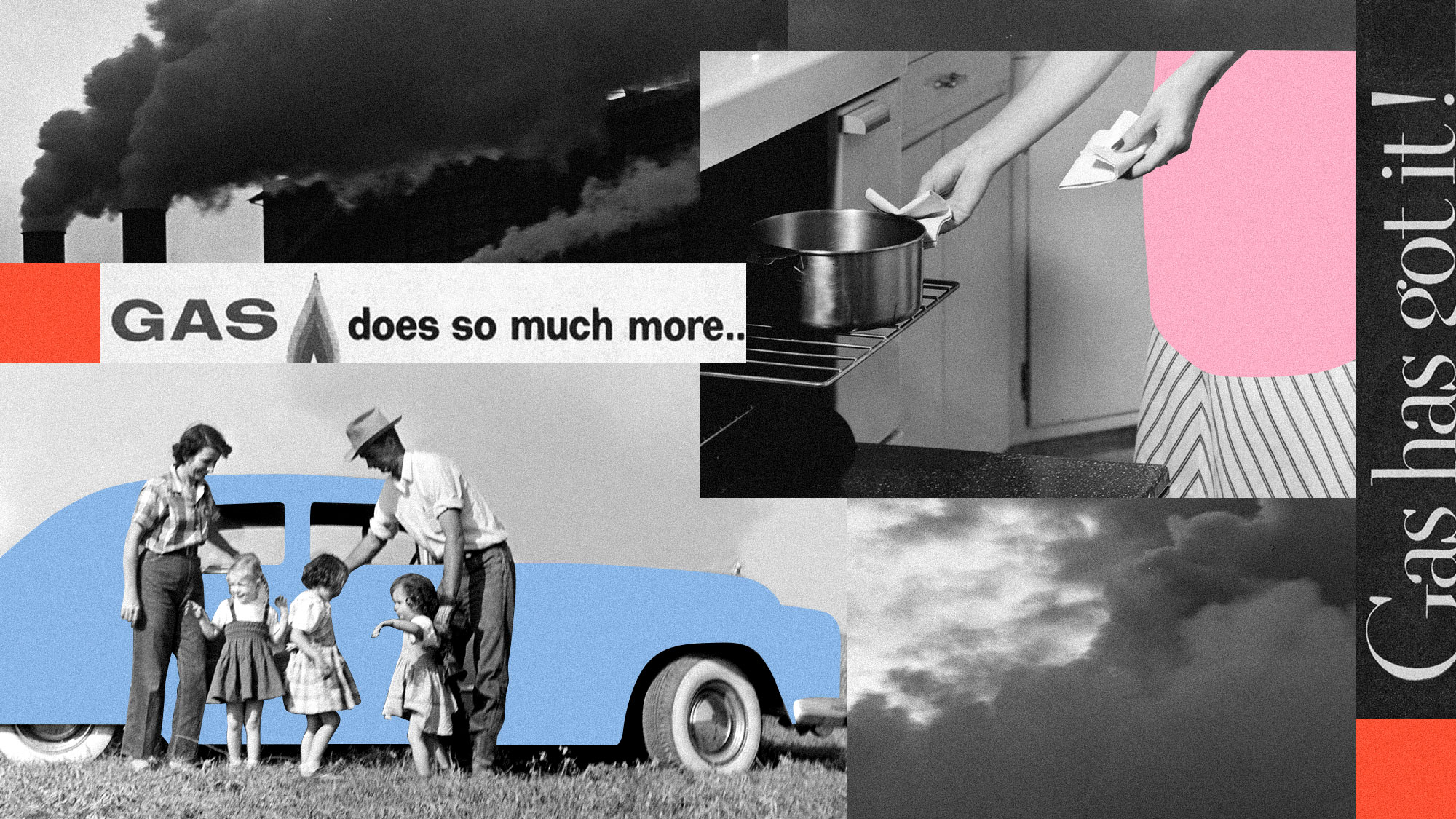
While this vision of a petroleum-free world is presented as a catastrophic loss of civilization, a Grist investigation reveals that this specific definition of "normal" was not an accidental byproduct of industrial progress. It was a meticulously crafted construct, built over a century through aggressive advertising, sophisticated public relations, and a sustained effort to weave oil and gas into the very fabric of the American identity.
A Century of Strategic Conditioning
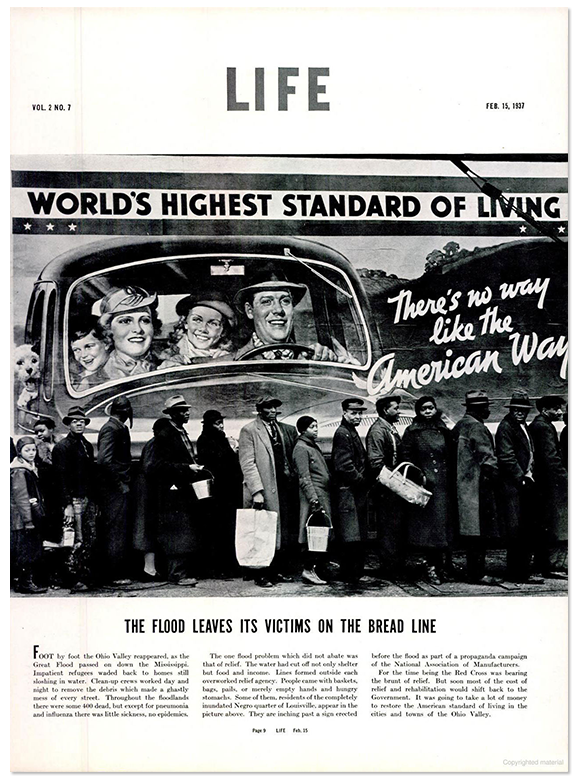
The modern dependence on fossil fuels was not inevitable. At the dawn of the 20th century, electric vehicles were a common, quiet, and reliable competitor to early gas-powered cars, making up a significant portion of the market. However, through a combination of mass production, lobbying, and cultural engineering, the oil industry successfully positioned gasoline as the lifeblood of the "American way."

Beginning in the 1940s and 1950s, the petroleum industry launched a massive, multi-million-dollar campaign to "educate" the public. They did not just sell gasoline; they sold a lifestyle. They utilized billboards showing families on open roads, films featuring stylish kitchens fueled by gas, and magazine advertisements promoting the "American Dream" as a life of suburban ease, manicured lawns, and constant mobility.
As Robert Brulle, an environmental sociologist at Brown University, notes, "Our dependence on oil didn’t just happen." It was the result of a deliberate, long-term strategy to create demand. By the time the environmental movement began to gain traction in the 1960s, the connection between petroleum and prosperity was so deeply embedded in the American psyche that it had become nearly invisible—hiding in plain sight.
Chronology of an Engineered Culture
The Early Marketing Era (1910–1940)
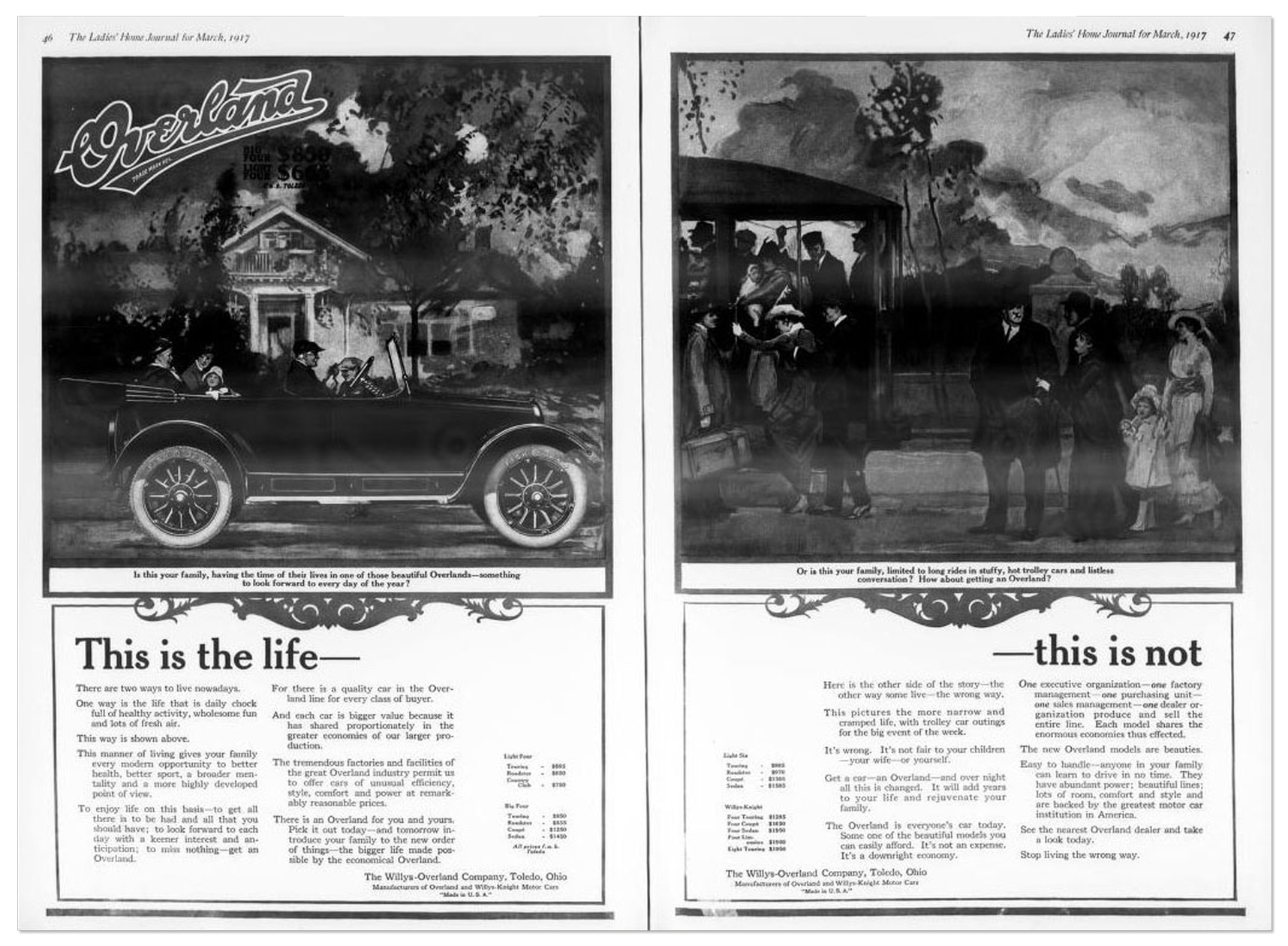
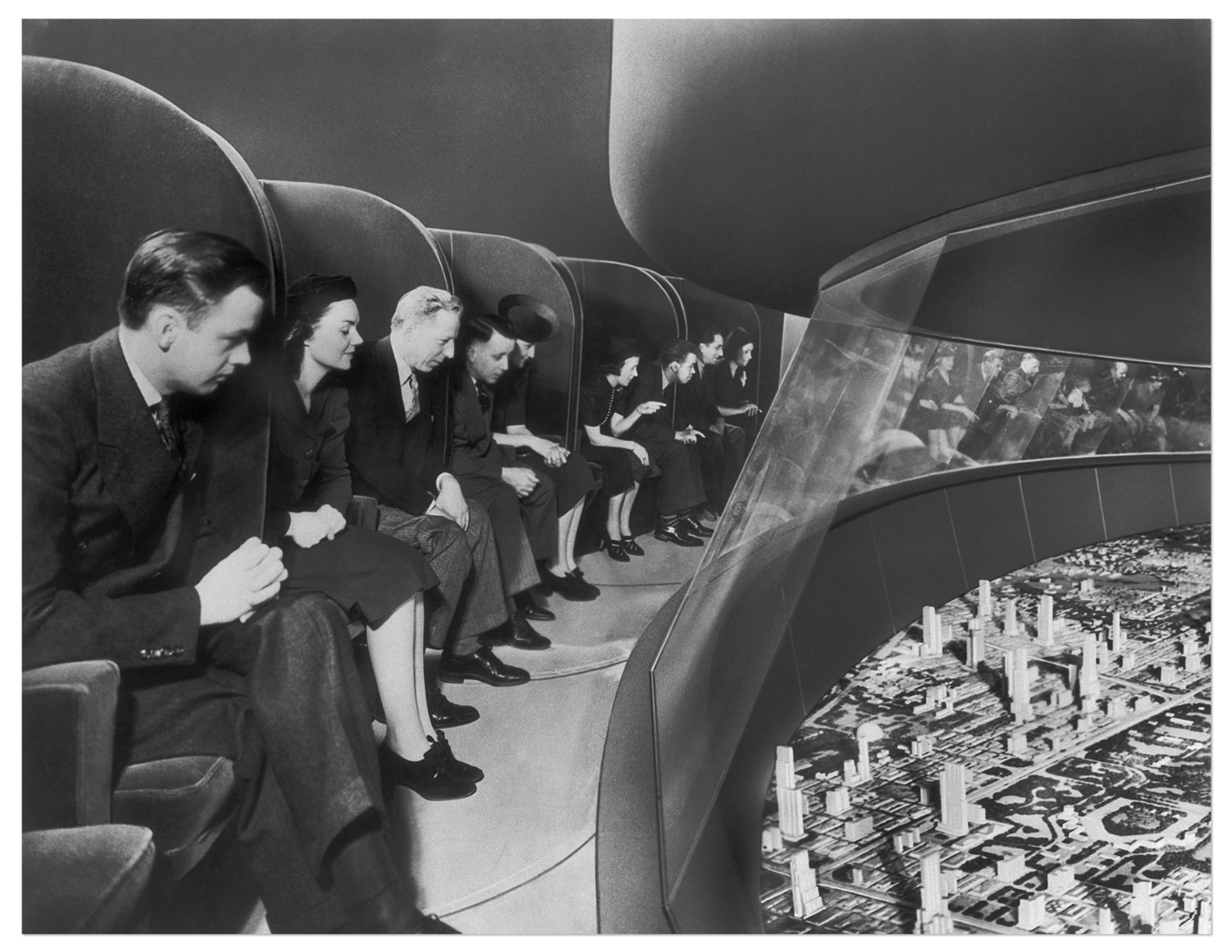
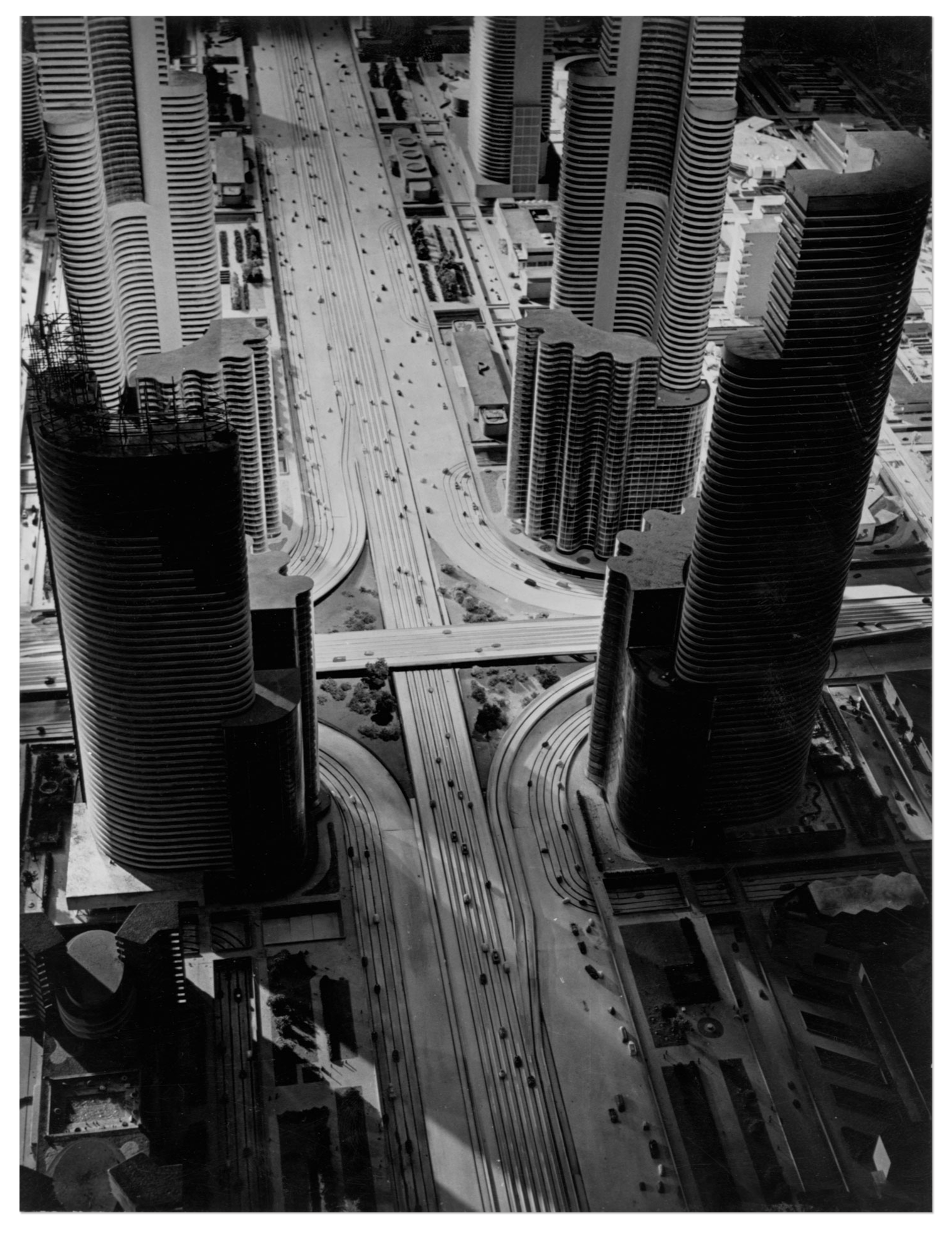
The transition from rail and trolley to the automobile was accelerated by aggressive marketing that framed car ownership as a leap in social status. Advertisers moved away from touting technical specifications and began selling intangible benefits: leisure, freedom, and beauty. By the 1939 New York World’s Fair, General Motors’ "Futurama" exhibit solidified this vision, presenting a sprawling, futuristic city defined by 14-lane highways and skyscrapers, convincing millions of visitors that this car-centric future was the inevitable path of progress.
The Post-War PR Machine (1945–1960)
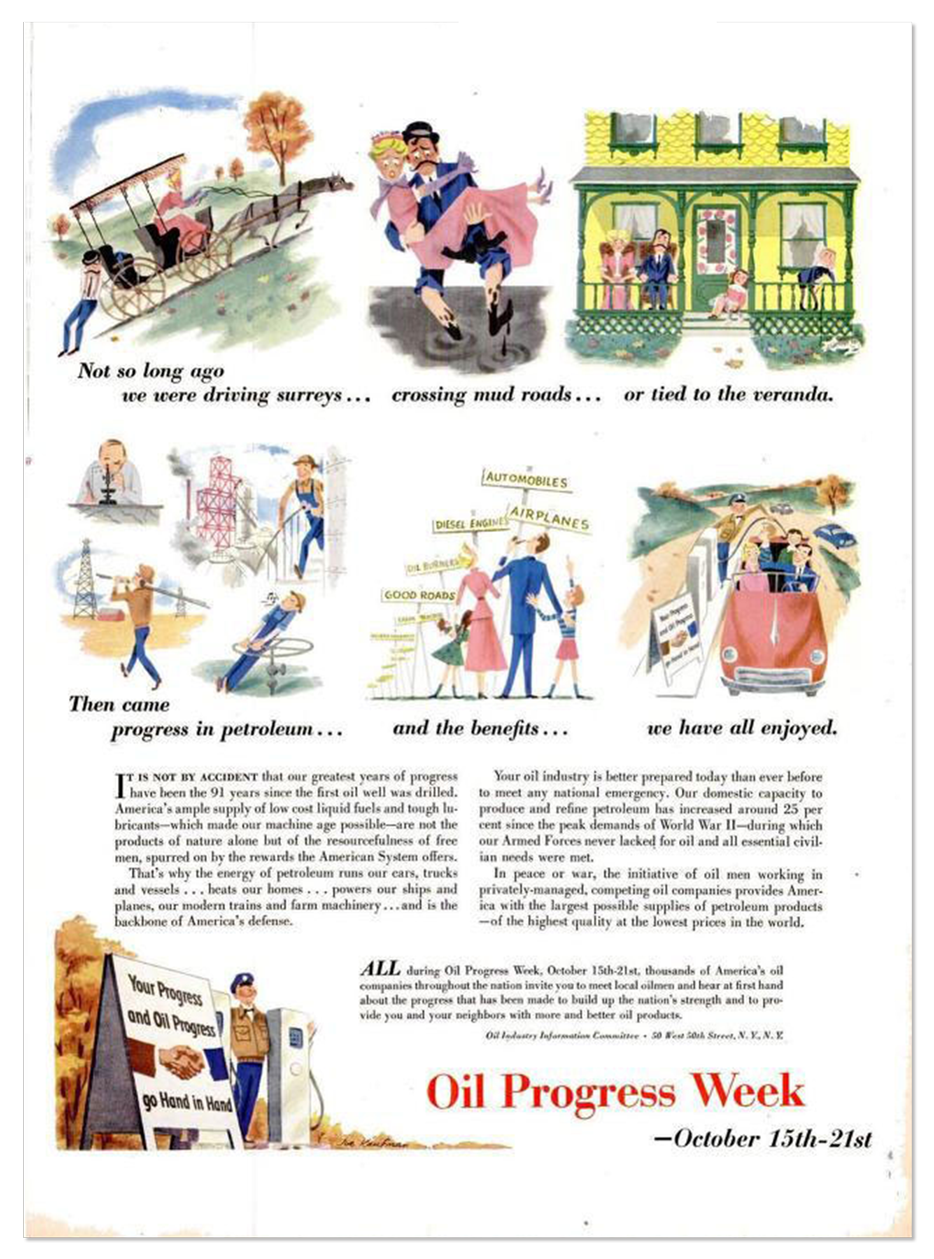
After World War II, the American Petroleum Institute formed the Oil Industry Information Committee. This group didn’t just buy ads; they infiltrated schools, community groups, and local events. They sponsored films like Destination Earth—a cartoon where a Martian visits the U.S. and discovers that the secret to a "better life" is oil—and established "Oil Progress Week" to celebrate the industry as the savior of the American economy. By the mid-1950s, these industry ambassadors were reaching millions of Americans, framing their corporate interests as identical to the national interest.
The Home Front: "Cooking with Gas" (1920–1955)
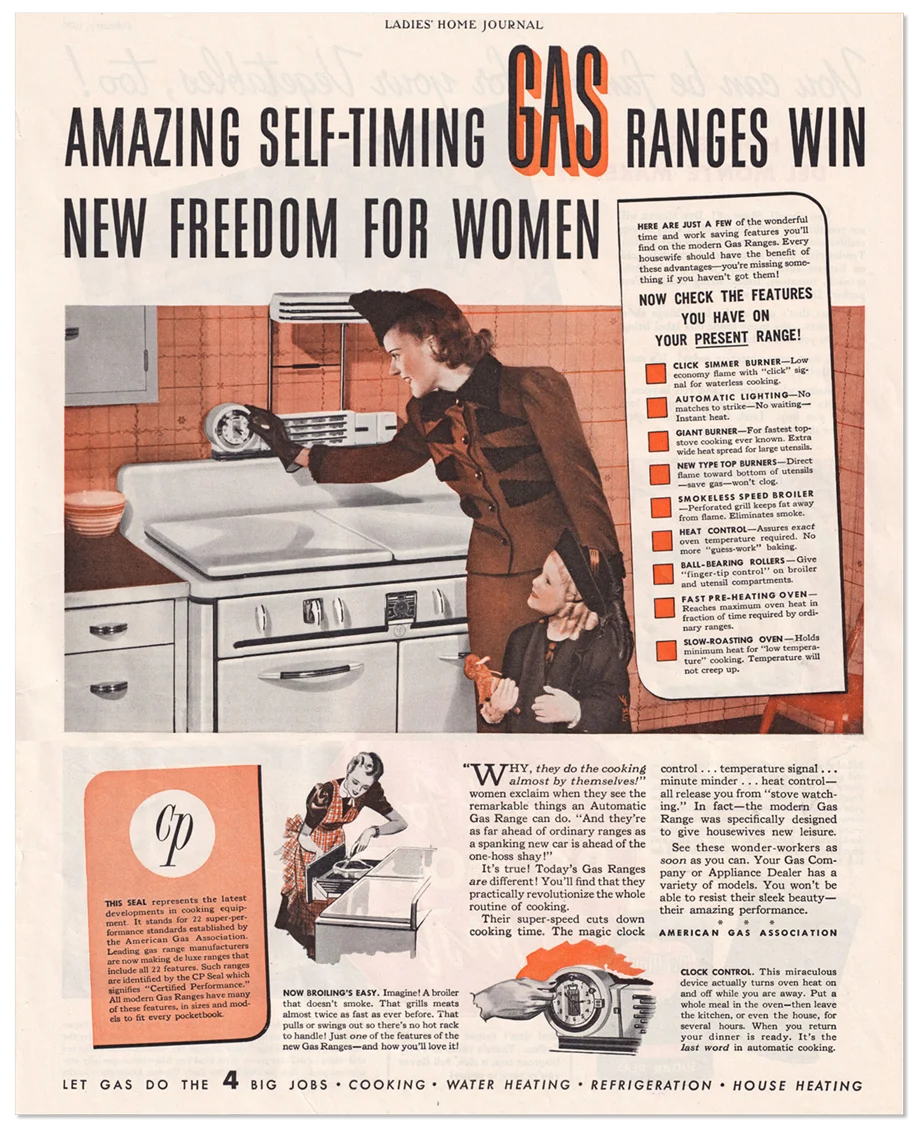
The gas industry targeted the domestic sphere with equal intensity. Women were the primary targets of "home service" departments, where utilities demonstrated the superiority of gas-powered ranges and refrigerators over wood-burning or electric alternatives. Industry experts like Ada Bessie Swann were heralded as "apostles of home service," creating a cultural expectation that a "dream kitchen" was one powered by gas. They leveraged Hollywood, ensuring gas appliances appeared in hundreds of films, and even co-opted the phrase "now you’re cooking with gas" to reinforce their brand in the popular consciousness.
Supporting Data and Economic Realities
The industry’s efforts were immensely profitable. Between 1946 and 1956, the profits of 14 major petroleum companies tripled, rising from $269 million to $917 million. These massive capital reserves allowed the industry to exert immense political pressure whenever regulation threatened their model.
When the 1973 oil embargo struck, the industry pivoted from selling "modern convenience" to selling "freedom." They framed environmental regulations as government overreach designed to restrict the American right to drive. By 1997, when the Kyoto Protocol proposed carbon reduction targets, companies like Mobil took to The New York Times to warn that such measures would "alter today’s lifestyles and tomorrow’s living standards," explicitly linking climate action to job losses and a lower standard of living.
The Political Implications: A Divided Nation
Today, the battle over energy has become a central front in the American culture war. The modern Republican platform, particularly the MAGA movement, has increasingly embraced fossil fuels as a core tenet of national identity. Polling data from the Pew Research Center highlights this shift: in 2020, 65% of Republicans supported prioritizing renewable energy. By 2026, that figure had plummeted, with 71% now preferring fossil fuels over wind and solar.
This is not merely a debate over technology; it is a debate over identity. When politicians like those in the Trump administration describe deregulation as "restoring the American Dream," they are tapping into a century of messaging that equates fossil fuel consumption with economic liberty. Conversely, when conservative groups like the Alliance for Consumers post images of "Biden’s Dream House" to protest appliance efficiency standards, they are utilizing the same tactics of fear and nostalgia that the industry perfected in the 1950s.
Conclusion: Re-imagining the Dream
The challenge in moving toward a cleaner, post-petroleum future is that the current American lifestyle is, as many politicians have argued, "not up for negotiation." However, this stance ignores the reality that climate change itself is now the greatest threat to the American Dream. Rising costs of food, insurance spikes, and the physical destruction of homes due to extreme weather are pushing the traditional "good life" further out of reach for many.
As Stephanie LeMenager, author and professor at the University of Oregon, observes, the U.S. is a "petroculture"—an oil society through and through. Untangling this connection requires more than just replacing engines with batteries; it requires a fundamental shift in our cultural narrative.
If the "American Dream" was an invention of the 20th century—marketed through films, radio, and classroom pamphlets—it is a construct that can be reinvented. The transition to a sustainable future is not an attack on the "good life," but an opportunity to define a new, more resilient version of it. The history of the last century proves that what we believe to be "normal" is often just what we have been told to want. Now, the task for the 21st century is to decide what we truly need.


 Raul Delapena Setiawan

 Laily UPN

 Reynand Wu

 Sagoh


 Azzam Bilal Chamdy

 Ali Ikhwan
