
 Lina Irawan
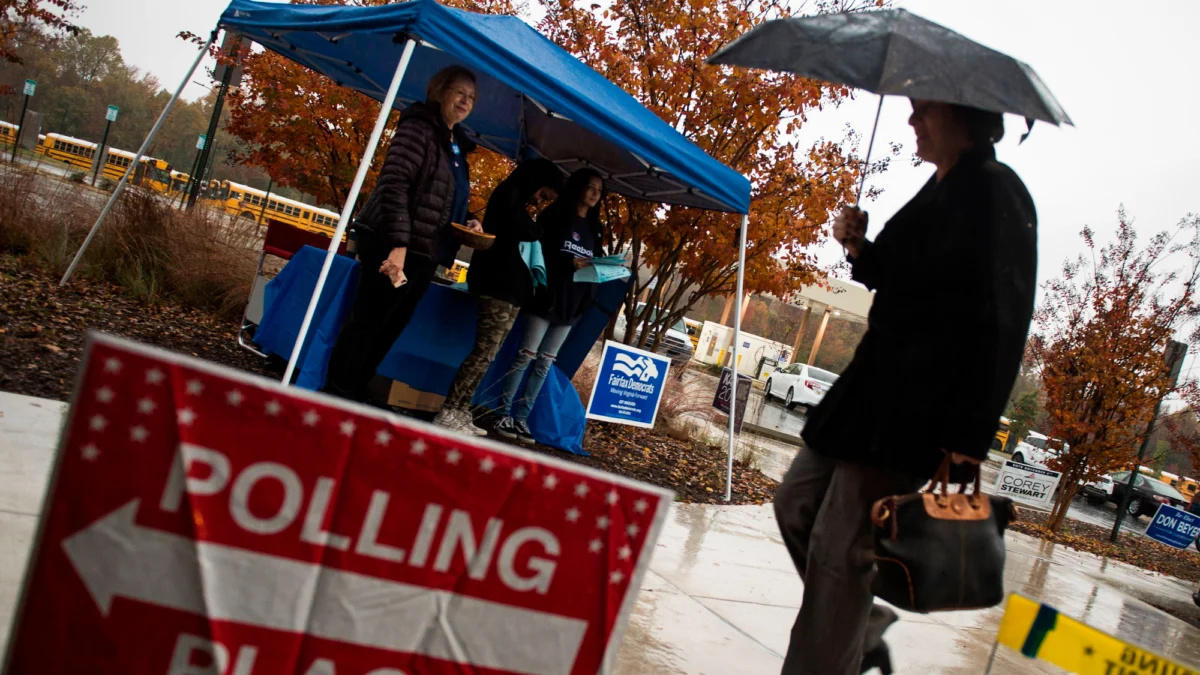
As the United States barrels toward the 2026 midterm elections, the political landscape is defined less by what is being said and more by what is being studiously ignored. Despite a record-breaking summer of sweltering heat, the mounting costs of energy-induced inflation, and the visceral memory of catastrophic weather events, the climate crisis has been effectively scrubbed from the campaign rhetoric of both major parties. This phenomenon, which observers are calling “climate hushing,” represents a profound disconnect between the urgency felt by the American public and the calculated silence of those seeking federal office.
The State of the Union: A Campaign of Omission
For voters in battleground states—Alaska, Georgia, Maine, Iowa, Michigan, North Carolina, Ohio, and Texas—the climate crisis is not merely a distant theoretical threat. It is a daily reality that touches their wallets and their safety. Households across the nation are currently grappling with an estimated $2,000 annual increase in living costs, driven by mortgage adjustments and energy volatility exacerbated by geopolitical tensions, specifically the fallout from the U.S. confrontation with Iran.
Yet, despite this clear link between fossil fuel dependency and economic instability, the issue remains a political pariah. A review of candidate platforms in these eight pivotal states reveals a startling trend: with only a few notable exceptions, the word “climate” is entirely absent from official campaign websites.
This silence is not accidental; it is a strategic retreat. Even candidates who previously built their brands on environmental advocacy have pivoted. Abdul El-Sayed, running for the U.S. Senate in Michigan, has publicly distanced himself from the Green New Deal, a policy he once championed. In Georgia, incumbent Senator Jon Ossoff has largely sidelined environmental discourse to focus on inflation and the ongoing conflict in the Middle East. Perhaps most tellingly, Texas Senate hopeful James Talarico, who once famously compared the oil and gas industry to obsolete cassette tapes, has recently reframed his position, emphasizing his ties to the industry that funded his own public school education.
Chronology of a Policy Retreat
The trajectory of climate politics over the last decade has been a rollercoaster of high-level discourse followed by a precipitous decline.
- 2022-2024: Following the passage of major clean energy legislation, climate change was briefly treated as a central pillar of national security and economic growth.
- 2025: As inflation began to bite and geopolitical tensions rose, the narrative shifted. The fossil fuel industry, bolstered by the Trump administration’s deregulation efforts, successfully reframed energy independence as the primary economic imperative, painting clean energy as a "radical" luxury.
- 2026 (The Current Cycle): The "Climate Omertà" has taken hold. Candidates have concluded that mentioning climate change invites attacks from Republican opponents who label any pro-renewable stance as an existential threat to American jobs and prosperity.
The rhetoric has become increasingly combative. Donald Trump, appearing at rallies, has leaned into personal attacks against climate-conscious candidates, specifically targeting Talarico with vitriol, mocking his lifestyle and policy positions in an attempt to categorize him as an “eco-extremist.” This has forced many Democrats into a defensive crouch, prioritizing survival over the promotion of a green energy transition.
Data vs. Discourse: The Polling Paradox
The most striking aspect of this political silence is its rejection of voter sentiment. Polling data from the Environmental Voter Project indicates that "climate hushing" is a strategy divorced from reality.
In the eight battleground states, voters are three times more likely to prioritize hearing about climate change than they are to want to avoid the subject. Furthermore, there is broad, bipartisan support for a transition to clean energy. Even in conservative strongholds like Texas, surveys reveal that a majority of voters—54 percent—are more likely to support a candidate who prioritizes renewable energy, compared to just 19 percent who oppose it.
"The climate hushers are dead wrong," says Nathaniel Stinnett, executive director of the Environmental Voter Project. "Voters want to hear more about climate change, not less. It is a huge vote-winner, even with independents in red states who favor aggressive action by a four-to-one margin."
Anthony Leiserowitz of Yale University, a preeminent expert in climate communication, suggests that politicians are operating on an outdated map. "The norm has shifted," he explains. "Politicians are stuck in a 1990s world where they view clean energy as a fringe concern of the environmental elite. In reality, the American public has moved on, yet the political class remains paralyzed by an antiquated fear of the ‘radical’ label."
Official Responses and Political Strategy
The strategies employed by candidates vary, though they all share a common theme of risk aversion.
In Alaska, Senatorial candidate Mary Peltola represents a hybrid approach. While she advocates for clean energy tax credits, she simultaneously pushes for expanded oil and gas production, including the controversial development of Arctic oil projects. Her campaign argues that this "all-of-the-above" strategy is the only way to address the affordability crisis in a state where the energy sector is the lifeblood of the economy.
Conversely, the Trump administration has been emboldened by the lack of political pushback. Interior Secretary Doug Burgum recently claimed that the climate movement has had its "legs knocked out from under it," citing the decrease in media mentions and the shifting priorities of voters as evidence that the public has lost interest.
However, some candidates are refusing to go along with the silence. Angie Nixon, running for the Senate in Florida, has made the climate crisis a centerpiece of her campaign. "A lot of Florida will be under water in the next few decades," Nixon says. "I want the world to be around for my kids. Ignoring this is a failure of leadership." Nixon argues that the climate crisis is not just an environmental issue, but a bread-and-butter issue that impacts insurance premiums, property values, and the future of the state’s economy.
Implications: The Human Cost of Inaction
While politicians debate the optics of their messaging, the human cost of climate-induced disasters continues to mount. Last year, catastrophic flash floods in Texas claimed the lives of 136 people, including 28 children at a summer camp.
For survivors and grieving families, the political indifference is not just frustrating—it is infuriating. "They see it, they know it, they’ve heard us scream to the rooftops about it," says Georgia Bishop, an 18-year-old survivor who lost her best friend in the floods. "But it just seems to be: ‘Well, this is weather, this is life.’"
As the nation enters an exceptionally strong El Niño event, meteorologists and climate scientists warn that the frequency and intensity of these "weather events" will only increase. By ignoring these realities in the name of political expediency, candidates on both sides of the aisle are failing to address the very issues that are rapidly changing the landscape of American life.
Senator Sheldon Whitehouse, a long-time climate advocate, argues that Democrats have fundamentally misunderstood the challenge. By merely repeating polling data rather than leading with a clear moral narrative, they have allowed their opponents to dictate the terms of the debate. "This is a story with villains—the greedy fossil fuel companies wrecking the planet and sticking Americans with the bill," Whitehouse asserts. "Frustrated voters are hungry to see someone fight for them. The climate fight is the perfect arena to prove who is actually on the side of the people."
As the midterms approach, the question remains: will candidates continue to play it safe, or will one of them finally break the silence and speak to the reality of a warming world? For now, the "Great Silence" continues, a quiet protest against the very voters it aims to court.


 Raul Delapena Setiawan

 Laily UPN

 Reynand Wu

 Sagoh


 Azzam Bilal Chamdy

 Ali Ikhwan
