
 Laily UPN
The digital marketing landscape is currently undergoing a painful correction. For years, content marketers relied on the "silver bullet" of mass-produced, SEO-optimized listicles and comparison articles to siphon traffic from search engines. However, recent Google algorithm updates, coupled with the rise of Large Language Models (LLMs), have caused this traffic to evaporate for many publishers.
The central question facing SEO professionals today is whether the "listicle" format is obsolete. The answer is a resounding no—but the strategy behind it must fundamentally change.
The Core Problem: Gaming the Algorithm vs. Serving the User
For years, the SEO industry treated listicles and "versus" articles as containers for keywords. By scaling content production, brands attempted to capture search intent for every possible permutation of "Best X for Y." This practice became the primary target of Google’s recent spam and helpful content updates.
Google’s stance has been clear: It does not hate listicles, nor does it penalize affiliate links. It penalizes site reputation abuse and scaled, low-quality content designed solely to manipulate search rankings. When content is produced at scale without unique insight, experience, or expert evaluation, it loses its value to the user—and consequently, its value to the search engine.
Chronology of the Shift
- The Golden Age (2015–2020): Content mills dominated SERPs (Search Engine Results Pages) by churning out thousands of "Best [Category]" articles. SEO was treated as a game of volume.
- The AI Proliferation (2022–2023): The emergence of generative AI allowed brands to scale content production exponentially, leading to a flood of repetitive, derivative content.
- The Correction (2023–2024): Google launched multiple core and spam updates, explicitly targeting "scaled content" that lacked original research or distinct human expertise. Traffic for mass-produced roundups plummeted, leaving many marketers scrambling.
The Strategic Pivot: Why Comparison Content Still Matters
If we move away from "SEO-first" content, why continue producing listicles? The answer lies in the customer journey. Consumers—both in B2B and B2C markets—are looking for shortcuts to decision-making.
1. Generating Customers Through Bigger Brands
Smaller companies often struggle to gain traction against industry giants. However, you can leverage the search volume of these giants by inserting your brand into the conversation.
Instead of writing a generic "Best [Category]" list on your own blog, collaborate with influencers and YouTubers who already rank for comparisons between major brands. By sponsoring a video that compares "Brand A vs. Brand B," you can position your brand as the "Third Alternative." This strategy places your product directly in front of an audience already in the "consideration" phase of the sales funnel.
2. Establishing Unbiased Credibility
When a potential client is making a high-stakes purchase—such as selecting a SaaS platform or a service provider—they rarely trust marketing copy alone. They seek third-party validation.
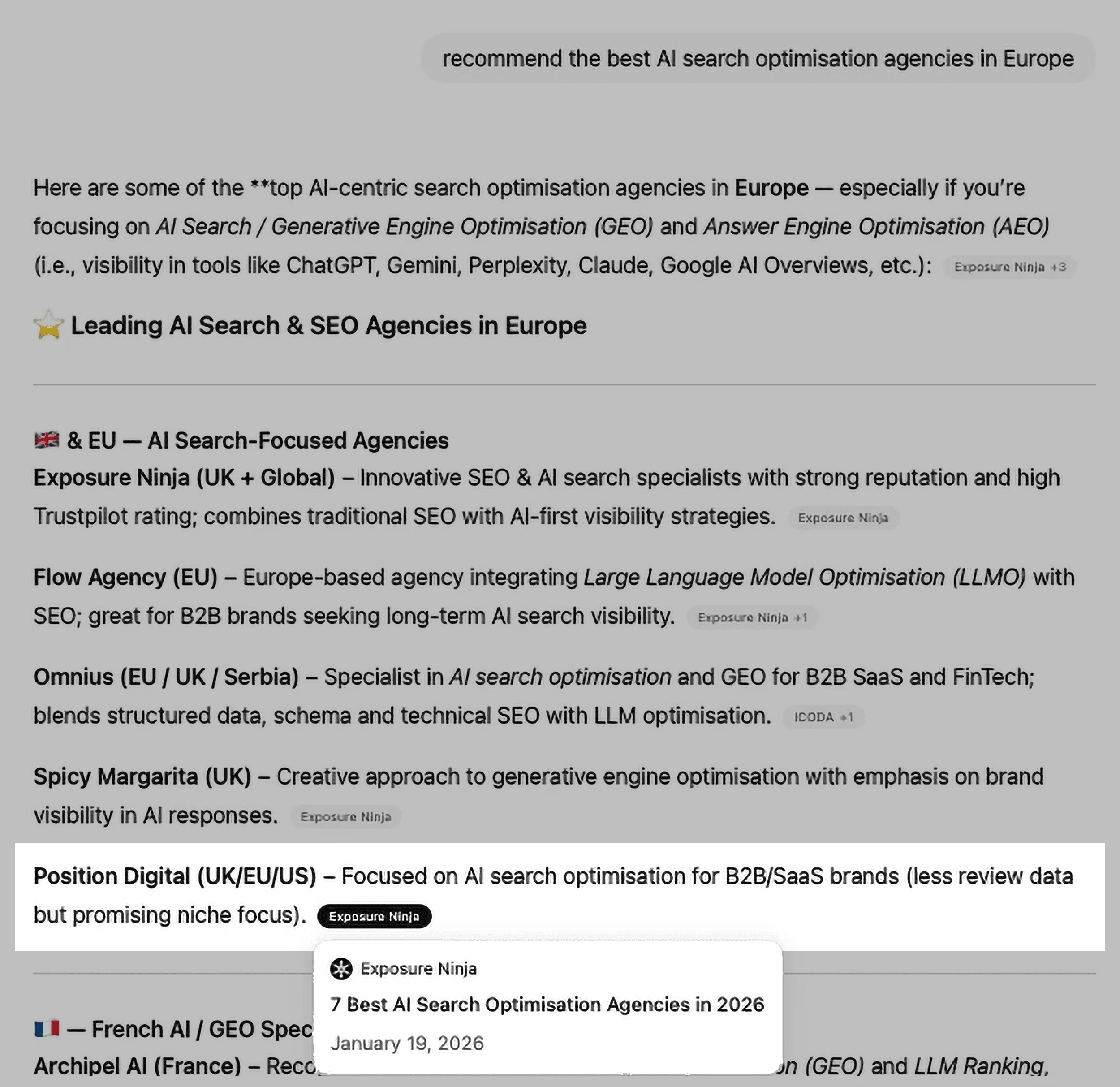
Listicles and comparison guides that incorporate user reviews, community commentary, and expert analysis provide the trust that a company’s own "About Us" page never could. This is why authoritative publications like U.S. News & World Report or local city magazines remain so influential. When you are featured in a respected, unbiased list, you inherit the trust of the publisher.
3. Solving Support Challenges
An often-overlooked benefit of comparison content is its impact on customer support. If your support team is inundated with the same questions about your product versus a competitor’s, create a high-quality comparison piece that addresses these pain points. By providing transparent, honest pros and cons, you not only help the customer decide but also reduce the operational burden on your support staff.
Supporting Data: The Value of Referral and Direct Traffic
While search engine traffic is volatile, referral traffic from trusted sources is remarkably stable. When you are featured in an industry-leading newsletter—such as SEOFOMO or SEO Roundtable—you are reaching a curated audience that has already opted into high-quality content.
This "spider-effect" is crucial:
- Human Discovery: Readers see the mention, find value, and click through to your site.
- Bot Crawling: When search engine crawlers follow these links from high-authority sites, they associate your domain with relevant, high-quality industry discussions.
- Discoverability: Consistent inclusion in these roundups can lead to your content being picked up by Google Discover, which prioritizes topical authority and trusted sources over raw, keyword-stuffed pages.
Official Stance and Implications for SEO
Google has been explicit in its documentation: the focus must be on "Helpful Content." The implication for marketers is that the "SEO-first" mindset must be replaced by a "User-first" mindset.
Key Guidelines for Modern Listicles:
- Originality: Do not simply summarize what is already on the first page of Google. Add original data, personal testing, or unique expert interviews.
- Transparency: If your content contains affiliate links, disclose them clearly. Google’s spam policies are not against monetization; they are against deceptive practices.
- Depth over Breadth: A listicle of 50 items is rarely helpful. A list of five items with deep, comparative analysis is almost always better for the user.
- Intent Alignment: Ask yourself, "Is this page solving a problem, or is it just trying to rank for a keyword?" If the answer is the latter, the content is at risk.
Building an Audience vs. Gaming the Algorithm
When you stop treating content as a commodity to be scaled, you start building an audience. A well-crafted roundup acts as a magnet for like-minded users. If you curate the best tools, services, or resources for your niche, you become a go-to destination.
This creates a self-sustaining cycle:
- The Audience Grows: Users return because they know you provide value, not just noise.
- Engagement Increases: Better engagement signals to search engines that your content is worth promoting.
- Authority Builds: As you become a recognized voice in your space, other creators will naturally reference your content, leading to organic backlinks and increased brand recognition.
Conclusion: The Future of Comparison Content
The "collapse" in traffic experienced by many marketers is not an indictment of the listicle format; it is an indictment of the strategy used to create them. We are exiting an era where SEO was about quantity and entering an era where it is about quality, intent, and authority.
Comparison content and listicles remain powerful tools for conversion and brand building. They help consumers navigate complex markets, provide essential social proof, and drive high-intent traffic to your product pages. However, to survive the modern search environment, these assets must be treated as premium content pieces. They should be written for the reader who is ready to buy, not for the algorithm that is looking for a reason to penalize.
If you prioritize the user’s need for clarity over the SEO’s need for volume, you will not only survive the current volatility—you will thrive in a market that is increasingly hungry for genuine, trustworthy expertise.
More Resources for Further Study:
- Google’s Search Essentials (formerly Webmaster Guidelines): Review these to ensure your content strategy aligns with current spam policies.
- The E-E-A-T Framework: Focus on Experience, Expertise, Authoritativeness, and Trustworthiness to future-proof your site.
- Customer Journey Mapping: Align your content strategy with the various stages of your customer’s decision-making process, from awareness to conversion.


 Ammar Sabilarrohman
 Sagoh

 Raul Delapena Setiawan

 Reynand Wu



 Azzam Bilal Chamdy

 Ali Ikhwan
