
 Asep Darmawan
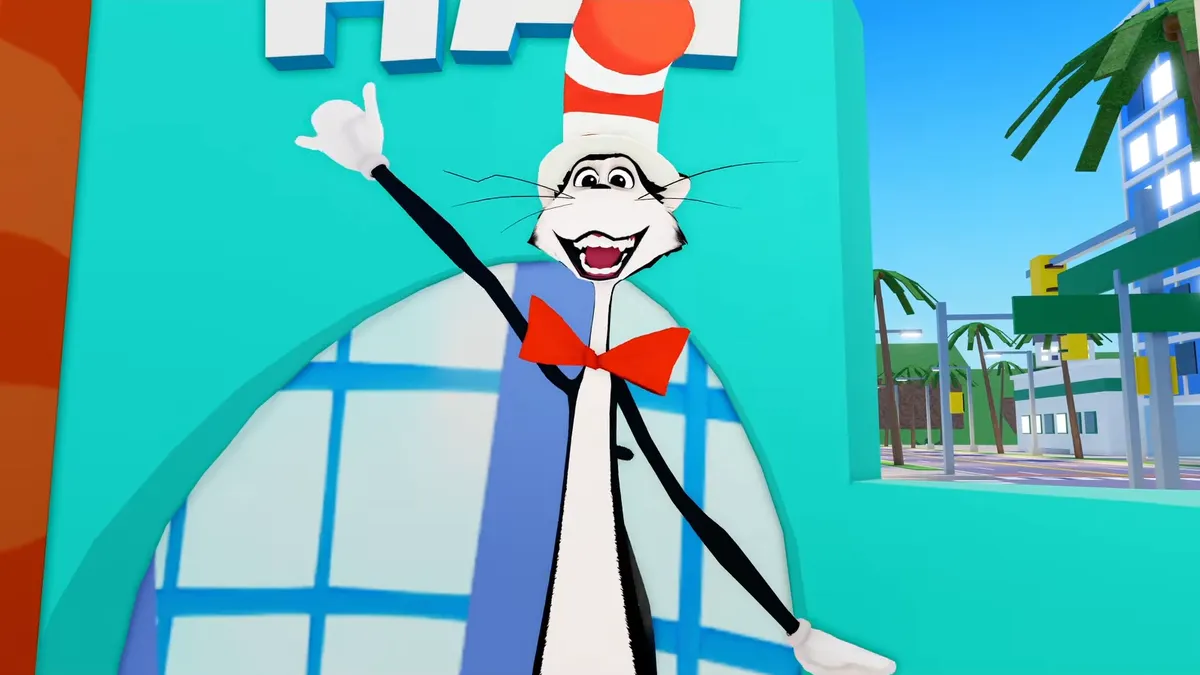
In an era where traditional movie marketing often struggles to capture the attention of Gen Z and Gen Alpha audiences, Warner Bros. has doubled down on a proven strategy: immersive, platform-native digital experiences. As of October 22, 2026, the studio has launched an ambitious cross-platform activation within Roblox to promote its upcoming animated feature, The Cat in the Hat.
Rather than attempting to build a standalone virtual world from scratch—a costly and often risky endeavor—Warner Bros. has opted for a strategic integration into three of Roblox’s most popular, pre-existing game environments. These titles, which boast a combined total of over 7 billion lifetime visits, provide an instant, massive, and highly engaged audience for the film’s marketing campaign.
The Strategy: Tapping Into Established Ecosystems
The campaign, developed in collaboration with digital creative agency Sawhorse, is designed to mirror the chaotic, whimsical energy of the Dr. Seuss classic. By embedding film-inspired modules directly into established games, Warner Bros. is meeting players where they already spend their time.
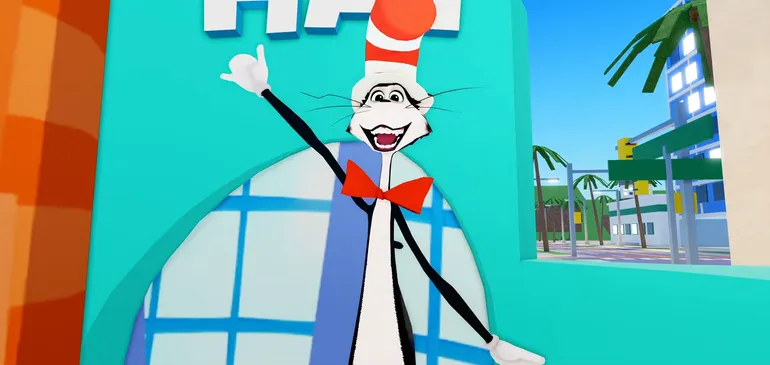
The activation, which is slated to run through November 8, 2026, allows users to engage with "The Cat in the Hat" through specific gameplay challenges. Players can team up with the titular character to cause mischief within the digital landscape, effectively turning the movie’s marketing into a playable experience. Beyond the gameplay, the integration offers six exclusive, limited-edition avatar items. These digital collectibles—including the "Thing Box" (which spawns Thing 1 and Thing 2), a "Glitter Trumpet," and a "Hat Cannon Launcher"—are designed to be shared and used with friends, incentivizing social interaction and viral spread.
A Proven Playbook for Studio Marketing
This initiative marks the latest in a series of successful partnerships between Warner Bros. and Sawhorse. The strategy is built on the success of the 2024 promotion for Beetlejuice Beetlejuice, which saw the studio integrate a virtual Fandango box office directly into Roblox. That campaign allowed players to purchase real-life movie tickets without ever leaving the digital environment, effectively bridging the gap between virtual engagement and real-world box office revenue.
The studio has also experimented with other platforms, including a notable 2025 activation in Fortnite to support the horror film Weapons. These projects underscore a broader shift in Hollywood’s marketing budget: shifting focus from traditional television and billboard spots toward "metaverse" integrations that prioritize community-led interaction.
Chronology of the Activation
The lead-up to the launch has been meticulously timed to align with the film’s theatrical release, which is scheduled just weeks before the holiday shopping and entertainment season.
- Early 2026: Warner Bros. and Sawhorse finalized the concept, focusing on high-traffic Roblox environments to ensure maximum exposure.
- March 2026: Roblox announced a pivotal change to its business model, signaling its intent to take a percentage of in-game brand deal revenue starting in 2027. This added pressure on studios to secure successful activations under current, more favorable revenue-sharing terms.
- October 22, 2026: Official launch of The Cat in the Hat modules across three selected Roblox games.
- October–November 2026: A two-week window of active gameplay, designed to build "FOMO" (fear of missing out) regarding the limited-edition avatar items.
- November 8, 2026: The conclusion of the in-game event, timed to serve as a final push before the film’s wide theatrical release during the high-traffic Thanksgiving weekend.
Supporting Data: Why Roblox?
The move to Roblox is backed by hard data regarding consumer behavior. According to a 2025 Securities and Exchange Commission (SEC) filing, Roblox boasts 127 million daily average users, with over 80% of these users accessing the platform via mobile devices. This mobility is crucial for movie studios, as it allows for persistent, "always-on" engagement throughout the day.
Furthermore, the platform’s internal economy is robust. The same SEC filing revealed that nearly 30% of Roblox’s revenue is derived from the purchase of Robux on the Apple App Store, with another 15% coming from Google Play. For a brand, this represents a highly monetized user base that is already accustomed to micro-transactions and digital asset ownership.
The Thanksgiving holiday, in particular, has become a "super-window" for cinema. In 2024, data from firms like MarketWatch showed that both AMC and Cinemark experienced an incredible surge in foot traffic on Black Friday, proving that high-quality, family-friendly content remains a massive draw for theater-goers. By targeting this period, Warner Bros. is aligning its digital campaign with the time of year when consumer entertainment spending is at its peak.

The Evolution of the "Hospitable" Platform
Roblox has not been a passive host in this transition. Throughout 2025, the platform actively sought to make itself more hospitable for major global brands. This included scaling rewarded video advertising—where players watch a brand video in exchange for in-game currency—and implementing more sophisticated third-party measurement tools to track the efficacy of marketing spend.
The platform is essentially pivoting from a "game engine" to an "ad-tech powerhouse." By offering brands better data transparency, Roblox is positioning itself as a legitimate alternative to traditional digital ad platforms like Meta or Google, particularly for brands that need to reach the elusive 10-to-25-year-old demographic.
Implications for the Future of Film Marketing
The integration of The Cat in the Hat into Roblox is more than just a promotional gimmick; it represents a fundamental change in how films are "sold."
1. From Passive to Active Consumption
Traditional trailers are passive. A user watches, judges, and moves on. By contrast, the Cat in the Hat modules force the user to interact with the brand’s identity. The player is not just watching the film; they are becoming part of the film’s universe. This increases brand recall and emotional connection, which are the primary drivers of opening-weekend ticket sales.
2. The Rise of the "Shared" Economy
The inclusion of items designed to be used with friends—like the "Thing Box"—is a masterclass in organic growth. When a player uses these items in front of other players, they are essentially acting as a walking, talking billboard for the film. This peer-to-peer marketing is far more effective than paid social media ads, which are increasingly ignored by younger audiences.

3. Economic Hurdles and Revenue Sharing
The upcoming 2027 change to revenue-sharing policies on Roblox means that studios are currently in a "gold rush" period. Warner Bros. is maximizing its ROI before the platform increases its take of brand deal revenue. This suggests that in the coming months, we will likely see a surge in high-budget, highly polished brand activations as companies try to lock in long-term engagement strategies while the economic conditions are still optimal.
4. The Talent Factor
The film itself features a high-profile voice cast, including Bill Hader as the Cat, alongside Xochitl Gomez, America Ferrera, and Quinta Brunson. By aligning this level of star power with a digital experience, Warner Bros. is creating a cohesive brand narrative that spans from the actor’s social media feeds to the virtual items in a child’s game inventory.
Conclusion
As the digital and physical worlds continue to converge, the success of campaigns like the one for The Cat in the Hat will likely become the benchmark for Hollywood marketing. Warner Bros. has demonstrated that it understands the core tenet of modern engagement: don’t build a digital island that players have to find; instead, build a bridge into the communities where they are already living.
With the film set to premiere as the holiday season kicks into high gear, the studio is well-positioned to capitalize on this digital momentum. Whether this leads to a direct correlation in box office receipts remains to be seen, but one thing is certain: the era of the static movie poster is effectively over, replaced by the era of the playable, shareable, and immersive digital experience.


 Reynand Wu
 Iffa Jayyana

 Raul Delapena Setiawan


 Sagoh

 Azzam Bilal Chamdy

 Ali Ikhwan
