
 Jia Lissa
By Chris Kelly | October 21, 2026
In an era where the boundary between digital leisure and physical consumption continues to blur, Domino’s Pizza is making its boldest play yet to capture the hearts—and appetites—of the global gaming community. Following a series of successful, high-profile ventures into the metaverse and streaming platforms, the pizza giant has announced a massive, multi-market partnership with the newly released Minecraft Dungeons II.
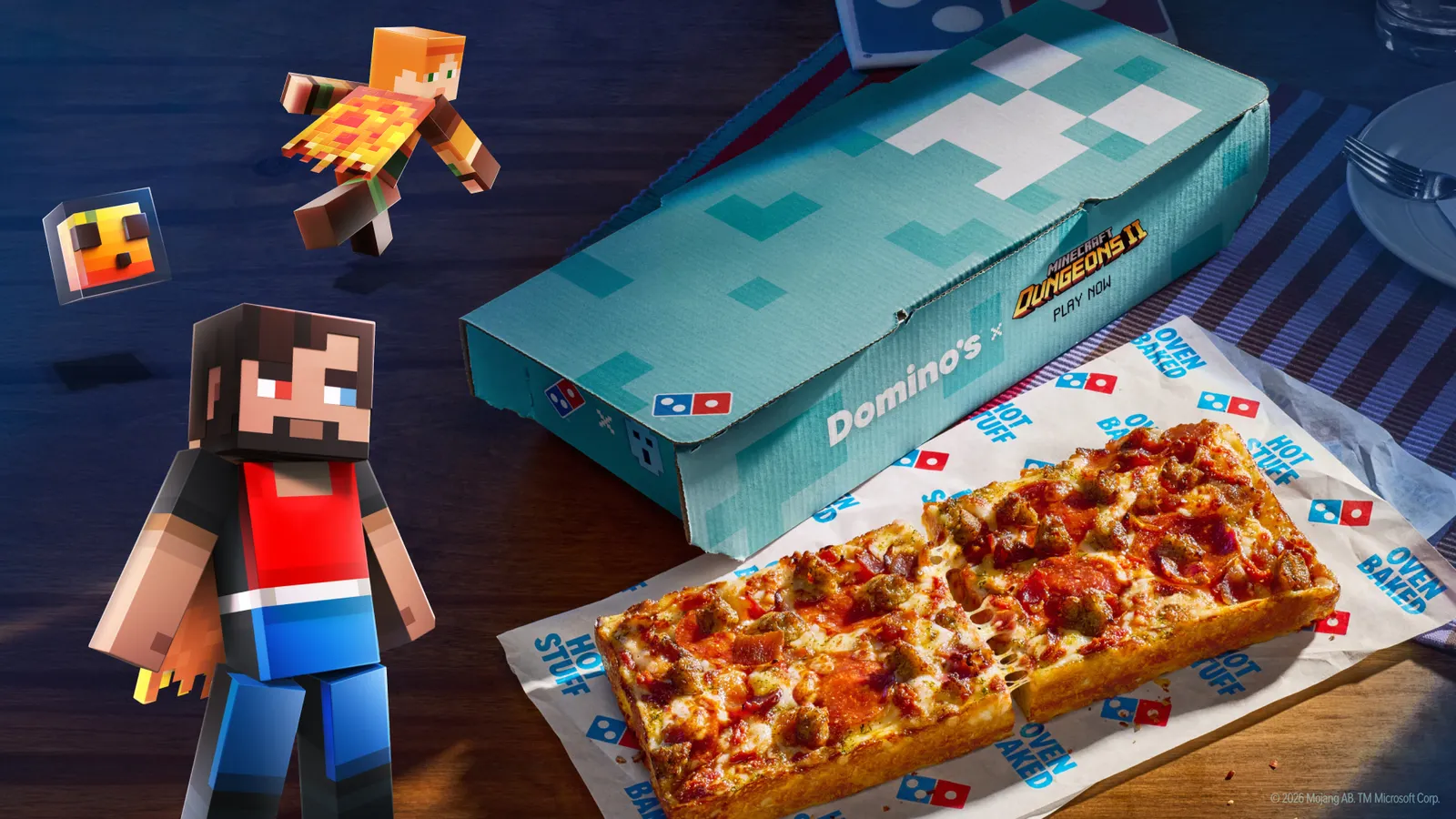
The collaboration, which centers on the promotion of Domino’s new "The Domino" menu item, represents a sophisticated blend of loyalty rewards, creator-led marketing, and interactive digital integration. By aligning its rectangular, block-styled pizza with the aesthetic of one of the world’s most recognizable gaming franchises, the brand is positioning itself as the quintessential companion for high-stakes gaming sessions.
Main Facts: A Strategic Alignment of Brands
The partnership is built on the narrative that gaming, much like a Detroit-style pizza, is best experienced in the company of friends. Minecraft Dungeons II, which launched on September 29, 2026, serves as the perfect canvas for this campaign.
Key components of the campaign include:
- In-Game Integration: Domino’s Rewards members who purchase the new signature item online can unlock exclusive digital assets, including custom avatar skins, a digital cape, and the "Cheesy Cube Pet"—a first-of-its-kind co-branded companion pet within the game’s ecosystem.
- Global Reach: The initiative is set to roll out across 19 international markets, showcasing Domino’s ability to execute complex, localized marketing at a massive scale.
- The "Domino" Product: The menu item itself—a rectangular, deep-dish pizza—was designed with the block-based world of Minecraft in mind, allowing the brand to lean into the game’s visual identity naturally.
- Interactive Tracking: The famous Domino’s Tracker, a staple of the brand’s digital experience, is receiving a thematic overhaul, featuring game-inspired visuals and interactive elements for customers awaiting their orders.
Chronology: From Concept to Campaign
The path to this collaboration did not happen in a vacuum. It is the culmination of years of experimentation with digital culture and gaming-adjacent demographics.
- 2023–2025: Domino’s focused on the aggressive expansion of its loyalty program, which grew to over 37 million active users by the end of 2025. This digital infrastructure provided the necessary backbone for the current Minecraft campaign.
- August 31, 2026: Domino’s introduced "The Domino," a rectangular, Detroit-style pizza, setting the physical stage for the upcoming partnership.
- September 29, 2026: Minecraft Dungeons II officially launches on PC and consoles, establishing the digital environment for the partnership.
- October 21, 2026: The official announcement of the partnership, signaling the start of the promotional push.
- October 26 – November 4, 2026: A high-intensity promotional window where the brand will distribute 2,000 game tokens daily to customers who submit proof of purchase via a dedicated microsite.
Supporting Data: Loyalty and Digital Engagement
The numbers behind this move suggest a calculated risk designed to yield high returns. Domino’s Rewards, which saw a 20% surge in active users following its 2023 relaunch, remains the engine of the company’s marketing strategy. By requiring customers to order through the Domino’s platform to unlock Minecraft items, the company is effectively driving traffic away from third-party delivery apps and into its own high-margin ecosystem.
Furthermore, the giveaway of 2,000 game tokens per day serves as a powerful acquisition tool. By directing users to a dedicated microsite, Domino’s is capturing first-party data from non-loyalty members, allowing the company to build a broader customer profile that can be retargeted with future gaming-related campaigns. This data-gathering exercise is essential in a post-cookie digital landscape where brands must own their customer relationships.
Official Responses: The Philosophy of "Playful Spirit"
Kate Trumbull, Domino’s Executive Vice President and Chief Marketing Officer, emphasized that the partnership is rooted in the shared culture of the two brands.
"Minecraft Dungeons II is all about teaming up with friends for epic adventures, and the Domino is built for those same moments," Trumbull said in an official statement. "With its block shape, playful spirit, and perfect-for-gaming format, the Domino felt right at home in the Minecraft Dungeons II universe."

The brand’s decision to lean into the "block" aesthetic is a deliberate attempt to make the pizza feel like a natural extension of the game rather than an intrusive advertisement. This philosophy of integration over interruption is what separates modern, successful brand collaborations from the clunky "product placement" campaigns of the past.
Implications: The Future of Creator-Led Marketing
Perhaps the most significant takeaway from this campaign is how Domino’s is utilizing the creator economy. Rather than relying solely on traditional TV spots, the company has tapped a roster of visual effects (VFX) creators whose work is native to the gaming space. These creators are producing social content that feels authentic to the Minecraft community.
The Shift Toward Creator-Driven Production
Marketing experts have noted a distinct trend: brands are moving away from traditional ad agencies to handle all creative output. Instead, they are empowering creators to produce content that mirrors their own unique styles. By allowing VFX artists to interpret the Domino’s/Minecraft synergy, the brand ensures the content will be shared organically by the gaming community rather than skipped as an unwanted advertisement.
Expanding the Digital Footprint
This partnership implies a permanent shift in how food-service companies view their digital assets. The Domino’s Tracker is no longer just a utility—it is becoming a destination. By gamifying the experience of waiting for a pizza, Domino’s is increasing the "dwell time" of its customers within its app, further entrenching its brand in the daily lives of Gen Z and Millennial consumers.
Global Localization
With 19 markets involved, the logistical undertaking is immense. The variation in timing and specific offerings per market suggests that Domino’s is moving toward a "Global Framework, Local Execution" model. This allows the brand to maintain a unified identity while respecting the unique cultural and gaming nuances of different regions.

Conclusion: A Blueprint for Brand Synergy
The collaboration between Domino’s and Minecraft Dungeons II serves as a masterclass in modern brand integration. By aligning a physical product (the rectangular pizza) with a digital aesthetic (the block-based world of Minecraft), the company has created a narrative that feels cohesive and engaging.
As Domino’s continues to build upon its massive loyalty base and deepens its relationship with the gaming industry, it is clear that the company views itself as more than a food provider. It is positioning itself as a lifestyle partner for the digital generation. For marketers watching this space, the campaign provides a clear roadmap: define the core "occasion," leverage your loyalty infrastructure, empower the creator community, and ensure your digital touchpoints are as entertaining as the products they represent.
Whether this campaign will drive long-term retention remains to be seen, but as of October 2026, Domino’s has successfully ensured that when players sit down for a session of Minecraft Dungeons II, there is a high probability that the box on their desk will be branded with the Domino’s logo.


 Reynand Wu
 Iffa Jayyana

 Raul Delapena Setiawan


 Sagoh

 Azzam Bilal Chamdy

 Ali Ikhwan
