
 Neng Nana
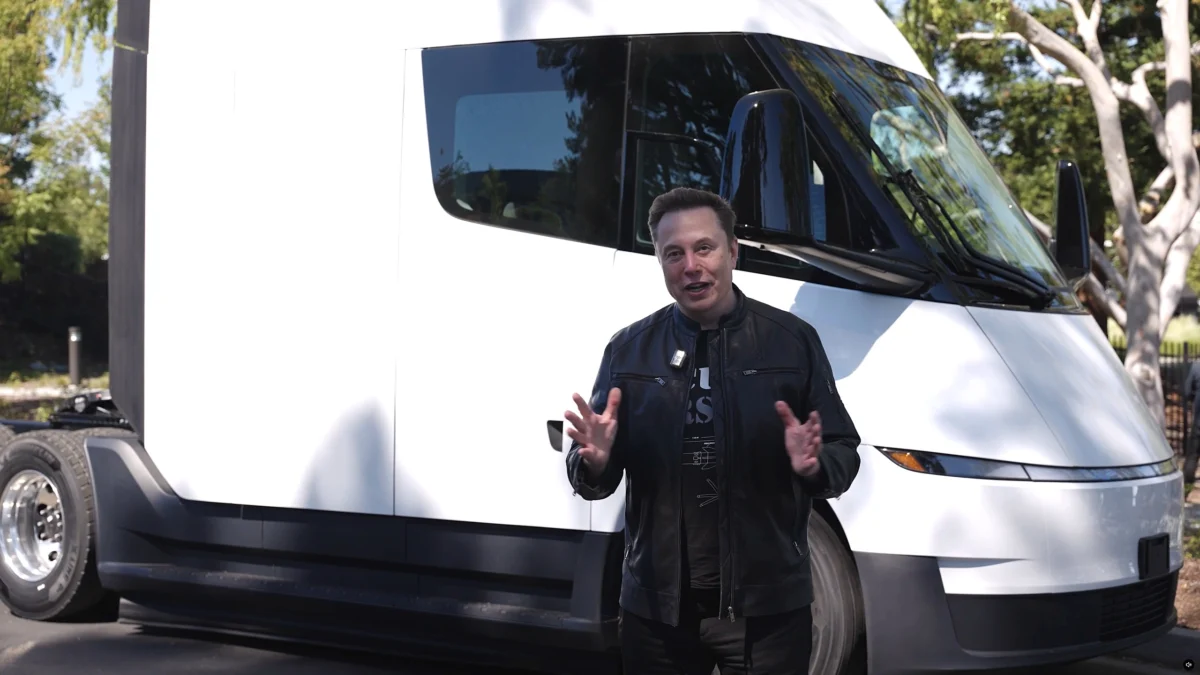
In a pivotal development for the freight and logistics sector, Tesla has officially commenced volume production of its Class 8 electric Semi truck at its Nevada facility. This transition from pilot-stage deployment to large-scale manufacturing marks a watershed moment for the Austin-based electric vehicle (EV) giant, signaling its aggressive intent to disrupt the long-haul trucking industry. As Tesla scales its operations, it is simultaneously laying the groundwork for a transatlantic expansion, with eyes set on entering the European market by 2027.
The Main Facts: A New Chapter in Heavy-Duty Electrification
During its third-quarter earnings call, Tesla leadership confirmed that the Nevada Gigafactory has been optimized for high-volume production of the Semi. The company revealed an installed annual manufacturing capacity of 25,000 units, a figure that underscores the company’s confidence in the vehicle’s market viability.
The Tesla Semi, a Class 8 heavy-duty hauler, is designed to challenge the dominance of diesel-powered tractors. Performance data shared by the company highlights the vehicle’s technical prowess: the top-tier variant boasts a 500-mile range while carrying a gross combination weight (GCW) of 82,000 pounds. Perhaps more importantly for fleet operators, Tesla claims an efficiency rate of 1.7 kWh per mile. According to CEO Elon Musk, this efficiency allows the Semi to consume roughly one-third of the energy required by a traditional diesel counterpart to haul an identical payload. In a high-stakes industry where energy costs represent the largest component of the total cost of ownership (TCO) per mile, this efficiency gain is positioned as a transformative competitive advantage.
A Chronological Progression: From Concept to Commercialization
The road to volume production has been a multi-year journey defined by iterative engineering and strategic testing.
- 2017: The Unveiling: Tesla first introduced the Semi concept, promising a revolution in aerodynamics and electric powertrain efficiency.
- 2022: Initial Deliveries: After several delays, Tesla began limited deliveries to select pilot customers, most notably PepsiCo, to gather real-world performance data.
- 2024: Scaling Infrastructure: Tesla focused on refining the production line in Nevada, moving away from manual assembly processes toward the high-speed, automated lines required for the 25,000-unit annual capacity.
- September 2026: ZET SCALE Partnership: Tesla was selected as the primary supplier for a massive 2,500-truck order facilitated by the Zero-Emission Truck Shipper-Carrier Alliance (ZET SCALE), signaling a shift from experimental fleet testing to widespread commercial adoption.
- Q3 2026: Volume Production Confirmed: Tesla officially confirmed the start of volume production during its Q3 earnings call, marking the beginning of the "mass production" era for the program.
- 2027 (Projected): European Market Entry: Tesla aims to initiate customer demonstrations in Europe during the first half of the year, with formal deliveries expected to follow by year-end.
Supporting Data: Financial Health and Manufacturing Metrics
Tesla’s entry into the heavy-duty sector comes at a time of broader fiscal recalibration for the company. While the Semi program is gaining momentum, the company’s overall financial performance in the third quarter of 2026 reflects the challenges of balancing legacy passenger vehicle manufacturing with massive investments in new technology.
Financial Overview (Q3 2026)
Tesla reported quarterly revenue of $28.05 billion, remaining nearly flat compared to the $28.1 billion recorded in the same period of 2025. Earnings faced downward pressure, with adjusted (non-GAAP) diluted earnings per share (EPS) falling to 48 cents, a 4% decline year-over-year. GAAP net income saw a more pronounced contraction, dropping 43% to $787 million.
The company’s commitment to future growth remains evidenced by its capital expenditure (CapEx) guidance for 2026, which has been revised to approximately $20 billion. This massive investment pool is earmarked for continued expansion in AI, robotics, energy infrastructure, and, crucially, the scaling of the Semi’s production facilities.
Operational Metrics
| Metric | Q3 2026 Value |
|---|---|
| Annual Semi Production Capacity | 25,000 units |
| Stated Semi Range (Top Variant) | 500 miles |
| Stated Energy Consumption | 1.7 kWh/mile |
| Total Company Revenue | $28.05 billion |
| GAAP Net Income | $787 million |
| Free Cash Flow | $1.53 billion |
| Passenger Vehicle Deliveries | 486,532 |
Official Responses and Strategic Vision
During the earnings call, Elon Musk was characteristically optimistic about the Semi’s role in the company’s future. "We also began production of the Tesla semi-truck in Q3, our Class 8 heavy-duty truck," Musk stated. He emphasized that the focus is now squarely on the total cost of ownership, noting that for logistics companies, the energy efficiency of the Semi effectively pays for the vehicle’s premium price point over time.
Dan Priestley, head of Tesla’s Semi program, has been the primary architect of the European expansion strategy. At the IAA Transportation conference in Germany, Priestley outlined a methodical approach to the European market. Rather than rushing into local production, Tesla will leverage the existing output from its Nevada plant to satisfy early demand.
"What we’re working on right now is lining up customers that are highly interested in experiencing the truck through demonstrations in the first half of next year, with the opportunity then to take delivery, targeting by the end of next year," Priestley explained. Furthermore, to support these trucks, Tesla is planning the deployment of over 100 Megacharger stalls in Europe by 2027, each capable of delivering up to 1.2 megawatts of power—a critical requirement for reducing downtime during long-haul charging sessions.
The Implications: What This Means for the Logistics Industry
Tesla’s transition to volume manufacturing carries significant implications for the freight industry, which has long been the stronghold of diesel combustion engines.
1. Competitive Pressure on Diesel
The trucking industry is historically slow to adopt new technology due to the "mission-critical" nature of logistics—trucks must be on the road to make money. By demonstrating a 1.7 kWh/mile efficiency rating, Tesla is challenging the industry’s status quo. If these metrics hold up under diverse weather and terrain conditions, fleet operators will face mounting pressure from shareholders and regulators to justify the continued use of diesel.
2. The Charging Infrastructure Bottleneck
The success of the Semi is inextricably linked to the Megacharger network. Tesla’s commitment to 1.2-megawatt charging stalls is an aggressive attempt to solve the "range anxiety" that has previously plagued commercial electric vehicles. By controlling both the vehicle and the charging ecosystem, Tesla is replicating its successful "Supercharger" model from the passenger vehicle world, aiming to create a seamless end-to-end user experience for trucking fleets.
3. Supply Chain and Reliability
While the 25,000-unit capacity is an impressive headline figure, industry analysts remain cautious. Tesla did not disclose the actual number of units produced or delivered in Q3, nor did it break out specific revenue associated with the Semi division. The "installed capacity" represents a ceiling rather than a current output rate. For the logistics sector, the real test will be the reliability of these trucks in high-utilization, 24/7 operations.
4. Global Market Shifts
By targeting Europe for 2027, Tesla is entering a market with some of the most stringent emission regulations in the world. The European Union’s commitment to carbon neutrality provides a supportive regulatory environment for electric heavy-duty vehicles. However, Tesla will face stiff competition from established European players like Volvo, Scania, and Mercedes-Benz, all of whom have their own aggressive electrification roadmaps.
Conclusion
Tesla’s move into volume production for the Semi is more than just a new product launch; it is a declaration that the company intends to be a dominant force in industrial transportation. By focusing on energy efficiency and leveraging its existing Nevada capacity, Tesla is attempting to solve the economic puzzle of electric trucking.
While the company faces financial headwinds in its core passenger vehicle business and must prove that it can scale the Semi without compromising the build quality or reliability required by professional carriers, the trajectory is clear. As the company prepares for its European debut in 2027, the global logistics landscape stands on the precipice of a significant, and potentially permanent, shift toward electrification. The success of this endeavor will likely define Tesla’s next decade as much as the Model 3 or Model Y defined the last.

 Sagoh

 Ali Ikhwan

 Raul Delapena Setiawan

 Reynand Wu



 Azzam Bilal Chamdy

