
 Asro
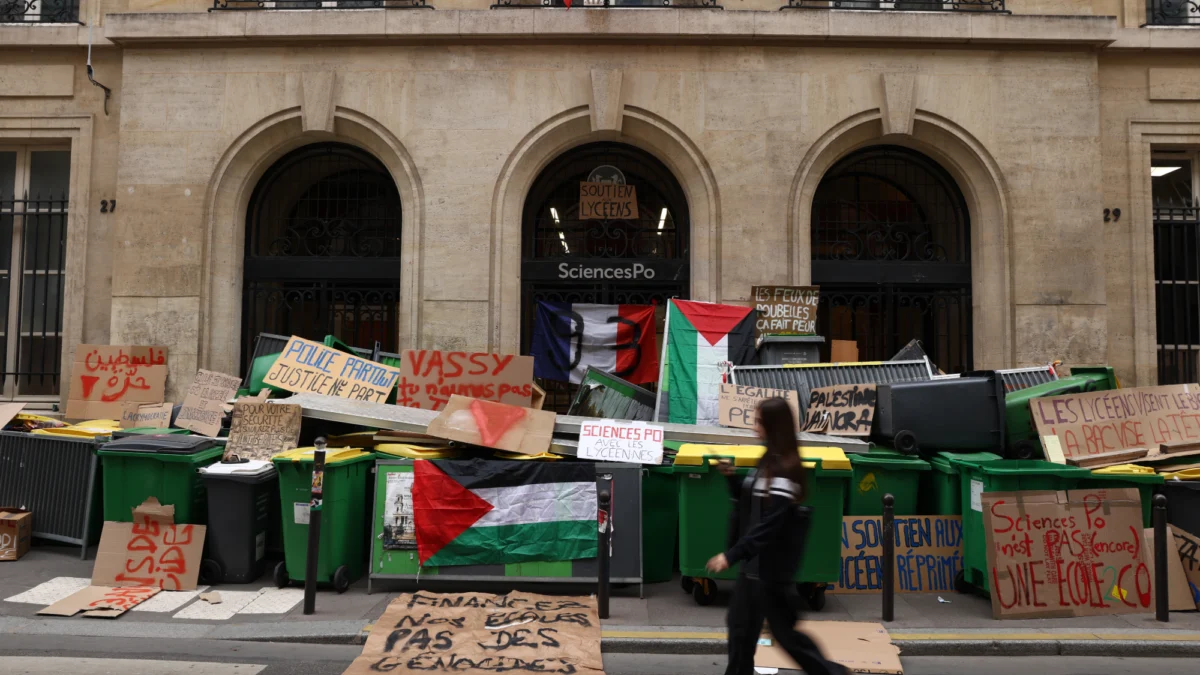
PARIS — Across the historic boulevards of Paris and the industrial suburbs surrounding the capital, a new, urgent sound has overtaken the traditional bustle of the French school system: the clamor of barricades.
For the past four weeks, thousands of students have mobilized in one of the most significant youth-led social movements in recent French history. What began as a series of localized grievances regarding infrastructure and academic overcrowding has rapidly metastasized into a nationwide outcry against a government that students argue has failed to protect them from the tangible, lethal realities of a warming planet.
As record-breaking heat waves transform classrooms into sweltering greenhouses, the protests have forced a national reckoning: how can a nation that prides itself on its intellectual tradition continue to educate its youth in buildings that are physically incapable of sustaining life in the 21st century?
The Catalyst: A Summer of Heat and Health
The spark for the current unrest was not a single policy decision, but a visceral physical experience. By June, as France grappled with its second consecutive extreme heat wave of the year, the limitations of the country’s aging educational architecture became painfully apparent.
For 16-year-old Cléo, a high school student on the eastern periphery of Paris, the realization came during a Greek class. What she initially dismissed as fatigue quickly devolved into the classic symptoms of heat exhaustion: nausea, extreme dehydration, and a lightheadedness that forced her to seek medical attention from her school nurse. Her experience is not an anomaly; it is a recurring nightmare for thousands of students.
France recorded its hottest year on record in 2026, leading to a grim statistical milestone: 8,000 excess deaths during the summer months alone. In June, mortality rates spiked by 11 percent compared to 2025. In schools, this translated into reports of fainting, nosebleeds, and a pervasive sense of abandonment by an administration that seems unwilling to adapt to a reality where triple-digit temperatures are no longer a rarity, but a seasonal expectation.
A Chronology of the Revolt
The movement’s timeline reflects an escalating desperation among the youth:
- Early June 2026: Initial reports of heat-related illness in schools emerge. Teachers and students begin protesting for basic accommodations, such as fans and modified schedules.
- Late June – Early July: As temperatures climb, the localized protests evolve into organized strikes. Students begin blocking school entrances with refuse bins and furniture.
- Mid-July: The movement expands beyond infrastructure. Demands grow to include class size reductions, teacher recruitment, and a complete overhaul of the post-secondary university application system.
- August – September: The state response shifts from tolerance to containment. The government, citing public order, begins a heavy-handed crackdown.
- October 2026 (Present): The protest movement, now bolstered by university students and high-profile activists like Greta Thunberg, has reached a fever pitch, with over 8,000 arrests reported in three weeks—85 percent of whom are minors.
The Infrastructure Crisis: A Legacy of "Thermal Inertia"
At the heart of the students’ anger is the physical state of their learning environments. Many French schools were designed decades—if not centuries—ago with a primary focus on thermal retention.
"We are realizing that, until now, we’ve designed buildings for energy efficiency in winter," explains Marie-Hélène Azam, a professor of engineering science at the National Institute of Applied Sciences. "We need to find a way to reconcile comfort in winter with comfort in summer, and that means designing buildings a little differently."
French classrooms often feature high ceilings and large, south-facing windows intended to maximize natural light. In a climate crisis, these design choices have become liabilities, effectively turning classrooms into greenhouses. Furthermore, the "high thermal inertia" of traditional stone and brick structures means that once the buildings absorb heat, they store it, radiating that warmth back into the rooms long after the sun has set.

"With heat waves becoming more intense and lasting longer, we no longer have enough time to cool these buildings down at night or between two heat waves," says Azam. "As soon as the temperature of the building starts to drop, another even more intense heat wave arrives."
Beyond the heat, students report a cascade of systemic failures: structural degradation including falling ceilings, pervasive mold, inoperable plumbing, and a severe lack of basic supplies. For the students, these are not just maintenance issues; they are evidence of a state that does not value their safety or their future.
Official Responses and the Cost of Adaptation
The government response has been a mix of financial allocation and security-focused suppression. A spokesperson for the Île-de-France region, which oversees the Paris-area high schools, confirmed that $1.2 billion was allocated this year for renovations, including roof and window upgrades. During the peak of the heat waves, the region spent $1.1 million on temporary measures, including misting devices, portable fans, and the opening of air-conditioned exam centers.
However, the question of air conditioning (AC) remains a flashpoint. While some call for its universal installation, others—including environmental scientists and the students themselves—are hesitant. Widespread AC usage risks exacerbating the "urban heat island" effect, where units vent hot air into the streets, further increasing ambient city temperatures. Moreover, with European energy costs among the highest globally, the long-term fiscal viability of such a solution is being questioned.
The political optics of the 8,000 arrests have also backfired. By criminalizing the protest movement, the state has arguably radicalized the participants, transforming a debate about school maintenance into a broader ideological battle over the government’s priorities.
The Broader Implications: A Generation in Flux
The students protesting outside the barricaded gates of Sciences Po are not merely complaining about the heat. They are articulating a profound existential dread. For many, the crumbling school walls are a metaphor for the broader climate crisis: a failing system that is incapable of protecting the next generation from the consequences of their predecessors’ fossil-fuel-dependent lifestyle.
"It’s pretty unsettling to see that we’re living in a world where we’re going to die out because of our own actions," says Margaux Levy, a second-year university student. "Everything seems pretty bleak. I feel like nobody is going to make an effort, and political parties aren’t making it a priority."
This sentiment was echoed by Greta Thunberg during her recent visit to a Paris school, where she characterized the protests as a natural reaction to a stolen future. "This generation is one that has been growing up with a sense of hopelessness," she noted. "We can see our future and our rights taken from us in front of our very eyes. What do they expect? Of course people are going to fight back."
Conclusion: A Future at Stake
The French student movement of 2026 serves as a bellwether for the rest of Europe. As climate-driven events become more frequent, the traditional social contract between the state and its students—that the state will provide a safe environment for learning—is being shredded.
Whether the government can move past its current security-first strategy to engage in substantive, long-term infrastructure reform remains to be seen. However, one thing is certain: the students have made it clear that they are no longer willing to wait for the next heat wave to see if their voices will be heard. They have moved from the classroom to the streets, and they are demanding a world that is as habitable as it is equitable.


 Raul Delapena Setiawan

 Laily UPN

 Reynand Wu

 Sagoh


 Azzam Bilal Chamdy

 Ali Ikhwan
