
 Raul Delapena Setiawan
In a significant evolution of its digital advertising infrastructure, Meta has unveiled "GenRecs" (Generative Recommenders), a transformative approach to ad delivery that moves beyond traditional, ID-based scoring systems. By integrating Large Language Model (LLM) architectures into the core of its recommendation engine, Meta is shifting from a paradigm of pattern matching to one of semantic reasoning. This breakthrough, powered by "GenRecs Tokenization," allows the platform to interpret the intrinsic meaning of an advertisement and pair it with user intent, fundamentally changing how ads are surfaced to billions of users globally.
Main Facts: Moving Beyond the ID
For over a decade, digital advertising has relied on massive, sparse embedding tables—essentially assigning a unique ID to every single ad, user, and product. When a user interacted with an item, the system updated that specific ID’s history. While effective, this "cold-start" problem was a persistent bottleneck: if a new product or ad lacked historical engagement data, the system was effectively blind to its potential.
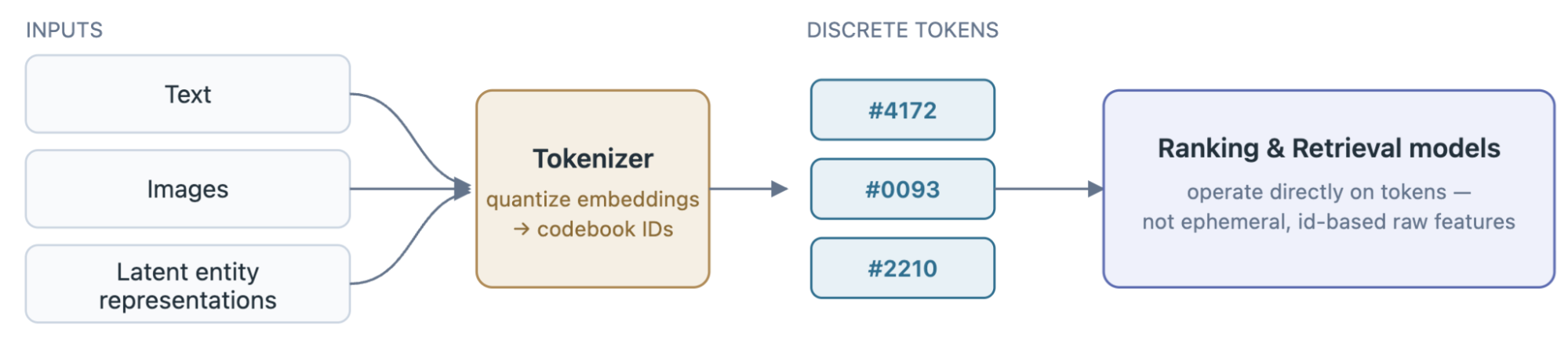
GenRecs changes this by abandoning rigid IDs in favor of a structured, semantic vocabulary. Instead of treating a product as a siloed database entry, the system uses multimodal LLMs to analyze the visual, textual, and behavioral metadata of an item. It then translates these attributes into a compact sequence of "semantic tokens."
By doing so, the model gains the ability to relate an unseen item to familiar ones. If a brand launches a new trail shoe, the system does not start from zero. Instead, it recognizes the "trail shoe" tokens and immediately inherits the model’s existing knowledge regarding that category, enabling the system to make highly accurate predictions for brand-new products from their very first impression.

A Chronology of Innovation
The transition to GenRecs represents the culmination of a multi-year effort within Meta’s engineering teams to bridge the gap between traditional recommendation systems and generative AI.
- Early 2025: Conceptualization: Meta engineers began exploring how LLM-native architectures—typically used for text generation—could be repurposed for retrieval and ranking tasks. The core challenge was reconciling the high-latency nature of LLMs with the millisecond requirements of ad auctions.
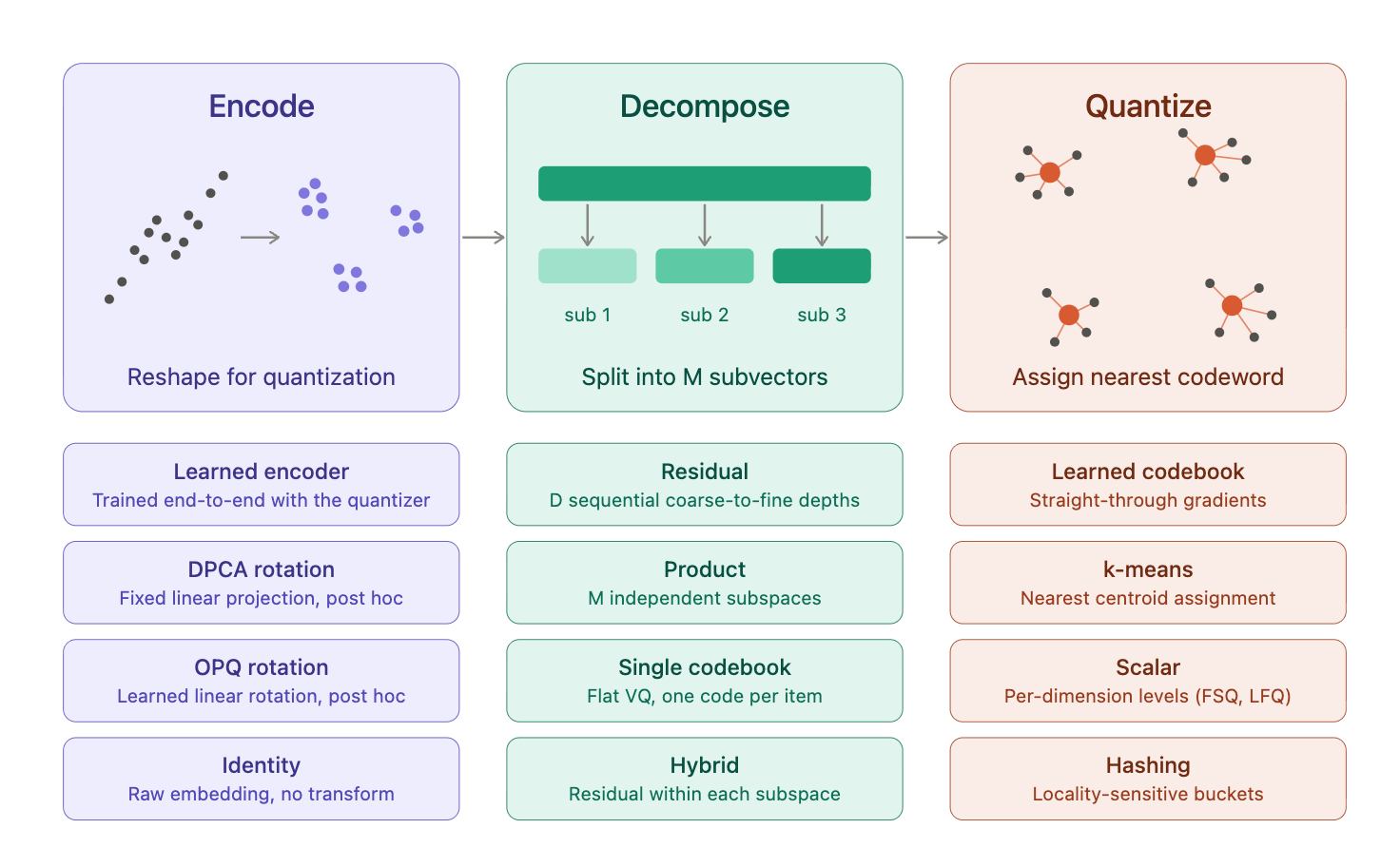
- Late 2025: Developing the Vocabulary: The team focused on the "Tokenizer," a mechanism to compress rich multimodal data (images, text, video) into discrete, manageable tokens. This required a three-stage pipeline involving learned encoders, residual decomposition, and vector codebooks.
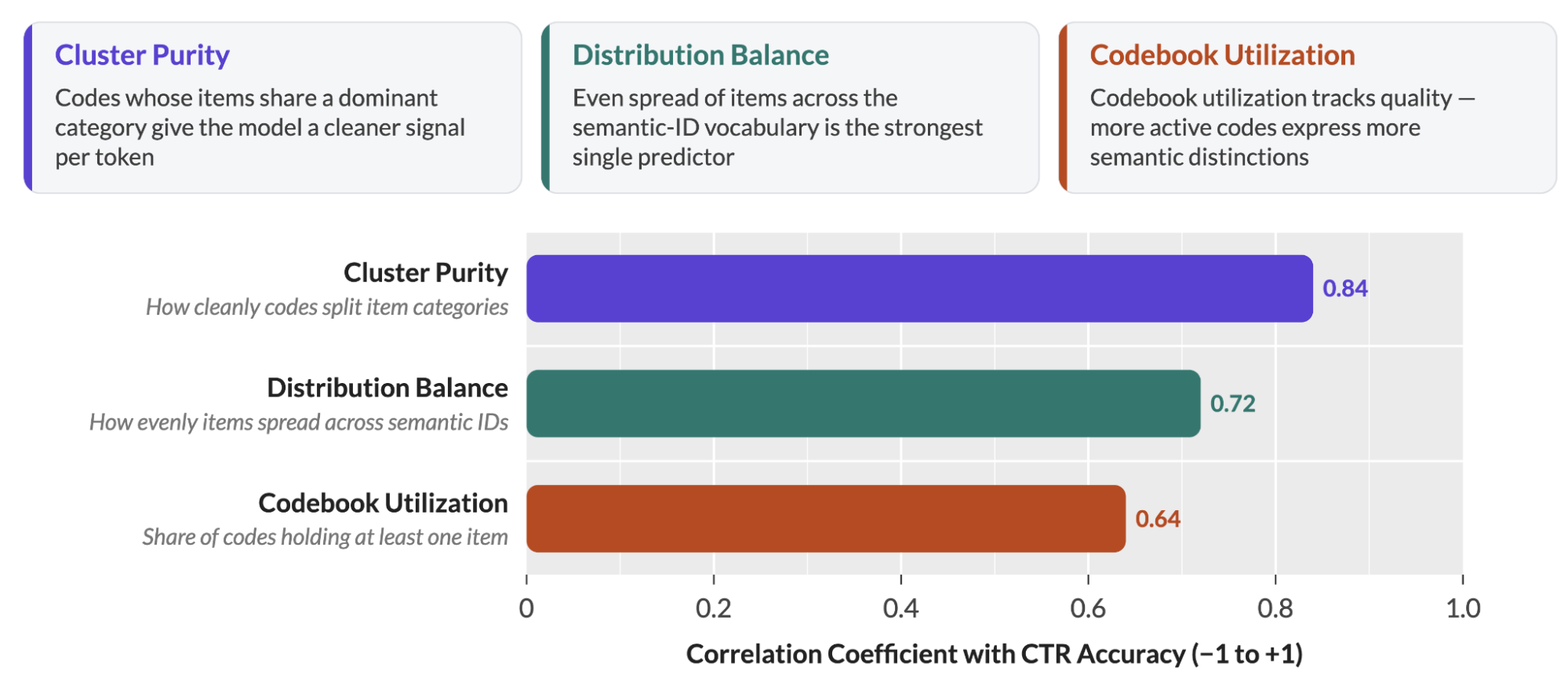
- February 2026: Validation: Internal testing confirmed that the quality of these tokens directly correlates to ranking accuracy. The team observed that tokenizer versions with better intrinsic metrics—such as diversity and reconstruction accuracy—consistently outperformed predecessors in Click-Through Rate (CTR) prediction.
- Mid-2026: Production Integration: Following successful experiments, GenRecs was integrated into the production stack, allowing for cross-entity transfer of knowledge across ads, products, pages, and pixels.
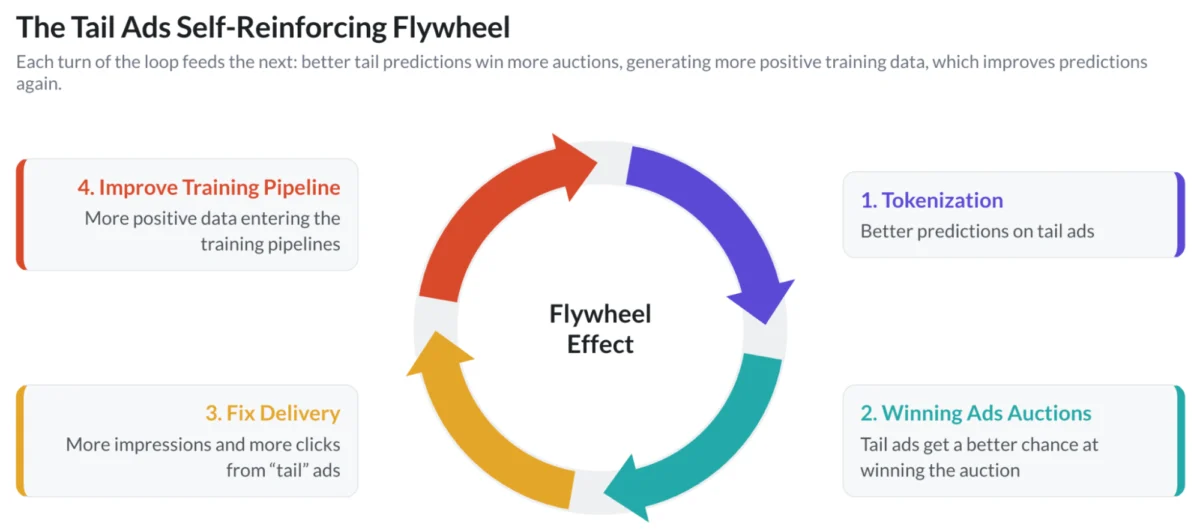
- Current State (October 2026): GenRecs is now a foundational pillar of Meta’s ad ecosystem, with ongoing refinements aimed at optimizing the "Tokenization Flywheel"—a self-reinforcing loop where better predictions generate higher-quality training data, further refining the model.
Supporting Data and Technical Architecture
The efficacy of GenRecs is rooted in its three-stage technical pipeline. First, a pre-trained multimodal model encodes an ad’s content—including visual elements and descriptive text—into a rich embedding. Second, this signal is combined with engagement data to ensure the model understands not just what the item is, but how it performs. Third, this information is quantized into a sequence of discrete tokens.
Intrinsic Quality Metrics
Meta’s research indicates a linear correlation between tokenizer quality and downstream performance. By evaluating the tokenizer using "diversity loss" (ensuring a broad vocabulary) and "dead code resets" (preventing token stagnation), engineers have created a system that can be optimized independently of the final recommendation model. This allows for rapid iteration cycles; the team can now improve the system’s "reasoning" capabilities without waiting for full-scale model re-training.
The Two-Tower Breakthrough
Building on this, Meta’s recent work on LLM-native retrieval has demonstrated that a two-tower architecture—using a shared LLM encoder—can achieve state-of-the-art results while using a fraction of the training data previously required by legacy systems. This efficiency is critical, as it allows for the deployment of complex generative logic without compromising the latency expectations of a global, high-volume ad auction.
Official Perspectives: The Vision for 2027 and Beyond
Meta’s leadership and engineering teams view GenRecs as the definitive move from "discriminative scoring" to "generative reasoning."
"As recommendation systems evolve, the data foundation must evolve from ephemeral IDs to stable semantic representations," noted a spokesperson for the project. By treating tokenizer quality as a first-class objective, Meta is positioning itself to handle the next generation of digital commerce.
The company has outlined three primary directions for the continued development of GenRecs:
- Deepening Cold-Start Generalization: The goal is to eliminate the performance gap for new advertisers. By scaling tokenization to cover the entire inventory, Meta aims to ensure that even the smallest, newest businesses can find their audience instantly.
- Unifying the Token Space: The ultimate vision is a shared vocabulary across all content surfaces. Currently, the team is exploring how a single token representation can span text, image, audio, and video, allowing the model to "reason" about a user’s interest in a way that feels holistic rather than fragmented.
- Latency-Optimized Serving: Because fully verbalizing every ad into an LLM context window is computationally expensive, Meta is working on "compacted verbalization." This technique combines semantic IDs with LLM-generated tokens to maintain high reasoning quality while keeping the system fast enough for real-time bidding.
Implications for the Industry
The shift to GenRecs has profound implications for the advertising landscape, particularly for small-to-medium-sized enterprises (SMEs) and content creators.
Leveling the Playing Field
Historically, incumbent advertisers with deep historical data on their products had an inherent advantage in ad auctions. GenRecs, by design, levels this playing field. Because the model can infer the value of a new product based on its semantic features—rather than its historical performance—newly launched products can achieve performance levels previously reserved for established campaigns.
The Death of the Cold Start
The most immediate business impact is the mitigation of the "cold-start" problem. For advertisers, this means faster time-to-market and lower volatility during product launches. By leveraging shared knowledge from similar, previously successful campaigns, the model effectively "transfers" wisdom to new items, resulting in higher ad efficiency from the first hour of a campaign.
Towards a Generative Future
Finally, GenRecs represents a broader shift in AI engineering. By moving away from brittle, hard-coded ID systems toward flexible, language-based representations, Meta is creating a system that behaves more like a human expert. It doesn’t just look for "who clicked what" in the past; it looks for the underlying meaning and relevance of the advertisement in the context of the user’s current world.
As the digital economy grows more complex, the ability to interpret content at scale—rather than just tracking interaction logs—will likely become the benchmark for all major advertising platforms. With GenRecs, Meta has provided a roadmap for how generative AI can be integrated into the mechanical, high-stakes environment of programmatic advertising, signaling a new era of "intelligent" recommendations that benefit both the platform, the advertiser, and ultimately, the end consumer.
This report is based on findings from Meta’s internal research as of February 2026, as detailed in recent engineering disclosures and financial commentary.


 Jia Lissa

 Nila Kartika Wati


 Reynand Wu

 Sagoh


 Azzam Bilal Chamdy

 Ali Ikhwan
