
 Muslim
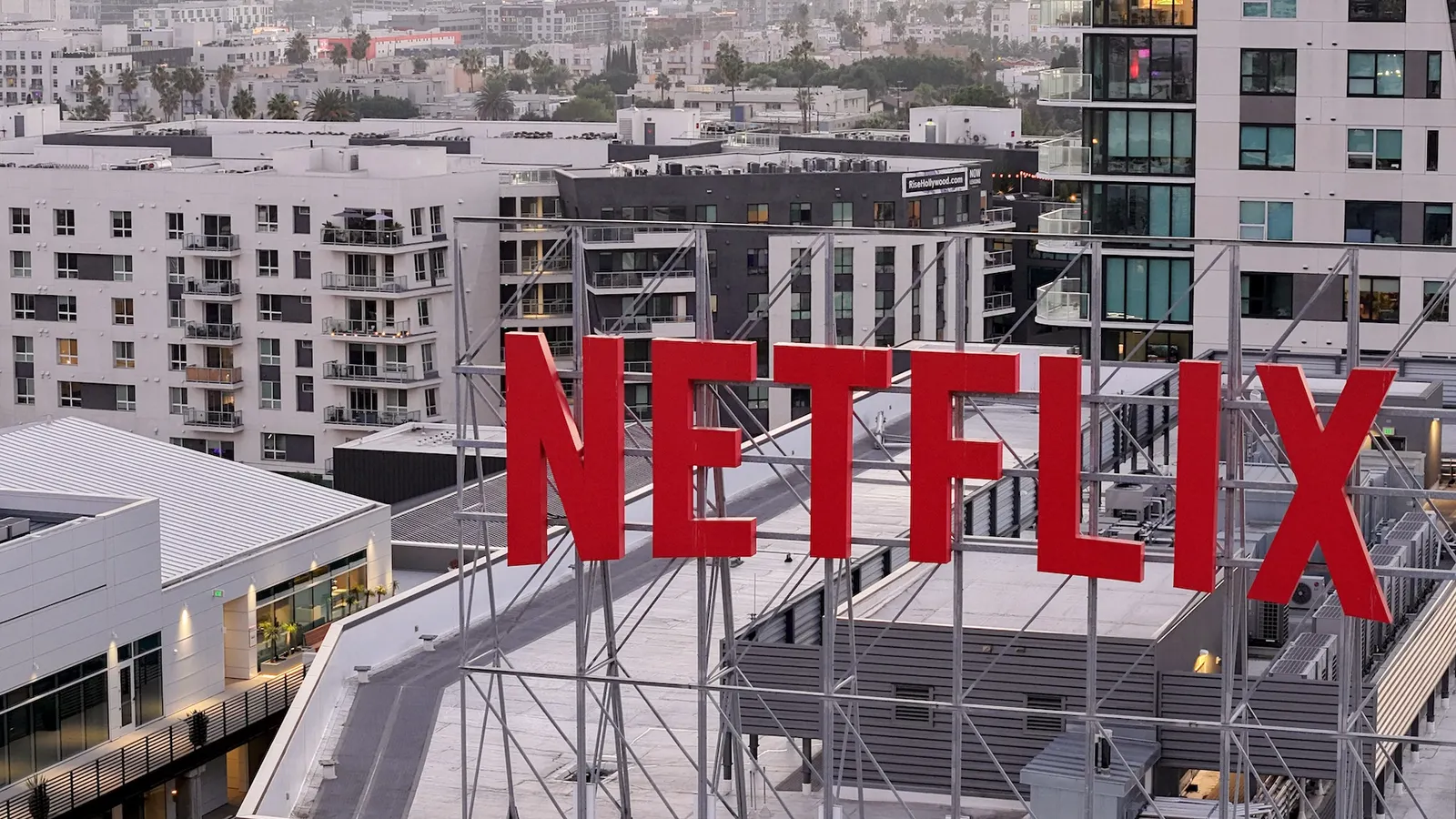
Netflix, the titan of the streaming industry, has long been the bellwether for the digital media landscape. However, its latest Q3 2026 earnings report paints a complex picture: while the company continues to achieve double-digit growth, the aggressive velocity it promised investors has hit a temporary speed bump. As the company navigates a transitionary period marked by significant workforce reductions and a recalibration of its advertising ambitions, stakeholders are left weighing the company’s long-term potential against the reality of a cooling growth engine.
The Main Facts: A Quarter of Contrasts
For the third quarter of 2026, Netflix reported a 12% year-over-year revenue increase, reaching a total of $12.9 billion. This performance was bolstered by a combination of strategic pricing adjustments, steady subscription growth, and favorable foreign exchange fluctuations. By all traditional metrics, the company remains a financial powerhouse.
However, the narrative shifted during the earnings call as management offered a more tempered outlook for the remainder of the fiscal year. Netflix lowered its total revenue guidance for 2026 to $51.1 billion—a 13% growth projection that, while healthy, falls short of earlier, more bullish expectations. The most striking adjustment was in the advertising segment; Netflix now expects ad revenue to reach approximately $2.7 billion for the year, a downward revision from its previous $3 billion forecast.
This discrepancy highlights the friction between Netflix’s ambition to become an advertising powerhouse and the practical challenges of scaling a high-tech ad suite in a competitive, fragmented marketplace.
Chronology: A Trajectory of Transformation
The story of Netflix in 2026 is one defined by rapid shifts in strategy and structure:
- Early 2026: Netflix set ambitious internal targets for its advertising business, aiming to capitalize on its massive global reach to challenge traditional linear television for marketing budgets.
- Mid-2026: The company embarked on a significant restructuring, culminating in the layoff of approximately 6% of its workforce. The departure of key leadership figures, including Chief Content Officer Bela Bajaria, signaled a deeper organizational pivot.
- October 20, 2026: Netflix unveiled a suite of new ad-tech capabilities, including enhanced Conversion API and Netflix Pixel tools, intended to deepen its relationship with brand marketers.
- October 20, 2026 (Earnings Call): The company officially released its Q3 financial results, revealing the revenue miss in the ad sector and a reduction in the annual guidance.
- March 2027 (Upcoming): Netflix is scheduled to expand its ad-supported subscription plan to 15 additional countries, including Austria, Denmark, Sweden, and Peru, as part of a continued international land-grab.
Supporting Data: Behind the Advertising Gap
While Co-CEO Greg Peters acknowledged that the company is "a bit behind" its aggressive annual targets, he was quick to point out that the ad business itself is not failing; it is simply growing at a rate that is currently below the company’s internal "stretch goals." According to executive statements, the Netflix ad business is still expanding at a rate of over 80% year-over-year.
The challenge lies in the deployment of technology. The company has been aggressively investing in its "Netflix Ads Suite," aiming to extend programmatic access through global connected TV (CTV) marketplace deals. However, delays in the rollout and integration of these complex product features have served as a drag on revenue realization.
To bridge this gap, Netflix is leaning into partnerships. The company recently integrated with The Trade Desk to allow advertisers to leverage their own first-party audiences, building upon existing collaborations with Yahoo DSP and Amazon Ads. These moves are designed to offer the "full-funnel optimization" that major brands demand, moving beyond simple impressions to trackable, measurable conversions.
Official Responses and Strategic Priorities
During the earnings call, Co-CEO Greg Peters maintained a posture of measured optimism. He emphasized that the priorities for the advertising business remain steadfast: "We want to advance our full-funnel optimization solutions. We want to deliver new ad formats, new ad products. We want to increase the availability of our first-party measurement and reporting."
Peters noted that general demand for Netflix’s ad inventory remains robust and the diversity of the advertiser base continues to expand. The company’s strategy remains predicated on the belief that as it rolls out more sophisticated tools—such as the newly announced Netflix Pixel—advertisers will have the confidence to allocate larger portions of their digital budgets to the platform.
Regarding the international expansion, the company views the March 2027 rollout as a vital growth lever. By bringing the ad-supported tier to a wider array of European and Latin American markets, Netflix hopes to tap into a fresh cohort of price-sensitive subscribers, effectively doubling down on the model that has driven much of its recent growth.
Implications: The Industry Outlook
The market’s reaction to these developments has been one of skepticism, as analysts weigh the long-term viability of the streaming giant’s current model.
Mike Proulx, vice president and research director at Forrester, offered a blunt assessment of the current climate. "When a company makes big layoffs and changes key leadership, it doesn’t exactly scream things are going ‘honky-dory,’" Proulx noted. He emphasized that while Netflix is still growing, the deceleration is a significant "wake-up call" for an organization that previously defined the rules of the streaming economy. The 10% reduction in the 2026 ad revenue forecast, he argues, forces investors to question the actual ceiling of the advertising strategy.
The implications for the broader industry are equally significant. Julie Clark, senior vice president of diversified markets, media and entertainment at TransUnion, suggests that Netflix’s future success will depend on its ability to weave together its diverse offerings—streaming TV, film, and increasingly, live events—into a unified, data-rich ecosystem.
"That unified view, tied to measurable outcomes, is what will determine whether Netflix can give advertisers the confidence to keep increasing their investment," Clark said.
A Critical Juncture
Netflix stands at a critical juncture. It has successfully moved past the "growth at any cost" phase of its history, entering a more mature, revenue-focused era. However, the transition has not been seamless. The combination of executive turnover, workforce reductions, and the need to refine its ad-tech infrastructure suggests that the "easy" growth phase is over.
To succeed in the coming years, Netflix must prove that its ad-supported tier is not just a secondary revenue stream, but a primary engine of value. This requires more than just high subscriber counts; it requires the company to act as a sophisticated data and measurement partner for global brands.
For shareholders, the next few quarters will be vital. They will be watching to see if the integrations with The Trade Desk and Yahoo begin to pay dividends, if the March 2027 international expansion hits its adoption targets, and if the company can regain the momentum that has historically made it the most valuable player in the streaming space. While the company’s core business—delivering compelling content—remains stronger than ever, its ability to monetize that content in a high-stakes, data-driven advertising environment will define the next chapter of the Netflix legacy.
As the digital media landscape continues to evolve, Netflix is no longer just a content platform; it is attempting to become an essential marketing utility. Whether it can execute that vision while navigating internal volatility remains the defining question for the company’s leadership in the months ahead.


 Reynand Wu
 Iffa Jayyana

 Raul Delapena Setiawan


 Sagoh


 Azzam Bilal Chamdy

 Ali Ikhwan
