
 Pevita Pearce
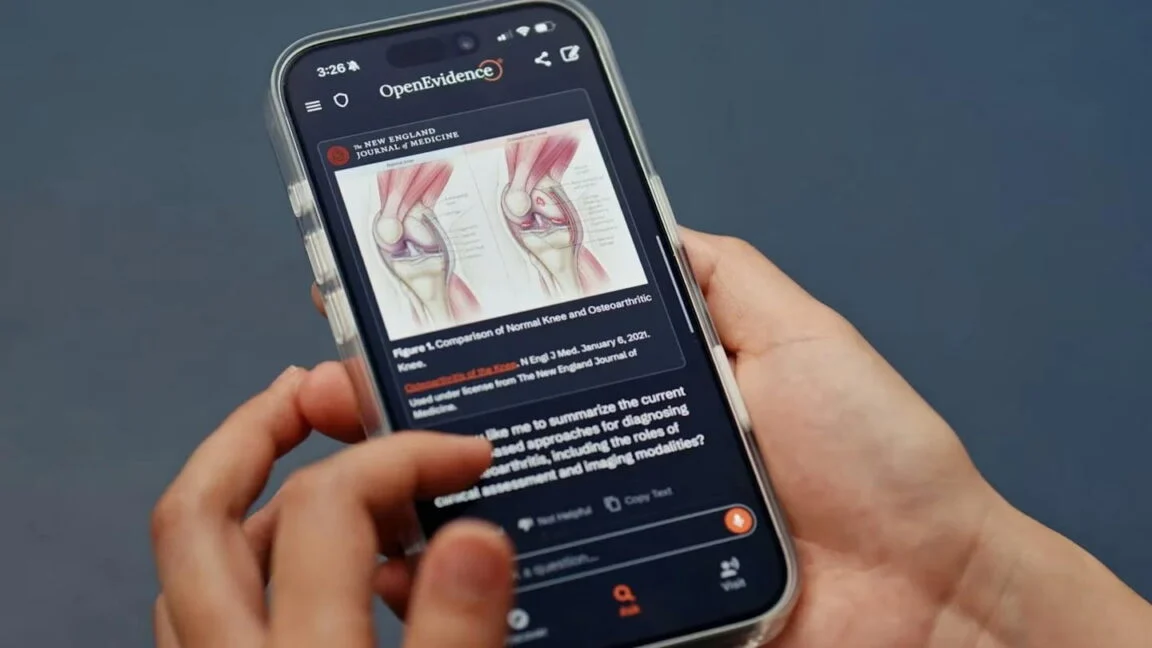
The intersection of artificial intelligence and medicine has moved beyond the hype phase, entering a period of critical evaluation where the promise of “digital doctors” meets the cold reality of clinical benchmarks. At the center of this transformation is OpenEvidence, a startup betting that the future of healthcare technology lies not in administrative automation, but in the sophisticated mining of scientific literature to drive drug discovery and clinical decision-making.
As the industry matures, OpenEvidence finds itself in a David-versus-Goliath struggle against frontier AI giants like OpenAI and Anthropic. While the startup’s leadership remains bullish on its long-term economic potential, the scientific community remains divided, with recent performance data highlighting a complex landscape where user trust and benchmark accuracy do not always align.
The Strategic Pivot: Beyond Clinical Assistance
For OpenEvidence, the "end game" is not merely providing a search tool for physicians; it is the radical acceleration of literature-based drug discovery. According to the company’s leadership, the capacity to parse, synthesize, and extract novel insights from the massive, ever-growing corpus of global medical research represents an economic opportunity that dwarfs traditional healthcare software models.
“The economic value of that as a company is going to dwarf by orders of magnitude whatever we could have charged hospitals or advertisers,” says the company’s leadership. By positioning itself as a platform for deep discovery, OpenEvidence is effectively pivoting toward a high-value B2B model that leverages AI to unlock R&D breakthroughs, potentially shortening the timeline for bringing new pharmaceutical therapies to market.
To bolster these efforts, the company has recently brought on Alexander Tarashansky, the creator of Claude Science—the Anthropic platform designed to assist research scientists. Tarashansky’s integration into the team is a signal of OpenEvidence’s intent to deepen its technical rigor and solidify its footprint in the clinical research domain.
Chronology of a Competitive Landscape
The evolution of AI in medicine has been rapid, characterized by shifting alliances and intense competition.
- The Early Wave: AI models like GPT-4 and Gemini arrived with broad utility, leading to widespread experimentation within hospital systems.
- The Rise of Specialized Tools: Startups like OpenEvidence emerged to solve the "hallucination" problem of general models, focusing on closed-loop, evidence-based citations.
- The Anthropic Intervention: Anthropic’s release of healthcare-specific tools marked a turning point, particularly with their recent partnership with OpenEvidence to deploy resources into 100 low- and middle-income countries.
- The Benchmarking Clash: Throughout the past year, the industry has seen a flurry of comparative studies. While OpenEvidence has found favor in bedside usage, academic evaluations published in journals like Nature have raised questions regarding how these tools compare to general-purpose models on standardized clinical benchmarks.
The Performance Paradox: Evidence vs. Perception
A central tension in the current medical AI landscape is the gap between anecdotal clinical success and formal benchmark performance.
The Mayo Clinic Endorsement
A study conducted by the Mayo Clinic—which also maintains a financial stake in OpenEvidence—provided a glimpse into the platform’s utility. In a sample of five patient case studies, the model provided accurate, evidence-based recommendations. However, the study also noted that while the information was accurate, its actual impact on complex, high-stakes treatment decisions was more nuanced and limited.
The Nature Study Discrepancy
Conversely, research published in Nature this past June painted a more challenging picture. When subjected to rigorous clinical benchmarks, OpenEvidence reportedly underperformed relative to industry heavyweights like Google’s Gemini and OpenAI’s GPT-4. This discrepancy suggests that while OpenEvidence may be "clinically relevant" in a narrative sense, it currently lacks the raw, generalized reasoning power of the largest frontier models.
Expert Skepticism
Dr. Eric Oermann, a neurosurgeon at NYU Langone, points to a structural failure in the adoption of these tools: the lack of standardized research. "There is a lack of research into the performance of individual AI tools and scant guidance on how to implement the tools in a clinical setting," Dr. Oermann notes. Without a standardized framework for deployment, hospital administrators are often left to pilot these tools without a clear understanding of their safety profiles or long-term efficacy.
Implications: The Risks of Junior Reliance
Perhaps the most significant concern among medical educators and practitioners is the impact of AI on the next generation of physicians. As these tools become more user-friendly, there is a legitimate fear that junior doctors—residents and interns who are still in the critical phase of mastering foundational medicine—may rely on AI as a crutch.
If a trainee utilizes OpenEvidence to generate a diagnosis or treatment plan without first understanding the underlying pathophysiology, the quality of their clinical intuition risks atrophy. "There is a danger in relying too heavily on these systems without first mastering basic knowledge of particular conditions," a concern echoed by several medical boards.
The industry is currently debating whether such tools should be gated or if they should come with mandatory "educational guardrails" that force users to demonstrate foundational knowledge before accessing the AI’s generative conclusions.
Investor Sentiment and Market Differentiation
Despite the mixed research results, investors remain confident in the startup’s trajectory. Nworah Ayogu, a partner at Thrive Capital, argues that the "stickiness" of the platform is its greatest asset.
“The fact that doctors are adopting and using a piece of software of their own volition means there is a degree of differentiation that OpenEvidence can really lean on,” Ayogu says. In a world where doctors are notoriously resistant to adopting new software, the fact that they choose to use OpenEvidence, even when other tools are available, indicates a user-experience advantage that is hard to replicate via code alone.
The startup’s leadership remains unfazed by the benchmark wars. For them, the real-world usage data is the only metric that matters. “It’s a fun, friendly competitive pressure to play with benchmarks,” the leadership stated. “But there’s no question of what AI tool physicians trust and use.”
Looking Ahead: The Future of Clinical AI
As the dust settles on the initial AI gold rush, the market is shifting toward consolidation and specialization. OpenEvidence’s strategy of leveraging scientific literature to fuel drug discovery is a bold bet that pivots the company away from the crowded space of general clinical assistants and toward the high-margin, high-impact world of pharmaceutical R&D.
However, the path forward is fraught with hurdles. To succeed, the company must:
- Reconcile Benchmark Performance: Address the gaps identified by studies like the one in Nature to ensure that their medical reasoning is as robust as it is user-friendly.
- Formalize Clinical Integration: Work with institutions like the Mayo Clinic and NYU Langone to develop "gold standard" protocols for AI usage in hospitals.
- Ensure Ethical Guardrails: Implement systems that discourage over-reliance among junior medical staff while maintaining the tool’s utility as a high-level assistant.
Ultimately, the battle for clinical AI supremacy will not be won by the company with the best marketing, but by the one that can prove, through transparent and rigorous peer-reviewed data, that its model can improve patient outcomes without compromising the foundational skills of the human physicians it aims to support.
As we look toward 2026 and beyond, the integration of AI into healthcare will likely move from a "tool of convenience" to a "tool of record." Whether OpenEvidence leads this charge or becomes a case study in the perils of premature scaling remains the central question for the industry to answer.
Additional reporting by George Hammond in San Francisco.
© 2026 The Financial Times Ltd. All rights reserved. Not to be redistributed, copied, or modified in any way.


 Reynand Wu

 Sagoh

 Raul Delapena Setiawan


 Azzam Bilal Chamdy

 Ali Ikhwan
