
 Basiran
By Alejandra Carranza | Supply Chain Dive | October 15, 2026
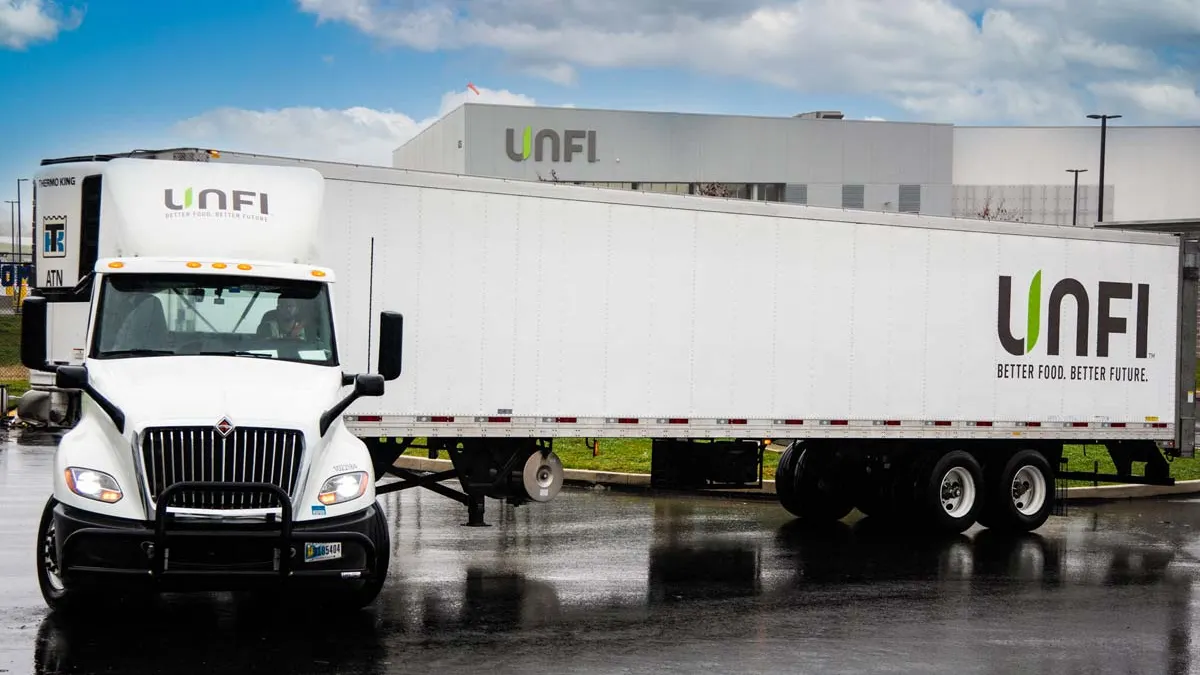
As the global geopolitical landscape remains volatile, United Natural Foods, Inc. (UNFI) is finding itself at the forefront of a logistical battle against record-breaking energy inflation. With U.S. on-highway diesel prices hitting a staggering $6.18 per gallon—a year-over-year increase of $2.51—the wholesale food distribution giant is deploying a dual-pronged strategy of financial hedging and advanced artificial intelligence to protect its bottom line and ensure the steady flow of goods to retailers nationwide.
The Macroeconomic Backdrop: A Perfect Storm for Logistics
The current inflationary environment in the trucking industry is not merely a product of market fluctuation; it is a direct consequence of global instability. The ongoing conflict in Iran has severely disrupted energy supply chains, creating a ripple effect that has pushed fuel prices to historic highs. For a company like UNFI, which operates a massive network of nearly 50 distribution centers and a fleet of over 2,000 delivery vehicles, fuel is one of the most significant line items in its operating budget.
The Energy Information Administration (EIA) confirmed in its October 12, 2026 report that the average cost of diesel has continued to climb in the weeks following the Goldman Sachs Global Consumer and Retail Conference held in mid-September. This sustained pressure has forced distributors across the food and beverage sector to re-evaluate their transportation models or risk significant margin erosion.
Financial Resilience: The Role of Hedging
During the Goldman Sachs conference on September 15, UNFI CEO Sandy Douglas emphasized that the company’s ability to navigate these turbulent waters relies heavily on traditional risk management strategies. At the heart of this strategy is fuel hedging—a financial mechanism designed to mitigate volatility.
Understanding the Hedge Mechanism
Dean Croke, principal industry analyst at DAT Freight & Analytics, explains that fuel hedging functions as a "price lock" for major logistics operators. "If prices climb, the hedge covers the difference. If they drop, you miss the savings. Either way, you know your costs and can plan around them," Croke noted.
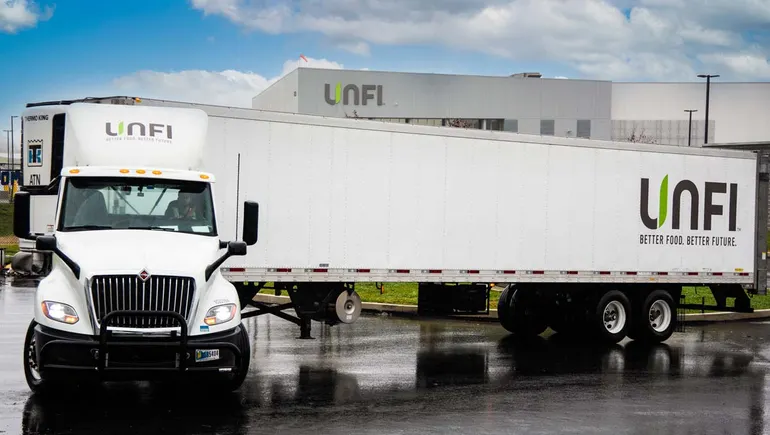
For UNFI, which consumes millions of gallons of diesel annually, hedging serves as a crucial insurance policy. While the company may not benefit if market prices suddenly plummet, the primary objective is not speculative profit—it is cost predictability. By locking in rates, UNFI provides a sense of stability to shareholders and investors, signaling that the company is effectively insulating its earnings from the erratic swings of the global oil market.
The Technological Edge: AI-Powered Optimization
While financial hedging manages the cost of fuel, UNFI is simultaneously addressing the consumption of fuel through the integration of the Samsara AI-powered visibility platform. In the modern supply chain, visibility is not just about tracking where a truck is; it is about analyzing data to determine where the truck should be.
Transforming Data into Efficiency
UNFI’s investment in Samsara represents a shift toward data-driven logistics. By analyzing telematics, traffic patterns, and delivery windows, the AI platform allows UNFI to optimize routes with precision that human dispatchers cannot achieve at scale.
"Samsara is one of several technologies UNFI is using to continue to improve safety, effectiveness, and efficiency across our transportation fleet," a company spokesperson stated. "The platform helps us identify opportunities to optimize delivery routes and reduce unnecessary miles."
Reducing "empty miles"—the distance a truck travels without cargo or on a suboptimal route—is the most effective way to combat rising fuel costs. By shortening routes and ensuring that trucks are loaded efficiently, UNFI is able to deliver the same volume of goods while consuming less fuel per unit, effectively lowering its carbon footprint and its operational expenditure simultaneously.
Comparative Industry Strategies
UNFI is not alone in its struggle to manage logistics costs, but its approach highlights the diverse strategies currently being employed across the grocery and consumer goods sectors.

Costco’s Contractual Approach
Costco has adopted a different philosophy to mitigate fuel surcharges. During their Q4 2026 earnings call, EVP and CFO Gary Millerchip revealed that the retailer has largely offset incremental costs through the negotiation of lower contracted shipping rates. By leveraging its immense volume and market power, Costco has successfully pushed back against the inflationary pressures that are forcing smaller players to raise consumer prices.
McCormick’s Productivity Focus
Meanwhile, McCormick & Co. is tackling the issue through internal productivity initiatives. EVP and CFO Marcos Gabriel noted during an October 1 earnings call that the company is leveraging its "Comprehensive Continuous Improvement" (CCI) program to absorb higher freight, packaging, and input costs. This internal focus on lean operations allows McCormick to maintain profitability without relying entirely on external financial instruments like hedging.
Implications for the Future of Food Distribution
The situation facing UNFI and its peers raises significant questions about the future of the food supply chain. As energy costs remain high and the transition to electric heavy-duty vehicles remains in its infancy, companies are forced to become masters of efficiency.
1. The Shift to "Visible" Supply Chains
The success of platforms like Samsara suggests that the era of "black box" logistics is over. Companies that lack real-time visibility into their transportation networks are increasingly at a competitive disadvantage. Future investment will likely favor companies that can integrate AI, IoT, and real-time data to pivot quickly in response to market shocks.
2. The Persistence of Price Volatility
The current crisis serves as a reminder that the global supply chain is inherently fragile. For distributors, the ability to hedge will remain a core competency. However, financial tools are only a stopgap; the real winners in the next decade will be those who can permanently lower their fuel intensity through route optimization, load consolidation, and the gradual adoption of alternative fuel technologies.
3. Investor Expectations
Investors are increasingly sophisticated in their understanding of supply chain risks. Companies that communicate their mitigation strategies clearly—as UNFI did at the Goldman Sachs conference—are rewarded with more stable valuations. Conversely, companies that fail to account for fuel volatility in their financial forecasting are likely to see increased scrutiny.

Conclusion: A Proactive Stance
As of mid-October 2026, there is no immediate indication that the geopolitical tensions driving diesel prices will subside. UNFI’s combination of financial hedging and technological innovation provides a roadmap for how large-scale logistics providers can survive in an era of high inflation.
By acknowledging the reality of the fuel crisis and moving quickly to implement both fiscal and technical solutions, UNFI has positioned itself to maintain service levels for its retail partners while protecting its margins. Whether these measures will be sufficient in the long term remains to be seen, but for now, the company’s proactive stance offers a template for resilience in a volatile global market.
The challenge ahead for the distribution sector will be to balance the immediate need for cost control with the long-term imperative of sustainability. As AI tools continue to evolve, the ability to squeeze efficiency out of every mile will become the ultimate differentiator between those who lead the market and those who are simply trying to keep up.

 Sagoh

 Ali Ikhwan

 Raul Delapena Setiawan

 Reynand Wu



 Azzam Bilal Chamdy

