
 Rifan Muazin
In the traditional landscape of public relations, success was measured in column inches, domain authority, and the subjective prestige of a media placement. For decades, PR professionals operated on a simple premise: earn coverage in high-authority outlets, and brand equity—along with search rankings—would follow. However, the rise of generative AI and the integration of Large Language Models (LLMs) into search experiences have fundamentally rewritten the rules of digital visibility.
Digital PR is no longer just about reaching human readers; it is about securing a place in the "answer engines" that now serve as the primary research tool for millions of modern buyers. Today, "showing up" means being cited by AI as a credible authority. As the industry grapples with this transition, the divide between PR teams that merely chase traditional metrics and those that optimize for AI visibility is widening into a chasm.
The Paradigm Shift: From Media Lists to Answer Engines
The core value proposition of PR remains unchanged: influencing audiences that paid advertising cannot reach. Yet, the mechanism of influence has evolved. When a prospective buyer turns to an AI-powered search tool to evaluate a category, they aren’t scanning a traditional search engine results page (SERP) for blue links; they are looking for a definitive, synthesized answer.
If your brand is not embedded in those answers, you are effectively invisible. This form of "earned media" carries significantly more weight than traditional coverage because it signals to the user—and the AI model—that your brand is an industry leader. PR teams that fail to treat AI visibility as a primary, measurable outcome of their efforts are clinging to a legacy model that ignores where the modern buyer journey begins.

The New Accountability
Leading PR departments are beginning to treat AI visibility not as a secondary, downstream effect of a press release, but as a core KPI. This requires a fundamental shift in mindset:
- Traditional Metric: "We earned a placement in a Tier-1 publication."
- AEO-Focused Metric: "We earned a placement that resulted in three new citations within top-tier AI answer engines for our core product category."
This shift marks the transition from vanity metrics to high-accountability data, providing the C-suite with clear evidence that PR investments are directly fueling the brand’s digital authority in the AI age.
Chronology of the AEO Revolution
The emergence of Answer Engine Optimization (AEO) as a discipline did not happen overnight, but rather as a reaction to the rapid deployment of AI-integrated search tools like Perplexity, ChatGPT’s Search, and Google’s AI Overviews.
- 2023: The Disruption Begins. As generative AI became publicly accessible, marketers noticed a decline in traditional organic traffic. Search behaviors began to shift from keyword-based queries to natural language, conversational requests.
- Early 2024: The Realization of the "Citation Gap." PR agencies began to notice that high-authority backlinks were no longer the sole determinant of search presence. Some brands with lower domain authority began appearing in AI answers more frequently than established competitors. It became clear that the quality and context of the source—and its relevance to the specific query—outweighed sheer site authority.
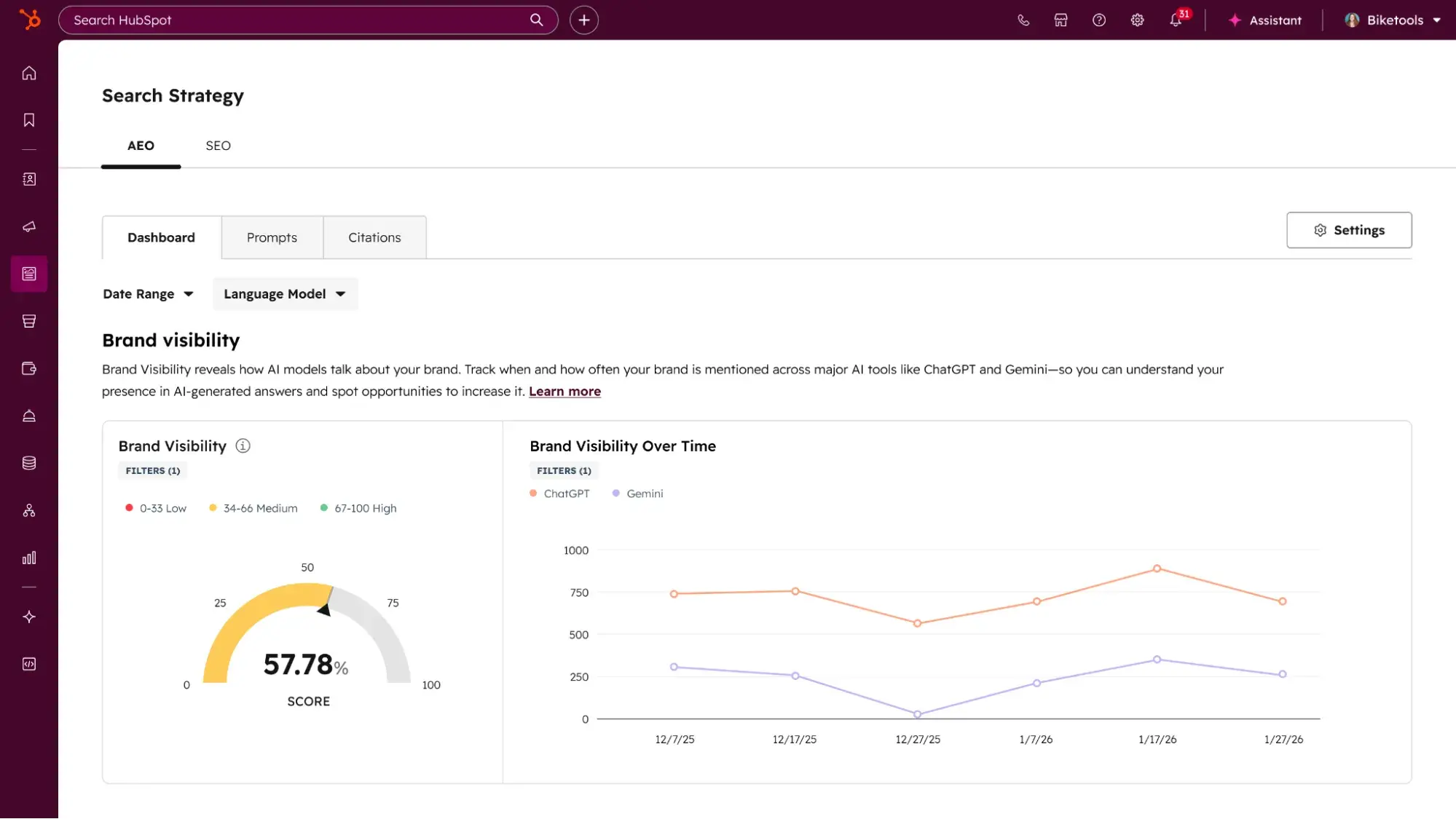
- Late 2024–2025: The Rise of Specialized Analytics. Tools like HubSpot’s AEO suite emerged, allowing teams to move beyond speculation. For the first time, organizations could quantify the relationship between specific earned media placements and AI citations, effectively closing the "accountability gap" that had long plagued the PR industry.
Data-Driven PR: Why Not All Placements Are Equal
A common misconception in the industry is that any coverage in a high-authority publication will automatically boost a brand’s AI visibility. Current data proves otherwise. The relationship between earned media and AI citations is complex and highly specific to the content type and the publication’s topical authority.

The Variance in Citation Power
Data shows that placement in a top-tier outlet does not guarantee a citation. Some publications possess a structural advantage in AI training data, while others are consistently ignored. If a PR team is measuring success solely by "domain authority" or "estimated reach," they may be pouring resources into outlets that have zero impact on AI visibility.
HubSpot’s internal marketing team provides a compelling case study. By shifting their focus toward specific types of high-value content, they recorded a 642% increase in citations for comparison articles and a 58% increase in overall brand mentions. This massive uplift was not the result of "more" PR, but "smarter" PR—targeting the specific formats and outlets that AI models prioritize as authoritative sources.
Official Perspectives: Bridging the Gap
Industry experts now advocate for a "citation-first" approach to media relations. The challenge, according to many in the field, is that PR has historically been a qualitative discipline, whereas AI visibility is inherently quantitative.
"The goal is to stop treating media relations as a game of reputation and start treating it as a game of information architecture," says a spokesperson for advanced marketing analytics platforms. "When we look at the data, we see that AI models value content that is structured, objective, and deeply relevant to the user’s intent. PR teams that align their pitches to this reality are the ones that see their share-of-voice grow."

The Role of Tooling
Sophisticated tools, such as the HubSpot AEO Citation Analysis, are becoming the "source of truth" for modern PR departments. These tools allow teams to:
- Identify Citation Gaps: Discover which topics their brand should be cited for but currently isn’t.
- Evaluate Source Value: Determine which publications are currently driving the most AI visibility, allowing for a more efficient allocation of media relations budget.
- Refine Pitching Strategy: Use data-backed insights to guide content teams on the types of stories, data studies, or expert commentary that have the highest probability of being indexed as a "source of truth" by AI.
Implications for the Future of PR
The transition to AEO-led PR has profound implications for the industry. It effectively elevates the PR function from a brand-awareness department to a strategic growth engine.
1. The Death of the "Spray and Pray" Strategy
The days of mass-pitching press releases to hundreds of journalists are numbered. Because AI models favor specific, high-quality, and highly relevant sources, the focus must shift to "High-Impact Relationship Building." PR pros will spend less time managing volume and more time cultivating deep, long-term partnerships with the editors and publishers who control the sources that AI algorithms trust.
2. The Integration of SEO and PR
The lines between SEO and PR are blurring into non-existence. Historically, these were siloed teams: SEO handled the technical and keyword aspects, while PR handled the relationships. In the AEO era, they are the same job. PR professionals must now understand the technical foundations of how information is indexed, while SEOs must understand the human-centric art of relationship building.

3. Demonstrating ROI to Stakeholders
One of the most significant benefits of this shift is the ability to tie PR activity directly to business outcomes. By tracking the Brand Visibility Score, PR teams can provide stakeholders with a clear, visual representation of their influence. When a stakeholder asks, "What is the value of this PR campaign?", the answer is no longer "brand awareness"—it is "a 15% increase in our share-of-voice across all AI-driven search results for our top-tier keywords."
Conclusion: The Path Forward
The evolution of digital PR is not a threat; it is an opportunity. By embracing Answer Engine Optimization, PR professionals can move beyond the murky metrics of the past and into an era of precision and accountability.
The publications that influence AI answers are largely the same outlets that top-tier teams have always targeted. The difference lies in the strategy: knowing which placements to track, which to prioritize, and how to present the data in terms that reflect the reality of the modern search landscape. As we look toward the future, the brands that win will be the ones that understand that in an AI-first world, being the "answer" is the ultimate form of influence.
PR teams that adapt to this reality will not just survive; they will define the authority of their brands for years to come. The era of the "citation" has arrived—is your team ready to lead it?


 Ammar Sabilarrohman
 Sagoh

 Raul Delapena Setiawan

 Reynand Wu



 Azzam Bilal Chamdy

 Ali Ikhwan
