
 Pevita Pearce
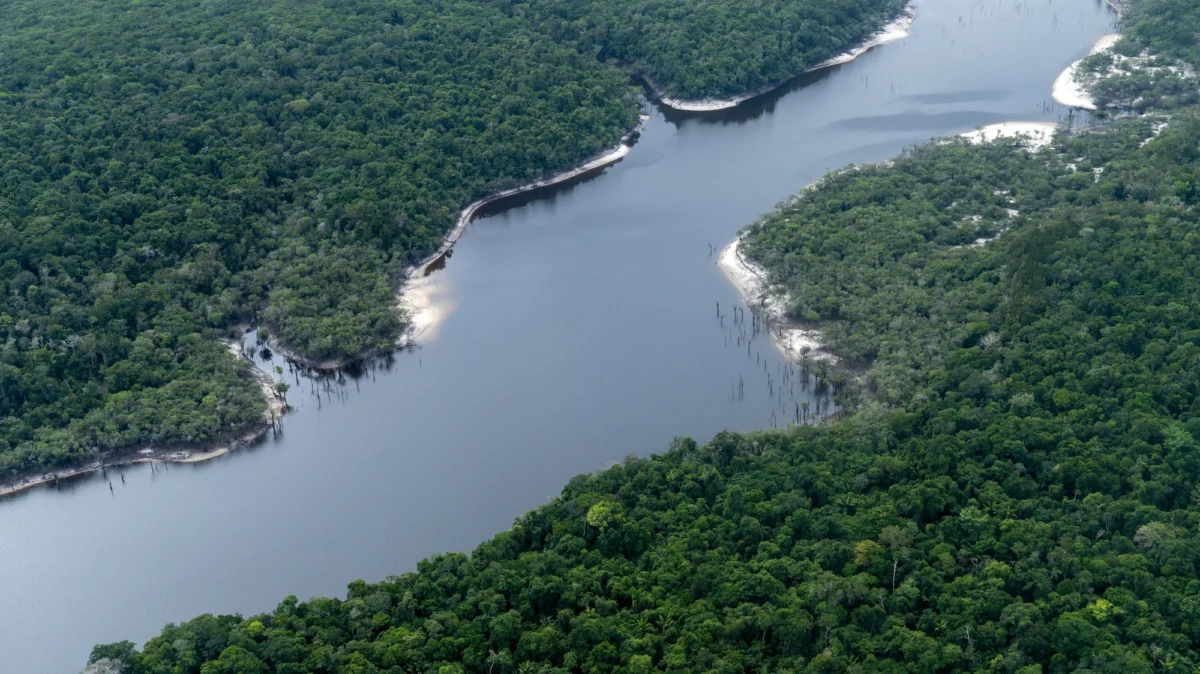
The Amazon rainforest, the world’s largest terrestrial carbon sink and a vital organ of the planetary climate system, faces an existential threat as Brazil enters the final stretch of its most consequential presidential election in decades. In a stunning result from the first round of voting, Flávio Bolsonaro, the son of the imprisoned former president Jair Bolsonaro, has emerged as the clear frontrunner to lead Latin America’s largest nation.
With 47 percent of the vote, Flávio has eclipsed the incumbent, Luiz Inácio Lula da Silva, who secured 44.2 percent. As the nation prepares for an October 25 runoff, climate scientists, human rights activists, and global observers are sounding the alarm: a victory for the Bolsonaro dynasty could trigger an unprecedented acceleration of deforestation, the dismantling of democratic institutions, and a "bonfire" approach to the natural world.
The Main Facts: A Dynastic Return
The rise of Flávio Bolsonaro represents more than a standard change in government; it signals the resurgence of a hardline ideological movement that prioritizes extractive industries—mining, logging, and large-scale industrial farming—over environmental preservation.
Jair Bolsonaro’s previous term, which saw a 59.5 percent surge in Amazonian deforestation, resulted in the loss of an estimated 2 billion trees. Flávio has campaigned on a platform of total continuity with his father’s legacy. He has explicitly promised that if elected, his first act will be to pardon his father, who is currently serving time for plotting a military coup and attempting to undermine Brazil’s constitutional order. Flávio has even suggested that the elder Bolsonaro could hold a senior position in his cabinet, essentially creating a "shadow government" that threatens to undo the progress made by the current administration.
A Chronology of the 2026 Electoral Shock
The path to this moment has been paved with political volatility and the erosion of institutional trust:
- September 2026: Initial reports emerge showing that despite Lula’s efforts to curb deforestation by 50 percent, his electoral support remains stagnant. The "green" vote fails to translate into a broader mandate.
- Early October 2026: The first round of the presidential election concludes with a shock lead for Flávio Bolsonaro, defying most pre-election polling that suggested a tighter race or a potential victory for the incumbent.
- Post-Election Week: Analysis reveals a massive sweep by Bolsonarist candidates in state legislatures. Seven of the nine Amazonian states are now under the control of right-wing factions sympathetic to the Bolsonaro agenda.
- October 25, 2026: The scheduled date for the final runoff, which will determine whether Brazil continues its environmental recovery or pivots toward a policy of aggressive, unchecked exploitation.
Supporting Data: The Cost of the "Bolsonarismo" Doctrine
The environmental data regarding a potential return to Bolsonarism is grim. Under the current administration, significant strides were made to protect Indigenous territories and restore the authority of environmental agencies. However, the electoral map shows that these efforts did not resonate with the rural electorate.

Economic data from the Amazonian state of Pará highlights the tension. Daniel Santos, a victorious candidate aligned with the Bolsonarists, currently faces $275,000 in fines for the illegal clearing of 690 acres of forest. His campaign promise to waive such penalties underscores the core of the movement: the removal of legal barriers to land exploitation.
Furthermore, the shift in the legislative landscape is profound. With the Bolsonaro family members securing key positions in both the Senate and the Chamber of Deputies, the executive branch will likely find itself stripped of its ability to enforce environmental regulations. The "hate cabinet"—a term used to describe the digital disinformation network led by the Bolsonaro family—has proven remarkably adept at utilizing social media to bypass traditional media, framing environmental regulations as "anti-growth" and "foreign-imposed" constraints on sovereignty.
Official Responses and Political Shifts
The political establishment is reeling. Supporters of the Bolsonaro movement argue that the international focus on the Amazon is a form of "environmental imperialism," claiming that Brazil has a right to exploit its resources to achieve national wealth, regardless of global climate goals.
Conversely, environmentalists and indigenous leaders have expressed profound despair. The defeat of high-profile pro-environment candidates like Marina Silva and Joenia Wapichana serves as a bellwether for the shifting priorities of the Brazilian voter. Out of 57 Indigenous candidates running for office, only two were elected, illustrating a severe disconnect between the traditional stewards of the land and the political power structure in Brasília.
Lula, now 80, has faced criticism for failing to adapt his messaging to a new generation of voters who are increasingly influenced by the rise of US-style Pentecostalism. Many evangelical churches in the Amazon region have begun to promote a theology of prosperity, which often encourages the aggressive pursuit of wealth and land ownership, directly contradicting the conservationist stance of the Catholic Church and modern environmental movements.
Global Implications: The "Trumpist" Domino Effect
The Brazilian election is not an isolated event; it is a critical piece of a global shift toward right-wing populism that views environmental regulation as a secondary, or even negative, concern.

The influence of Donald Trump’s rhetoric and policy approach is visible throughout the Americas. From the environmental rollbacks in the United States to the right-wing shifts in Argentina, Peru, and Chile, there is a clear trend of countries retreating from international climate commitments. The Bolsonaro family has explicitly sought alignment with these movements, with Eduardo Bolsonaro calling for economic sanctions against Brazil to "punish" the government for its treatment of his father.
If Brazil, the home of the world’s most critical carbon sink, becomes the next "domino" to fall to this ideology, the consequences will be global. The stability of the climate, the survival of countless species, and the integrity of the Amazonian biome are all hanging in the balance.
The Final Reckoning: What Lies Ahead
The upcoming October 25 runoff is, in every sense, a binary choice for the future of the planet. While Lula still retains a path to victory, the structural advantages lie with the right. The majority of the candidates eliminated in the first round are ideologically aligned with the Bolsonarists, and historically, no candidate who has led the first round of a Brazilian presidential election has ever lost the subsequent runoff.
However, the tragedy of this election may be that it ignores the ultimate, long-term reality. Even if the Bolsonaro family succeeds in their quest for power, they will inherit a nation increasingly ravaged by the effects of the climate crisis they helped to accelerate.
The question remains: will the voters prioritize immediate, short-term economic gains from extractive industries, or will they recognize that the destruction of the Amazon is a self-inflicted wound? As the country heads to the polls, it is not merely the presidency that is at stake—it is the survival of the Amazon and the democratic framework of Brazil itself. The world is watching, but in the heart of the rainforest, the clock is ticking toward a point of no return.


 Raul Delapena Setiawan

 Laily UPN

 Reynand Wu

 Sagoh


 Azzam Bilal Chamdy

 Ali Ikhwan
