
 Raul Delapena Setiawan
In the rapidly evolving landscape of artificial intelligence, the promise of "all-in-one" platforms has become the new frontier for both individual power users and enterprise development teams. Abacus AI stands at the center of this movement, positioning itself as a comprehensive workspace that integrates LLM orchestration, autonomous agentic workflows, and cloud-based development environments. However, as the platform scales, it has invited a spectrum of user experiences that range from high-efficiency praise to pointed criticism regarding cost transparency and technical complexity.
This article provides an evidence-based assessment of Abacus AI, synthesizing community feedback, technical performance, and strategic implications for those considering the platform for professional workflows.
The Genesis and Vision: What is Abacus AI?
Abacus AI is not merely a chatbot interface; it is a technical workspace designed to consolidate the fragmented world of AI tools into a single, unified environment. While competitors like OpenAI’s ChatGPT or Anthropic’s Claude focus primarily on conversational excellence, Abacus AI operates as an orchestration layer. It provides users with a centralized dashboard to interact with multiple AI models, deploy autonomous agents for complex task execution, and conduct data analysis within a persistent, high-performance compute environment.
The platform’s mission is to move beyond the "prompt-response" paradigm into a "task-completion" model, where AI acts as a digital worker capable of writing code, building applications, and managing multi-step research processes without constant human intervention.
Core Ecosystem: A Functional Breakdown
To understand why Abacus AI has gained traction, one must look at its diverse utility suite. The platform’s architecture is designed to handle tasks ranging from basic documentation to advanced engineering.
The Toolkit
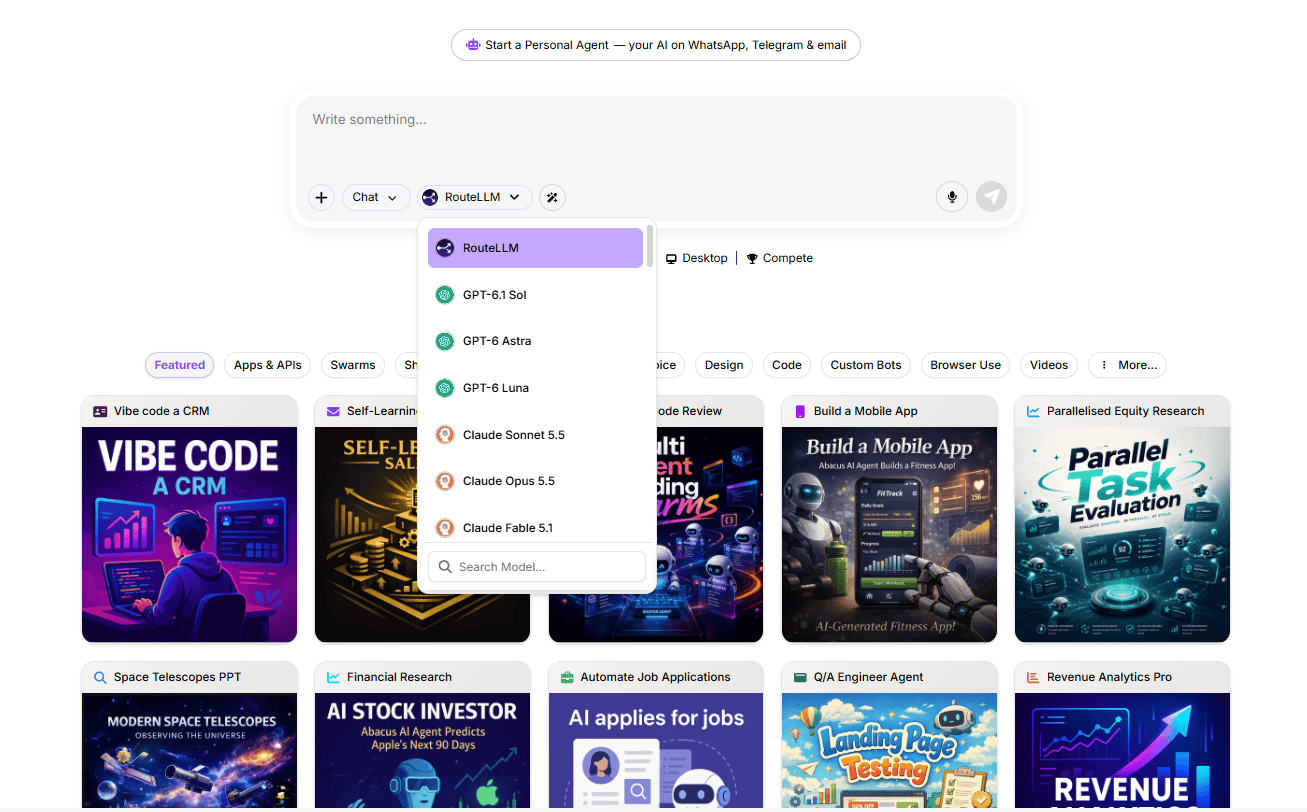
- ChatLLM: The primary gateway, featuring intelligent routing via RouteLLM to select the most appropriate AI model for the specific query.
- Autonomous Agents (Hermes, Claw, and Swarms): These are the platform’s "heavy lifters." Hermes is designed for reusable skill acquisition, while Swarms allow multiple agents to coordinate on complex, multi-faceted tasks simultaneously.
- Studio & Vibe Coding: These tools facilitate the generation of images, video, and audio, as well as the rapid deployment of functional web applications through natural language instructions.
- SuperComputer: A cloud-based backend that ensures agentic workflows continue to process even after the user closes their browser, a critical requirement for long-running data analysis or automation tasks.
Evidence-Based Assessment: The User Perspective
A deep dive into Reddit discussions, user reviews, and technical walkthroughs reveals a dichotomy. Users who leverage Abacus AI for heavy-duty automation, coding, and data engineering often report high satisfaction, citing the "all-in-one" nature as a significant productivity booster. Conversely, general users seeking a simple conversational interface often encounter friction.
1. The Complexity Barrier
The most common critique centers on the platform’s interface. By bundling a vast array of tools—ranging from terminal-like coding environments to agent management consoles—the user experience (UX) can become overwhelming.
- The Learning Curve: Unlike the "walled garden" simplicity of ChatGPT, Abacus AI requires a mental shift toward understanding how agents, models, and workflows interact.
- Model Tracking: Users have noted that in long, multi-model sessions, it can be difficult to audit which model generated specific outputs, potentially impacting accountability in professional settings.
2. The Credit System and Fiscal Transparency
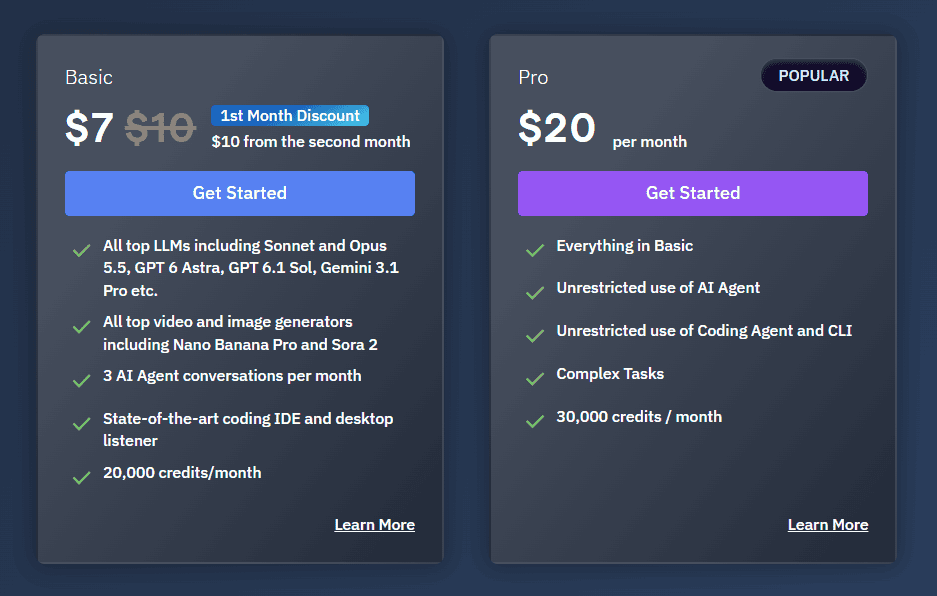
Abacus AI employs a credit-based consumption model. While this is standard for API-heavy platforms, it has been a point of contention for some users.
- Unpredictability: Because agentic workflows are dynamic—meaning they may take multiple, recursive steps to solve a problem—credit consumption is not always linear. A simple task might become expensive if an agent gets stuck in a loop or requires multiple retries.
- Budgeting Concerns: For small businesses, the lack of granular "pre-spend" alerts can lead to bill shock. Users are encouraged to monitor usage pacing, but the technical burden of doing so rests on the user, which has drawn criticism from those expecting a "set-it-and-forget-it" subscription.
3. Workflow Reliability and Performance
In professional contexts, the "last mile" of a task—the transition from AI output to usable deliverable—is crucial.
- Incomplete Tasks: Some users report that agents occasionally stall or require manual intervention to complete a workflow.
- Error Handling: A major critique involves credit consumption during failed runs. When an agent fails, the user is still charged for the compute time, a policy that some find punitive when the fault lies with the AI’s logic rather than the user’s prompt.
Real-World Use Cases: Where Abacus AI Excels
Despite the challenges, the platform’s potential is best demonstrated in its real-world applications.
Automated Software Development and QA
The "AI QA Engineer" and "Multi-Agent Code Review" features represent a paradigm shift. By assigning a "swarm" of agents to review pull requests, identify security flaws, and suggest patches, development teams can significantly reduce their manual code-review burden. These agents are capable of simulating user interactions to test landing pages and form submissions, providing reports that are far more detailed than static testing tools.
Business Intelligence and Revenue Analytics
"Revenue Analytics Pro" is a standout example of how Abacus AI handles complex data. By processing large datasets to find growth opportunities or churn patterns, the platform allows non-technical managers to generate high-level insights. However, the quality of these insights is strictly dependent on the precision of the metrics provided—an area where Abacus AI’s documentation could be further strengthened.
Routine Automation
For businesses managing recurring tasks—such as scraping competitor pricing, downloading invoices, or updating internal databases—the "Scheduled Browser Workflows" provide an efficient alternative to traditional RPA (Robotic Process Automation) software, which often requires significant maintenance.
Implications for Businesses and Developers
For organizations, the primary question is whether Abacus AI is a replacement for existing workflows or an augmentative tool.
The "Developer-First" Reality: Critics are correct in noting that the platform is skewed toward developers and technical power users. For a non-technical marketing team, the barrier to entry for setting up a custom agent swarm might be too high. However, for a startup looking to consolidate its AI stack, the cost-effectiveness of using one platform for code generation, data analysis, and web scraping is compelling.
Strategic Considerations:
- Integration Mapping: Before committing, companies must audit their existing tech stack to ensure Abacus AI can communicate effectively with their current CRM or ERP.
- Human-in-the-Loop: As with all autonomous agent systems, the "hallucination" risk is real. Businesses must implement internal validation layers for any output that touches financial data or customer-facing materials.
- Cost Governance: Organizations must treat Abacus AI credits as a variable operational expense, requiring the same level of oversight as cloud compute budgets (AWS/Azure).
Conclusion: Is Abacus AI Worth It?
Abacus AI is a sophisticated, high-utility workspace that rewards users who are willing to invest the time to understand its nuances. It is not an alternative to simple chatbot apps; it is an alternative to a suite of disconnected AI tools.
Who should use it?
- Developers and Engineers: Those who need a sandbox to build and test agents, deploy code, and automate complex browser-based tasks.
- Data Analysts: Professionals looking for an environment that bridges the gap between raw data and actionable insights using multiple, specialized AI models.
- Startup Teams: Lean teams that need to replace multiple SaaS subscriptions with a single, versatile platform.
Who should look elsewhere?
- Casual Users: If your primary need is writing emails, drafting text, or getting quick answers, the complexity and cost structure of Abacus AI may be overkill.
- Risk-Averse Enterprises: Organizations that require rigid, "black-box" controlled environments with guaranteed, predictable monthly billing might find the agentic, pay-per-credit model too volatile for their current policies.
Abacus AI represents the "professionalization" of the AI assistant. By providing a workspace that mimics a human workstation—complete with browsers, code editors, and data analysis tools—the platform provides a glimpse into the future of work. Whether it is "worth it" depends entirely on your willingness to treat AI not as a magic button, but as a complex, powerful tool that requires oversight, configuration, and a clear understanding of its financial and technical requirements.
Prospective users are strongly advised to utilize the company’s provided video demos and trial credits to test their specific workflows before committing to a long-term, higher-tier subscription. As the platform matures, the key to its success will lie in lowering the barrier to entry while maintaining the robust, agent-first architecture that sets it apart from the rest of the market.

 Neng Nana

 Evan Lee Salim


 Reynand Wu

 Sagoh


 Azzam Bilal Chamdy

 Ali Ikhwan
