
 Reynand Wu
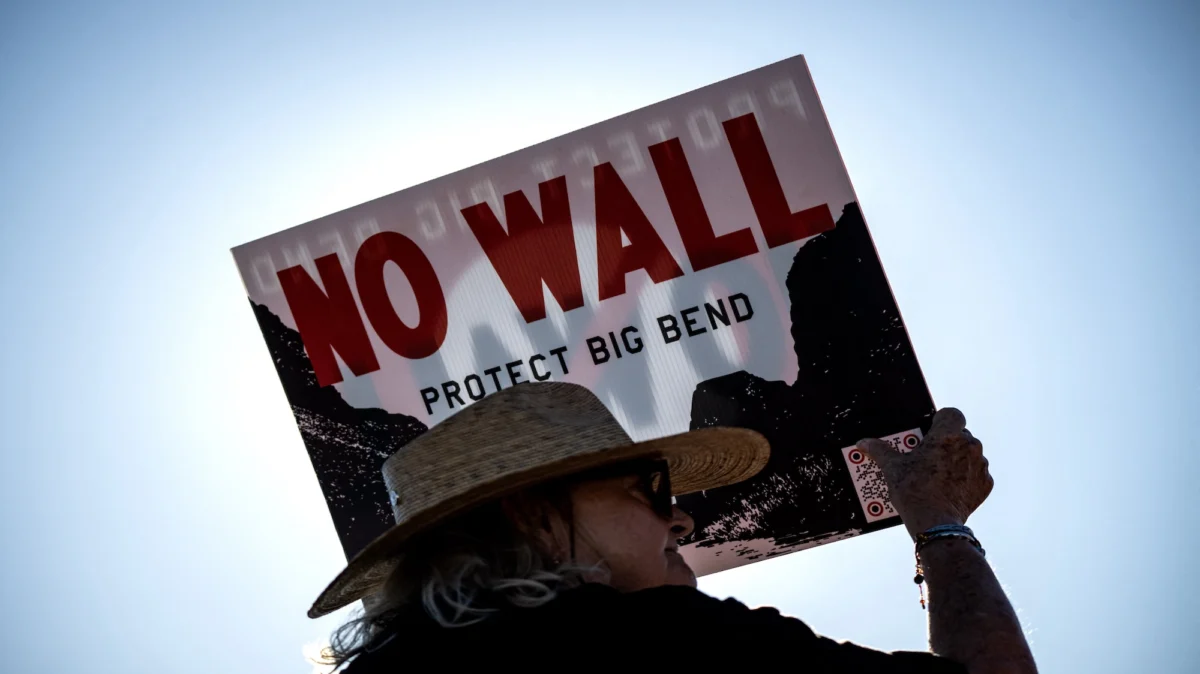
EL PASO, Texas — In a significant legal victory for environmentalists, indigenous advocates, and local residents, a federal judge has issued a preliminary injunction effectively halting the construction of border barriers across the ecologically sensitive Big Bend sector of West Texas.
U.S. District Judge Kathleen Cardone’s ruling on Friday arrived following a grueling four-hour evidentiary hearing, during which the court heard testimony regarding the potential for permanent, irreversible damage to one of the most pristine wilderness areas in the United States. The injunction stops the federal government from proceeding with wall construction across a 500-mile expanse that includes Big Bend National Park and Big Bend Ranch State Park, mandating that the government pause all activity until it can demonstrate full compliance with a suite of environmental and historical protection laws.
The Core of the Conflict: A Landscape Under Siege
Big Bend is world-renowned for its rugged beauty, dramatic limestone canyons, and dark night skies. However, the region has become a flashpoint in the ongoing national debate over border security. The Trump administration’s push to erect a 30-foot steel wall on private lands and install vehicle barriers within protected park boundaries has met fierce resistance from those who argue that the infrastructure is both unnecessary and destructive.
Judge Cardone’s decision hinges on the likelihood that the plaintiffs—a coalition including the Center for Biological Diversity, the Friends of the Ruidosa Church, and local river guide Danny Miller Jr.—will succeed on the merits of their lawsuit. Most critically, the court recognized that the ongoing construction poses "irreparable harm" to the region’s biodiversity and cultural heritage. By staying the effect of federal waivers that previously allowed the Department of Homeland Security (DHS) to bypass critical oversight, the ruling restores the requirement that the government adhere to the National Environmental Policy Act (NEPA) and the Archaeological and Historic Preservation Act.
A Chronology of Escalation
The battle over the Big Bend border wall has been defined by rapid shifts in federal policy and reactive community mobilization:
- April 2026: The legal challenge is formally filed by a coalition of plaintiffs represented by the Texas Civil Rights Project and the Center for Biological Diversity, targeting the Department of Homeland Security and Secretary Markwayne Mullin.
- August 15, 2026: Residents and activists stage a high-profile protest in Study Butte, Texas, highlighting the threat to the Big Bend ecosystem.
- Mid-August 2026: Heavy machinery, including excavators and bulldozers, is documented clearing land within the boundaries of Big Bend National Park, sparking outrage among conservationists.
- August 17, 2026: Under intense public and legal pressure, Customs and Border Protection (CBP) announces a temporary construction pause within the park.
- Late August 2026: The pause is lifted, and construction commences on a 30-foot steel barrier in Hudspeth County, prompting the emergency hearing before Judge Cardone.
- October 2, 2026: Judge Cardone grants the preliminary injunction, effectively freezing all border barrier construction in the 500-mile Big Bend sector.
The Myth of "High Illegal Entry"
One of the most compelling aspects of Friday’s hearing was the dismantling of the government’s stated justification for the wall. The federal government’s waivers were predicated on the claim that the Big Bend sector represents a high-traffic area for unauthorized border crossings.
However, testimony provided by Adam Isaacson, an analyst at the Washington Office on Latin America (WOLA), painted a starkly different picture. Isaacson presented data indicating that the Big Bend sector is a "distant last place" in terms of unauthorized crossings when compared to the nine other sectors along the U.S.-Mexico border.
The plaintiffs’ legal team highlighted a critical lack of transparency from the federal government, noting that despite requests for granular data regarding apprehensions specifically within the national park boundaries, the government failed to provide evidence to support its claims of a security crisis in the area. This discrepancy between the government’s stated need for a wall and the statistical reality on the ground formed the backbone of the plaintiffs’ argument that the project is an arbitrary use of federal power.
Human Stakes: The View from the Rio Grande
For individuals like Danny Miller Jr., a long-time river guide in the region, the construction is not merely a policy dispute; it is a personal and professional tragedy. In emotional testimony, Miller described the proposed 30-foot wall as a "visible scar that will never go away."
Miller and other witnesses described the Rio Grande not as a barrier to be fortified, but as the lifeblood of the desert ecosystem and the cornerstone of the local tourism-based economy. When questioned about the impact of the wall on their relationship with the river, many witnesses were visibly overcome by grief. Their testimony underscored the sentiment that the wall would irreversibly sever the connection between the border communities and the landscape they have stewarded for generations.
Official Responses and Administrative Silence
The Department of Justice (DOJ) attorneys, tasked with defending the government’s position, offered limited counterarguments during the hearing and notably failed to call any witnesses to testify in support of the project.
The White House declined to comment, referring inquiries to the Department of Homeland Security. In a statement released following the ruling, a CBP spokesperson maintained that the agency remains confident in its legal authorities. "We stand by our assessment and remain confident in our legal authorities to secure the border while preserving the unique landscape of the Big Bend region," the spokesperson stated, adding that the agency is currently coordinating with the DOJ on the next steps.
Implications of the Ruling
The injunction issued by Judge Cardone serves as a significant check on executive overreach, particularly regarding the use of broad legal waivers to bypass environmental protections.
Environmental and Historical Preservation
The ruling forces a pause on the degradation of a landscape that is home to numerous endangered species and significant archaeological sites. By requiring the government to follow the National Environmental Policy Act, the court ensures that the environmental impact of the wall must be rigorously assessed and debated in the public sphere, rather than pushed through under the guise of national security.
A Precedent for Border Policy
This case may set a legal precedent for how the federal government approaches border infrastructure in sensitive public lands. If the plaintiffs successfully argue that the "high traffic" justification is factually unsupported, it could undermine the government’s ability to use similar waivers in other sectors of the border.
Community Empowerment
For the residents of Terlingua, Marfa, and other border communities, the ruling is a validation of their efforts to preserve their way of life. The sight of supporters weeping and embracing outside the El Paso courthouse signals that the movement to "Protect Big Bend" is far from finished.
As the litigation continues, the focus will shift toward the discovery phase, where the government will finally be forced to produce the data it has thus far kept hidden. For now, the bulldozers are quiet, and the canyons of the Big Bend remain, for the time being, unscarred by the steel walls that threatened to change them forever. The legal battle is far from over, but for the residents who have fought to protect their home, Friday’s ruling is a profound reminder that even in the face of immense federal power, the rule of law still holds sway.


 Raul Delapena Setiawan

 Laily UPN


 Sagoh


 Azzam Bilal Chamdy

 Ali Ikhwan
