
 Reynand Wu
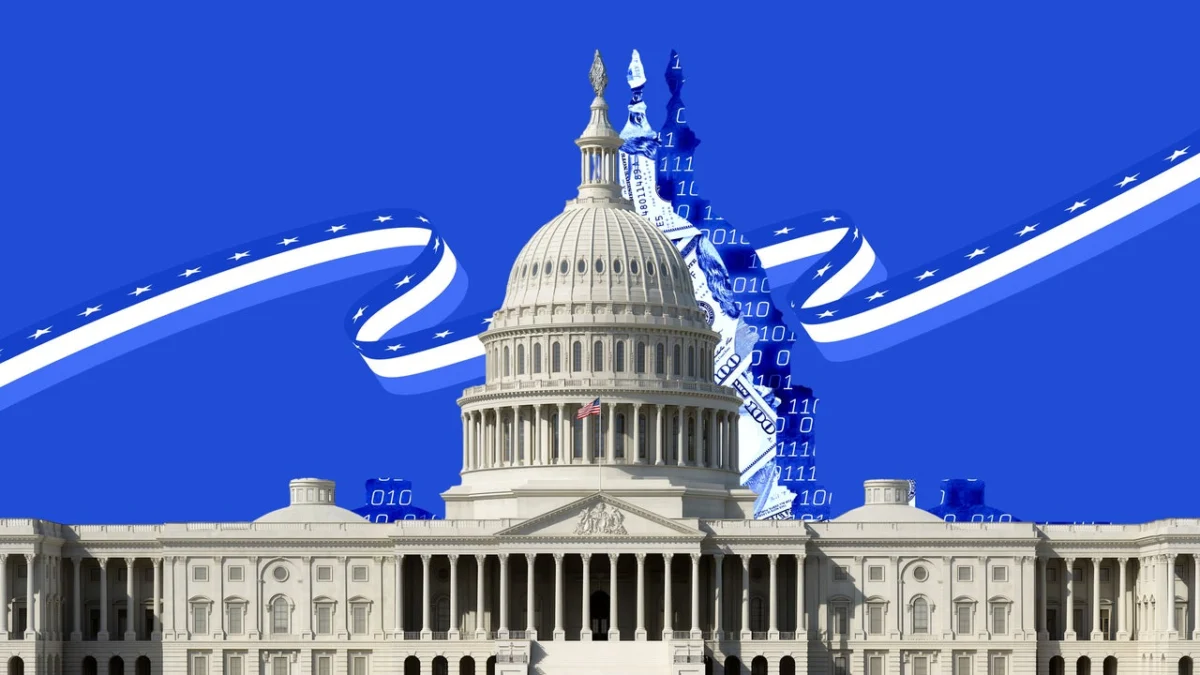
Welcome to AI Decoded, Fast Company’s weekly newsletter that breaks down the most important news in the world of AI. I’m Mark Sullivan, a senior writer at Fast Company, covering emerging tech, AI, and tech policy.
Sign up to receive this newsletter every week via email here. And if you have comments on this issue and/or ideas for future ones, drop me a line at [email protected], and follow me on X @thesullivan.
In the high-stakes theater of the 2026 midterm elections, a new, massive financial player has entered the arena: the "AI Super PAC." Backed by the heavyweights of Silicon Valley—venture capital titans, AI developers, and tech infrastructure moguls—these organizations have funneled tens of millions of dollars into key congressional races. Yet, for all this immense capital, there is a curious, calculated silence surrounding their actual agenda.
Across thousands of television spots, streaming commercials, and targeted digital advertisements, the terms "artificial intelligence," "algorithms," and "tech policy" are almost entirely absent. Instead, voters are being bombarded with conventional messaging on inflation, local taxes, and small business growth. This strategic invisibility is not an accident; it is the cornerstone of a sophisticated campaign to shape federal oversight from the shadows, ensuring that the legislative environment remains friendly to AI expansion while avoiding the growing public backlash against it.
The Strategy of Strategic Invisibility
To understand why tech giants are spending millions while avoiding the topic of technology, one must look at the current political climate. Recent polling and social sentiment analysis confirm that AI—and the massive, energy-draining data centers required to sustain it—has become a significant political liability.
For many Americans, AI is not viewed as a tool of progress, but as a harbinger of job displacement, mass surveillance, and media manipulation. Furthermore, the physical footprint of the industry is increasingly despised at the local level. The construction of noisy, power-hungry, water-intensive data centers has sparked grassroots protests across the country, as communities grapple with the environmental and infrastructure strain these facilities impose.
Because the industry recognizes that a debate on AI policy would likely unite voters in opposition, they have adopted a "stealth influence" strategy. By funding candidates who are inherently predisposed to favor deregulation, these PACs can secure a favorable legislative landscape without ever having to defend their industry in a public forum.
Chronology: The Rise of the Tech Super PAC
The trajectory of this influence began in earnest following the 2024 election cycle, as the AI boom accelerated.
- Early 2025: As the new administration settled in, tech leaders identified the 2026 midterms as a critical window to cement a "light-touch" regulatory framework.
- Summer 2025: Major venture capital firms, led by industry leaders like Andreessen Horowitz, began consolidating funds into specialized Super PACs. The goal was no longer just lobbying; it was controlling the makeup of the House and Senate committees that oversee technology.
- Q1-Q2 2026: Massive cash infusions began hitting the accounts of key candidates. According to Federal Election Commission (FEC) filings, the influx of capital was unprecedented for a midterm cycle, with AI-aligned groups becoming some of the top donors in competitive battleground states.
- Late 2026 (The Current Moment): The election cycle has entered its final, most expensive phase. The media market is saturated with "kitchen-table" ads, masking the underlying intent of the donors behind them.
Supporting Data: The Cost of Influence
The scale of this spending is staggering. A deep-dive analysis of federal campaign finance data reveals that political groups aligned with major AI developers, including OpenAI and Anthropic, have directed between $55.7 million and $60 million into federal midterm campaign advertising and voter outreach.
Data from Public Citizen, a government watchdog, highlights the emergence of "Leading the Future" as the sector’s flagship super PAC. This single entity raised $75.1 million in this cycle alone. A significant portion of this war chest—roughly two-thirds—came from Andreessen Horowitz. The personal stakes are just as high: Greg Brockman, cofounder and president of OpenAI, and his wife, Anna, contributed $50 million in personal funds. Notably, they split this massive donation between Leading the Future and the primary Trump-aligned super PAC, MAGA Inc., signaling a strategic desire to remain in the good graces of the administration regardless of the political winds.
However, money in politics is not a 1:1 transaction. Federal Communications Commission (FCC) rules place a heavy thumb on the scale against super PACs. While candidate campaigns are entitled to "lowest unit rate" discounts for advertising, super PACs must pay full, undiscounted market rates. In some instances, this means tech-backed PACs are paying up to five times as much per ad slot as the candidates themselves. This fiscal reality forces them to be even more surgical in their messaging; they cannot afford to waste expensive ad time on niche policy topics that might alienate a swing voter.
Official Responses and the "Voluntary" Pact
The symbiotic relationship between the White House and the AI sector has been on full display. The current administration has made it clear that its priority is to keep AI regulation voluntary, nonbinding, or nonexistent.
This culminated in a high-profile luncheon at the White House last month, where tech titans were invited for the ceremonial signing of a "safety pact." While the administration touted the event as a landmark moment for safety, critics view it as a masterclass in performative governance. By agreeing to internal monitoring and voluntary safety protocols, companies like OpenAI and Anthropic successfully preempted more aggressive, legally binding federal legislation that could have capped their growth or forced transparency regarding their data sources.
When asked for comment on the influx of tech money into the midterms, representatives for the major PACs have largely declined to address the specific policy goals, instead emphasizing their commitment to "economic growth" and "American technological competitiveness"—phrases carefully chosen to deflect from the underlying controversy of AI regulation.
Implications for the Future of Governance
The implications of this silent lobbying are profound. By effectively bypassing the public debate, the AI industry is creating a fait accompli. If the candidates backed by these millions win their seats, the legislative agenda for the next two years will be tilted toward protecting the interests of developers, potentially at the expense of privacy, labor rights, and environmental sustainability.
Furthermore, this dynamic creates a dangerous precedent. When an industry becomes so wealthy that it can dominate the political landscape while remaining essentially invisible to the voting public, the democratic process itself begins to atrophy. Voters are making choices based on the cost of eggs and the price of gas, while the architects of the most transformative technology of our century are buying the right to build that future without oversight.
As we look toward the 2026 results, the question is not just who will control Congress, but whether the American public will realize that the "economic" messaging they are hearing is actually the sound of a multi-billion dollar industry securing its own autonomy. The silence surrounding AI in this campaign is, in itself, the loudest message of all: Silicon Valley does not want you to look at the machines they are building, and they are spending a fortune to make sure you keep your eyes on the kitchen table.
Stay tuned to AI Decoded as we continue to track the intersections of big money, big tech, and the future of our democracy. Your support and engagement help us hold these powerful entities accountable.



 Sagoh

 Raul Delapena Setiawan


 Azzam Bilal Chamdy

 Ali Ikhwan
