
 Rifan Muazin
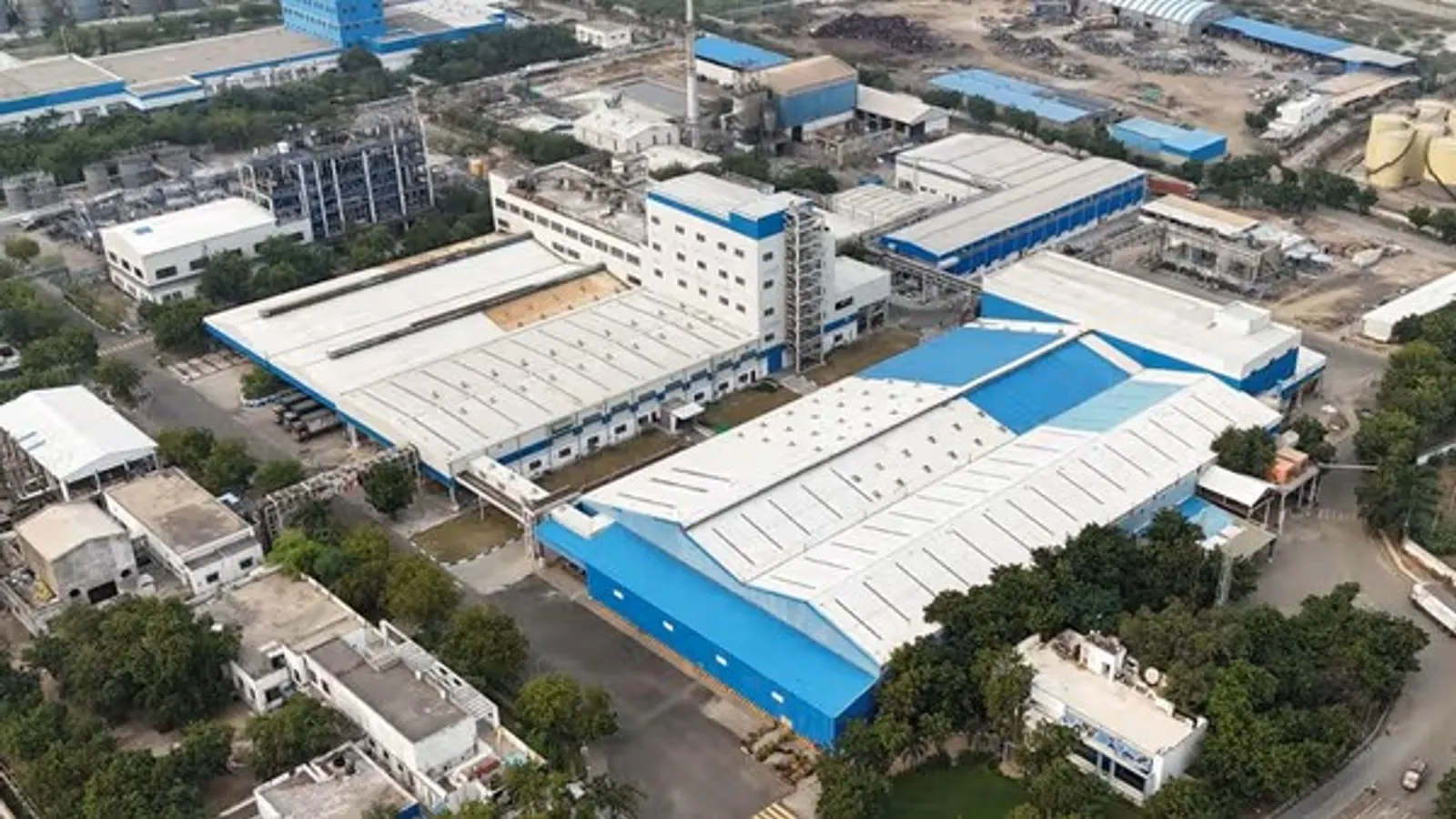
Unilever, the consumer goods giant behind household names like Dove, Hellmann’s, and Seventh Generation, is embarking on an ambitious technological expansion. Over the next 18 months, the company plans to deploy artificial intelligence-enabled digital twins across approximately 40 of its manufacturing sites worldwide. This massive scale-up, facilitated by a strategic partnership with consulting giant Accenture, marks a transition from localized pilot projects to a standardized, company-wide industrial framework.
However, as Unilever accelerates this rollout, leadership is emphasizing that the true challenge is not merely technical—it is strategic and cultural. By leveraging the lessons learned from initial deployments in the United States, Poland, Vietnam, and India, the company is shifting its focus toward a rigorous, data-driven approach to implementation, ensuring that every digital model serves a tangible business objective.
The Strategic Shift: Defining Success Beyond the Buzz
The decision to scale follows a period of "learning by doing" at five pilot sites. Vicky Cuthbert, Chief Product Supply Chain Officer for Unilever’s personal care business, acknowledges that the initial phase of the company’s digital twin journey was not without its pitfalls. In the early days, the company focused heavily on the novelty of the technology rather than the granular metrics of success.
"As we started doing this work in the early days, we were probably not clear enough on making sure that we were driving a benefit that we could tangibly measure in the results," Cuthbert explained.
This realization has fundamentally altered Unilever’s project management framework. For the upcoming 40-site deployment, the mandate is clear: identify a specific operational bottleneck, define the necessary data points for resolution, and establish clear KPIs before a single line of code is written. This "problem-first" mentality is designed to prevent the common pitfall of "technology for technology’s sake," ensuring that digital twins are viewed as precision tools for operational excellence rather than just innovative experiments.
Chronology: From Pilot Labs to Global Infrastructure
The trajectory of Unilever’s digital twin adoption is a masterclass in iterative industrial scaling:
- Initial Discovery (Pre-2022): Unilever begins testing the concept of virtual models at select sites, focusing on data integration from physical sensors to monitor production line health.
- The Pilot Phase (2022–2024): Five sites—located in Raeford, NC (USA); Poznań (Poland); Cu Chi (Vietnam); and two sites in India (including Gandhidham)—are selected to test the technology’s efficacy.
- The Validation Milestone (2024): Data from the pilot phase confirms significant gains in waste reduction, capacity, and defect minimization, providing the business case for a wider rollout.
- Strategic Partnership (2025): Unilever announces a formal partnership with Accenture to operationalize the rollout to 40 additional global facilities.
- The Road Ahead (2025–2026): The next 18 months will see the deployment of standardized digital twin templates, refined through the lessons of the pilot phase, across the company’s vast global manufacturing footprint.
Supporting Data: Quantifiable Gains in Production
The evidence justifying this massive investment is rooted in the success of the pilot programs. Digital twins act as "virtual replicas" of physical equipment, allowing operators to monitor performance in real-time, simulate changes, and predict failures before they occur. The results from the initial five sites have been substantial:
- Raeford, North Carolina: The personal care facility reported a 20% reduction in waste and a 10% increase in overall production capacity.
- Poznań, Poland: The food manufacturing facility successfully reduced minor production stoppages by 20%, ensuring smoother throughput.
- Gandhidham, India: Over a four-year period, the plant achieved a 30% reduction in product defects, significantly improving quality consistency.
- Cu Chi, Vietnam: The home care site realized a 1% to 2% cost saving on premium ingredients, a significant margin in the high-volume consumer goods sector.
These gains have provided the "proof of concept" required to justify capital expenditure at a corporate level, proving that digital twins are not merely IT projects but bottom-line drivers.
Official Responses and Philosophical Shifts
Cuthbert and the leadership team at Unilever emphasize that while the technology is powerful, it is the "human-in-the-loop" aspect that will define the long-term success of the project.
The Cultural Imperative
"Don’t underestimate the overall organizational and cultural impact that this has, and how you need to take the organization along with you," Cuthbert noted. This perspective led to the development of the "DigiEdge" program. Recognizing that traditional manufacturing roles are evolving into data-centric roles, Unilever launched this initiative to upskill its workforce through gamified training. By making the acquisition of digital skills engaging, the company aims to reduce friction and resistance among plant-floor employees who may feel threatened by the rise of AI.
Autonomy vs. Human Oversight
Currently, the digital twins at Unilever function as "advisors"—they suggest corrections for operational problems, but human supervisors must approve these actions. However, the roadmap for the future involves increased autonomy. In low-risk scenarios, AI agents are already beginning to act independently.
"As we learn about how the human and the agent can coexist, that literally is adjusting depending on the process area every week at the moment," says Cuthbert. This constant calibration between human judgment and machine logic represents the frontier of modern industrial management.
Implications: The Future of Global Manufacturing
The move toward digital twins carries significant implications for the broader manufacturing sector.
1. The Necessity of Digital Maturity
Unilever does not select sites for digital twin deployment at random. Criteria for selection include the presence of robust cybersecurity, advanced data-gathering sensor networks, and a base level of "technical maturity." This effectively creates a tiered system within large manufacturing networks where only plants that have invested in basic digitization are ready to take the next step. Smaller or less tech-enabled sites may be left behind unless they prioritize foundational infrastructure upgrades.
2. Standardization and Scalability
The "hardwired" approach—where digital twins are linked directly to business goals like agility, responsiveness, and productivity—is becoming the industry standard. By standardizing the rollout, Unilever is effectively turning its factories into "plug-and-play" nodes. If a digital twin solution works in a facility in Poland, it can be exported to a similar site in Brazil or Indonesia, provided the data architecture is consistent. This is the hallmark of a truly globalized, digitally native supply chain.
3. Predictive Maintenance as the "Killer App"
For many manufacturers, the most immediate value proposition for digital twins is predictive maintenance. By analyzing sensor data, the twins can predict when a piece of equipment is likely to fail, allowing maintenance crews to perform repairs during planned downtime rather than responding to emergency breakdowns. This shifts the culture of a plant from "reactive fire-fighting" to "proactive reliability," significantly reducing the total cost of ownership for machinery.
Conclusion: Lessons for the Industry
As Unilever scales its digital twin efforts, the company’s journey serves as a roadmap for any enterprise looking to marry physical manufacturing with digital intelligence. The core lesson—that success depends as much on defining the right metrics and fostering a culture of continuous learning as it does on the sophistication of the AI—is vital.
By focusing on the integration of human expertise with machine-learning capabilities, Unilever is not just upgrading its equipment; it is upgrading its organizational intelligence. As the next 18 months unfold across 40 sites, the results will likely reinforce the idea that in the modern industrial era, the most valuable "twin" is the one that successfully bridges the gap between the plant floor and the boardroom.

 Sagoh
 Ali Ikhwan

 Raul Delapena Setiawan

 Reynand Wu



 Azzam Bilal Chamdy

