
 Iffa Jayyana
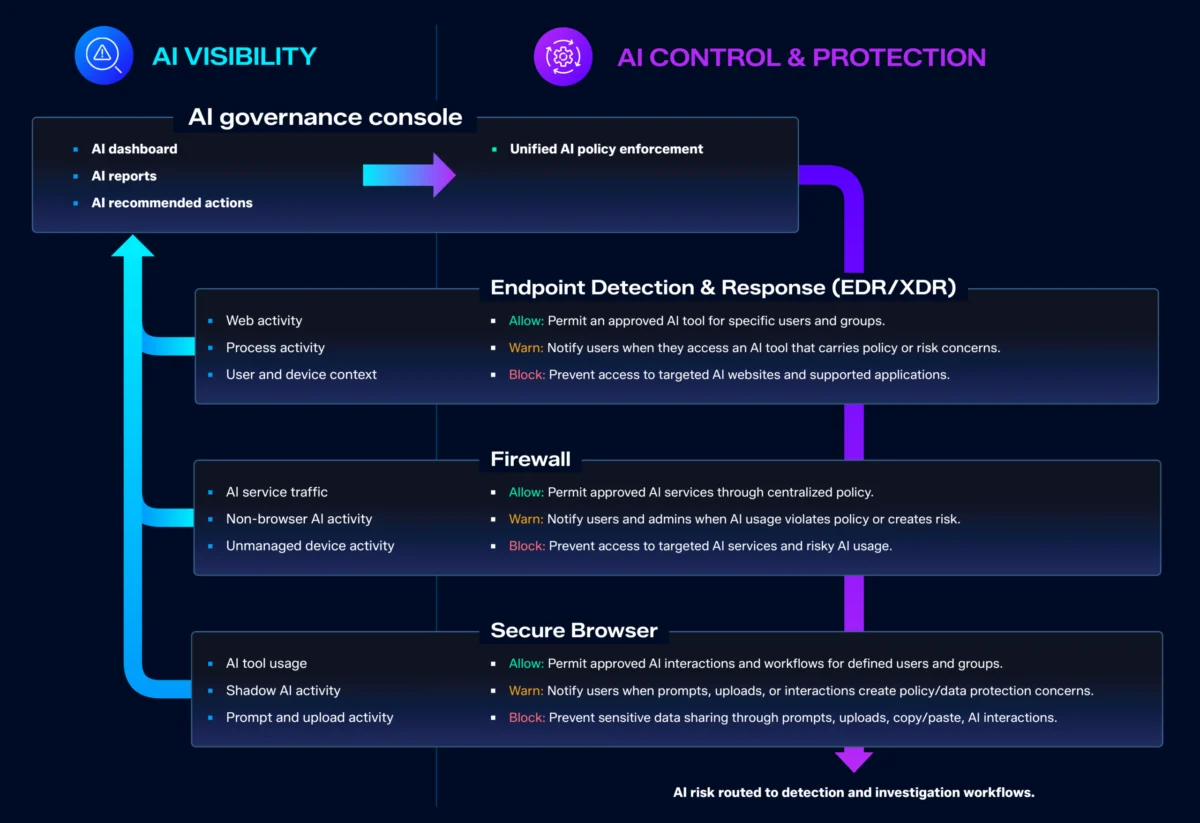
The rapid democratization of Artificial Intelligence has ushered in a new era of corporate productivity, but it has simultaneously created a "blind spot" of unprecedented scale. For modern enterprises, the ease with which employees can adopt generative AI tools—often without the explicit knowledge or approval of IT departments—has led to a surge in Shadow AI. While these actions are rarely malicious, they represent a significant departure from standard security protocols, moving sensitive intellectual property and corporate data into environments that remain entirely outside the visibility of internal security teams.
The prevailing ethos of the digital age—"move fast and break things"—has inadvertently become a strategic advantage for threat actors. As data flows through an increasingly complex web of third-party platforms, APIs, and delegated credentials, the traditional perimeter has effectively dissolved. Organizations are now grappling with a fundamental question: How do you govern an ecosystem that is expanding faster than your ability to monitor it?
The Fallacy of the Written Policy
In response to the proliferation of AI, many organizations have rushed to draft comprehensive AI usage policies. The prevailing logic is simple: if employees are educated on the risks and provided with clear documentation on acceptable use, they will comply.
However, security professionals are increasingly realizing that governance does not work through documentation alone. Policy documents and annual training modules are merely the beginning—they represent the "paper" layer of security. Without technical controls enforced directly within user workflows, these policies are destined to fail.
The primary culprit is delivery pressure. Much like the tension seen in software engineering, where developers are often forced to choose between strict security compliance and hitting a feature release deadline, employees using AI are frequently prioritized by productivity. When a policy becomes a barrier to output, the policy will almost always lose. If the organization fails to provide a sanctioned, efficient path to using AI, employees will invariably find an unsanctioned, unmonitored route to achieve their goals.
Anatomy of a Breach: The Vercel Incident
The risks associated with Shadow AI are not theoretical. In April 2026, Vercel provided a sobering case study in a public security disclosure. The incident demonstrated that the danger often lies not in the AI tool itself, but in the lack of governance surrounding the integration of those tools into corporate accounts.
In the Vercel incident, an employee registered for a consumer-grade AI product using their corporate Google Workspace credentials. By delegating these credentials, the employee inadvertently granted the third-party application broad access to internal systems. An attacker, leveraging vulnerabilities within the AI tool’s ecosystem, was able to pivot from the external application into Vercel’s internal environment.
This event underscores a critical reality: the "human element" of security is not just about phishing or weak passwords anymore; it is about the automated, silent authorization of third-party tools that hold the keys to the corporate kingdom.
The Strategy: Paved Roads and Guardrails
To combat this, security leaders are adopting the philosophy championed by industry veterans like Jason Chan, the former VP of Information Security at Netflix. The core of this strategy is the "paved road."
Instead of relying on rigid "gates" that simply block access—which only motivates users to find workarounds—organizations must build "guardrails." A gate acts as a brick wall, frustrating users and driving them toward shadow activity. A guardrail, conversely, acts as a boundary that keeps the user safe while guiding them toward an approved, monitored, and efficient alternative.
Successfully implementing this requires a shift in mindset: security teams must stop viewing AI users as offenders and start viewing them as informants. Every unsanctioned tool discovered in the wild is a signal that the current "paved road" is not meeting a specific user need. By analyzing these signals, security teams can develop smarter, more functional tools that satisfy productivity requirements without compromising safety.
The First Step: Visibility Through Discovery
You cannot govern what you cannot see. The first step toward a robust AI governance strategy is comprehensive discovery. Organizations must map the AI landscape across their enterprise, identifying where AI is being used, what data is being shared, and where that data is residing.
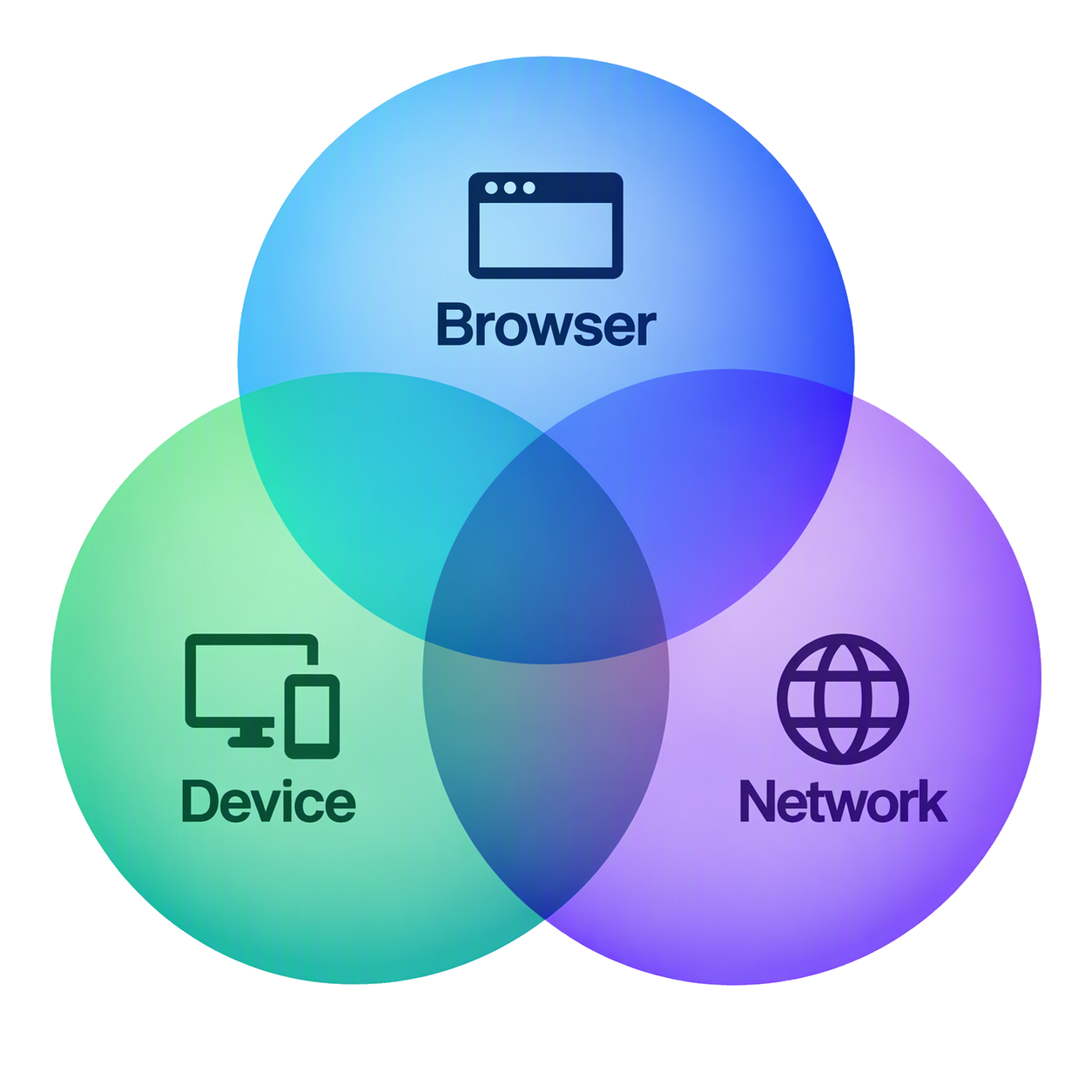
To achieve this, discovery must span three primary surfaces:
- Endpoint activity: Identifying locally installed AI clients and desktop-based agents.
- Network/Firewall traffic: Capturing service-level access to AI providers that bypass managed browsers.
- Managed Browser/Workspace activity: Monitoring uploads, downloads, and copy-paste interactions within sanctioned environments.
Once these channels are monitored, a fourth signal becomes critical: delegated credentials. As AI agents become more autonomous, the tokens and permissions granted to these services become the primary vector for potential breaches. Security teams must treat these credentials with the same rigor as administrative passwords, scanning for them continuously and aggregating the findings into the same dashboards used for other security operations.
If an AI governance tool exists in a siloed, separate console, it will inevitably be ignored. To be effective, AI risk data must be integrated into the existing incident response workflows that security operations teams check daily.
A Nuanced Approach to Enforcement
A binary "block or allow" approach to AI enforcement is largely obsolete. Organizations that block tools too aggressively without providing alternatives will only succeed in pushing users toward personal devices and shadow networks where visibility is zero.
A more effective framework utilizes three tiers of enforcement:
- The Warn Tier: When a user engages with a new or partially vetted tool, they receive a real-time notification explaining the risk. This allows the security team to maintain visibility and coach the employee without disrupting their work.
- The Block Tier: This should be reserved for high-risk, non-compliant tools. Crucially, a block must always be accompanied by an explanation of why the tool is blocked and, whenever possible, a link to an approved, safer alternative.
- The Adaptability Tier: Security teams should work with employees to evaluate new tools. If a tool is necessary for business, the team should focus on a "safe proof of concept" approach, evaluating risk and establishing guardrails rather than defaulting to "no."
The Technological Imperative
The complexity of modern AI adoption means that governance must be woven into the fabric of the existing infrastructure. Rather than deploying standalone AI security platforms that add more "console fatigue," organizations should leverage the control points they already operate: endpoints, networks, and browsers.
Tools like Sophos AI Defense exemplify this shift, aiming to integrate AI visibility and control into the existing cybersecurity stack. By bringing AI governance into the primary operational view, security teams can move from detection to action in seconds rather than days.
Implications for the Future
The pressure on security teams to prove compliance is only mounting. Boards of directors, cyber insurers, and regulators are now demanding the same level of transparency for AI as they do for cloud infrastructure or endpoint protection.
The ultimate goal of a mature AI governance program is to ensure that the "wrong thing is hard and the right thing is easy." By encoding security policies into a paved road, organizations can ensure that their employees remain productive without inadvertently opening the door to the next major breach.
As we move forward, the organizations that succeed will be those that embrace the necessity of continuous discovery, cross-platform visibility, and a collaborative approach to policy enforcement. In the age of Shadow AI, the strength of your security posture is no longer measured by the thickness of your rulebook, but by the intelligence and agility of your guardrails.
Effective governance is not a gatekeeper; it is an enabler. By prioritizing visibility and integrating AI controls into the existing workflow, businesses can harness the immense power of generative AI while keeping their data—and their reputation—secure.


 Basiran

 Raul Delapena Setiawan

 Reynand Wu

 Sagoh


 Azzam Bilal Chamdy

 Ali Ikhwan
