
 Asep Darmawan
By Damian Brett
In a significant technological leap for the air logistics sector, LATAM Cargo has officially launched a high-fidelity Virtual Reality (VR) training program at its Miami Airport hub. This initiative represents a departure from traditional, classroom-based instruction, moving toward an immersive digital environment that allows personnel to rehearse critical operational procedures with high precision. By simulating real-world hazards, the airline aims to bridge the long-standing gap between theoretical training and the high-pressure reality of a busy airport warehouse floor.
The Core Transformation: Moving Beyond the Classroom
The implementation of VR technology at the Miami facility is designed to address the unique complexities of cargo handling. Warehouses are dynamic, high-stakes environments where split-second decisions can have significant safety and financial consequences.
LATAM Cargo’s new platform enables staff to navigate a variety of scenarios—ranging from routine cargo intake to the management of hazardous materials—without the physical risks associated with live training. By placing workers in a controlled digital replica of their daily work environment, the airline is fostering a "muscle memory" approach to safety. The system tracks precise behavioral metrics, allowing instructors to monitor how employees respond to unexpected variables, such as emergency stops, pedestrian encroachment, or improper loading sequences.
For the airline, this is more than just a training tool; it is a fundamental shift in its operational safety strategy. By quantifying human performance through digital data, LATAM Cargo can identify specific knowledge gaps before they manifest as real-world accidents.
Chronology of Innovation: From Santiago to Miami
The Miami rollout is the latest chapter in a broader digital transformation strategy for the carrier. The technology was first piloted at the Fast Air warehouse in Santiago, Chile. The success of that pilot program provided the necessary proof of concept for the carrier to scale the project to its North American hub.

The transition from the Santiago pilot to the Miami operation represents a "major scale-up." While the initial Chilean rollout focused on foundational concepts, the Miami implementation has been expanded to include more complex operational scenarios. This reflects the increased volume and specialized nature of the Miami hub, which serves as a critical gateway for LATAM’s international cargo network.
Following the successful deployment in Miami, the company is already in the process of evaluating further expansions. The next logical steps include the deployment of the VR training modules to other key strategic hubs, with a particular focus on Brazil—a critical node in the airline’s Latin American operations. This phased approach suggests that LATAM Cargo intends to standardize this high-tech training across its entire global footprint, creating a unified safety culture reinforced by digital proficiency.
Supporting Data and Technical Scope
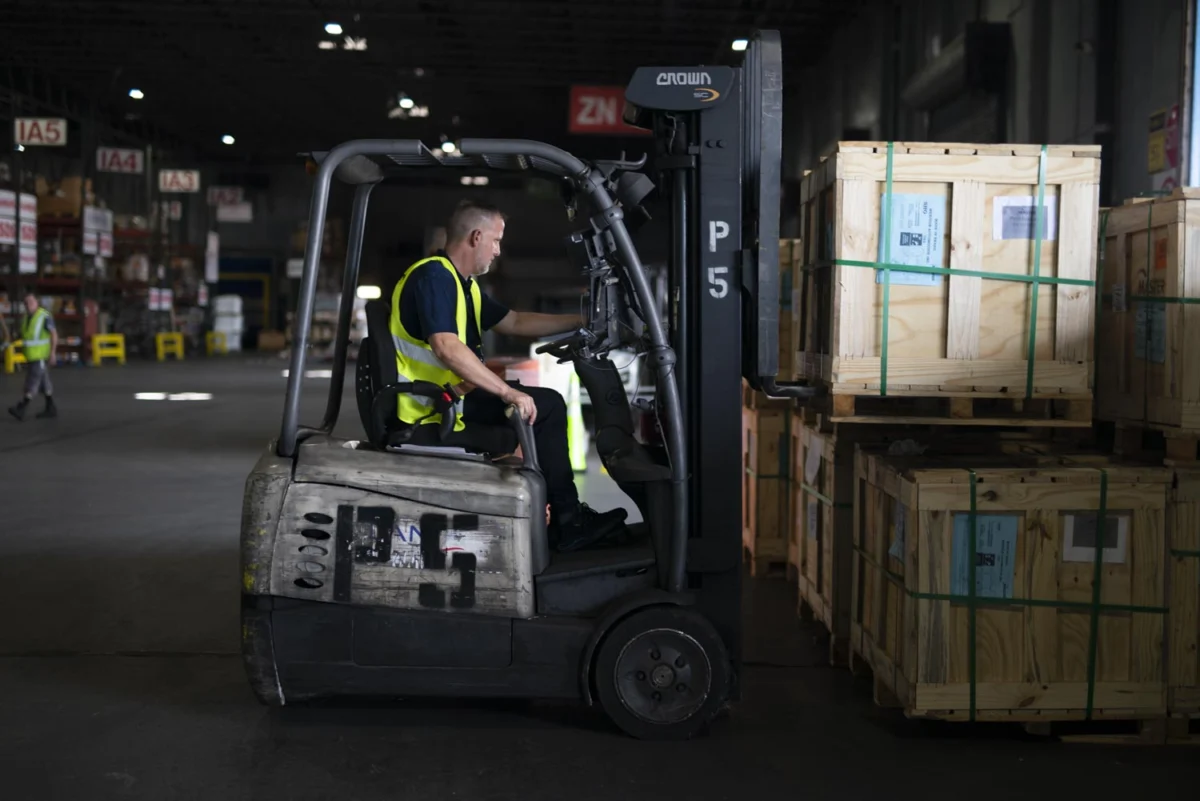
The scale of this implementation is substantial. In its primary phase at the Miami facility, approximately 550 staff members are undergoing training. This cohort includes 250 forklift operators—a role that carries some of the highest risks in warehouse operations.
The technical architecture of the training program is divided into distinct modules designed to cover the most critical areas of warehouse safety:
- Pedestrian Safety Zones: The simulators feature six distinct zones that mimic the high-traffic areas of the warehouse. These scenarios are designed to test the situational awareness of staff as they navigate around heavy machinery and moving cargo.
- Forklift Proficiency Modules: Three specialized modules have been developed specifically for forklift operators. These go beyond basic driving, requiring operators to demonstrate proficiency in stacking, maneuvering in tight spaces, and reacting to sudden obstruction in the warehouse aisles.
- Hazardous Goods Handling: Perhaps the most vital aspect of the training, this module focuses on the segregation and handling of dangerous goods. In a digital environment, trainees can practice the correct protocols for identifying and isolating hazardous materials, ensuring that when they encounter such items in the real world, the correct procedures are second nature.
The platform distinguishes itself by capturing granular metrics. Unlike written exams, which measure retention of information, the VR system measures reaction times, the accuracy of hazard identification, and the efficiency of the mitigation steps taken by the user.
Official Perspectives: Bridging Theory and Practice
Daniel Leng, Chief Operating Officer of LATAM Cargo, has been a vocal proponent of this technological transition. In a recent statement, Leng emphasized that the integration of VR is a direct response to the limitations of traditional, paper-based safety training.

"Integrating Virtual Reality at our Miami hub marks a key step in our operational safety strategy," Leng stated. "By placing our teams in critical operational scenarios within an exact replica of their daily work environment, we significantly close the gap between classroom theory and ramp practice."
Leng’s perspective highlights a common frustration in the logistics industry: the "disconnect" that occurs when workers learn safety protocols in a static, quiet classroom but struggle to apply those same rules amidst the noise, pressure, and physical constraints of a working warehouse. The VR environment forces the trainee to manage external stimuli, effectively training them to remain calm and methodical even when the "digital" warehouse becomes chaotic.
Implications for the Global Logistics Industry
The implications of LATAM Cargo’s move extend well beyond the company itself. As the global logistics industry faces increasing pressure to improve safety, reduce cargo damage, and increase operational efficiency, the adoption of VR and Augmented Reality (AR) is likely to accelerate.
1. The Standardization of Safety
One of the most significant advantages of a VR-based training system is standardization. In a global network, ensuring that a warehouse worker in Miami is trained to the same level of safety as a worker in Santiago or São Paulo is notoriously difficult. With VR, the "curriculum" is software-based. The exact same high-risk scenarios can be deployed worldwide, ensuring that every employee—regardless of location—undergoes the same rigorous testing and evaluation.
2. Cost-Benefit Analysis
While the initial investment in VR hardware and software development is significant, the long-term cost savings are projected to be substantial. Reducing the incidence of workplace injuries results in lower insurance premiums, fewer work stoppages, and improved staff retention. Furthermore, by training on simulators, the company avoids the costs associated with "live" training, which often requires taking equipment out of service and using valuable floor space for instruction.
3. Attracting and Retaining Talent
In an era where the logistics industry is struggling to recruit skilled labor, the adoption of advanced technology can also serve as a recruiting tool. Modern workers, particularly younger generations entering the workforce, expect a high level of digital integration in their daily tasks. By investing in VR, LATAM Cargo is positioning itself as a forward-thinking employer that values technological innovation and employee development.

4. Continuous Improvement
Perhaps the most powerful feature of this system is the ability to update scenarios. As new regulations come into effect or as the company adopts new cargo handling procedures, the VR modules can be updated remotely. This allows the airline to pivot its training focus quickly, rather than needing to rewrite manuals and retrain instructors across the globe.
Conclusion: A New Standard for Warehouse Safety
LATAM Cargo’s deployment of VR technology in Miami is a clear signal that the future of logistics training is digital. By moving safety training out of the classroom and into a high-fidelity, interactive environment, the airline is not only enhancing the safety of its personnel but is also setting a new benchmark for operational excellence in the air cargo sector.
As the company looks toward expanding this technology to its hubs in Brazil and beyond, the industry will undoubtedly be watching. If the metrics gathered from the Miami and Santiago facilities continue to demonstrate a reduction in accidents and an improvement in operational response times, it is highly probable that VR will become an industry-standard component of warehouse management.
The transition from "theory" to "practice" has always been the greatest hurdle in industrial training. Through the use of Virtual Reality, LATAM Cargo has found a way to bridge that divide, ensuring that when the pressure is on, its teams are prepared for the realities of the modern warehouse. As the digital and physical worlds of logistics continue to converge, this initiative stands as a testament to the power of technology to make the global supply chain safer, more efficient, and more resilient.

 Sagoh

 Ali Ikhwan

 Raul Delapena Setiawan

 Reynand Wu



 Azzam Bilal Chamdy

