
 Rifan Muazin
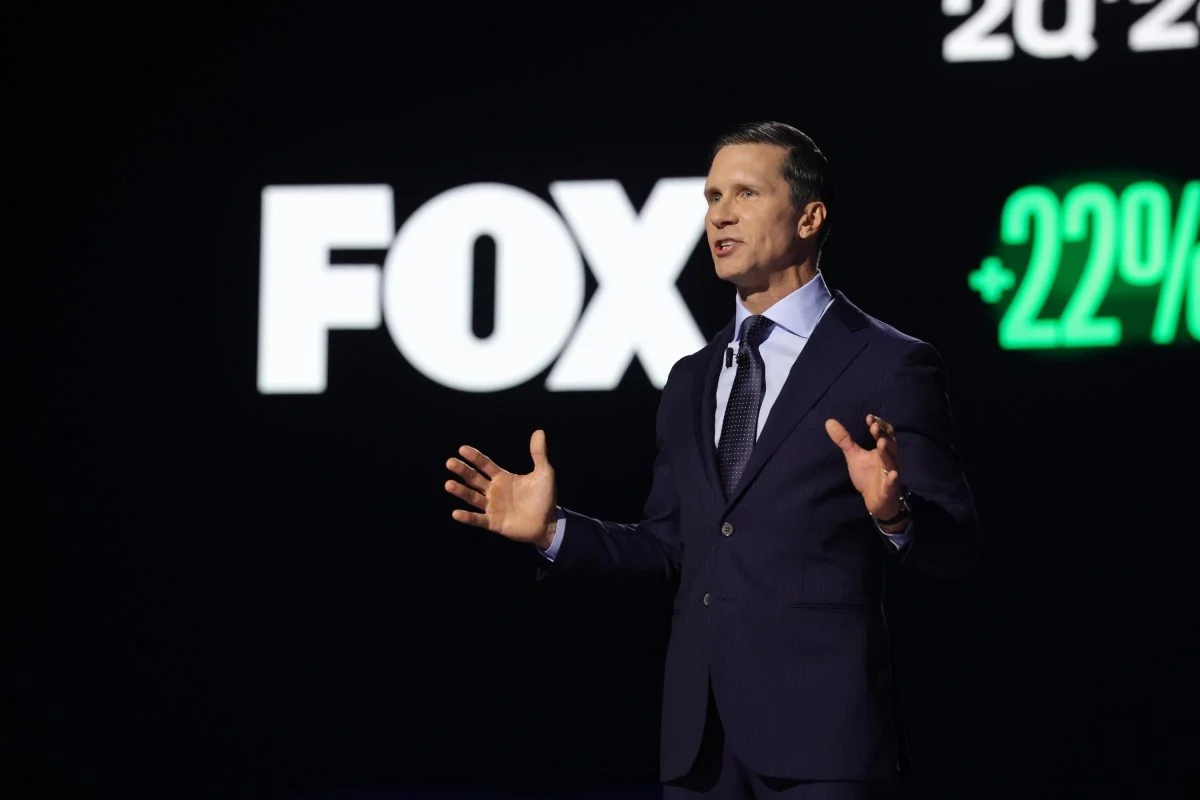
The television advertising industry, long characterized by manual negotiations, spreadsheet-heavy planning, and static metrics, is currently undergoing a radical transformation. At the forefront of this shift is Fox Corporation, which has officially moved into the next phase of its ambitious "agentic" platform rollout. By leveraging autonomous AI agents, Fox aims to transform the traditionally rigid buying process into a dynamic, end-to-end ecosystem that could redefine the economics of the upfront market.
As the industry pivots toward Connected TV (CTV) and performance-based marketing, Fox’s strategy represents more than just a tech upgrade; it is a fundamental redesign of how media companies interact with advertisers.
Main Facts: The Rise of the Agentic Framework
At its core, Fox’s "agentic platform" is designed to eliminate the friction points that have plagued TV buying for decades. An "agentic" system refers to AI that does not simply suggest or analyze data but actively performs tasks—negotiating, adjusting, and executing transactions—on behalf of a user.
Fox’s current initiative focuses on three primary pillars:
- Autonomous Execution: Moving beyond basic automation, the platform is designed to handle complex media-buying workflows without constant human intervention.
- Cross-Platform Integration: The platform is expanding its scope to include end-to-end linear broadcast transactions, with a roadmap that integrates digital and CTV inventory into a single, unified pipeline.
- Expanded Partnership Ecosystem: By onboarding a wider array of agency partners, Fox is pressure-testing its technology in real-world scenarios, moving from beta pilots to industry-standard utility.
This pivot is not occurring in a vacuum. It follows a broader industry trend where stakeholders are increasingly skeptical of vanity metrics like "impressions." Instead, the market is demanding a focus on "real audience attention"—a metric that captures whether a viewer is actually engaged with a screen, rather than just present in the room.
Chronology: A Roadmap to Autonomous Buying
The journey toward this agentic future has been a deliberate, multi-year process for Fox.
- Phase I: The Foundation (2022-2023): Fox began by digitizing its inventory and optimizing its data-cleanroom infrastructure. The goal was to ensure that the "pipes" of the advertising machine were compatible with high-speed AI processing.
- Phase II: The Beta Rollout (Early 2024): The company introduced its initial agentic tools to a select group of partners. These early iterations focused on inventory discovery and automated pricing recommendations.
- Phase III: The Current Expansion (Late 2024-2025): Fox is now entering the "Next Phase," as noted by leadership. This involves the integration of linear transactions and the formal inclusion of agentic capabilities into the upcoming upfront cycles.
- Future Outlook (2026 and Beyond): The long-term objective is to achieve a state of "continuous trading," where the upfront is no longer a seasonal event but a constant, AI-optimized flow of transactions that respond to market demand in real-time.
Supporting Data: Why Attention Metrics Matter
The shift toward agentic platforms is driven by a sobering reality: the disconnect between ad spending and consumer attention. According to internal and industry-wide research, traditional impression-based models often overstate the impact of CTV ads.
As part of the broader industry conversation, ADWEEK’s Exchange Series—featuring leaders from Havas, Wayfair, WHOOP, and others—has highlighted a critical industry consensus: Measuring attention drives higher ROI.
- The Attention Gap: Studies indicate that up to 30% of CTV impressions occur on "unattended" screens. By using AI agents to optimize for attention rather than mere reach, advertisers can cut waste significantly.
- Efficiency Gains: Early adopters of agentic workflows report a 20-30% reduction in "administrative drag"—the time spent on manual reconciliations and revisions.
- Market Velocity: Agentic systems allow for near-instantaneous bid adjustments. In a trial run of the platform, the time to execute a complex multi-platform media buy was reduced from days to minutes.
Official Responses: The Leadership Perspective
Jeff Collins, the lead executive for Fox’s advertising operations, has been vocal about the strategic necessity of this transition. In discussions with industry analysts, Collins emphasized that the goal is not to remove humans from the process, but to elevate them.
"The technological advancements we are seeing are ultimately creating more impactful relationships with our clients and partners," Collins noted. "By offloading the tactical, transactional burden to an agentic layer, we free up our teams and our agency partners to focus on high-level strategy, creative resonance, and long-term brand building."
This perspective aligns with a growing sentiment among media owners: that the "agency" of the future is a partnership between human intuition and machine-speed execution. By making the upfront process more transparent and responsive, Fox hopes to position itself as the most "frictionless" partner in the broadcast ecosystem.
Implications for the Industry
The implications of Fox’s move are profound, touching on everything from agency business models to the very nature of media buying.
1. The Death of the "Upfront" as We Know It
The traditional upfront—a months-long, high-pressure negotiation ritual—is fundamentally incompatible with an agentic, AI-driven future. If Fox successfully scales this platform, the upfront will likely evolve into a continuous, data-informed exchange. Advertisers will no longer need to "lock in" rates based on quarterly projections; instead, they will be able to adjust their commitment in real-time as the AI monitors audience attention and market conditions.
2. The Reshaping of Agency Roles
Agencies have historically acted as the "manual labor" of the media industry, handling the grunt work of buying and reconciliation. As AI agents take over these tasks, agency value propositions will shift toward audience strategy, data integrity, and creative direction. Those who fail to adapt to this "agent-first" paradigm risk becoming obsolete, while those who master the management of these agents will become indispensable.
3. The CTV Monetization Gap
CTV remains the final frontier for digital advertising. While search and social have been programmatic for years, TV has remained stubbornly manual. By bringing agentic capabilities to the linear-digital bridge, Fox is effectively helping to close the monetization gap. If Fox can prove that its agentic platform delivers higher attention and better ROI, other major networks will have no choice but to follow suit to remain competitive.
4. Transparency and Data Sovereignty
With AI agents making transactions, the issue of "black box" algorithms becomes paramount. Fox faces the challenge of maintaining trust. Advertisers will require clear visibility into how these agents are making decisions. As the platform expands, Fox will need to demonstrate that its agents are operating with the best interests of the advertiser in mind, rather than just maximizing yield for the network.
Conclusion: The Path Forward
Fox’s push into agentic technology is a bold bet on the future of television. By integrating AI into the core transactional fabric of the network, they are signaling that the era of manual TV buying is coming to an end.
However, technology is only one part of the equation. The success of this platform will ultimately depend on adoption. As the industry gathers at events like the ADWEEK Exchange Series to debate the merits of attention-based metrics and autonomous buying, the pressure is on media owners to provide the tools that make these theories a reality.
For advertisers, the message is clear: the tools you use to buy TV are about to become as sophisticated as the tools you use to buy search or social. Whether this results in a more equitable marketplace or a new era of algorithmic dominance remains to be seen. But one thing is certain—the transition to an agentic future is no longer a hypothetical dream; it is the new, unfolding reality of the media landscape.
As we look toward the next upfront season, all eyes will be on Fox to see if they can turn this technological potential into sustained, industry-wide competitive advantage. If the promise holds, we are witnessing the birth of a more efficient, attentive, and profitable future for the entire television advertising ecosystem.


 Reynand Wu
 Iffa Jayyana

 Raul Delapena Setiawan


 Sagoh


 Azzam Bilal Chamdy

 Ali Ikhwan
