
 Lina Hope
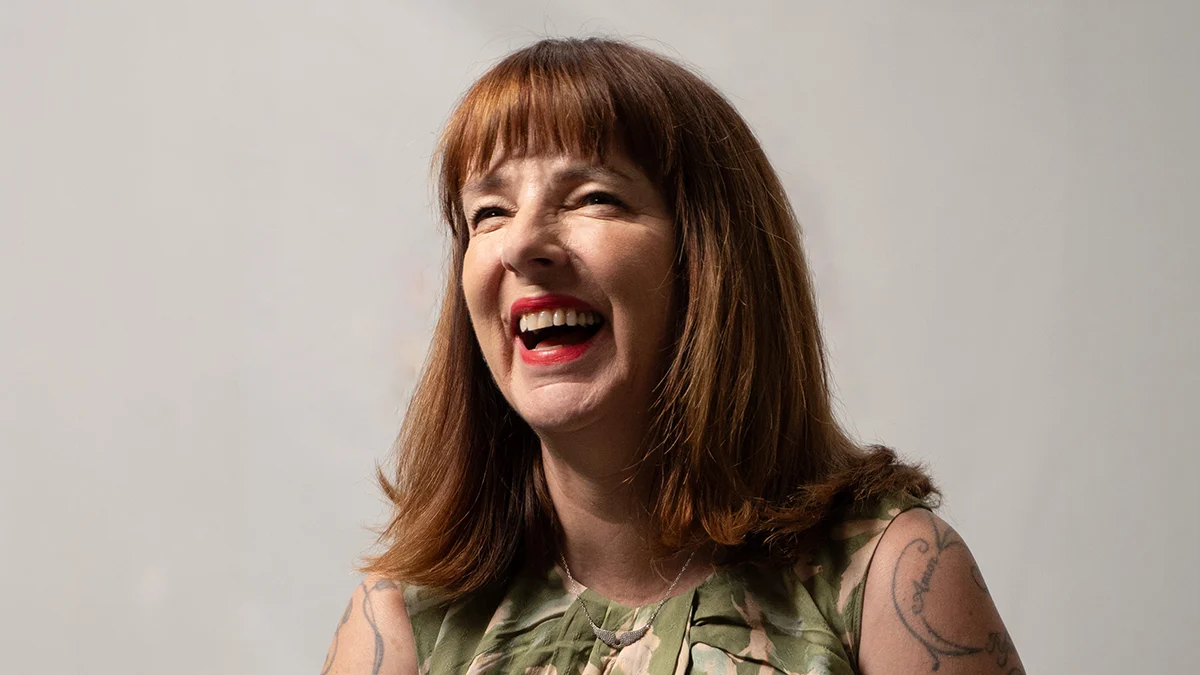
When the average consumer walks down the dairy aisle, the iconic imagery of Land O’Lakes—the blue-and-white packaging and the legacy of butter—is often the extent of their brand recognition. Yet, beneath this familiar surface lies a sprawling, 106-year-old agricultural cooperative that functions more like a massive, data-driven engine than a simple food manufacturer.
As Heather Malenshek, the company’s Chief Marketing Officer, articulated during an invite-only session at ADWEEK’s Brandweek, the dairy business is merely the tip of a much larger iceberg. From advanced crop protection technology to a massive animal nutrition arm that sustains 100 million animals daily—including those in the world’s leading zoos—Land O’Lakes is a titan of modern agriculture. For Malenshek, the challenge of the last six years has been reconciling this multifaceted, complex reality with a brand identity that, for many, was frozen in time.
The Evolution of a Legacy Brand
To understand the current trajectory of Land O’Lakes, one must look at the leadership shift that catalyzed its recent transformation. Malenshek, a veteran of legendary brands including Harley-Davidson, Jeep, and Budweiser, joined the cooperative six years ago. Her arrival was driven by a professional pivot—a move from the high-octane world of motorcycling to the fundamental, yet often overlooked, world of agricultural sustenance.
“I had really no idea what Land O’Lakes had to offer until I spoke to the CEO, Beth Ford,” Malenshek noted. “I fell in love with her leadership and how she cares so deeply about what we do.”
The company’s challenge was not a lack of value, but a lack of cohesion. With three distinct business units serving vastly different audiences, the organization had become siloed. To modernize, Malenshek realized the marketing department could not operate in a vacuum. She spearheaded a cross-functional initiative—involving operations, finance, and supply chain experts—to distill the company’s purpose into a unified platform: Rooted in Tomorrow.
Chronology of a Cultural Pivot
The transformation of Land O’Lakes did not happen overnight. It required a methodical, data-backed approach to repositioning a century-old entity.
- Pre-2018 (The Silo Era): The organization operated in fragmented segments, with dairy, animal nutrition, and crop technology functioning as separate silos.
- 2018–2020 (The Foundation): Malenshek joins, conducting deep dives into the organization’s manufacturing plants and facilities to understand the true "lived experience" of the farmers.
- 2020–2022 (The Advocacy Shift): Recognizing the digital divide during the COVID-19 pandemic, the company pivots to advocate for rural broadband, highlighting the inequity of rural students needing to park at retailers for Wi-Fi.
- 2023–Present (Cultural Integration): The launch of the Modern Rural Collective, a strategic initiative designed to shift how Hollywood and the media perceive rural America, moving away from tropes of isolation toward narratives of innovation and entrepreneurship.
Data-Driven Advocacy and the "Modern Rural Collective"
A critical pillar of Malenshek’s strategy is the distinction between genuine cultural participation and performative brand overreach. For Land O’Lakes, the litmus test is simple: if the action doesn’t directly support the farm owners, their families, and their communities, it is discarded.
This philosophy was put to the test when the company began advocating for rural broadband access. When the pandemic hit, the lack of internet connectivity in rural areas became a national crisis. Land O’Lakes didn’t just donate; they used their corporate voice to push for policy change.
“There’s a huge disconnect between how rural America shows up in culture, and our lived experience,” Malenshek explained. This led to the creation of the Modern Rural Collective, a bridge between rural stakeholders and the entertainment industry. By partnering with production companies, Land O’Lakes is working to reshape the narrative of the American heartland—highlighting that it is not a place of decline, but a hub of technology, innovation, and young talent.
Supporting Data: Why Trust Matters
Trust, in Malenshek’s view, is not something to be courted when a crisis arrives; it is built in the quiet moments between major campaigns. To build this trust internally, she abandoned the marketing industry’s tendency to only highlight success.
“One of the things we suffered a little bit with is we always wanted to tell a good story. We would never tell any bad steps,” she admitted. “Being more transparent, having humility that in our group we don’t know all the answers, and being upfront about that, has helped in building those trusted relationships.”
By linking marketing initiatives directly to business strategy, Malenshek secured a "seat at the table." When the team proposed unconventional collaborations—such as a sneaker partnership or leveraging the "butter yellow" fashion trend on TikTok—the internal skepticism was mitigated by a track record of accountability. Data proved that these experiments were not mere vanity projects; they were calculated efforts to remain relevant in a digital-first economy.
Official Perspectives: The CMO’s Roadmap
When asked how other CMOs can transition their organizations from storytelling to culture-shaping, Malenshek offers a practical, if challenging, piece of advice: Involve the people outside of marketing.
“Don’t be scared to involve other colleagues from different parts of the organization. That’s been super valuable for me because then I have advocates all over the place,” she said. By integrating finance, operations, and supply chain personnel into the creative process, the marketing department ensures that its cultural outputs are grounded in the tangible reality of the business.
Furthermore, she emphasizes the need to speak the language of business rather than marketing jargon. For Land O’Lakes, the "long game" is measuring success through adoption and impact on the rural economy. Whether it is TikTok trends or high-level advocacy in Washington, D.C., every move is measured against the company’s core purpose: supporting the farmers who feed the world.
Implications for the Future
The implications of Land O’Lakes’ shift are significant for the broader agricultural sector and legacy brands at large. The company is effectively proving that a "boring" or traditional business can be a cultural influencer if it leans into its authentic identity.
By championing the "Modern Rural" identity, Land O’Lakes is not just selling butter; it is advocating for the prosperity of the communities that sustain it. This approach provides a blueprint for other legacy companies:
- Authenticity is the Gatekeeper: If a brand has to explain why it is participating in a cultural trend, it has already failed.
- Transparency Builds Capital: Admitting to failed experiments creates the trust necessary to attempt bold, new ones.
- Cross-Functional Inclusion: Marketing must be a business-wide exercise, not a departmental silo.
As Malenshek prepares for her next ride—a motorcycle tour through the winding roads of Colorado and New Mexico—she carries with her the lessons of the road: that to see the country clearly, you must get close to it. By getting closer to the people who make up the Land O’Lakes cooperative, the company has managed to transform itself from a static household name into a dynamic, future-facing force.
In the end, Land O’Lakes remains a brand of the past, but one that is aggressively securing its place in the future. As Malenshek noted, “Our farmers are always evolving because they have to, and so we need to do the same thing.” For a 106-year-old cooperative, the path forward is clear: stay rooted in the dirt, but keep your eyes on the horizon.


 Ammar Sabilarrohman
 Sagoh

 Raul Delapena Setiawan

 Reynand Wu



 Azzam Bilal Chamdy

 Ali Ikhwan
