
 Muslim
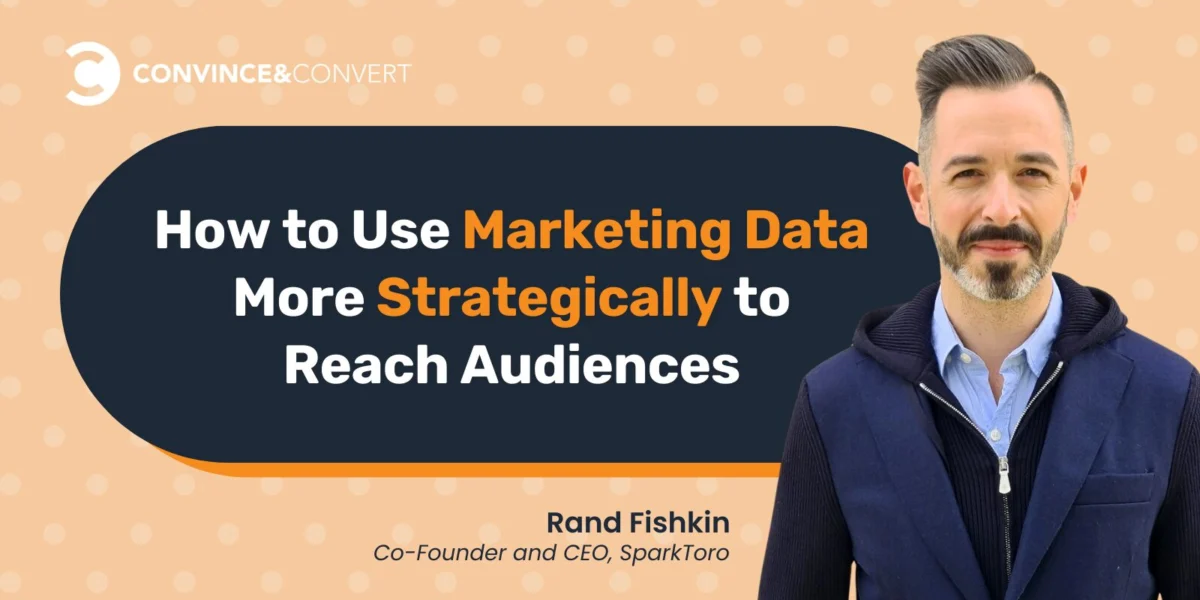
In the modern digital marketing landscape, a handful of giants—Google, Meta, and LinkedIn—have become the default architects of brand strategy. For most marketing departments, success is defined by a familiar ritual: setting up retargeting pixels, bidding on competitive keywords, and meticulously tracking Cost-Per-Acquisition (CPA) within platform-native dashboards. These channels are lauded for their reliability and, more importantly, their clear, quantifiable return on investment (ROI).
However, a growing chorus of industry experts is beginning to question the "safer bet" mentality. By leaning exclusively on platforms that promise easy attribution, are marketers accidentally trapping themselves in a cycle of diminishing returns? According to Rand Fishkin, founder of audience intelligence tool SparkToro, the answer is a resounding yes. In a recent appearance on the Data-Driven Decisions podcast, Fishkin argued that the obsession with measurable ad spend often obscures the reality of how customers actually behave, learn, and make purchasing decisions.
The Mirage of Attribution: Are You Measuring Value or Just Clicks?
The central friction in contemporary marketing is the difference between "attribution-friendly" channels and "audience-relevant" channels. Marketers are frequently incentivized to prioritize platforms that can prove a direct line between a click and a conversion. Google Ads is the quintessential example of this phenomenon.
Fishkin posits that Google is often mistaken for the driver of a purchase, when it is, in reality, merely the middleman. "A ton of what happens in Google is actually a response to something else," Fishkin explained. "People who performed a search query in Google, very rarely was that a spontaneous first-touch thing. It was like, ‘Oh, I heard about this software, so I went to Google and searched for it and clicked on it.’ And of course, the attribution looks like Google drove all the value. No, Google was just the middleman."
This creates a dangerous blind spot. If a company funnels its entire budget into Google search ads, it may see a steady stream of traffic and assume the strategy is working. But if those users were already converted by a mention on a niche industry podcast, an influential post on X (formerly Twitter), or a recommendation at a trade show, the marketing team is effectively paying a "tax" to Google to capture demand that was created elsewhere. By ignoring the broader customer journey, brands fail to optimize the very channels that could be generating five times the interest if properly nurtured.
Chronology of a Strategy Shift: From Broad Ads to Niche Communities
The evolution of marketing strategy is moving away from the "spray and pray" approach of broad-reach digital ads toward a more surgical, data-backed identification of niche communities. This shift is characterized by three distinct phases:
- The Era of Reliance (2010–2020): Marketing budgets shifted heavily toward performance marketing. The rise of sophisticated tracking pixels allowed brands to target users with unprecedented precision based on their browsing history.
- The Data-Privacy Crackdown (2020–Present): With the death of third-party cookies and increased privacy regulations (such as GDPR and Apple’s ATT), traditional tracking-based advertising has become less effective and more expensive.
- The Intelligence-First Paradigm (Present): Forward-thinking brands are now using audience intelligence tools to map where their customers spend time before they ever hit a search bar. Instead of chasing clicks, they are identifying the podcasts, influencers, and community hubs that their audience trusts.
Real-World Applications: The Power of Targeted Influence
Fishkin highlights two compelling case studies that demonstrate the effectiveness of this redirected, audience-first approach.
The Podcaster’s Growth Strategy
A podcaster looking to increase sponsorship revenue faced a dilemma: how to grow a high-quality audience without buying thousands of low-intent impressions. Instead of running ads, the creator used SparkToro to identify high-influence figures in their niche—specifically those with large followings on YouTube and X who had yet to be tapped by the show. By inviting these influencers as guests, the podcaster successfully leveraged the existing trust of those influencers’ audiences. The result was a natural, organic growth of the show’s listenership, which in turn provided a much more compelling data set to attract premium sponsors.
The Tech Event Organizer
Similarly, a technology event organizer used audience data to identify speakers who held sway over specific sub-sectors of the tech industry. By recruiting speakers based on the alignment between their personal audiences and the event’s target sponsors, the organizer ensured that the event was a guaranteed success for their stakeholders. This strategy, centered on human connection rather than programmatic ad buying, moved the needle far more effectively than a standard social media advertising campaign.
The Philosophy of "Zero-Click" Marketing
One of the most radical departures from traditional digital strategy is the concept of "Zero-Click" marketing, a term popularized by Amanda Natividad, VP of Marketing at SparkToro.
In a traditional model, every piece of content is a lure designed to force the user off the platform and onto the brand’s website. In the zero-click model, the brand provides value directly where the audience resides. A prime example is the data storytelling company Chartr. Rather than running ads on Reddit, they simply began sharing high-quality, visually engaging data graphics on the subreddit r/dataisbeautiful.
They included no sales pitch, no call-to-action, and no aggressive branding. They simply engaged the community on its own terms. The result was massive brand awareness and trust-building that paid dividends over time. By becoming a valued member of the community rather than an intruder, Chartr ensured that when users were ready to purchase, their brand was already top-of-mind. This approach recognizes that the modern consumer is highly adept at tuning out advertisements, but they are always looking for insightful, relevant content.
Implications for Stakeholder Reporting
One of the greatest hurdles to adopting these strategies is the pressure to present neat, linear reports to executives. "Safe" channels like Facebook or Google Ads produce clean spreadsheets with columns labeled "Spend," "Clicks," and "ROAS."
The challenge for marketing leaders today is to educate stakeholders on the nuance of the modern customer journey. If a company shifts budget from a Google ad to a podcast sponsorship, the attribution might not look as clean in a Google Analytics dashboard. However, if the result is higher brand affinity and a larger volume of "branded search" (people searching for the company name directly), the ROI is arguably higher.
The danger lies in "optimizing for what is easy to measure." When organizations fall into this trap, they systematically ignore the top-of-funnel channels that build long-term brand equity. Leaders must recognize that data-driven does not mean data-limited. As Fishkin notes, "If you think to yourself, the top 10% of spend that I do at those places [Google/Meta] is probably bringing me no incremental customers… maybe redirect that to some more creative, thoughtful and audience data-driven forms of marketing."
Conclusion: Balancing the Data-Informed Mindset
The ultimate takeaway from this shift is not that paid advertising is obsolete—it is that it must be part of a larger, more thoughtful ecosystem. The most effective marketing strategies are those that blend quantitative data with qualitative human insights.
Data can tell you where people click, but it cannot explain the frustration of a user who abandons your product, nor can it reveal the emotional motivations behind a purchase. For that, marketers must conduct interviews, engage in community forums, and stay close to the actual, lived experience of their customers.
As businesses look to refine their strategies in an increasingly crowded digital landscape, the winners will be those who stop chasing the algorithm and start following their audience. By using tools to understand where their customers live, learn, and solve problems, companies can transition from being digital advertisers to being community participants—a shift that is not only more effective but significantly more sustainable in the long term.
For those looking to deepen their understanding of how data-driven insights are reshaping business culture and strategy, consider exploring further resources on the intersection of technology and human behavior, such as Zontee Hou’s book, "Data-Driven Personalization," or the complete archives of the "Data-Driven Decisions" podcast series.


 Reynand Wu

 Iffa Jayyana

 Raul Delapena Setiawan


 Sagoh


 Azzam Bilal Chamdy

 Ali Ikhwan
