
 Ali Ikhwan
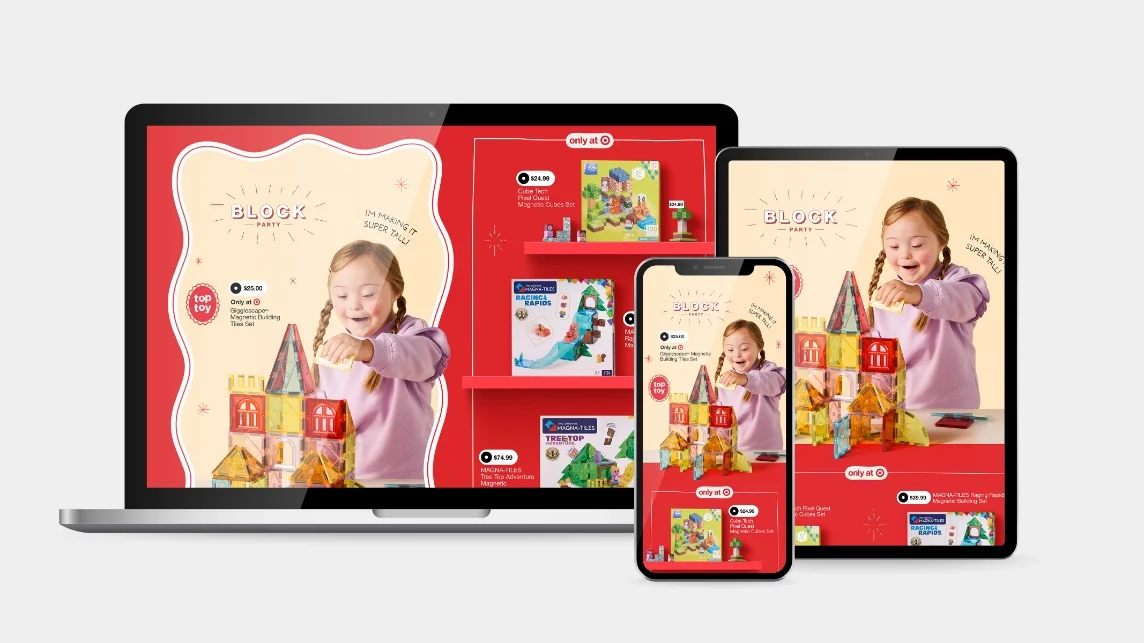
The annual “holiday toy war” has officially commenced, with the nation’s top two retailers—Target and Amazon—deploying sophisticated, high-tech catalogs designed to bridge the gap between physical play and digital convenience. As of October 5, both companies have rolled out their signature holiday toy experiences, marking a shift in how retailers approach the lucrative season by blending immersive content, AI-driven personalization, and omni-channel shopping.
The Evolution of the Holiday Catalog
For decades, the physical toy catalog was the bedrock of holiday marketing, a tangible wish list that children pored over in the weeks leading up to December. In 2026, the strategy has undergone a complete metamorphosis. Target’s new interactive Holiday Kids Catalog is no longer a static book; it is a shoppable content platform.
Target’s digital offering, available via its website and mobile app, features nearly 500 toys, games, and gifts. Unlike a traditional e-commerce product grid, the platform acts as an entertainment hub. It provides video demonstrations, professional reviews, and an interface that allows users to move seamlessly from discovery to checkout. Perhaps the most significant technical advancement is the integration of a “list scanner” feature. This tool allows parents to take a handwritten wish list—often scrawled by children based on the physical catalog—and digitize it through the Target app, turning paper requests into actionable shopping lists that can be shared with family members and gift-givers.
Each page of the physical catalog is also equipped with unique QR codes, ensuring that any user holding a physical copy can be instantly transported to the corresponding digital environment. This creates a frictionless loop between the tactile experience of browsing and the convenience of mobile commerce.
Amazon’s AI-Powered Counter-Offensive
Amazon, the undisputed leader in North American e-commerce, has launched its ninth annual Holiday Kids Gift Book. Featuring over 600 items, Amazon’s strategy leans heavily into its technological ecosystem, specifically its Alexa-enabled devices.
Where Target focuses on social sharing and app-native content, Amazon is betting on experiential engagement. Through a collaboration with Readyland, Amazon has created a “choose-your-own-adventure” audio experience. Children can interact with the characters featured in the catalog via any Alexa-enabled device, turning the selection process into a narrative game.
Furthermore, Amazon is doubling down on its proprietary AI commerce tools. The retailer’s “Alexa for Shopping” allows parents to request gift recommendations based on specific parameters, such as the age and interests of their children. By leveraging data-driven personalization, Amazon aims to reduce the "decision fatigue" that often plagues holiday shoppers. Additionally, the “Amazon Lens” feature enables users to scan products spotted in the real world or on social media, instantly populating the Amazon shopping cart with the item or similar alternatives.
Chronology: The Race to the Holiday Season
The timing of these launches is no coincidence. Retailers have spent the better part of 2026 preparing their supply chains and digital interfaces to capitalize on a holiday season characterized by shifting consumer behaviors.
- Mid-2026: Target reported exceptional growth in its “Fun101” category (toys, sporting goods, and entertainment), marking it as the company’s strongest-performing segment.
- August–September 2026: Retailers finalized their logistics strategies, focusing on the high demand for same-day and next-day delivery services.
- October 5, 2026: Both Target and Amazon officially released their respective toy catalogs, signaling the start of the holiday marketing push.
- Q4 2026 (Upcoming): Analysts expect a hyper-competitive period as both companies leverage their respective strengths—Target’s in-store pickup convenience versus Amazon’s vast logistical network and AI-driven discovery tools.
Supporting Data and Financial Performance
The urgency to capture the holiday market is supported by robust financial performance. Target, ranked No. 5 in Digital Commerce 360’s Top 1000 Database, reported an 8.7% year-over-year increase in online sales during its fiscal Q2 2026. This growth significantly outpaced the company’s total comparable sales growth of 3.8%.
Crucially, Target’s investments in supply chain speed have paid dividends: same-day delivery services saw over 25% growth in the quarter, with the retailer fulfilling 30% more same- and next-day units compared to the previous year. While total net sales reached $26.7 billion—a 5.3% increase—the figures were bolstered by roughly $1 billion in tariff-related adjustments.
Amazon, holding the top spot (No. 1) in the Top 1000 Database, continues to leverage its sheer scale. While Target’s strategy focuses on transforming its “Fun101” category into a year-round driver of traffic, Amazon uses its massive product assortment and AI integration to maintain its market share. Both companies are navigating a complex landscape where the line between "retail" and "media" is becoming increasingly blurred.
Official Perspectives
Leadership at Target remains optimistic about the role of the catalog as a bridge for family interaction. Cassandra Jones, senior vice president of Fun101 at Target, stated, “This year’s digital experience helps families discover toys together, create and share wish lists, and find gifts they’ll be excited about all season long.”
The sentiment from both firms highlights a shared understanding of the modern shopper: they are not just looking for a product; they are looking for a streamlined, entertaining, and personalized shopping experience. Whether it is through Target’s emphasis on community and gift-sharing or Amazon’s focus on AI-assisted discovery, the goal remains the same: to remain the primary destination for holiday gift-giving.
Strategic Implications for the Retail Industry
The divergence in these two strategies suggests a bifurcation in the future of e-commerce.
The Rise of "Shoppable Content"
Target’s approach is a prime example of the "shoppable content" movement. By integrating video reviews and interactive demonstrations, retailers are moving away from the "search and buy" model toward a "browse and discover" model. This is particularly effective for toys, where parents often seek social proof or clear evidence of a product’s value before purchasing.
The AI Imperative
Amazon’s strategy highlights the growing role of AI in the retail funnel. As the volume of available products continues to explode, the ability for an algorithm to curate and recommend based on individual consumer data is becoming a competitive necessity. Amazon’s placement at No. 54 in Digital Commerce 360’s AI Commerce Rankings reflects their ongoing commitment to integrating machine learning into every stage of the customer journey.
Omnichannel Frictionless Integration
Both retailers are obsessed with the "phygital" (physical + digital) experience. Whether it is scanning a printed catalog to create a digital list or using Lens to scan a real-world object, the industry is moving toward a future where there is zero friction between a consumer’s desire for a product and the completion of the transaction.
Market Outlook
As the 2026 holiday season progresses, the battle for consumer attention will likely move beyond just product pricing. Loyalty will be won by the retailer that provides the best user interface (UI) and the most helpful digital tools. For Target, the challenge will be scaling its app-native content to compete with Amazon’s massive, AI-optimized ecosystem. For Amazon, the challenge will be maintaining the personal touch and family-friendly appeal that Target has carefully cultivated through its “Fun101” branding.
Ultimately, the holiday season will serve as a bellwether for the retail industry. As shoppers continue to favor convenience and personalization, the companies that can successfully merge technology with the traditional joy of gift-giving will emerge as the leaders of the new retail era.
Data and insights for this report were provided by Digital Commerce 360, the definitive authority on e-commerce retail data. To learn more about how your organization fits into the evolving retail landscape, submit your data for inclusion in future rankings.


 Reynand Wu

 Iffa Jayyana

 Raul Delapena Setiawan


 Sagoh

 Azzam Bilal Chamdy

