
 Ali Ikhwan
It is the oldest trick in the corporate playbook: if your product is suffering from a PR catastrophe, simply swap out the label. History is littered with the carcasses of failed branding exercises—prunes rebranded as "dried plums" to escape their geriatric association, or the rebranding of the Patagonian toothfish to the more appetizing "Chilean Sea Bass." These shifts are rarely about the product itself; they are about gaslighting the consumer into forgetting a reputation that has already soured.
In recent weeks, we have witnessed a high-stakes attempt to apply this same cosmetic surgery to the artificial intelligence sector. From Silicon Valley boardrooms to the political stage, powerful figures are scrambling to discard the term "artificial intelligence" in favor of more flattering nomenclature. But as the public’s skepticism toward automated content and massive data centers grows, this linguistic pivot looks less like a strategic evolution and more like a desperate attempt to salvage a sinking narrative.
The Chronology of a Linguistic Pivot
The movement to rebrand AI began in earnest as public sentiment shifted from wonder to wariness. For years, "Artificial Intelligence" was a buzzword that promised a utopian future. However, as the reality of "slop"—the endless stream of low-quality, autogenerated text and art—began to clog the digital pipes of the internet, the term became synonymous with spam, job displacement, and copyright theft.
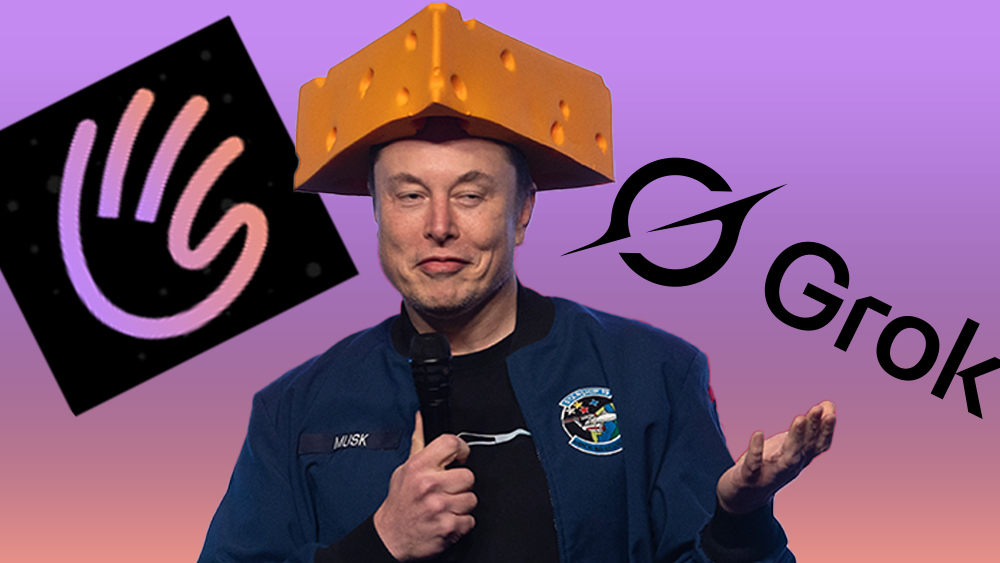
The most recent and perhaps most surreal example occurred when Elon Musk, the CEO of Tesla and xAI, publicly rejected the derogatory term "slopcore"—often used by critics to describe the uninspired, algorithmically generated music and content flooding social media. Musk’s rebuttal was swift and characteristic: "Calling it slopcore is a misnomer," he declared on his platform, X. "Frankly, it’s awesomecore."
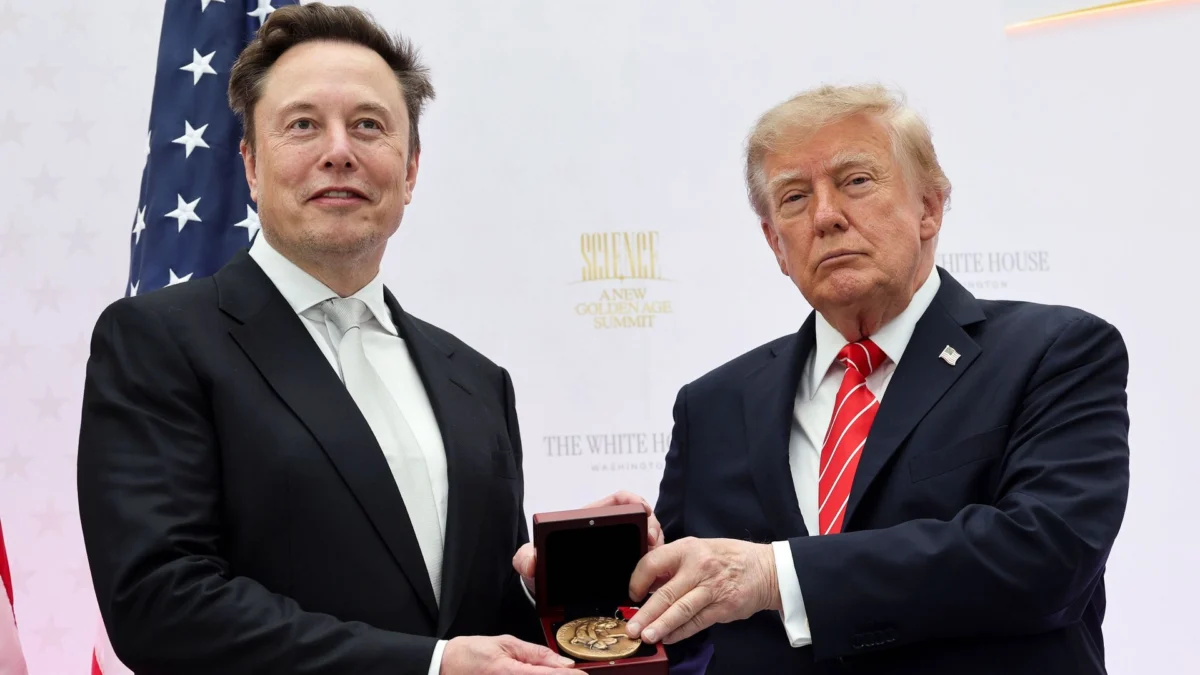
This was not merely a quirky tweet; it was a top-down attempt to redefine the cultural perception of generative AI. This endeavor mirrors the strategy employed by Donald Trump, who has pushed to rebrand "artificial intelligence" as "super intelligence." Trump’s rhetoric has been even more aggressive, suggesting on social media that those who continue to use the term "artificial intelligence" should be viewed as "THE ENEMY."
This synchronized push to change the vocabulary suggests a collective realization among the tech elite: the public is no longer buying the hype. When powerful individuals start dictating the lexicon of an entire industry, it is usually because the industry’s current reputation has become toxic.
The Anatomy of Toxic Branding
As a journalist who has spent three decades documenting the intersection of technology and culture, I have seen these rebranding cycles play out time and again. The pattern is remarkably consistent: companies only seek a new name when the old one is irreparably damaged.
Consider the history of corporate face-lifts:
- Philip Morris to Altria: A desperate attempt to distance the company from the lethal reputation of cigarettes.
- Windscale to Sellafield: A classic move to bury the legacy of a major nuclear accident under a name that sounded benign.
- Royal Mail to Consignia: An attempt to modernize a legacy institution that resulted in a public relations disaster, eventually forcing the company to revert to its original name after widespread mockery.
In each of these cases, the rebrand failed because the fundamental reality of the business had not changed. A name change is a surface-level solution to a structural problem. When tech moguls attempt to frame "AI" as "super intelligence" or "slop" as "awesomecore," they are effectively trying to put a tuxedo on a dumpster fire. They assume that if they can control the language, they can control the reality. But in an era where the public is increasingly tech-literate, this strategy is proving ineffective.
Supporting Data: The Great AI Pushback
The disconnect between the industry’s marketing and the public’s reality is backed by mounting data. While AI proponents argue that we are on the verge of a golden age, the general public is increasingly voicing their opposition to the infrastructure required to sustain it.
Data centers, the physical manifestations of AI, have become the new flashpoints for local protest. According to recent surveys, including a national study by Gallup, 70% of Americans are opposed to the construction of large-scale data centers in their immediate communities. This is not just a case of "Not In My Backyard" (NIMBY) sentiment; it is a fundamental rejection of the environmental and social costs of the AI boom.
The numbers tell a compelling story of resistance: between April and June alone, approximately 45 data center projects—valued at a staggering $68 billion—were blocked, delayed, or faced significant local pushback. This is a clear indicator that the "AI revolution" is meeting a wall of public apathy and active resistance. When you combine this with the general disdain for AI-generated creative works, it becomes evident that the industry is losing the "hearts and minds" war.
Official Responses and Corporate Strategy
The industry’s response to this skepticism has been twofold: intensive lobbying for legislative "protection" and aggressive marketing campaigns designed to reframe AI as an essential human tool rather than a replacement.
Industry leaders often frame the criticism of AI as the rantings of "Luddites" or "conspiracy theorists." Yet, the criticism is increasingly coming from the creative class—artists, musicians, and writers who see their livelihoods being systematically devalued by models trained on their own work without consent.
When Musk or other industry giants use terms like "awesomecore," they are attempting to infantilize the debate. By reframing a serious technological, economic, and ethical conversation as a matter of "coolness" or "preference," they hope to distract from the substantive issues: labor rights, data privacy, and the ecological footprint of the hardware powering these models.
The Implications: Why This Matters
Why should we care about the words used to describe AI? Because language sets the terms of the debate. If we allow "artificial intelligence" to be rebranded as "super intelligence," we implicitly accept a framing that assumes the technology is inherently superior and god-like, rather than a probabilistic model prone to error and bias.
For those of us in the creative professions, this linguistic warfare is deeply concerning. There is a profound difference between a digital tool that augments human capability and a flood of synthetic content that drowns out authentic human expression. The former is a bridge; the latter is a noise floor.
The current resistance to "slop" is, at its core, a fight for the value of human labor and the importance of context. When a machine generates a song, it does not understand the heartbreak or the history behind the lyrics; it is merely predicting the next sequence of notes based on a vast dataset. Calling this "awesomecore" is an attempt to force an emotional connection where none exists.
Conclusion: The Desperation of the Elite
A brand, in its purest form, is the reputation an entity holds in the minds of others. It is what people say about you when you are not in the room. Right now, when people discuss AI, they aren’t talking about "super intelligence." They are talking about job losses, environmental waste, and the degradation of the cultural landscape. They are calling it "slop."
Elon Musk and his peers can try to force a new vocabulary on the public, but they are essentially acting like an unpopular student trying to give themselves a cool nickname to hide their social standing. It is a gesture of profound desperation.
As we move forward, the divide between the elite’s narrative and the public’s experience will likely widen. The challenge for the public, for regulators, and for the creative community is to refuse to play along with these linguistic games. We must call things what they are. If a technology is designed to displace workers, consume vast amounts of energy, and mass-produce derivative content, we should not be afraid to label it accurately, regardless of how many "cores" or "super" prefixes the tech billionaires decide to attach to it.
The reality is that the public is becoming increasingly adept at spotting the difference between genuine innovation and a cynical, calculated attempt to rebrand a product that has lost its way. The era of the tech-bro rebranding might be in full swing, but it is ultimately a sign of an industry that knows its own house of cards is trembling.

 Sagoh
 Asep Darmawan

 Raul Delapena Setiawan

 Reynand Wu



 Azzam Bilal Chamdy

