
 Nila Kartika Wati
The mantra of "doing more with less" has become the perennial anthem of the modern marketing department. In an era of tightening budgets, shrinking resources, and increasingly aggressive pipeline targets, this directive often feels less like a strategy and more like a recipe for burnout. For many, the instinct is to double down: create more content, launch more webinars, and push more campaigns.
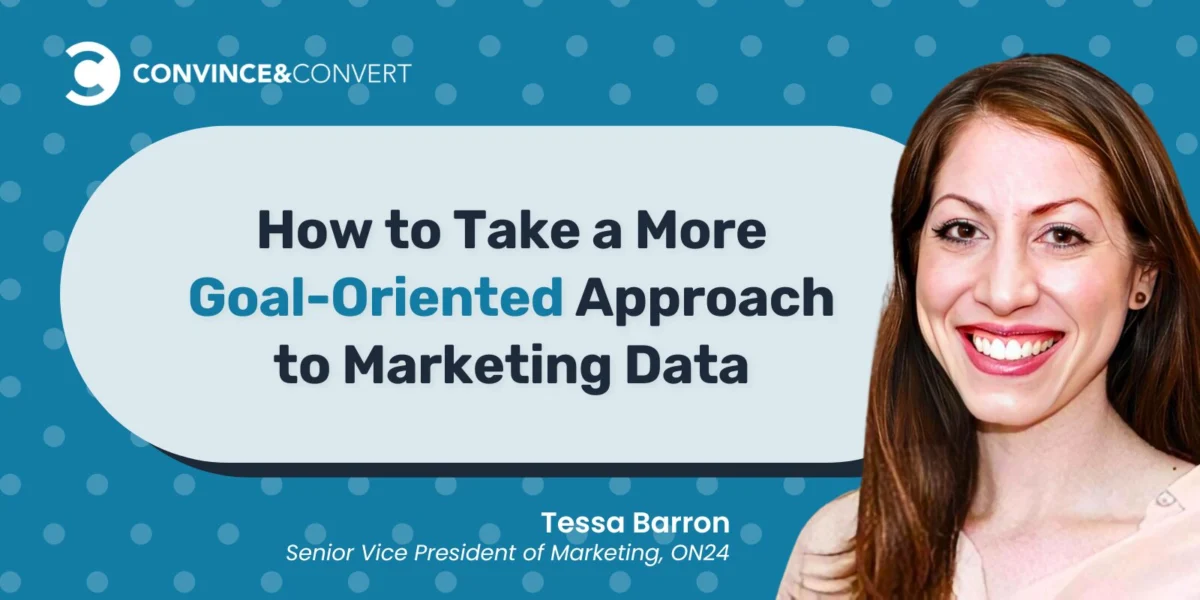
However, according to Tessa Barron, former Senior Vice President of Marketing at ON24 and a recent guest on the Data-Driven Decisions podcast, this "more-is-more" approach is fundamentally flawed. Barron argues that the solution to the current marketing malaise isn’t to increase the volume of output, but to radically shift our perspective on the role of data and the anatomy of pipeline growth. By moving from a tactic-oriented mindset to a goal-oriented framework, marketers can stop chasing activity and start driving revenue.
The Mindset Shift: Breaking the Cycle of Tactical Inertia
The post-pandemic landscape has permanently altered consumer behavior and market expectations. Yet, a significant portion of the marketing industry remains tethered to the playbooks of 2019.
"We as marketers have to check in with ourselves and ask: ‘Have we changed? Are we still doing what we were doing three years ago?’" Barron notes. "If the answer is yes, that is the first sign that we need to stop expecting that if we execute the same way and do more and more, we’re going to get more in return."
The Trap of "Tactic-First" Marketing
Marketing teams often fall into the trap of calendar-based planning. A typical Q1 roadmap might look like: Four webinars, two whitepapers, one industry podcast, and a series of blog posts. This is "tactic-first" planning. It focuses on the vehicle rather than the destination.
Barron suggests reversing this. Instead of starting with the content format, marketers must start with the objective. A goal should not be "run a webinar," but rather, "achieve a 10% uplift in pipeline targets" or "reach X number of net-new qualified accounts." When the goal is defined first, the tactic becomes the logical solution to a specific problem, rather than a box to be checked.
Uncovering the Signals That Move the Needle
In the current digital ecosystem, marketers are drowning in data but starving for insight. The sheer volume of metrics available—clicks, impressions, bounce rates, time-on-page—often creates "noise" that obscures the reality of buyer intent.
Barron proposes a shift in terminology: stop looking for "data" and start hunting for "signals." A signal is any piece of information that indicates a buyer is moving closer to a purchase decision. Once these signals are identified, marketing teams can engineer their content to capture them.
Engineering "Signal Traps"
ON24’s platform, for instance, provides over 20 ways to interact with a webinar, ranging from live Q&As to polls and surveys. These are not just engagement tools; they are diagnostic instruments.
Case Study: The Cloud Provider Insight
A technology company struggling to regain market share identified a critical correlation: prospects using a specific cloud provider were 10 times more likely to convert to a sales opportunity. Armed with this knowledge, the marketing team didn’t just produce "more" content. They integrated a single, pivotal question into their webinars: "Which cloud provider are you currently using?" This allowed them to immediately segment high-intent prospects and prioritize them for sales follow-up.
Case Study: Risk Assessment in Healthcare
In the pharmaceutical sector, the goal was to identify doctors with patients requiring specialized therapies. During educational webinars, the company asked, "How would you rate the risk of your patient base: High, Medium, or Low?" Those who selected "High" were immediately flagged, allowing the company to tailor follow-up communications directly to the needs of that specific, high-intent segment.
These examples illustrate that strategic data capture, when tied to a specific business goal, transforms marketing from a top-of-funnel activity into a precision-targeted engine.
The Sales-Marketing Synergy: Building the Pipeline Together
The most common point of friction in B2B organizations is the misalignment between marketing-qualified leads (MQLs) and actual sales pipeline. Barron emphasizes that marketers must step out of their silos and engage directly with the sales front line.
Aligning on the "Qualified" Definition
Marketers often assess content quality by vanity metrics—how many people registered, or how many people downloaded a PDF. While these are indicators of interest, they are rarely indicators of readiness.
"Salespeople sit at the front lines of the prospect’s communication with a company," Barron explains. "They can tell you much more about the prospect’s needs, their reasons for hesitation, and their expectations." By asking sales teams what questions they use to qualify a lead, marketers can reverse-engineer those questions into their digital interactions. If a salesperson asks about budget, timeline, or current infrastructure, marketing should be testing those same questions in early-stage webinars or interactive content.
Redefining Roles in Pipeline Creation
It is a hard truth for many in marketing to swallow: Marketing does not create pipeline; it creates the conditions for pipeline. Salespeople, ultimately, close the deals. Marketers act as the architects of a "net" designed to catch potential buyers. The efficiency of that net is determined by how well the marketer understands the buyer’s journey before the salesperson ever picks up the phone.
The Framework for Persistent Messaging
To effectively move a prospect from a lead to an opportunity, marketers must deploy highly relevant messaging across every touchpoint. This requires a structured approach to the buyer’s journey.
- Identify the Friction: Audit current lead-capture forms. Are they too long? Do they ask for irrelevant information that causes drop-offs?
- Tailored Messaging: Use the insights gained from sales to personalize content. If a prospect is at a "consideration" stage, they don’t need generic whitepapers; they need case studies that mirror their specific pain points.
- Iterative Optimization: Use the "little steps" approach. By optimizing the middle-of-funnel interactions—such as email follow-up sequences and landing page conversion rates—marketers can exert control over the pipeline without needing to spend an extra dollar on top-of-funnel traffic.
Implications for Organizational Reporting
The final challenge for the modern marketer is the internal communication of success. When stakeholders—often outside of the marketing and sales departments—look at reports, they aren’t looking for "webinar attendance" or "email open rates." They are looking for movement in the pipeline.
Barron suggests that reporting must be stripped of technical jargon and focused on "signal-based" outcomes.
- Visual Simplicity: Use dashboards that show clear trajectories—up or down.
- Budget Attribution: Explicitly link budget spend to specific conversion milestones.
- Goal Transparency: When the entire company understands that marketing is not just "generating leads" but "identifying specific signals that lead to high-value conversions," the internal perception of the marketing department changes from a cost center to a strategic revenue driver.
Conclusion: The Path Forward
The "do more with less" mandate is only a burden if you define "more" as quantity. If you redefine "more" as "more signal," "more clarity," and "more alignment," the challenge becomes an opportunity for innovation.
By shifting from a tactic-first to a goal-first mentality, utilizing data to capture buyer signals, and building a genuine partnership with the sales team, marketers can move beyond the grind. The future of pipeline growth isn’t about running faster; it’s about running in the right direction, with the right information, at every step of the journey.
As Tessa Barron highlights, when you focus on the little steps between the lead and the sale, you gain the ability to turn the dials of your strategy, creating a sustainable, predictable, and high-performing engine that satisfies even the most demanding pipeline targets.


 Reynand Wu

 Iffa Jayyana

 Raul Delapena Setiawan


 Sagoh


 Azzam Bilal Chamdy

 Ali Ikhwan
