
 Nila Kartika Wati

In the high-velocity world of digital marketing, the gap between a trend emerging and a brand reacting is where market share is either won or lost. For analysts, social media managers, and product researchers, the challenge has never been a lack of data—it is the overwhelming abundance of it. Keeping pace with fast-moving online conversations while ensuring that research remains accurate and actionable has long been an uphill battle.
Recognizing this, Brandwatch has unveiled a suite of transformative AI updates designed to collapse the time between raw data, strategic insight, and decisive action. By leveraging advanced machine learning, these tools move beyond simple automation, providing teams with the ability to operate with unprecedented speed and confidence.
The Core Challenge: Data Paralysis
Whether you are architecting a massive research project to inform a multi-million-dollar product launch, benchmarking your brand against a volatile competitor set, or attempting to maximize the ROI of a live social campaign, you are fighting a race against time. When insights go stale, the window of opportunity closes.
Brandwatch’s latest release addresses the "bottleneck of analysis" by automating the most time-consuming aspects of the research lifecycle. From query construction to crisis management, these seven enhancements are engineered to empower teams to work smarter, not harder.

1. Streamlining Research: The New Query Workflow
The foundation of any research project is the query—the set of rules that defines which data enters your analysis. Traditionally, crafting a comprehensive query was a tedious, iterative process prone to human error.
The Solution: Within Brandwatch Consumer Research, the new Iris AI Query Writer, Query Health, and Query Fixer tools change the game. Instead of spending hours manually drafting Boolean strings, researchers can now describe their research question in plain language, and the Iris AI will generate a sophisticated, robust query in seconds.
The Query Health and Query Fixer features then act as an automated audit layer, identifying potential gaps in logic or scope and recommending fixes. This ensures that the data you collect is clean, relevant, and representative from day one, drastically reducing the "garbage-in, garbage-out" risk associated with manual data collection.
2. Conversational Intelligence: Asking Iris for Instant Insights
Even with the perfect data set, interpreting what that data means for your specific brand goals can take hours of dashboard exploration.
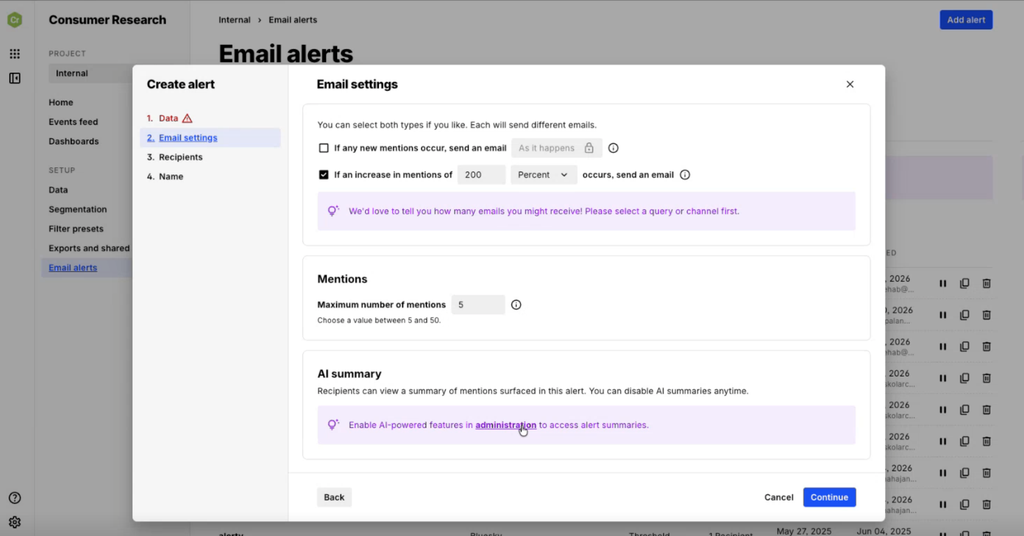
The Solution: The Ask Iris AI chat feature, now integrated directly into homepages and dashboards, allows users to interrogate their data as if they were speaking to a seasoned data analyst. By asking natural language questions—such as, "What are the primary drivers of negative sentiment regarding our new product launch?"—users receive immediate, synthesized summaries.
This capability bridges the gap for stakeholders who may not be expert data analysts but need immediate answers to make informed decisions. It transforms the dashboard from a static reporting tool into a dynamic, interactive research partner.
3. Mastering Complexity: Categorizing Vast Data with Iris AI
When analyzing millions of mentions, manually tagging and categorizing themes is impossible. Without effective categorization, "noise" often obscures "signal."
The Solution: Iris AI Categories provides a scalable way to stay in control of massive datasets. By using machine learning to surface consumer needs, pain points, and emerging sub-topics, the system helps teams drill down into specific themes without needing to build complex rule-based classifiers from scratch. This allows brands to shift their focus from the "what" (collecting data) to the "why" (understanding the consumer narrative).
4. Crisis Management: Understanding Breaking Stories in Real-Time
In a crisis, every minute spent navigating a dashboard is a minute lost in the public relations battle.
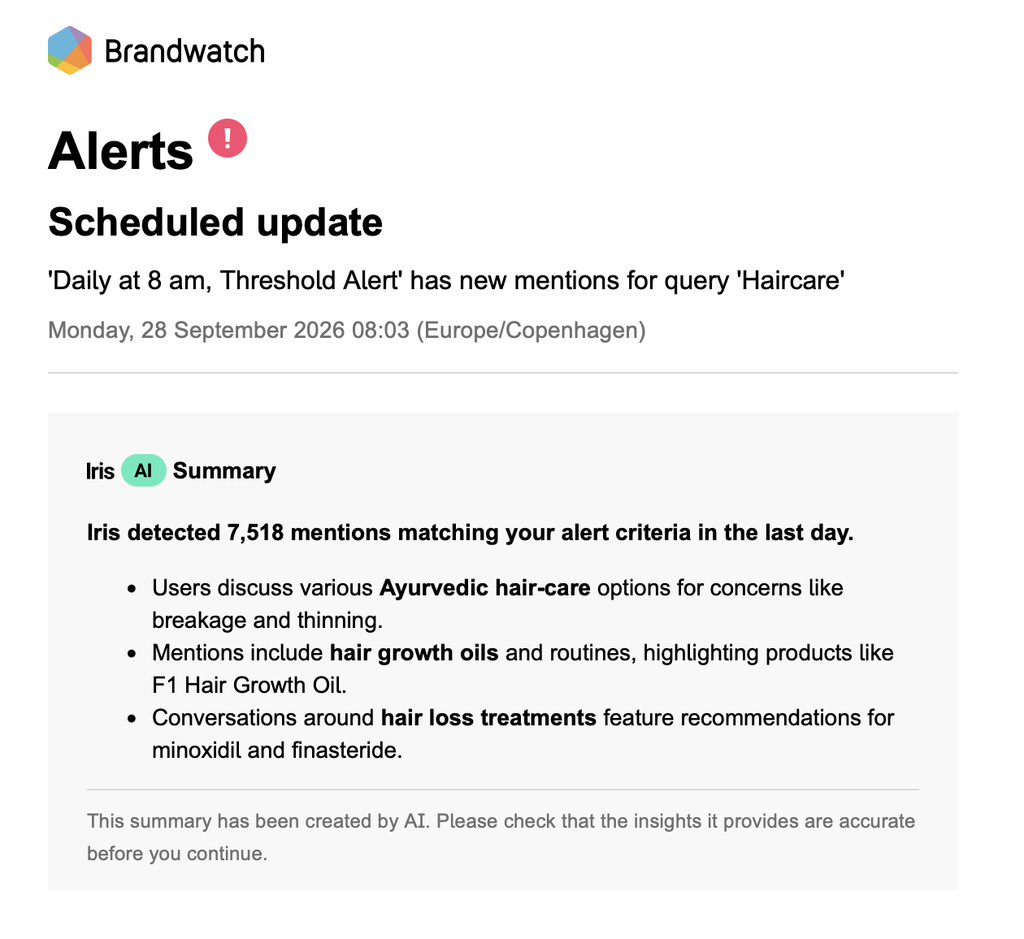
The Solution: Brandwatch has overhauled its Alert and Signal emails to include AI-powered summaries. When a sudden spike in conversation occurs—whether it’s a PR nightmare or a viral brand moment—users no longer need to click through to a dashboard to understand the context. The automated email provides a concise summary of why the conversation is spiking, the prevailing sentiment, and the key players involved. This enables teams to respond with speed and precision, rather than panic.
5. Benchmarking: Moving Beyond Isolated Metrics
A common pitfall in social media management is viewing performance metrics in a silo. A 10% increase in engagement is meaningless without the context of industry benchmarks or competitor performance.
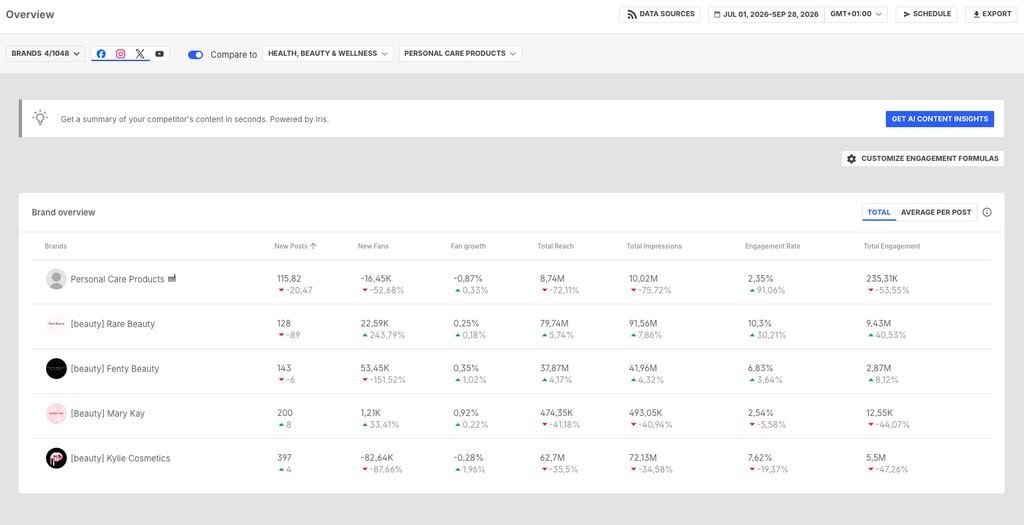
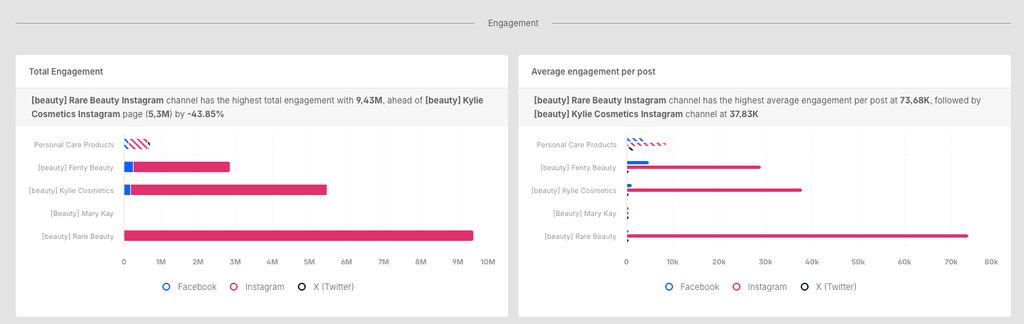
The Solution: The latest updates enable users to seamlessly compare owned social performance against broader industry trends. By integrating comparative analytics into the core workflow, Brandwatch makes it easy to visualize how your brand is performing relative to the market. This contextual awareness ensures that KPIs are always tethered to reality, preventing teams from chasing vanity metrics that don’t move the needle on business outcomes.
6. Precision Influence: Finding Creators via Semantic Search
Influence marketing is often hampered by keyword-based search, which captures creators who mention a topic but may not necessarily align with a brand’s specific values or niche context.
The Solution: The Social Media Management (Influence) suite now includes semantic search for YouTube creators. Rather than searching for creators based on surface-level tags, brands can search based on the context of the content. If you are a sustainable fashion brand looking for creators who discuss "slow living" or "circular economy," the system identifies creators based on the semantic meaning of their videos. This ensures that partnerships are built on genuine thematic alignment, not just keyword density.
7. Operational Efficiency: Intelligent Message Routing
For social media management teams, the sheer volume of incoming messages on channels like X (formerly Twitter), Facebook, and Instagram can lead to missed opportunities or slow response times.
The Solution: In the Engage module, teams can now automatically identify, organize, and route incoming messages based on their content. By training the AI to recognize intent—such as differentiating between a support request, a sales lead, or a crisis-level complaint—the system ensures that the right message reaches the right person immediately. This significantly improves response times and ensures that high-priority interactions are never buried in a general inbox.
Implications for the Future of Work
The integration of these AI tools signals a broader shift in the role of the digital marketer and analyst. As mundane tasks—such as query building, data categorization, and manual routing—are increasingly handled by AI, the human role becomes more focused on strategic interpretation and creative execution.
Brandwatch’s latest updates prove that AI is not here to replace the strategist; it is here to remove the operational friction that prevents them from doing their best work. By automating the "discovery" phase of research and the "triage" phase of engagement, these tools provide a competitive advantage to brands that adopt them early.
In an era where consumer sentiment shifts in minutes, having the right technology to capture, understand, and act upon those shifts is no longer a luxury—it is a requirement for survival. As Nesibe Zirzakiran, Senior Product Marketing Manager at Brandwatch, notes, the goal is to "connect the dots between what people are saying online, what products offer, and what decisions brands need to make." With these updates, the dots are being connected faster than ever before.


 Reynand Wu

 Iffa Jayyana

 Basiran

 Nana Wu

 Nana

 Siti Muinah

 Ammar Sabilarrohman
