
 Raul Delapena Setiawan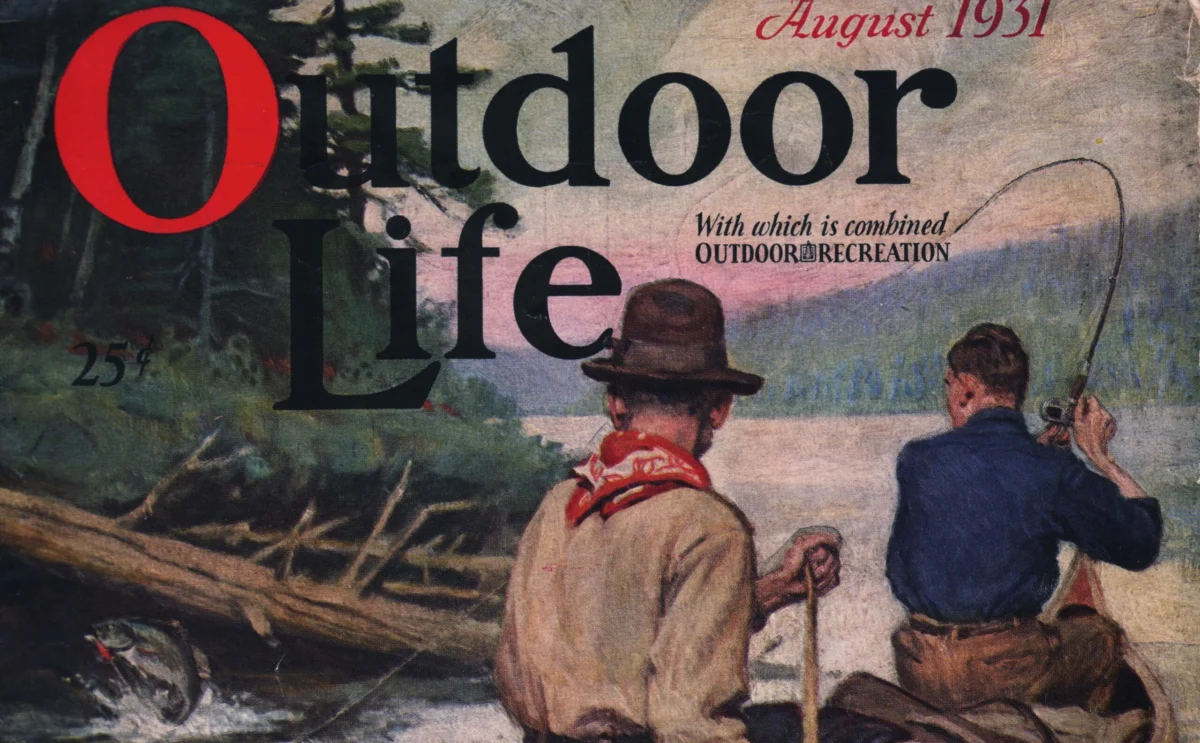
For the better part of a decade, the media industry has been haunted by the siren song of "content-to-commerce." The theoretical model is elegant in its simplicity: a media brand builds a captive, trust-based audience, then leverages that relationship to sell products directly to them. It promises a lucrative, self-sustaining flywheel—monetizing the consumer twice, first through advertising and attention, and then through the retail margin of the goods they consume.
In practice, however, the model has been a graveyard of ambition. High-profile attempts by media giants like The Chernin Group—which saw its investments in Food52, Hodinkee, and The Pro’s Closet unravel amidst massive layoffs and financial instability—have left the industry scarred. Even Recurrent Ventures, once a darling of the venture capital world that raised $300 million to build a content-to-commerce empire, recently retreated from the very affiliate-driven model that once served as its bedrock.
Yet, as the industry begins to shy away from these integrations, a new player has emerged to double down. On October 7, a newly formed entity called eFormed Ventures acquired Outdoor Life, one of the most storied brands in the enthusiast publishing space, from Recurrent. The pitch? A specialized, AI-driven approach to commerce that aims to fix the structural failures that brought down their predecessors.
The Chronology of a Failed Paradigm
To understand the skepticism surrounding the eFormed acquisition, one must look at the wreckage of the last several years. The “content-to-commerce” model, while conceptually sound, has historically struggled with the friction between the editorial mind and the retail machine.
- 2018–2019: The industry saw early warning signs as companies like F+W Media—led by current eFormed managing partner Tom Beusse—struggled under aggressive e-commerce pivots. The company ultimately filed for bankruptcy, a cautionary tale regarding the dangers of limited capital and over-leveraged growth.
- 2023: The Chernin Group’s portfolio faced a reckoning. The integration of high-end retail with editorial content at brands like Hodinkee (luxury watches) and The Pro’s Closet (high-end cycling) proved to be a multi-million-dollar mistake, leading to significant layoffs and a reassessment of the viability of enthusiast-niche retail.
- 2024: Recurrent Ventures signaled a major pivot, stepping back from the intensive affiliate business to focus on its core editorial strengths. This departure paved the way for the sale of Outdoor Life to eFormed.
The core problem, as industry observers and former executives have noted, is that the skills required to curate a compelling editorial voice rarely overlap with those required to manage complex supply chains, inventory, and logistics.
The "Resonance" Strategy: Can AI Bridge the Gap?
eFormed Ventures, headquartered in Bend, Oregon, enters the fray with a specific toolset: a proprietary AI platform dubbed "Resonance." The fund, backed by a consortium of family offices, intends to keep the existing editorial staff of Outdoor Life intact while layering in this new technology to transform the user experience.
Managing partners Tom Beusse and Mike Morford are keenly aware of the “fault lines” that destroyed previous attempts at this model. Their strategy relies on three pillars:
- AI-Driven Personalization: Resonance is designed to tailor product recommendations and dynamic pricing based on seasonality, geographic location, and granular shopping behavior. Unlike generative AI models currently flooding the internet with low-quality content, Beusse insists that Resonance will not touch the editorial process. It is strictly a conversion tool.
- Hybrid Inventory Management: Avoiding the pitfalls of bloated, owned inventory, eFormed plans to blend its own stock with “virtual” inventory held by partner retailers. By leveraging real-time data on sell-through rates and gross margins, the firm aims to minimize the capital-intensive risks that have bankrupted previous publishers.
- Niche Vertical Depth: The outdoor category is uniquely suited for this model. Unlike luxury goods, which are often one-time purchases, outdoor gear—ammunition, tackle, apparel—is consumable. According to Beusse, the outdoor community is roughly five times the size of the golf community, providing a robust, recurring revenue floor that niche sites like The Pro’s Closet never achieved.
Supporting Data and the Retail Reality
The fiscal reality of traditional affiliate marketing is stark. Currently, publishers like Outdoor Life drive over $20 million in purchases annually for third-party retailers. However, with affiliate commissions typically capping at 14% to 15%, and industry giants like Amazon actively slashing commission rates, the actual revenue captured by the publisher is a mere fraction of the total sales volume.
By moving from a referral model to a marketplace model, eFormed aims to capture the full retail margin. They point to early testing on the Field & Stream storefront—which they have managed via a licensing arrangement—as evidence of success. According to Morford, the storefront has posted triple-digit growth since January, though they acknowledge it is still the early days of the experiment.
However, the skepticism remains well-founded. The "traffic problem" persists: while a marketplace makes each visitor more valuable, it does nothing to solve the broader decline in search traffic that currently plagues the entire publishing ecosystem.
Official Responses and the "Trust" Safeguard
When questioned about the inherent conflict of interest—wherein a publisher might be tempted to prioritize the products they own over those that are objectively better—Beusse is firm.
"The Outdoor Life audience would punish that immediately," Beusse stated during an interview. He argues that the brand’s authority is its most valuable asset, and compromising that authority for short-term retail gain would be a fatal error. To mitigate this, the company has recruited industry veterans with deep retail expertise, such as Scott Blackwell, formerly of Beretta and Remington, to act as a buffer between the commercial and editorial operations.
Despite these safeguards, the burden of proof remains on eFormed. They are essentially betting that with better data, more focused, patient capital from family offices, and a clear separation of church and state between the AI marketplace and the editorial desk, they can succeed where others have failed.
Implications for the Future of Media
The sale of Outdoor Life is, in many ways, an ironic postscript to the last three years of industry trend-chasing. While large, venture-backed media companies are running away from commerce, smaller, specialized funds are picking up the pieces, convinced that the model wasn’t broken—it was just badly executed.
If eFormed succeeds, it could provide a roadmap for the hundreds of enthusiast publications currently struggling to survive in an era of declining display advertising and volatile search algorithms. If it fails, it will likely serve as the final nail in the coffin for the "content-to-commerce" dream.
The Broader Media Landscape: A Snapshot
Beyond the Outdoor Life deal, the media industry remains in a state of rapid transformation.
- Authentic Brands Group (ABG) Expansion: As ABG prepares for a public market debut next year, the hire of Lark-Marie Anton as chief communications officer marks a significant pivot toward professionalizing their media division. With a portfolio that includes Sports Illustrated, ABG is signaling that it views media not just as an add-on, but as a core component of its licensing machine.
- The Rise of Creator Agencies: The creator economy is undergoing a wave of consolidation. With over 100 creator-economy M&A deals recorded this year alone, the market is maturing. Incumbents are realizing that they cannot replicate the authentic connection between creators and their audiences, leading to a "buy rather than build" strategy that is reshaping the agency landscape.
- The Podcast Wars: The battle for top-tier podcast talent is intensifying. As discussed by Chris Balfe of Red Seat Ventures, the competition is no longer just between podcasts, but against streaming giants like Netflix, Amazon, and SiriusXM. The challenge, however, remains monetization—particularly in the short-form video space, where creators are currently generating massive value for platforms without receiving a commensurate share of the revenue.
As the industry looks toward 2025, the Outdoor Life experiment represents the ultimate test of the "enthusiast publisher" thesis. Will the marriage of AI, retail expertise, and deep community roots be enough to overcome the structural challenges that have plagued the industry for years? For now, the verdict remains cautiously pessimistic—but as any seasoned journalist knows, the most interesting stories are the ones that defy the conventional wisdom.


 Siti Muinah
 Jia Lissa
 Layla Zulfa
 Nana
Nana
 Pevita Pearce
 Rifan Muazin

 Iffa Jayyana